:::::::::::::::::::::::::::::::::::::::::::::::::::::::::::::::::::::::::::::::::::::::::::::::::::::
Sickle (kama)
***** Location: Japan
***** Season: Various, see below
***** Category: Humanity
*****************************
Explanation
The word SICKLE (KAMA, ..GAMA 鎌) by itself is not a kigo, but a topic for haiku.
We do have some kigo, however, in compound words.

cutting rice plants with a sickle
:::::::::::::::::::::::::::::::::::::::::::::::::::::::::::::::::::::::::::::::::::::::::::::::::::::
Sickles to cut rice and other plants have been used since the stone age. They originate from stone knives (ishiboochoo 石包丁).
. . . CLICK here for stone knife Photos !
The handle is made of wood (kigara 木柄) and the blade (hagane 刃金) of metal (jigane 地金), iron has been used since the Yayoi period (tetsugama 鉄鎌).
Since then rice could be harvested easily and the straw also be used for many tools and equipment.
The part of the metal that is fastened into the wooden handle is called komi コミ .
nokogirigama 鋸鎌 "sickle like a saw"
mikazuki "like a three day moon"
. . . CLICK here for Mikazuki 三日月型 Photos !
Echizengama 越前鎌 sickle from Echizen
The most famous sickles in th Edo period. They have been made by the sword smith 千代鶴国安 from Kyoto, who moved to Echizen (now Fukui). There were special merchants and peddlers involved in selling these sickles. Most of these peddlers have been producers of tree laquer (where they need sharp tools to scratch the bark).
. . . CLICK here for Photos !
Many other regions of Japan have sickles with a special form or blade.
. . . CLICK here for Matsubara 松原型 Photos !
. . . CLICK here for Tosa blade 土佐型 Photos !
. . . CLICK here for Tsuyama 津山型 Photos !
. . . CLICK here for Yonezawa 米沢型 Photos !

Daruma kama ダルマ鎌 Daruma sickle
:::::::::::::::::::::::::::::::::::::::::::::::::::::::::::::::::::::::::::::::::::::::::::::::::::::
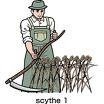
naga-e no kusakarigama 長柄の草刈りがま scythe
Sence
:::::::::::::::::::::::::::::::::::::::::::::::::::::::::::::::::::::::::::::::::::::::::::::::::::::
A sickle is a hand-held agricultural tool with a curved blade typically used for harvesting grain crop or cutting grass for hay.
© More in the WIKIPEDIA !
:::::::::::::::::::::::::::::::::::::::::::::::::::::::::::::::::::::::::::::::::::::::::::::::::::::
kigo for all spring
. wakamekarigama 若布刈鎌(わかめかりがま)
sickle to cut wakame seaweed
:::::::::::::::::::::::::::::::::::::::::::::::::::::::::::::::::::::::::::::::::::::::::::::::::::::
kigo for late summer

藻刈り鎌
. mokarigama 藻刈鎌(もかりがま)
sickle for harvesting mo waterweeds
.................................................................................
kigo for all summer
. kusakarigama 草刈鎌(くさかりがま)
sickle for cutting grass
. . . CLICK here for 草刈り鎌 Photos !
and in a more modern version we have
kusakariki 草刈機(くさかりき)maschine for cutting grass
:::::::::::::::::::::::::::::::::::::::::::::::::::::::::::::::::::::::::::::::::::::::::::::::::::::
kigo for late autumn

source : http://item.rakuten.co.jp/toyokuni/10001416/
稲刈り鎌
. sickle for cutting rice plants by hand, inekari gama
.... 稲刈鎌(いねかりがま)
offering for the sickle, kama iwai 鎌祝(かまいわい)
thanksgiving for the sickle, after having used it to cut the rice plants by hand.
The sickle has a zigzag blade of varying size.

Stamp with a harvest scene using sickle
From 1937, when more than 50% of the Japanese population was involved in farming.
:::::::::::::::::::::::::::::::::::::::::::::::::::::::::::::::::::::::::::::::::::::::::::::::::::::
kigo for all winter
. kazakirigama 風切鎌 (かざきりがま)
"wind-cutting sickle"
A sickle is put up on a long pole or on the roof to "cut the strong north wind" and protect the home.
. kamaitachi 鎌鼬 (かまいたち) "sickle weasel"
kamakaze 鎌風(かまかぜ)"wind like a sickle"
cut of the skin by a cold sucking wind
*****************************
Worldwide use
Kenya
. Slashers used to cut grass
*****************************
Things found on the way
. Blacksmiths in the Edo period
Takadono huts
.................................................................................
The origins of the name Kamakura
On the hill behind the temple lies a small shrine called
Kamatari Inari Shrine (鎌足稲荷神社, Kamatari Inari Jinja) which, in spite of its insignificant appearance, is of a certain historical importance both because of its age (it dates back to the seventh century) and its role in a legend related to Kamakura's name.
The plaque next to the shrine explains that kami Inari gave young Fujiwara no Kamatari (藤原釜足) a sickle which would magically protect him as long as it was in his possession. In 645 A.D., having defeated Soga no Iruka, Kamatari came to the Kantō and there he dreamed of Inari, who told him:
"I gave you the sickle to protect you,
but now that you have achieved your goal of defeating Iruka,
you must give it back to me and to the land."
Kamatari buried the sickle, and in the spot was erected the shrine that carries his name. According to the same legend, the name Kamakura means "the place where Kamatari buried his sickle".
© More in the WIKIPEDIA !
. Kamakura, a HAIKU TOWN 鎌倉
A city in Kanagawa prefecture
:::::::::::::::::::::::::::::::::::::::::::::::::::::::::::::::::::::::::::::::::::::::::::::::::::::
. Knives from Echizen .
越前市(武生)越前打刃物 Fukui
Takefu Knife village (タケフナイフヴィレッジ)
*****************************
HAIKU

鎌祝い言祝ぐ烏一羽二羽
kama iwai koto hogu tori ichiwa niwa
thanksgiving to the sickle -
adding their words of celebration
one bird, two birds
source : updaraft
with photo
:::::::::::::::::::::::::::::::::::::::::::::::::::::::::::::::::::::::::::::::::::::::::::::::::::::
水深く利(とき)鎌鳴らす真菰刈
mizu fukaku toki kama narasu makomo kari
deep in the water
the sound of sickles cutting
water rice
Yosa Buson 蕪村 (1716-1783)
. makomo karu 真菰刈る (まこもかる)
harvesting makomo water rice
:::::::::::::::::::::::::::::::::::::::::::::::::::::::::::::::::::::::::::::::::::::::::::::::::::::

nokogiri 鋸 (のこぎり) saw
鋸の音貧しさよ夜半の冬
nokogiri no oto mazushisa yo yowa no fuyu
the sound of a saw
and this poverty -
midnight in winter
Tr. Gabi Greve
A saw's Sound I hear--
so poor to work--
On a winter's night.
Tr. Thomas McAuley
The sound of a saw
How poor!
In the dead of a winter night.
Tr. Nelson/Saito
A handsaw sounding
like poverty
at midnight in winter.
Tr. Sawa/ Shiffert
. Yosa Buson 与謝蕪村 in Edo .
..........................................................................
shiisoo シーソー seasaw, teeter(-totter)
シーソーのかたへに秋の来てゐたり
shisoo no katae ni aki no kiteitari
to the opposite side
of a seesaw
autumn arrives
Kaneko Atsushi 金子敦
Tr. Fay Aoyagi
:::::::::::::::::::::::::::::::::::::::::::::::::::::::::::::::::::::::::::::::::::::::::::::::::::::
chainsaw チェーンソー
. Friday, 9th of July 2010 .
five thirty -
the woodcutters chainsaw
sounds deep in the forest
Tuesday, 20th of July
They are back every morning ...
We see a huge truck carrying the long stems out of the valley.
And more sounds of splitting wood
and thudding on the ground.
five thirty -
the chainsaw sounds again
deep in the forest
.................................................................................
surviging the damage
laughing in another day
writing haiku
after the typhoon -
the sound of a chainsaw
in every garden
We have to take care of the fallen trees and branches ourselves.
Aug 31, 2004
*****************************
Related words
***** kamakiri 鎌切 praying mantis
"cutting like a sickle"
Tenodora aridifolia
:::::::::::::::::::::::::::::::::::::::::::::::::::::::::::::::::::::::::::::::::::::::::::::::::::::
kigo for mid-summer
***** nokogirisoo, nokogiri soo 鋸草 (のこぎりそう)
yarrow; milfoil . lit. "saw plant"
Achillea alpina. Garbe
It grows well in dry mountain areas and is now also grown as a garden flower to enjoy the white or pink blossoms. The leaves are shaped like a saw.
The reddish flowering plants are from the west
seiyoo nokogirisoo セイヨウノコギリソウ.

:::::::::::::::::::::::::::::::::::::::::::::::::::::::::::::::::::::::::::::::::::::::::::::::::::::
[ . BACK to WORLDKIGO . TOP . ]
[ . BACK to DARUMA MUSEUM TOP . ]
:::::::::::::::::::::::::::::::::::::::::::::::::::::::::::::::::::::::::::::::::::::::::::::::::::::





 Posts
Posts