3/19/2005

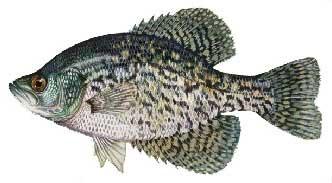
Crappie fish (Pomoxis) (05)

nnnnnnnnnnnn TOP nnnnnnnnnnnnn

Crappie (Pomoxis family)

***** Location: North America
***** Season: Late Spring
***** Category: Animal


*****************************
Explanation

It is a fish and in late spring early summer (April - May) Crappie-Thons are held across Texas. Like Bass Tournaments but for Crappie. Big thing here Radio and TV ads sponsors for prizes the whole shebang!

Don Haney, US
http://www.houstonaxl.com/

xxxxxxxxxxxxxxxxxxxxxxxxxxxxx

Say hello to spring. It's the smell of flowers, a landscape of blooming dogwoods and spawning time at hand when hefty slabs put a bend in your pole.

There are several reasons why spring is the most popular season among crappie fishermen, but the main one is the movement of fish up into shallow water making them somewhat easier to find and catch. Spring is the season that brings the fish and the fishermen closer together than at any other time of the year.
http://www.crappieusa.com/

xxxxxxxxxxxxxxxxxxxxxxxxxxxxx

Black Crappie (Pomoxis nigromaculatus)
Other names:
speckled perch, specks, papermouth, bachelor perch, calico bass, strawberry bass, or white perch


http://www.landbigfish.com/fish/fish.cfm?ID=12

xxxxxxxxxxxxxxxxxxxxxxxxxxxxx

White Crappie (Pomoxis annularis)
Other names:
speckled perch, papermouth, silver bass, bachelor perch


http://www.landbigfish.com/fish/fish.cfm?ID=13

*****************************
Worldwide use

Japan

ブラッククラッピー
http://f15.aaa.livedoor.jp/~ichthy/fisher/bass.html#pomoxis

*****************************
Things found on the way


CRAPPIE USA
In many cases, kids don't get the opportunity to go fishing. Some don't have a dad or mom, uncle or aunt, grandparents or guardian that has taken the time to introduce them to this great sport which has brought so much enjoyment to so many.

That's the other side of the coin we saw. Kids that wanted to yet seldom got the chance. For several, it was their first fishing trip. We pray it wasn't their last.

At many CRAPPIE USA 1-day events, we devoted a portion of our time and provided opportunities at the rodeos where, for a few short hours, a kid could go fishing, earn some degree of self esteem and go home a winner.

Excerpt from
http://www.crappieusa.com/library/Article_Detail.cfm?Article_ID=3

*****************************
HAIKU


late spring -
bridge piling serves
as a crappie bed


A piling of course is the columns supporting bridges and they make an awesome fishing hole for crappie, as well as sunken Christmas trees.

Christmas tree
in early summer

... crappie bed

After Christmas we round up Christmas trees that people are disposing of tie them together and weight them down and sink them in January and by April the crappie have made a home there - thus a fishing hole for the crappie-thon. We (myself and two friends) have been known to catch over a hundred in one day.

Don Haney
http://www.houstonaxl.com

xxxxxxxxxxxxxxxxxxxxxxxxxxxxx

the Daruma bobber dunks deep: a slab!

"slab" is a local slang for a large crappie

Daruma is a folkfigure in Japan sort of the same shape and colors of those ubiquious round plastic fishing bobbers.

"chibi" (pen-name for Dennis M. Holmes)

Fishhook Daruma !!!

xxxxxxxxxxxxxxxxxxxxxxxxxxxxx

cool morning
long line at ramp
crappie biting

Frank Brannock
©2003 Randy Brooks, Millikin University, Decatur, Illinois
http://www.millikin.edu/haiku/courses/globalPACE2003/FrankBrannock.htm

xxxxxxxxxxxxxxxxxxxxxxxxxxxxx

*****************************
Related words

***** crappie-thon

Come have a great time and win some prizes, fishing in the "Quiet Lakes" Crappiethon - Thousands of Dollars worth of tagged crappies are swimming in Ghost Lake waiting for some lucky anglers to catch them. Catch one and you win! Great cash prizes up to $xxx per tagged fish.
http://www.ghostlakelodge.com/specials/SpecialsB/page6.html

crappie-thon...
sun burned anglers
weigh in


Don Haney
http://www.houstonaxl.com/

*****************************
Please send your contributions to Gabi Greve
worldkigo@yahoo.com

WHC Worldkigo Discussion Group
http://groups.yahoo.com/group/WHCworldkigo/

Back to the WHC Worldkigo Index
http://worldkigodatabase.blogspot.com/

Crape myrtle (sarusuberi)

[ . BACK to WORLDKIGO . TOP . ]
::::::::::::::::::::::::::::::::::::::::::::::::::::::::::::::::::::::::::::::::::::::::::::::::::::: 

Crape myrtle (sarusuberi)

***** Location: Japan, North America
***** Season: Mid-Summer
***** Category: Plant


*****************************
Explanation


This is one of my favorite trees, not only for its beautiful flowers, but for its name in Japanese, which means:
Even monkeys fall from trees! sarusuberi.


crape myrthle, crepe myrthle, pride of India. Lagerstroemia indica.
It has various names in Japanese

sarusuberi, hyakujikkoo 百日紅
shibi 紫薇
hakuyooju 怕痒樹
kusuguri no ki くすぐりの木
white for hundred days, hyakujitsu haku 百日白

Some saijiki place this plant in the late summer.

The origin of this plant is China. It flowers in pink and white, with single or double flowers (yae 八重). It was already known in the Kamakura period in Japan, where it was called
"Monkeys sliding" saru nameri 猿滑り

Since it flowers from summer to autumn for more than 100 days, one of the names is "flowering a hundred days" in pink or white.

Gabi Greve


xxxxxxxxxxxxxxxxxxxxxxxxxxxxx


Some plant facts from FLORIDATA:

The deciduous crape myrtle is among the longest blooming trees in existence with flowering periods lasting from 60-120 days. Crapes come in heights as short as 18 in (46 cm) and as tall as 40 ft (12 m). Leaves are alternate and smooth, but leaf size depends on variety. Flowers are borne in summer in big showy clusters and come in white and many shades of pink, purple, lavender and red. The fruits that follow are brown or black.

When mature they dry and split releasing disk shaped seeds. Depending on variety, crapes grow as large shrubs or as trees that may be either upright or spreading. Large varieties are very fast growing and can put on several feet in a single growing season. Many types have interesting bark that exfoliates in thin flakes exposing lovely cinnamon or gray inner bark. Crapes tend to produce many suckers that should be removed as they appear if you want to maintain them as trees with distinct trunks. They are enthusiastic reseeders so you may find yourself pulling up baby crapes throughout the summer.

The common name of this plant is crape myrtle not crepe myrtle.
It is called this because the flowers have crinkly petals that resemble the material called crepe (which according to Webster is a "light crinkled fabric woven of any of various fibers") but many references tell us that you're supposed to spell it crape when it's in front of myrtle. Confused? I think somebody was full of crape when they came up with this name!
At any rate, it's a common name and since there's no authority that manages common names for plants you can spell (or call it) whatever you like!

http://www.floridata.com/ref/l/lager_i.cfm

........................................

About the spelling of the word
W. J. Higginson

"Crape myrtle" is the correct, original, and in pre-1950s dictionaries the ONLY English spelling, on any side of whatever pond an English-speaker may sit. Nowdays, American dictionaries seem to be accepting "crepe myrtle" as an alternate, but still not the main, "correct" spelling. (OED and Websters also checked...)

Current garden books also list the plant under "crape myrtle" -- those from both America and Australia that I checked. "Crepe myrtle", though sometimes acknowledged as an alternate spelling, does not appear in their indices. The smaller plant dictionaries I have do not to list "crepe myrtle" at all.

I suspect that someone misspelled it "crepe myrtle", thinking of "crepe paper", and that this apparent Frenchism was taken up by others -- but that would be very strange, since the plant comes from East Asia. The OED says, definitively, that "crepe" is the French word equivalent to "crape" in English.

groups.yahoo.com/group/WHCworldkigo/


*****************************
Worldwide use

Australia

Here, in New Zealand and also in England the spelling is 'crepe myrtle'. The E should have the French accent.
The tree was named, I believe, because of the crepe-like texture of its 'petals' (crepe being the name of a type of fabric, presumably originating in France).
One of the crepe myrtles is a native of Queensland, Australia...Lagerstromia archeriana.

Lorin Ford

... ... ...

The Crepe Myrtles Webiste
http://www.crapemyrtle.com/

:::::::::::::::::::::::::::::::::::::::::::::::::::::::::::::::::::::::::::::::::::::::::::::::::::::

Southern USA

in the souther usa, just when the landscape dries up under the brutal heat, the crape myrtle, a woody shrub, bursts into enthusiastic bloom.

the crape myrtle, introduced the the us in 1795 by seagoing french botanist andre michaux. he settled in charleston south carolina and grew crape myrtles from seed.

the woody shrubs were a welcome addition to the southern landscape. the plant spread throughout the south in the 1800s. in the 1960s and 1970s, hybridizers worked their magic, and now the shrub is available in heights of 3 feet to 30 feet and in many colors. its white, pale to deepest pink and shades of light to dark lavendar grace the southern landscape. most are 15 feet tall.

the palest pink flowers seem to glow in shadow or low light. the pinks shout joyfully to passers-by. the lavendars evoke the lilacs so beloved in the northern regions, at least until fall when they clash with newly turning leaves!

just as they bloom, the crape myrtles shed their thin bark, which peels away in curls, revealing cinnamon colored stems. the spent blossoms fall to the ground to make way for more new blossoms.

the southern usa would be a much sadder sight if the crape myrtle were not working its magic.

susan delphine delaney
................................................................


Crape myrtle, like dogwood, has become a widely spread decorative tree in Georgia. More and more roads are lined with this beautiful tree that blooms all summer with white, red, pink, and other shades of red.

air-conditioned car -
crape-myrtles divide the highway
all the way home

Zhanna P. Rader


*****************************
Things found on the way


*****************************
HAIKU


in the lee
of the crape myrtle
a magneta whirlwind


susan delphine delaney md, plano, texas


::::::::::::::::::::::::::::::::::::::::::::::::::::::::::::::::::::::::::::::::::::::::::::::::::::: 


死に未来あればこそ死ぬ百日紅
shi ni mirai areba koso shinu sarusuberi

because there is a future
in death, I will die -
crape myrtle


Uda Kiyoko 宇多喜代子


:::::::::::::::::::::::::::::::::::::::::::::::::::::::::::::::::::::::::::::::::::::::::::::::::::::


百日紅ごくごく水を呑むばかり 
sarusuberi gokugoku mizu o nomu bakari

The red crepe myrtles -
I only gulp down
glasses of water


. Ishida Hakyo 石田波郷 .

(tr. Noriko)
http://alpha-club.org/page03_01/arc01.html

xxxxxxxxxxxxxxxxxxxxxxxxxxxxx


炎天の 地上花あり 百日紅
enten no chijoo hana ari sarusuberi

unter the scorching sky
on the ground these flowers -
crape myrtle


Takahama Kyoshi
(Tr. Gabi Greve)


Look at this page for more photos of the tree.
http://www.hana300.com/sarusu.html

百日紅 写真集 1(写真7枚)
百日紅 写真集 2(写真6枚)
百日紅 写真集 3(写真5枚)


xxxxxxxxxxxxxxxxxxxxxxxxxxxxx


quietude
in the temple garden -
no monkeys in sight

© All photos on this page by Gabi Greve, 2005.


*****************************
Related words

***** . PLANTS - - - the Complete SAIJIKI .


[ . BACK to WORLDKIGO . TOP . ]
:::::::::::::::::::::::::::::::::::::::::::::::::::::::::::::::::::::::::::::::::::::::::::::::::::::

Crane (tsuru)

[ . BACK to TOP . ]
::::::::::::::::::::::::::::::::::::::::::::::::::::::::::::::::::::::::::::::::::::::::::::::::::::: 

Crane (tsuru)

***** Location: Japan, other areas
***** Season: Various, see below
***** Category: Animal


*****************************
Explanation


CLICK for more photos CLICK for more photos


. . . . . Kigo for Winter

crane, tsuru 鶴
Family of the Grus.

Hooded crane, nabezuru 鍋鶴 Grus monachus
White naped crane, manazuru 真鶴 Grus vipio

crane with a read head, tanchoo 丹頂 Grus japonesis
crane with black wings, sodeguro tsuru 袖黒鶴
black crane, common crane, kurozuru 黒鶴
Demoiselle crane, anehazuru 姉羽鶴

Sandhill crane, Canada Crane

Cranes start coming to Japan in October and stay there over winter. In Spring they leave for the North.

The crane is a well-loved animal in Japan.
It comes to feed along the beaches and when it calls for its mate or its chicks, people of old felt the loneliness of a person, or a lonely traveler, longing for company.
It is a symobl for long life in Chinese and Japanese from ancient times on. In the article on bamboo as a kigo, we covered
Bamboo, Crane and the Turtle are a group for Long Life.


Another winter kigo with variations is

cranes standing in the cold, itezuru 凍鶴
"freezing crane" , tsuru itsu 鶴凍
frost for the cranes, shimo no tsuru 霜の鶴
cranes in a frosty night, shimoyo no tsuru 霜夜の鶴


Imagine a cold night when the cranes stand on one leg only, trying to keep warm. You can see them in parks and in the free nature. They evoke a feeling of pitty in the human soul.

In Ancient China, the crane too was a symbol of Long Life and also the symbol of the relationship of Father and Son according to the Confucian philosophy. Furthermore the crane is a symbol of wisdom. When a high-ranking Taoist priest died, it was said he was "turning into a crane".


:::::::::::::::::::::::::::::::::::::::::::::::::::::::::::::::::::::::::::::::::::::::::::::::::::


Detail from an 18th century rokkyoku-issho byobu from a private Honolulu collection; remounted by Yasumi Restoration.

- Shared by Jon Kostiner - Yasumi Restoration -
Joys of Japan, October 2012


:::::::::::::::::::::::::::::::::::::::::::::::::::::::::::::::::::::::::::::::::::::::::::::::::::

The Crane in Japanese Poetry
by Paul [choshi]

In Classical Japanese court poetry
the image of the crane was often used to symbolize the poet himself.


Without this knowledge, a poem might appear simply as a beautiful and moving objective depiction of nature. In the hands of a gifted poet, such poems can be evocative and a joy to read. This misperception of Japanese court poetry has been further promoted in the west through the view that this body of poetry values pure objectivity and lacks any symbolic meaning.

However, with an awareness of the symbolism and the historical context of the poem, the reader's experience can become deeply enriched beyond the surface beauty of the poem. Here is an example based on historical facts:

Teika (1162-1241) was a gifted poet of the Japanese court and son of the influential and gifted Shunzei (1114-1204. Tieka has exerted an deep and lasting influence on generations of poets. He was a natural- born poet with precocious talent. However, he also had a highly unstable personality. By today's standards he would probably be described as suffering from "bi-polar disorder" or "manic depression." As a result, he did not always get along very well with others. For instance, he had a highly volatile relationship with the Emperor Go-toba. [Go-toba authorized and supervised the editing of the Imperial poetry anthology "Shinkokinshu" (New Collection of Ancient and Modern Poems)].

He also organized many poetry contests. As a result of Tieka's often inappropriate behavior, Go-toba banished him from the court. Here are three related poems: [Note that "the place beyond the clouds" refers to the Imperial Palace] In the first Shuzei attempts to intervene on his son's behalf.

The second poem, was written by Akahito to convey Go-toba's displeasure with Teika. Shuzai again responds.

The crane which cries
as it heads toward the reeds
by Poetry Bay-
why can it not return
to that place beyond the clouds
Shunzei

At Waka Bay
as the tide comes flooding in
till tide pools disappear,
heading toward the reeds,
cranes fly overhead.

Yamabe Akahito

The year drew to a close
with the reed-dwelling crane
still wandering on cloud paths.
Now will Spring mists, too
be allowed to block its way
Shunzei

In reply, the retired emperor Go-toba [he was about 18 and already retired!!!] forgave Teika and he had Fujiwara Sadanaga respond. The latter wrote:

The reed-dwelling crane
parts Spring mists,
and now returns,
the clouds through which it wandered
from today are cleared.


Sources:
Waiting for the Wind: Thirty-six Poets of Japan's Late Medieval Age
By: Steven B. Carter [Columbia University Press: 1989] Waiting for the Wind

The Making of Shinkokinshu By: Robert N. Huey [Harvard University Press: 2002]
Book Link

Original at : Crane Haven by Choshi

:::::::::::::::::::::::::::::::::::::::::::::::::::::::::::::::::::::::::::::::::::::::::::::::::::


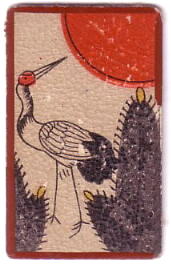
In the Flower Trump Game (hanafuda)


http://www.hana300.com/aafuda.html

January :
Pine and Crane, Matsu ni Tsuru 松に鶴
Pine (matsu) a kigo
More details about the Crane and Turtle as auspicious symbols
By Gabi Greve

World Kigo Database: Flower Trump Hanafuda

*****************************
Worldwide use


Bhutan


. Black-necked Crane, Grus nigricollis  
Tibetan Crane, black neck crane 


:::::::::::::::::::::::::::::::::::::::::::::::::::::::::::::::::::::::::::::::::::::::::::::::::::::

Germany

Kranich

Flucht des Kranichs, Haiku-Kunst
Haiku von Jochen Neuhaus
http://www.onlinekunst.de/neuhaus/kranich.html

xxxxxxxxxxxxxxxxxxx


Kranich is also the logo for Lufthansa!
http://konzern.lufthansa.com/en/html/ueber_uns/flotte/index.html

Here is a story about Lufthansa and some real live cranes :
http://50.lufthansa.com/php/geschichten_detail.php?lang=en&id=283

And here a web site on cranes and their protection in Germany :
http://www.kraniche.de/

Isabelle Prondzynski

xxxxxxxxxxxxxxxxxxxxxxxxxxxxx

India

Indian Music and the Crane
by Kala Ramesh

In music to stand perfectly on a note without going off-key is extremely difficult and then to give it life - so that it becomes a singing pulsating note is almost akin to reaching god.

to stand crane-like
on a singing note -
morning concert


:::::::::::::::::::::::::::::::::::::::::::::::::::::::::::::::::::::::::::::::::::::::::::::::::::


Uganda

The crested crane is Uganda's national bird --
and the most gorgeous bird I have ever seen. It lives in Kenya too, but nowhere near Nairobi. My most vivid memory of a crested crane is landing at the tiny airport on Manda Island, off Lamu Island on the Indian Ocean coast. As our little 6-seater prepared to touch the ground, a crested crane gracefully moved aside, leaving the runway to us for a while.

Good web sites :
http://www.ugandamission.net/aboutug/graphics/symbols.html

which explains the Uganda flag and coat of arms, both complete with crested crane.
http://www.uweczoo.org/crested_crane.html

explanations, background, photo
http://www.trekearth.com/gallery/Africa/Uganda/photo98012.htm

close-up photo
http://www.timetableimages.com/ttimages/qu.htm

Uganda Airways also uses the crested crane as its symbol.

Isabelle Prondzynski

*****************************
Things found on the way


1000 Folded Paper Cranes, senbazuru 千羽鶴
World Kigo Database : Hiroshima Day

:::::::::::::::::::::::::::::::::::::::::::::::::::::::::::::::::::::::::::::::::::::::::::::::::::

. matsukuwaezuru 松くわえ鶴 crane holding a pine branch .
auspicious decoration

:::::::::::::::::::::::::::::::::::::::::::::::::::::::::::::::::::::::::::::::::::::::::::::::::::


. tsurushibina つるし雛 / 吊るし雛 small hanging hina dolls .


Added with the wish for a long life of the girl.
As a crane made from folded paper, you can also fold your wish here and hope for fulfillment.


:::::::::::::::::::::::::::::::::::::::::::::::::::::::::::::::::::::::::::::::::::::::::::::::::::


Men posing as birds
Utagawa Toyokuni ukiyo-e prints

CLICK for more photos

Miburi-E 身振絵
http://pinktentacle.com/2008/05/old-prints-of-men-posing-as-birds-1809/


:::::::::::::::::::::::::::::::::::::::::::::::::::::::::::::::::::::::::::::::::::::::::::::::::::


Our ability to perceive quality in nature begins, as in art, with the pretty.
It expands through successive stages of the beautiful to values as yet uncaptured by language.
The quality of cranes lies, I think, in this higher gamut, as yet beyond the reach of words.

Aldo Leopold
A Sand County Almanac,1949

:::::::::::::::::::::::::::::::::::::::::::::::::::::::::::::::::::::::::::::::::::::::::::::::::::


. - The Six Birds of Paradise - 浄土の鳥 - .


:::::::::::::::::::::::::::::::::::::::::::::::::::::::::::::::::::::::::::::::::::::::::::::::::::


Japanese Bird Names, English and Romaji
http://egkaz.sakura.ne.jp/torinowamei_gaijinyou.html

*****************************
HAIKU


五月雨に鶴の足短くなれり 
samidare ni tsuru no ashi mijikaku nareri

in early summer rain
the legs of the cranes
have become shorter

or

because of the rainy season rains
the legs of cranes (standing in the flooded fields)
seem shorter

Matsuo Basho


You also find these translations:

The crane's legs
have gotten shorter
in the spring rain.

http://www.augustpoetry.org/poets/Basho.htm


in the seasonal rain
a crane's legs
have become short

tr.  kysamayu


In this season’s rain
the crane’s long leg
have suddenly been shortened

tr.  Dinh_Tran_Phuong


:::::::::::::::::::::::::::::::::::::::::::::::::::::::::::::::::::::::::::::::::::::::::::::::::::


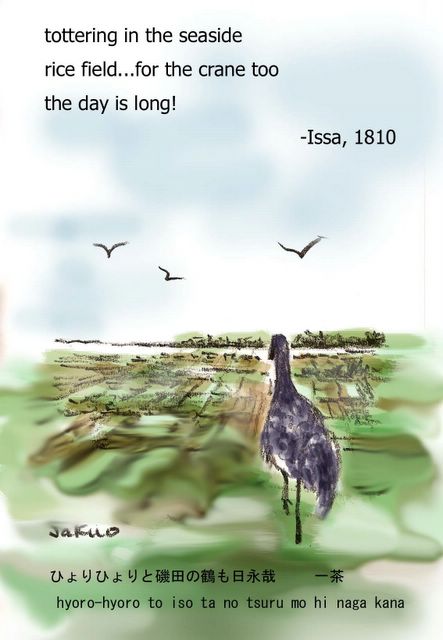
ひょりひょりと磯田の鶴も日永哉
hyoro-hyoro to iso ta no tsuru mo hi naga kana


tottering in the seaside
rice field...for the crane too
the day is long!


Issa

Haiga by Nakamura Sakuo
http://sakuo3903.blogspot.com/2005/07/go-slowly.html

:::::::::::::::::::::::::::::::::::::::::::::::::::::::::::::::::::::::::::::::::::::::::::::::::::


sandhill cranes
wings touching clouds
shaped by wind

a crane alights
on its reflection
close to an autumn day


Anna Holley
Quoted from : White Crow Haiku
http://www.ahapoetry.com/wtcrowbk.htm

:::::::::::::::::::::::::::::::::::::::::::::::::::::::::::::::::::::::::::::::::::::::::::::::::::


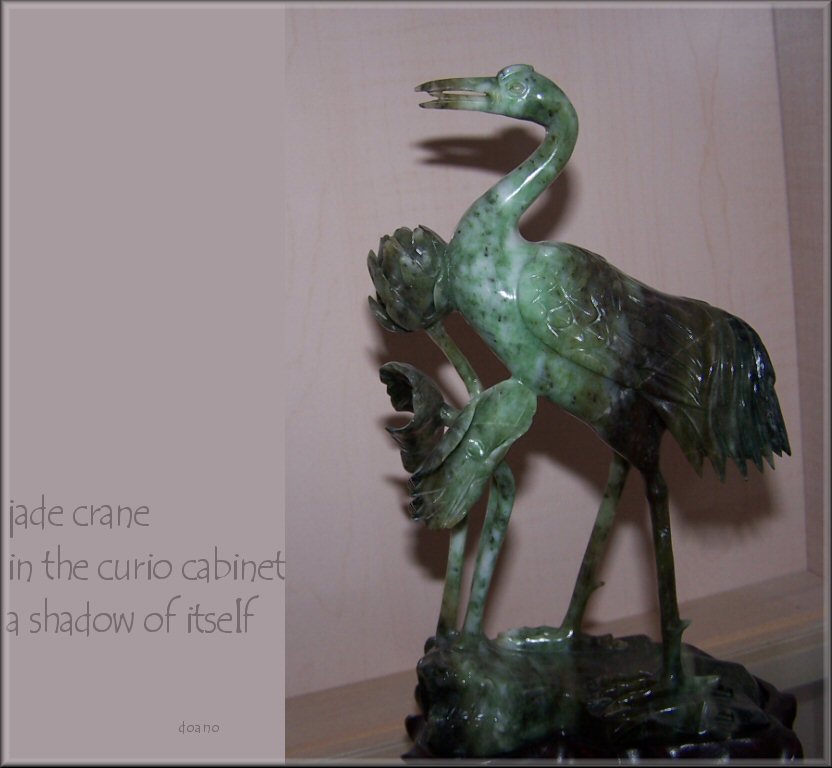
jade crane
in the curio cabinet
a shadow of itself


Doris Kasson
WHCmultimedia


:::::::::::::::::::::::::::::::::::::::::::::::::::::::::::::::::::::::::::::::::::::::::::::::::::::


cocor japonez-
in pasi de dans porneste
spre sanctuar

Japanese crane,
the dance steps start
to sanctuary


alex serban
Romania, May 2010


*****************************
Related words

***** first crane 初鶴 (はつづる) hatsuzuru
..... hatsutazu 初田鶴(はつたづ)hatsutazu
kigo for the new year


***** Cranes going back, hikizuru 引鶴
kigo for Spring


"crane leaving", tsuru saru 鶴去る
"crane going home", kaeru tsuru 帰る鶴
..... tsuru kaeru 鶴帰る


cranes staying behing, nokoru tsuru 残る鶴


There is even a haiku group called Hikizuru.

http://www.k3.dion.ne.jp/~haiku/hikizuru/


:::::::::::::::::::::::::::::::::::::::::::::::::::::::::::::::::::::::::::::::::::::::::::::::::::


***** cranes coming, tsuru kitaru
鶴来る (つるきたる)

kigo for late autumn

migrating cranes, tsuru wataru 鶴渡る(つるわたる)
..... watarizuru 渡り鶴(わたりづる)
..... tazu wataru 田鶴渡る(たづわたる)

CLICK for more photos


:::::::::::::::::::::::::::::::::::::::::::::::::::::::::::::::::::::::::::::::::::::::::::::::::::::


Three memorial days for poets with strong relations to the crane and took a nickname from the crane.


***** Fukaku-ki 風鶴忌(ふうかくき)
memorial day for Ishida Hakyoo
石田波郷(いしだ はきょう、1913年3月18日 - 1969年11月21日)
(crane in the wind)
kigo for early winter


***** itezuru ki 凍鶴忌(いてづるき)
memorial day for Hino Soojoo

(crane in the cold)
..... kakuruiki 鶴唳忌(かくるいき)
(voice of the crane)
..... tookaku ki 東鶴忌(とうかくき)
(crane of the East)
日野草城(ひの そうじょう、1901年(明治34年)7月18日 - 1956年(昭和31年)1月29日)
kigo for late winter


***** Saikaku ki 西鶴忌 (さいかくき) memorial day for
SAIKAKU,

Ibara Saikaku, Ihara Saikaku 井原 西鶴 1642–1693
(crane of the West)
kigo for mid-autumn


::::::::::::::::::::::::::::::::::::::::::::::::::::::::::::::::::::::::::::::::::::::::::::::::::::: 


source : facebook - made in Matsue

Arawai Shrine (阿羅波比神社), Matsue

::::::::::::::::::::::::::::::::::::::::::::::::::::::::::::::::::::::::::::::::::::::::::::::::::::: 

[ . BACK to DARUMA MUSEUM TOP . ]
[ . BACK to WORLDKIGO . TOP . ]

::::::::::::::::::::::::::::::::::::::::::::::::::::::::::::::::::::::::::::::::::::::::::::::::::::: 

3/18/2005

Crab (kani)

[ . BACK to WORLDKIGO  TOP . ]
. Legends about crabs .
::::::::::::::::::::::::::::::::::::::::::::::::::::::::::::::::::::::::::::::::::::::::::::::::::::: 

Crabs (kani)

***** Location: Japan, worldwide
***** Season: Various, see below
***** Category: Animal


*****************************
Explanation

There are many different types of crabs in the waters of Japan. Some are kigo for winter, see below.

Here we list a few summer kigo:

crab (usually the very small ones, which are rarely eaten) 蟹

shore crabs, hamagani 浜蟹

sand crabs, sunagani砂蟹
... salt water species (Ocypoda stimsoni)

sea rock crab, isogani, 磯蟹
rock crabs, iwagani 岩蟹

Benkei crab, benkeigani 弁慶蟹
..... named after Benkei, a hero in the legends arount Yoshitsune.

river crabs, kawagani 川蟹

mountain crabs, yamagani 山蟹
... found in small mountain rivers, species Potamon

swamp crabs, zawagani 沢蟹, 澤蟹
... quite a delicacy ! Potamon dehaani
mud-legged crabs, doroashi gani 泥足蟹

small crab, kogani 小蟹
hidden crab, kakuregani 隠れ蟹
red-handed crab, akategani 赤手蟹 (あかてがに)
wandering crabs, blue crab, watarigani 渡り蟹
... swimming crab, gazami ガザミ

crab eggs, kani no ko 蟹の子
crab foaming, kani no awa 蟹の泡


..... .....

sand-digging crab, sunahori gani 砂堀蟹
... a mole crab, but not part of a haiku saijiki

xxxxxxxxxxxxxxxxxxxxxxxxxxxxx

pickled crab, kanizuke 蟹漬

xxxxxxxxxxxxxxxxxxxxxxxxxxxxx

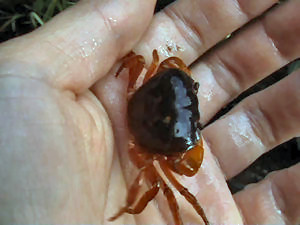
Swamp crab, Zawagani


© www.choraku.co.jp/teien.htm

This kind of crab even lives in our drinking water tank outside in the garden. It is proof that the water is clear and fresh.

Gabi Greve

:::::::::::::::::::::::::::::::::::::::::::::::::::::::::::::::::::::::::::::::::::::::::::::::::::::

Crabs in kigo for Winter

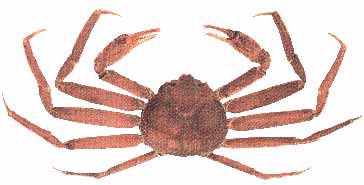
Queen crab, zuwaigani, ズワイガニ / ずわい蟹 (ずわいがに )
... Pacific snow crab
Chionoecetes opilio

http://www.sh.rim.or.jp/~ogawa/pages/zuwaigani.htm

Also called:
Crab from Echizen, Echizengani 越前蟹
Pine crab, matsubagani 松葉蟹

A type with very large legs, up to two meters long. An expensive delicacy in the winter season. There are special bus tours from Tokyo to special fish markets on the Sea of Japan, just to taste and then by these crabs.

. WASHOKU
First Catch of the Year, November in Toyooka, Hyogo


:::::::::::::::::::::::::::::::::::::::::::::::::::::::::::::::::::::::::::::::::::::::::::::::::::::


King Crab, tarabagani 鱈場蟹
ship for processing these crabs, kani koosen 蟹工船

They are usually found in fishing grounds of the cod (tara) in Northern Japan.


Kanikōsen 蟹工船
novel by 小林多喜二 Kobayashi Takiji


Takiji Kobayashi 小林 多喜二 K
( December 1, 1903 – February 20, 1933) was a Japanese author of proletarian literature. He is best known for his short novel Kanikōsen, or Crab Cannery Ship, a short novel published in 1929. It tells the story of several different people and the beginning of organization into unions of fishing workers.
- - - More in the WIKIPEDIA !

*****************************
Worldwide use

France

Les crabes (kani)
Quand on parle de crabe dans un haïku, on sous-entend les jeunes crabes de l'été, qui sont très visibles à cette période de l'année. Par contre, en tant que fruit de mer, les crabes sont souvent consommés en hiver. Les crabes sont dotés d'une paire de pince et de quatre paires de pattes, et leur carapace très solide leur donne une apparence invulnérable.

Kani no kuru
Tokoro ni ono wo
Oku kuriya

Dans la grosse caisse
Où sont rangés outils et haches,
Un crabe se cache !


Seishi YAMAGUCHI
http://www.threeweb.ad.jp/logos/saijiki/saijikife.html

:::::::::::::::::::::::::::::::::::::::::::::::::::::::::::::::::::::::::::::::::::::::::::::::::::::

USA, Chesapeake Bay

crab (callinectes sapidus Rathbun) —
Maryland's official crustacean, and a favorite food the Chesapeake region. Male crabs are 'jimmies,' female crabs are 'sooks.' Hardshells are crabs with hardshells, softshells are crabs that have shed their shells and have not yet hardened the new shell. Peelers are crabs just about to shed their shells. Crabs can be fished for using hand lines or crab pots. Chicken necks are a favorite bait.
For more info,
http://www.baydreaming.com/crabs.htm


work boats from Ewell,
scrapers on Big Thoroughfare,
Soft Crab your cities.

Harry Armistead, US
Previously published in 'Chesapeake Bay Haiku,' Audubon Naturalist News, Feb, 2002.

crab boat —

crab pot —
A trap used for catching crabs and ultimately derived from the Native American method of crabbing. Crab pots are submersed and tied together with arope and marked with small buoys. Boaters must keep an alert eye to avoid fouling their propellors with them.

crab shack —
A warm weather restaurant serving crabs and little else. A shack houses the kitchen and may have screened porches around it with picnic tables, it will also have open air tables. The tables are covered in newspaper for a tablecloth and the steamed crabs are dumped directly onto the newspaper. Crabs are broken open with wooden crab hammers and picked apart with the fingers and eaten.

crabbing —
Watermen typically spend winter oystering and summer fishing for crabs . Crabbing is also done recreationally and crab feasts on the beach are a favorite form of picnic.

Contribution of M. Kei, US
Editor of the Chesapeake Bay Saijiki

*****************************
Things found on the way


. Heikegani 平家蟹 Heike crabs, Heikea japonicum .


:::::::::::::::::::::::::::::::::::::::::::::::::::::::::::::::::::::::::::::::::::::::::::::::::::::

Japanese English Ocean Dictionary
http://www.oceandictionary.net/jez.html

*****************************
HAIKU


松の根に蟹かたむいてゐたりけり 
matsu no ne ni kani katamuite itarikeri

there -
at the root of a pine
there hangs a crab
  
Noro Shunmin 野呂 春眠
(Tr. Gabi Greve)


xxxxxxxxxxxxxxxxxxxxxxxxxxxxx

my beach walk
little carbs run
light as breeze

john tiong chunghoo
http://www.poemhunter.com/p/m/poem.asp?poet=63811&poem=2408309

*****************************
Related words

***** World Kigo Database : Fish as Kigo

:::::::::::::::::::::::::::::::::::::::::::::::::::::::::::::::::::::::::::::::::::::::::::::::::::::

Crab dishes 蟹料理 in Japan

WASHOKU ... Japanese Food SAIJIKI

WASHOKU -FISH and SEAFOOD SAIJIKI

. Legends about crabs .

:::::::::::::::::::::::::::::::::::::::::::::::::::::::::::::::::::::::::::::::::::::::::::::::::::::::::::::::::::::::::::

[ . BACK to DARUMA MUSEUM TOP . ]
[ . BACK to WORLDKIGO . TOP . ]
- #kani #crab #krabbe -

:::::::::::::::::::::::::::::::::::::::::::::::::::::::::::::::::::::::::::::::::::::::::::::::::::::::::::::::::::::::::::

3/16/2005

Cotton rose (fuyoo)

[ . BACK to WORLDKIGO . TOP . ]
::::::::::::::::::::::::::::::::::::::::::::::::::::::::::::::::::::::::::::::::::::::::::::::::::::: 

Cotton Rose, Rose-Mallow (fuyoo)

***** Location: Japan, other areas
***** Season: Early Autumn
***** Category: Plant


*****************************
Explanation

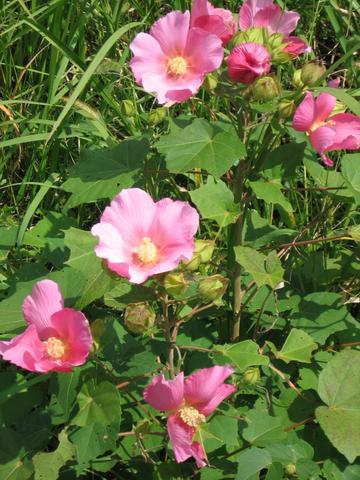
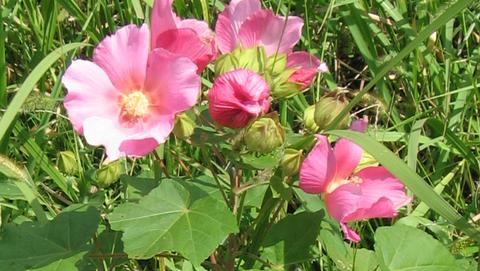
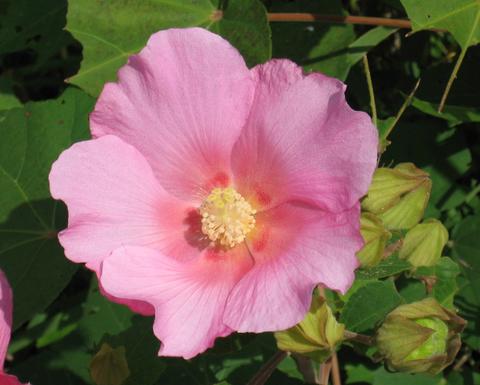
fuyō, fuyou, rose mallow, fuyoh
white cotton rose, shiro fuyoo 白芙蓉しろふよう
red cotton rose, beni fuyoo 紅芙蓉 べにふよう

flower of the cotton rose, hana fuyoo 花芙蓉


This lovely flower has been introduced to Japan before the Muromachi period. The pretty face of a woman is compared to this flower (fuyoo no kao 芙蓉の顔).


A "peak like the cotton rose" (fuyoo hoo 芙蓉峰) is a poetic way of referring to Mt. Fuji.

Click HERE to look at some Fuji Photos !


There are also doubly filled flowers (yae fuyoo 八重芙蓉).

. Look at them on my haiga here .

© Photos by Gabi Greve, Autumn 2006

:::::::::::::::::::::::::::::::::::::::::::::::::::::::::::::::::::::::::::::::::::::::::::::::::::::

© The Japan Times, Sept. 1, 2005

Fuyo (Rose-mallow or Cotton rose)

By LINDA INOKI

For centuries people have grown these shrubs (Hibiscus mutabilis) for their large, attractive flowers. They bloom from late summer until the first days of winter are near. Unusually, the flowers change color -- starting pure white and then turning to clear pink before finally turning a deep purplish-pink after about three days.

In China and Korea, the blooms are valued as herbs, and they are used in infusions or added to various foods. Hibiscus plants are members of the large Malvaceae, or mallow family of plants. Typical of the family, the flowers' many stamens are fused together in a central tube. The leaves are large and woolly as are the sepals that enclose the flower buds. This rough surface helps to protect the plant from predators and also preserves moisture, so that the shrubs can survive periods of drought.

In warm climates, the shrubs can grow to a height of 4 meters. Although this hibiscus is originally from southern China, it has become popular in the southern states of America.

There, the fluffy seed heads remind people of another famous member of the mallow family, Gossypium spp., otherwise known as the cotton plant. And although it is not a rose, and neither from Dixie, Americans have affectionately named this Oriental shrub the Cotton -- or Confederate -- Rose.

http://search.japantimes.co.jp/cgi-bin/fe20050901li.html


xxxxxxxxxxxxxxxxxxxxxxxxxxxxx

The Rose Mallow Haiku Class
Japan


*****************************
Worldwide use

India

Arali (Nerium oleander)

This plant seems similar to the cotton rose. It is often used for prayer ceremonies (pooja).

Celebrating Andal


*****************************
Things found on the way


*****************************
HAIKU


Round the deserted mansion
Hens take their ease,
Rose-mallows are blooming.

Masaoka Shiki (1866-1902)

xxxxxxxxxxxxxxxxxxxxxxxxxxxxx

blushing cotton rose —
cooling her cheeks
in the breeze


Look at the Haiga by Yasuhiko Shirota


*****************************
Related words

CLICK for more photos

***** fuyoo no mi 芙蓉の実 (ふようのみ)
seeds of the cotton rose


kigo for mid-autumn

The seed pods are very attractive and used for ikebana and dry flower arrangements.

:::::::::::::::::::::::::::::::::::::::::::::::::::::::::::::::::::::::::::::::::::::::::::::::::::::

***** . hibiscus (bussooge 仏桑花) .
Hibiscus, or rosemallow. family Malvaceae
fusooka 扶桑花(ふそうか)
kookin 紅槿(こうきん)

"rose of sharon from Okinawa", ryuukyuu mokuge
琉球木槿(りゅうきゅうむくげ)
also called : Rose of China, rosa sinensis


. PLANTS IN SUMMER - SAIJIKI


[ . BACK to WORLDKIGO . TOP . ]
:::::::::::::::::::::::::::::::::::::::::::::::::::::::::::::::::::::::::::::::::::::::::::::::::::::

Cosmos Flower

[ . BACK to TOP . ]
:::::::::::::::::::::::::::::::::::::::::::::::::::::::::::::::::::::::::::::::::::::::::::::::::::::

Cosmos (kosumosu, Japan)

***** Location: Japan, other regions
***** Season: Mid-Autumn
***** Category: Plant


*****************************
Explanation

Cosmos, kosumosu コスモス
autumn cherry, akizakura 秋桜


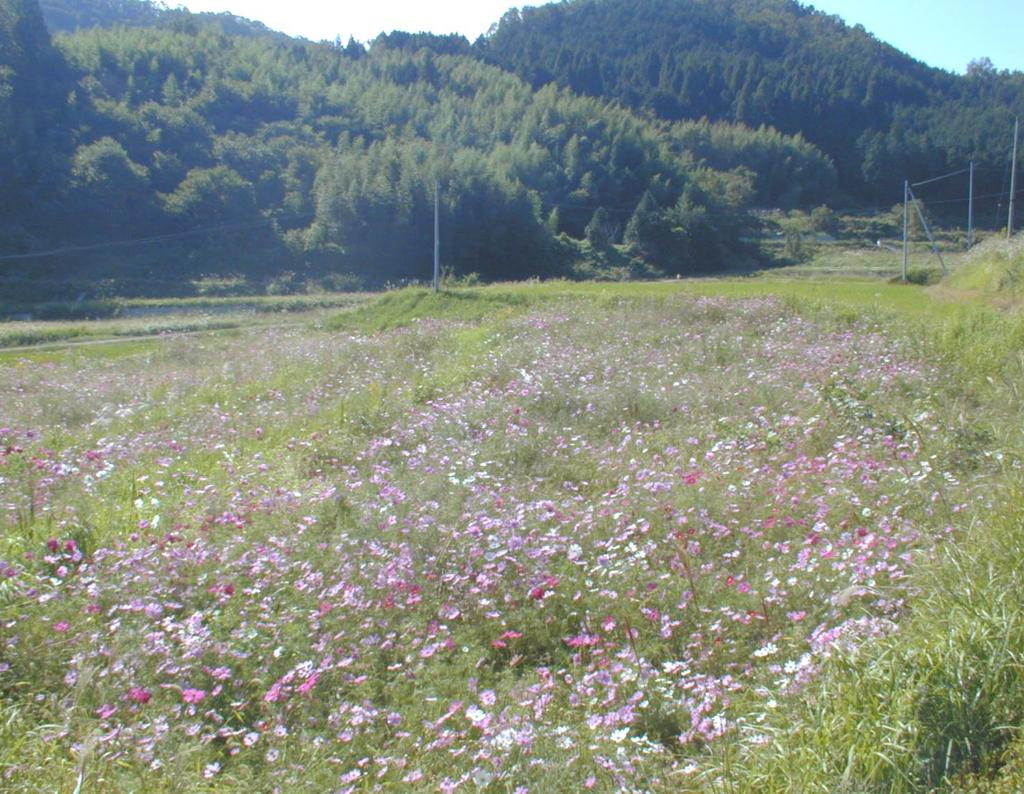
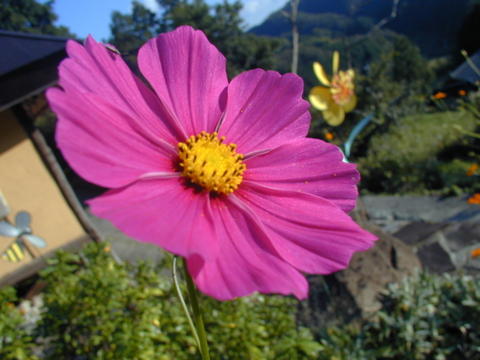
This flower is native to Mexico, but has become very popular now in Japan. It was introduced here in 1876 by an Italian gardener

In our area, unused fields and roadsides are planted with all sorts of Cosmos and we can enjoy them whilst driving through the countryside. There are also many Cosmos Parks.


© Photo Gabi Greve

xxxxxxxxxxxxxxxxxxxxxxxxxxxxx

More beautiful photos from Japan

秋桜 写真集1(写真8枚) 秋桜 写真集2(写真9枚)

ウィンターコスモス Winter Cosmos

黄花コスモス Yellow Cosmos, Kibana Kosumosu

金鶏菊(きんけいぎく) Tickseed (kingeigiku)


xxxxxxxxxxxxxxxxxxxxxxxxxxxxx

Botanical Name: Cosmos bipinnatus
Other Names: Mexican Aster, Chocolate Cosmo

Description: A single flower atop a delicate, sometimes hairy stem.
Colors: white, red, pink, brown, orange, yellow, purple
Season: Summer to Fall
Meaning: Comes from the Latin word kosmos meaning beautiful.

Flower of the Month: October
Bloom Size: 2 inches in diameter
Color Pattern: solid, striped, bi-color

Facts: Hummingbirds are very attracted to this flower.
Very fragrant. Chocolate cosmos even smell like chocolate. Are suitable for drying.

http://www.growerflowers.com/SEflowerinformation.asp

xxxxxxxxxxxxxxxxxxxxxxxxxxxxx


*****************************
Worldwide use


*****************************
Things found on the way


chokoreeto kosumosu チョコレートコスモス
brown cosmos flowers with the smell of chocolate


*****************************
HAIKU


framed for you
a carpet of cosmos
on the wall

My Cosmos Flowers

... ... ...


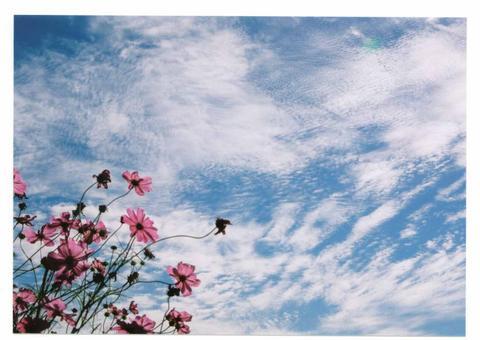
forever changing
the clouds
and I

Clouds in my Valley , 2004

© Gabi Greve

:::::::::::::::::::::::::::::::::::::::::::::::::::::::::::::::::::::::::::::::::::::::::::::::::::::

catching the light --
a spider threads
the cosmos

Earl Keener,
5th Shiki Internet Haiku Contest, 2001


no hint of wind
but still a sense of swaying...
field of cosmos

Larry Bole, KIGO HOTLINE, October 2007


*****************************
Related words

*****


:::::::::::::::::::::::::::::::::::::::::::::::::::::::::::::::::::::::::::::::::::::::::::::::::::::

Back to the Worldkigo Index
http://worldkigodatabase.blogspot.com/

:::::::::::::::::::::::::::::::::::::::::::::::::::::::::::::::::::::::::::::::::::::::::::::::::::::

Coolness (suzushi)

[ . BACK to WORLDKIGO  TOP . ]
::::::::::::::::::::::::::::::::::::::::::::::::::::::::::::::::::::::::::::::::::::::::::::::::::::: 

Coolness (suzushi)

***** Location: Japan, other areas
***** Season: All Summer
***** Category: Season


*****************************
Explanation


In Summer 2006, NHK broadcasted a program on the subject of
"Finding coolness (ryoo o mitsukeru 涼を見つける)"
in the tea ceremony during summer. The head of the Urasenke Tea Ceremony, Sen Soshitsu (Sen Sooshitsu)  裏千家の家元、千宗室,    talked about ways to stage the coolness, for example using a large fresh green leaf as cover of the water container (habuta 葉蓋) or wringing the little linen cleansing cloth in a way it produces the fresh sound of clear water (arai jakin 洗い茶巾). The intention is to create an aesthetically cool feeling, not to physically cool anything.

Using fresh water from one of the many famous wells in Kyoto (meisuidate 名水点) was also enjoyed in summer. After a sip of clear cool water, thick tea (koicha 濃茶) was served to the guests. The water from the well was carried to the tea house in a special square cedar box (tsurube mizusashi つるべ水差し), purified by a rope with white Shinto paper strips (shimenawa 注連縄).

During the old times without airconditioning, people had to live with the seasons as they where and try to enjoy them as best as they could.

Choosing a tea cake with a name to provoke coolness is also important. Most of them have a transparent look and are served on a light dish, often made from glas to also evoke a feeling of LIGHT when you pick it up.
For example, "water peony", mizubotan 水牡丹, made from red bean paste and kuzu starch.
. . . CLICK here for Photos !

There are many kigo evoking the coolness during the hot summer of Japan. Let us examine some of them. In Autumn, when it gets really cool, there are other kigo with the word "coolness" to express this feeling, see below.

Gabi Greve, Summer 2006

:::::::::::::::::::::::::::::::::::::::::::::::::::::::::::::::::::::::::::::::::::::::::::::::::::::


coolness, suzushisa 涼しさ
..... ryooki 涼気、すずしい、涼しい
"taste of coolness" ryoomi 涼味

forgetting the summer heat, natsu no hoka 夏のほか
..... natsu no yoso 夏のよそ

coolness in the morning, morning cool, asasuzu 朝涼
cool evening, yoisuzushi 宵すずし
cool at day's end, banryoo, banryō 晩涼
evening cool, yuusuzu, yūsuzu 夕涼
night cool, cool of the night, yaryoo 夜涼, ryooya 涼夜

a bit of coolness, biryoo 微涼

refreshing breeze, cool breeze, suzukaze 涼風
..... ryoofuu ryōfū 涼風

cool rain, ryoou ryoo u 涼雨
cool water, mizu suzushi 水涼し
cool dew, tsuyu suzushi 露涼い
cool moon, tsuki suzushi 月涼い

coolness in the garden, niwa suzushi 庭涼い
cool light of a stone lantern
..... hi suzushi 燈涼い
cool shadow, kage suzushi 影涼い
cool sound of a bell, kane suzushi 鐘涼い


natsu no tsuki 夏の月 moon in summer, summer moon
It refers to a cool evening (tsuki suzushi 月涼し).
It has been the subject of many poems since old times, when people enjoyed the full moon on a cool summer night.


:::::::::::::::::::::::::::::::::::::::::::::::::::::::::::::::::::::::::::::::::::::::::::::::::::::


humanity kigo for late summer

CLICK for more photos

hanagoori 花氷 (はなごおり) "ice flowers"
kooribashira 氷柱(こおりばしら) ice pillar

Flowers of the season are put in a cube of ice or an ice pillar and then decorated on the table to stage the feeling of "coolness" at the tea ceremony or expensive restaurants.

.................................................................................


suzumi 納涼 (すずみ) to enjoy a cool breeze
..... 、涼む(すずむ)
Mostly in the evening of a hot summer day.

suzumidai 涼み台(すずみだい)veranda to enjoy a cool breeze
They are sometimes erected above or near a river and you can eat and drink there.

kadosuzumi 門涼み(かどすずみ)enjoy a cool breeze at the gate
hashi suzumi 橋涼み(はしすずみ)enjoy a cool breeze on the bridge
ensuzumi 縁涼み(えんすずみ)enjoy a cool breeze at the home veranda (engawa)
dote suzumi 土手涼み(どてすずみ)enjoy a cool breeze at the riverbank
iso suzumi 磯涼み(いそすずみ)enjoy a cool breeze on the beach

suzumibune 納涼舟(すずみぶね)boat to enjoy a cool evening breeze . . . CLICK here for Photos !

yuusuzumi 夕涼み(ゆうすずみ)enjoy a cool evening breeze
..... yoi suzumi 宵涼み(よいすずみ)
yosuzumi 夜涼み(よすずみ)enjoy a cool night breeze

sommerliche Abendkühle


CLICK for more photos
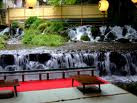
kawayuka 川床(かわゆか)riverbed veranda
also called kawadoko, dining decks on the river Kamogawa in Shijoo, Kyoto.
kawara no suzumi 河原の納涼 (かわらのすずみ) coolnes on the riverbed
Shijoogawara no suzumi 四条河原の納涼(しじょうがわらのすずみ)coolnes on the riverbed in Shijoo, Kyoto
.....Shijoo suzumi 四条涼み(しじょうすずみ)
yuka 床(ゆか)riverbed veranda
yuka suzumi 床涼み(ゆかすずみ)
suzumiyuka 納涼床(すずみゆか)


. WASHOKU
kawadoko ryoori 川床料理
food served on a riverbed veranda
 
In Kyoto, near shrine Kibune Jinja (Kifune Junja) 貴船神社 served in the forest restaurants along the clean river.

. Kifune Shrine Festivals and Haiku .


.SAIJIKI ... HUMANITY
Kigo for Summer


:::::::::::::::::::::::::::::::::::::::::::::::::::::::::::::::::::::::::::::::::::::::::::::::::::::


Wind Chimes (fuurin) 風鈴.
Another device to make us feel cool.
Their sound is making us feel a cool breeze.


*****************************
Worldwide use


*****************************
Things found on the way


Greetings from SEN Soshitsu XVI


The 20th century will go down in history as having been a century of war, as well as a century of momentous scientific developments. I believe that the 21st century should be made into a century distinguished by mankind's care for the global environment, as well as by the importance people place on culture.

The Urasenke Homepage contains a wealth of information for those who seek knowledge about the various aspects of chado. I sincerely hope that each visitor will find something of value in this internet site, and that the ethos of chado, the value it places on pure-hearted interchange between fellow human beings, is conveyed.
© Urasenke Homepage


Interview with Sen Soshitsu (Sen Sooshitsu)  

"Chanoyu: an Anthropological Approach to Tea,"
Jennifer Anderson
 

*****************************
HAIKU


miya suzushi baba wa kami o katari-ori

coolness in the shrine -
an old woman
talks about God

Kuehle im Schrein -
ein altes Weib
redet von Gott

Gabi Greve

:::::::::::::::::::::::::::::::::::::::::::::::::::::::::::::::::::::::::::::::::::::::::::::::::::::


Kobayashi Issa has more than 50 haiku about the coolness.

涼しさは直に神代の木立哉
suzushisa wa sugu ni kamiyo no kodachi kana

coolness--
straight from the holy grove
it comes


立涼寝涼さても涼しさや
tachi suzumi ne suzumi sate mo suzushisa ya

cooling off standing
cooling lying down...
well, it's cool!

Tr. David Lanoue  


:::::::::::::::::::::::::::::::::::::::::::::::::::::::::::::::::::::::::::::::::::::::::::::::::::::::::::::::::::::::::


- - - - - Yosa Buson - - - - -

涼しさや鐘をはなるゝかねの聲
. suzushisa ya kane o hanaruru kane no koe .
(1777)
the sound of the bell


涼すずしさやかしこき人の歩行わたり
suzushisa ya kashikoki hito no kachi watari

How cool!
A nobleman
Wades a stream.


"Kashikoki hito" is a man of high rank, or a nobleman. "Kachi watari" is to wade a stream.
Tr. Shoji Kumano


涼しさや都を竪に流れ川
suzushisa ya miyako o tatsu ni nagaregawa
(1768)

Coolness--
Through the capital from the north
A river flowing.

Tr. Nelson/Saito


我影を浅瀬に踏てすずみかな
waga kage o asase ni fumite suzumi kana
(1783)

Stepping on my shadow
In the shallows
The refreshing cool I enjoy.

Tr. Nelson/Saito


My own shadow
trodden on in the shallows--
cooling off.

Tr. Sawa/ Shiffert


. Yosa Buson 与謝蕪村 in Edo .


:::::::::::::::::::::::::::::::::::::::::::::::::::::::::::::::::::::::::::::::::::::::::::::::::::::::::::::::::::::::::


tsuki suzushi tesso suke-te sanga ari

Brisk moon—
through the window’s iron bars
mountains and rivers.


Itaru Ina
Tr.by Hisako Ifshin and Leza Lowitz   

*****************************
Related words

***** Taking the cool night air,
yuusuzumi 夕涼み

kigo for summer
CLICK for more photos

This shows the strong feeling of changing of seasons, everyone longing for autumn to come soon and trying to find a bit of cool in the evening (in the days before air conditioning, of course!)
Kindergardens and other clubs often have a summer festival in the evening called yuuzuzumi.


. uri tsukuru kimi ga are na to yuusuzumi .

You, who raised melons--
if only you were here too,
taking the night air


--Basho [1687]

Tr. by Carter
"Traditional Japanese Poetry:An Anthology"

In Carter's book, in addition to the haiku "You, who raised melons," Carter gives another haiku by Basho on the same topic, with a haibun headnote, presumably by Basho:

"Taking the Night Air at Fourth Avenue, Riverside" *

*The east end of Fourth Avenue, on the banks of the Kamo River [Kyoto]

"They call it 'taking the night air at Fourth Avenue, Riverside': people lining up their stands in the riverbed from moonrise early in the Sixth Month, on until the dawn moon of mid-month--drinking sake the night long, eating, and partying. The women bind themselves with the showiest sashes; the men deck themselves out in long jackets.
And there in the throng are priests and old people too--and even apprentices to coopers and smiths, all looking smug and at ease, singing and reveling. Now, that's life in the capital! "

川風や薄柿着たる夕涼み
kawakaze ya usugaki kitaru yuusuzumi

Ah, the river wind--
in robes of persimmon color,
taking the night air.


- - - - -


River breezes -
Dressed in light persimmon
Pleasant evening cool.

Tr. Saito / Nelson

Written in 元禄3年6月, Basho age 47.

. Matsuo Basho 松尾芭蕉 - Archives of the WKD .


source : itoyo/basho


. . . CLICK here for Photos of usugaki kimono colors !

. Matsuo Basho in Kyoto .
Cooling off by the river at Shijo - Jeff Robbins -

:::::::::::::::::::::::::::::::::::::::::::::::::::::::::::::::::::::::::::::::::::::::::::::::::::::


. Coolness in autumn
aki suzushi 秋涼い

first coolness, shinryoo 新涼
..... hatsu ryoo 初涼 "first cool"
..... arata ni suzushi 新たに涼い cool again
..... shuuryoo 秋涼(しゅうりょう)coolness in autumn
sooryoo 爽涼(そうりょう) pleasant coolness
kigo for early autumn

***** WKD : Tea Ceremony Saijiki 茶道の歳時記


:::::::::::::::::::::::::::::::::::::::::::::::::::::::::::::::::::::::::::::::::::::::::::::::::::::


***** Cool month, ryoogetsu 涼月(りょうげつ)
kigo for early autumn
The seventh month of the asian lunar calendar. (Now August).


:::::::::::::::::::::::::::::::::::::::::::::::::::::::::::::::::::::::::::::::::::::::::::::::::::::

Wagashi ... Sweets SAIJIKI


[ . BACK to WORLDKIGO . TOP . ]
::::::::::::::::::::::::::::::::::::::::::::::::::::::::::::::::::::::::::::::::::::::::::::::::::::: 

3/15/2005

Cold wave (kanpa)

[ . BACK to worldkigo TOP . ]
:::::::::::::::::::::::::::::::::::::::::::::::::::::::::::::::::::::::::::::::::::::::::::::::::::::

Cold wave (kanpa, kampa)

***** Location: Japan, worldwide
***** Season: All Winter and see below
***** Category:Heavens


*****************************
Explanation

cold wave, cold spell, kanpa, kampa 寒波
cold wave coming, kanpa kuru 寒波来る
first (cold) of the winter, fuyu ichiban 冬一番
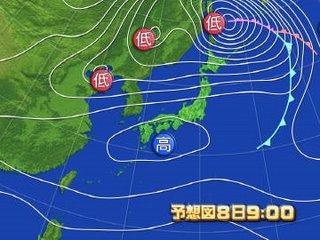


http://www.tbs.co.jp/weather/pressure-j.html

The cold waves coming down from Siberia are a common feature in the Japanese winter. In 2006, warm weather on the side of the Sea of Ohotsk (Ohotsuku オホツク)was about plus 18 degrees warm, and on the side of the Japanese Sea in went down to minus 30 degrees centigrade in the higher air masses!

This sudden cooling caused widespread stroms all over Japan. In Hokkaido, there was a severe tornado, killing many people.

Read more about it here in my local news from
/November 7, 2006 in Japan

The ususally do not last very long, but bring snow and storm, especially to the Sea of Japan side of the islands.

Gabi Greve

:::::::::::::::::::::::::::::::::::::::::::::::::::::::::::::::::::::::::::::::::::::::::::::::::::::

In other languages, there are expressions with COLD which do not relate to the winter feeling of coldness, the Japanese kanji for COLD : SAMUI, KAN 寒.
For kigo with the use of COLD ( KAN) in other seasons, see below.

Sometimes it should be clear from the context, like COLD COFFEE, sometimes you better check the World Kigo Database again.


Cold can be your physical feeling when you are out there, in various degrees of discomfort for your body. Or it can be the feeling of how it must be outside, by just looking out of the window.

cold morning, cold evening
(samuki asa, asazamu / samuki yoru, yosamu) on the other hand are expressions used for this feeling in autumn, when we feel the change of the seasons coming.


Morning, daytime, evening, night and KIGO


:::::::::::::::::::::::::::::::::::::::::::::::::::::::::::::::::::::::::::::::::::::::::::::::::::::


More kigo which relate to winter weather cold
(kan 寒) include
:


cold season starts, kan no iri, 寒の入 (かんのいり)
..... kan iri 寒入り(かんいり)

"little cold", minor cold, small chill, shokan 小寒 (しょうかん)
5 or 6 Jan
"big cold", major cold, big chill, daikan 大寒 (だいかん)
20 or 21 Jan
two of the 24 seasons of the lunar calendar .


in the middle of the cold season,
kan no uchi 寒の内 (かんのうち)

..... cold, kan 寒(かん), kanchuu 寒中(かんちゅう)
..... kan shiroo 寒四郎(かんしろう), kan ku 寒九(かんく)


extreme cold, genkan 厳寒 (げんかん)
..... gokukan 極寒(ごくかん)
..... kokkan 酷寒(こっかん)
cold hard to bear, kan kibishi 寒きびし(かんきびし)


extreme winter, atrocious winter, gentoo 厳冬(げんとう)

Winter Dog Days, kan doyoo 寒土用 (かんどよう)

........................................

feeling cold, samushi 寒し (さむし)
..... samusa, 寒さ

cold air, kanki 寒気(かんき)


strong coldness, kan-i, kani 寒威(かんい)
freezing cold, kanrei 寒冷(かんれい)

suffering in the cold, kanku 寒苦(かんく)

cold winter evening, kanbo 寒暮(かんぼ)
cold winter night, kanya 寒夜(かんや)
cold winter morning, kangyoo 寒暁(かんぎょう)
..... fuyu akatsuki 冬暁(ふゆあかつき)

moon in the cold, kangetsu 寒月(かんげつ)

river in the cold, kankoo 寒江(かんこう)、寒巖(かんがん)

rock in the cold, kangan 寒巖(かんがん)

sound of the cold watch, kantaku 寒柝(かんたく)
a sort of village patrol using sticks to make a sound, to make sure there are no fires or other dangers during a cold winter night.
..... kansui 寒翠(かんすい)
..... kanteki 寒笛(かんてき)flute, whistle in the cold


:::::::::::::::::::::::::::::::::::::::::::::::::::::::::::::::::::::::::::::::::::::::::::::::::::::


cold feeling (of people, things etc.),
tsumetashi 冷し (つめたし)

..... sokobie 底冷(そこびえ)penetrating cold
("cold on the floor") chilled to the bone
something gets cold, hiyu 冷ゆ (ひゆ)


.................................................................................


kigo for late winter

shibareru しばれる severe cold
..... shibare しばれ、凍れ(しばれ)
shibaruru しばるる、
karashibare からしばれ

This is a word in the dialect of Northern Japan and Hokkaido, when the winter days get really cold and freezing, even during the daytime.


*****************************
Worldwide use


*****************************
Things found on the way


*****************************
HAIKU


first cold wave -
your unexpected freeze
makes me shiver

Gabi Greve, November 7, 2006

xxxxxxxxxxxxxxxxxxxxxxxxxxxxx

shelters open
blankets spread
under downcast eyes

jurassic roaches
at switch of light
subliminal flash


Doris Kasson: Cold Wave
Shiki Archives, 4 Feb 1996


xxxxxxxxxxxxxxxxxxxxxxxxxxxxx

first cold wave-
the jacket you won't
wear again

first cold wave-
the smell of mothballs
everywhere


Robert Mestre - Dhammasaavaka
Simply Haiku, Nov 13, 2003


*****************************
Related words

***** Winter (fuyu)

***** ..... Cold Dew (kanro) Japan

:::::::::::::::::::::::::::::::::::::::::::::::::::::::::::::::::::::::::::::::::::::::::::::::::::::


COLD kigo for early spring

cold in spring, haru samu 春寒 はるさむ
..... haru samushi 春寒し(はるさむし)
..... samuki haru 寒き春(さむきはる)
..... shunkan 春寒(しゅんかん)

cold wind in spring ryooshoo 料峭(りょうしょう)

still feeling cold, remaining cold, yokan 余寒 (よかん)
lingering cold, nokoru samusa 残る寒さ(のこるさむさ)

end of the cold season, "cold breaks",
kan ake 寒明 (かんあけ)

..... kan akeru 寒明ける(かんあける)
a break in the cold, kan no ake 寒の明 (かんのあけ)
cold season is ending, kan owaru 寒終る(かんおわる)
cold season has passed, kan sugiru 寒過ぎる(かんすぎる)

cold season is coming back,
kan kaeru 寒返る(かんかえる)

..... kan modori 寒もどり(かんもどり)


:::::::::::::::::::::::::::::::::::::::::::::::::::::::::::::::::::::::::::::::::::::::::::::::::::::

COLD kigo for late autumn

Cold in autumn, aki samu 秋寒 (あきさむ)
..... aki samushi 秋寒し(あきさむし)、
..... aki kosamu 秋小寒(あきこさむ)

feeling a little cold in autumn, sozoro samu
そぞろ寒 (そぞろさむ)
..... sozoro ni samushi そぞろに寒し(そぞろにさむし)
..... suzuru samu すずろ寒(すずろさむ)
..... uso samu うそ寒 (うそさむ)
..... usu samu 薄寒(うすさむ), usura samu うすら寒(うすらさむ)
..... karigane samuki かりがね寒き (かりがねさむき)

a bit cold in autumn, yaya samu 漸寒 (ややさむ)
..... yaya samushi やや寒し(ややさむし)
at least it gets cold in autumn, yooyaku samushi
ようやく寒し(ようやくさむし)
..... yooyoo samushi ようよう寒し(ようようさむし)


"the skin feels cold", hada samu 肌寒 (はださむ)

mi ni shimu 身に入む (みにしむ) body feels cold
This is the piercing cold of autumn. It refers to an emotional reaction, also used for other situations.


cold morning, asa samu 朝寒 (あささむ)
asa samushi 朝寒し(あささむし), asa samumi 朝寒み(あささむみ)

cold night, yo samu 夜寒 (よさむ )
yo samusa 夜寒さ(よさむさ), yo o samumi 夜を寒み(よをさむみ)


.................................................................................


kigo for mid-autumn

hiyayaka 冷やか (ひややか) feeling cold
..... hiyuru 冷ゆる(ひゆる)
hiyahiya ひやひや、hiiyari ひいやり、hiebie ひえびえ
tsumetashi 冷たし(つめたし)
shuurei 秋冷(しゅうれい) autumn coldness
shitabie 下冷(したびえ)ground feels cold
asabie 朝冷(あさびえ)cold morning
amabie 雨冷(あまびえ)cold rain


.................................................................................


kigo for late autumn

susamaji 冷まじ (すさまじ) feeling rather cold
feeling desolate


. . . . AUTUMN
the complete SAIJIKI


:::::::::::::::::::::::::::::::::::::::::::::::::::::::::::::::::::::::::::::::::::::::::::::::::::::


朝日さす大地の息の寒さかな
asahi sasu daichi no iki no samusa kana

morning sun -
the earth breathing
coldness


Gabi Greve, 2005


:::::::::::::::::::::::::::::::::::::::::::::::::::::::::::::::::::::::::::::::::::::::::::::::::::::


. the 24 solar sections 二十四節気 .   

Risshun (立春): February 4— Beginning of spring
Usui (雨水): February 19— Rain water
Keichitsu (啓蟄): March 5— awakening of hibernated animals
Shunbun (春分): March 20— Vernal equinox, middle of spring
Seimei (清明): April 5— Clear and bright
Kokuu (穀雨): April 20— Grain rain

Rikka (立夏): May 5—Beginning of summer
Shōman (小満): May 21— Grain full
Bōshu, booshu (芒種): June 6— Grain in ear
Geshi (夏至): June 21—Summer solstice, middle of summer
Shōsho, shoosho (小暑): July 7— Small heat
Taisho (大暑): July 23— Large heat

Risshū (立秋): August 7—Beginning of autumn
Shosho (処暑): August 23—Limit of heat
Hakuro (白露): September 7—White dew
Shūbun, shuubun (秋分): September 23—Autumnal equinox, middle of autumn
Kanro (寒露): October 8— Cold dew
Sōkō, sookoo (霜降): October 23— Frost descent

Rittō, rittoo (立冬): November 7— Beginning of winter
Shōsetsu (小雪): November 22— Small snow
Taisetsu (大雪): December 7— Large snow
Tōji, tooji (冬至): December 22—Winter solstice, middle of winter
Shokan (小寒): January 5 Small Cold - also
. . . . 寒の入り (Kan no iri) entrance of the cold
Daikan (大寒): January 20— Major cold

::::::::::::::::::::::::::::::::::::::::::::::::::::::::::::::::::::::::::::::::::::::::::::::::::::: 

[ . BACK to WORLDKIGO  TOP . ]
[ . BACK to DARUMA MUSEUM TOP . ]

:::::::::::::::::::::::::::::::::::::::::::::::::::::::::::::::::::::::::::::::::::::::::::::::::::::