. Inari 稲荷と伝説 Legends about the Fox Deity .
:::::::::::::::::::::::::::::::::::::::::::::::::::::::::::::::::::::::::::::::::::::::::::::::::::::::::::::::::::::::::::

Mr. Fox is on the watch!
:::::::::::::::::::::::::::::::::::::::::::::::::::::::::::::::::::::::::::::::::::::::::::::::::::::::::::::::::::::::::::
Fox Shrine Festival (Inari Matsuri)
***** Location: Japan
***** Season: Late Spring
***** Category: Observance
*****************************
Explanation
For other kigo related to INARI see below.
Inari 稲荷 the "Fox Deity", "Fox God". Inari's foxes, or kitsune, are pure white and act as their messengers.
quote
Inari Ōkami (稲荷大神, also Oinari)
is the Japanese kami of foxes, of fertility, rice, tea and Sake, of agriculture and industry, of general prosperity and worldly success, and one of the principal kami of Shinto. In earlier Japan, Inari was also the patron of swordsmiths and merchants. Represented as male, female, &/or androgynous, Inari is sometimes seen as a collective of three or five individual kami. Inari appears to have been worshipped since the founding of a shrine at Inari Mountain in 711 AD, although some scholars believe that worship started in the late 5th century.
- More in the WIKIPEDIA !
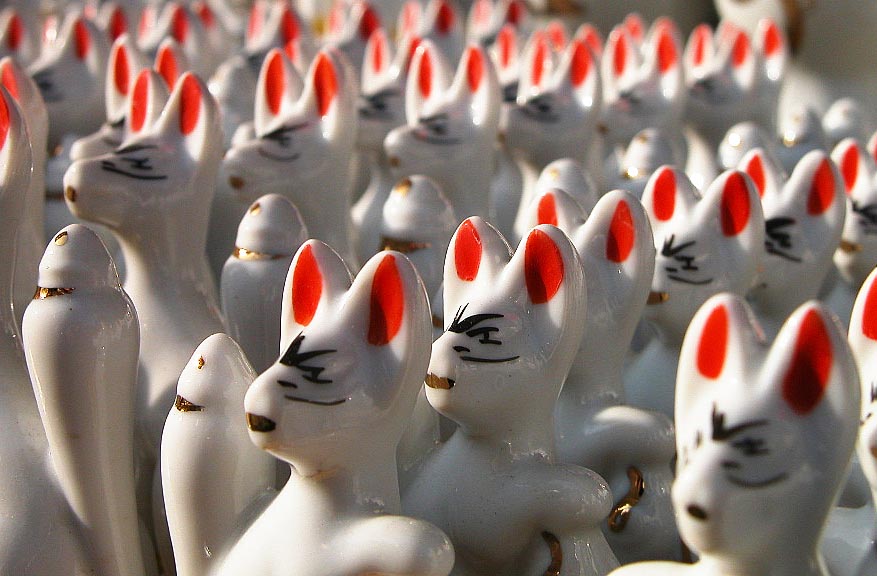
Fox God Festival, Inari Matsuri 稲荷祭 いなりまつり
visiting Fushimi Fox God Shrine Festival
... Inari Matsuri oide 稲荷祭御出、稲荷祭のお出
... Inari Shinkoosai 稲荷神幸祭, 還幸祭
Fox God Ceremony Group, Inari koo 稲荷講
visiting the Fox God Shrine for the first time,
Inari hatsumoode 稲初荷詣
This tradidional Japanese festival occurs on the first day of the horse according to the Asian lunar calendar.
The horse is the messenger of the Inari Deity.
. Inari fox on a horse .
There are many Fox Shrines in Japan and this is the first large festival of the New Year.
The great fox god shrine festival at Fushimi, Fushimi Inari in Kyoto is the most famous.
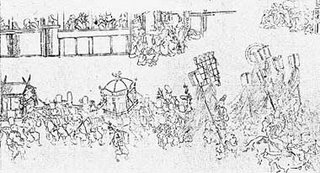
年中行事絵巻 稲荷祭(© 伏見稲荷大社蔵)
Click HERE to look at some photos !

Fushimi Inari Taisha Festivals 伏見稲荷大社
source : inari.jp

source : amamori.exblog.jp
Ukanomikami, Uka no Mikami 宇迦之御魂神 / 倉稲魂神
The deity for a good harvest, venerated at Inari shrines.
Miketsu Kami 御食津神 / 三狐神 "Three Foxes Deity"
Inari Kami 稲荷神 Deity to provide food
- quote
Ukanomitama
A kami of foodstuffs, thought to refer specifically to the spirit of rice. Kojiki describes the kami as the offspring of Susanoo, while Nihongi states that it was the offspring of the two kami Izanagi and Izanami. The Engishiki's comments on the Ōtono no hogai norito further identify the kami with Toyoukehime.
Ukanomitama is most commonly known as the kami Inari. From the medieval period, the kami was linked to popular combinatory kami such as Ugajin and Uka Benzaiten. Ukanomitama is enshrined at Kyoto's Fushimi Inari Taisha and other Inari shrines throughout Japan.
- source : Kadoya Atsushi, Kokugakuin 2005
:::::::::::::::::::::::::::::::::::::::::::::::::::::::::::::::::::::::::::::::::::::::::::::::::::::
quote
Fushimi Inari Taisha (伏見稲荷大社)
is the head shrine of Inari, located in Fushimi-ku, Kyoto, Japan. The shrine sits at the base of a mountain also named Inari, and includes trails up the mountain to many smaller shrines.
Since in early Japan Inari was seen as the patron of business, each of the Torii is donated by a Japanese business. First and foremost though, Inari is the god of rice.
Merchants and manufacturers worship Inari for wealth. Donated torii lining footpaths are part of the scenic view.
This popular shrine is said to have as many as 32,000 sub-shrines (bunsha (分社)) throughout Japan.
The shrine became the object of Imperial patronage during the early Heian period. In 965, Emperor Murakami ordered that Imperial messengers were sent to report important events to the guardian kami of Japan. These heihaku were initially presented to 16 shrines including the Inari Shrine.
The earliest structures were built in 711 on the Inariyama hill in southwestern Kyoto, but the shrine was re-located in 816 on the request of the monk Kūkai. The main shrine structure was built in 1499.
At the bottom of the hill are the main gate (楼門, rōmon, "tower gate") and the main shrine (御本殿, go-honden). Behind them, in the middle of the mountain, the inner shrine (奥宮, okumiya) is reachable by a path lined with thousands of torii.
Kodama-ike こだま池 (木霊池) is a pond where people come when a relative was lost. You clap your hands and listen carefully. The direction of the kodama (echo) tells you where to look for the lost person.
To the top of the mountain are tens of thousands of "honorable mounds" (御塚, o-tsuka) for private worship.
source : wikipedia
Yakuriki Sha 薬力社 Yakuriki Shrine
薬力大神
無病息災、薬効、薬害防止、安産、医学技術向上、健康長寿、家内安全、商売繁盛
(薬関係のお仕事、薬局、製薬会社等)
The deity in residence is a god for health and medicine, there are sub-shrines around the area of Yakuriki Shrine are also visited for a long life, advance in medical technology and treatment, success in medical operation and for other specific health related problems.
A deity for protecting the throat, 薬力大神 Yakuriki Ookami, is worshiped by people from performing arts such as singers and actors to perform daily on stage.
- reference -
. . . CLICK here for Photos !
:::::::::::::::::::::::::::::::::::::::::::::::::::::::::::::::::::::::::::::::::::::::::::::::::::::
- quote
On the way down are two "waterfalls,"
or rather places where water pours forth from an overhead trough so supplicants might stand beneath and test their faith while praying in the cold downpour, a religious austerity. The powerful Buddhist protector, Fudo Myo-o, is present in both spots.
- source : www.kyotoguide.com/ver2
. Fudō Myō-ō, Fudoo Myoo-Oo 不動明王 Fudo Myo-O
Acala Vidyârâja - Vidyaraja .
- Inari and Fudo 稲荷と不動明王 -
:::::::::::::::::::::::::::::::::::::::::::::::::::::::::::::::::::::::::::::::::::::::::::::::::::::

Another shrine which was founded by the immigrant clan Hata-uji (秦氏, Hata clan), Fushimi Inari Taisha (伏見稲荷大社).
In 711, Hata-no-Irogu (秦伊呂具), who is considered as the brother of Hata-no-imikitori (秦忌寸都理), established this shrine by enshrining the Inari deities at Mt. Inari (稲荷山) in Kyoto.
- Shared by Taisaku Nogi -
Joys of Japan, 2012
quote
The Hata clan (秦氏)
was an immigrant clan active in Japan since the Kofun period, according to the epic history Nihonshoki.
Hata is the Japanese reading of the Chinese (state and dynasty) name 秦 given to the Qin Dynasty (the real family name was Ying), and given to their descendants established in Japan. The Nihonshoki presents the Hata as a clan or house, and not as a tribe; also only the members of the head family had the right to use the name of Hata.
..... Members of this clan also served as financial advisors to the Yamato Court for several centuries. Originally landing and settling in Izumo and the San'yō region, the Hata eventually settled in the areas of what are now Japan's most major cities. They are said to have aided in the establishment of Heian-kyō (modern-day Kyoto), and of many Shinto shrines and Buddhist temples, including Fushimi Inari Taisha, Matsunoo Taisha, and Kōryū-ji.
© More in the WIKIPEDIA !
. The Hata Clan 秦氏 Hata Uji .
and the Korean and Christian connection
:::::::::::::::::::::::::::::::::::::::::::::::::::::::::::::::::::::::::::::::::::::::::::::::::::::
. Inari Myojin 稲荷明神 Honorable Inari Deity .
INARI refers to the Fox as the divine messenger and thus a deity himself.
KITSUNE refers to the fox as an animal. See below.
. Inari Daimyojin 稲荷大明神 .
and 小石川伝通院 Koishikawa Denzu-In, Dentsu-in, Tokyo
多久蔵主 (たくぞうす) Takuzosu. Also spelled 澤蔵主 / 澤蔵司 / 沢蔵
and the Inari fox priest Hakuzooshu 伯蔵主 Hakuzoshu / Hakuzosu
.................................................................................
Other New Year kigo for the
First Day of the Horse
in the second lunar month
. first day of the horse, hatsu uma, hatsu-uma 初午 .
horse festival, uma matsuri 午祭
first horse, ichi no uma 一の午
初午に狐の剃りし頭哉
. hatsu-uma ni kitsune no sorishi atama kana .
Matsuo Basho 松尾芭蕉
. hatsu-uma kyoogen 初午狂言(はつうまきょうげん)
Kyogen on the first day of the horse

source : blog.livedoor.jp/chino17jidai
taiko uri 太鼓売り vendor of drums
On the first day of the horse during the Inari festival, children walked around drumming, and since there were so many Inari shrines in Edo, the vendors made good business.
They sold all kinds of drums in various sizes and prices. They did not call out to announce their merchandise, but drummed on them, usually on the biggest one they carried, which was not for sale.
太鼓売り無言で歩きやかましさ
taiko uri mugon de aruki yakamashisa
the drum vendors
walk around not talking
but ever so noisy
. The Big Drum (taiko, oodaiko 大鼓、太鼓、大太鼓)and other drums .
. senryu, senryū 川柳 Senryu in Edo .
.................................................................................
Inari no bushasai 稲荷の奉射祭 (いなりのぶしゃさい)
first shooting at the Inari shrine
bushasai, busha sai 歩射祭(ぶしゃさい)
onyumihajimesai, on yumi hajime sai 御弓始祭(おんゆみはじめさい)
At Fushimi Inari on January 12.
With a special bow and arrow to ward off evil for the coming year.
Arrows are shot into the four directions to purify the place.
Finally the head priest shoots one big arrow.

source : sw21akira
hamayumi 破魔弓 bow to ward off evil
kamiya 神矢 "arrow of god"
. Hamaya, 破魔矢, arrow for the New Year .
Busha matsuri 歩射祭 or 奉射祭 - Introduction -
:::::::::::::::::::::::::::::::::::::::::::::::::::::::::::::::::::::::::::::::::::::::::::::::::::::

Inari 稲荷 <> The Fox Cult and Daruma
by Gabi Greve
Fushimi Fox God Shrine and Daruma
by Gabi Greve
ooo ooo ooo ooo ooo ooo ooo ooo ooo ooo ooo ooo
Inari is one of the most well known kami in popular folk Shinto. He (or she) is the god of rice and is related with general prosperity. In earlier Japan, Inari was also the patron of sword smiths and merchants. Primarily, however, Inari is associated with agriculture, protecting rice fields and giving the farmers an abundant harvest every year.
One of the main myths concerning Inari tells of this kami coming down a mountain every spring when it is planting season and ascending back up the mountain after the harvest for the winter. Both events are celebrated in popular folk festivals.
Read the details here and then come back :
INARI = Shinto Rice Kami
Mark Schumacher
Japanese Fox Belief 狐信仰 -
. Toyouke no Ookami 豊受大神
The Great Deity that gives Bountiful .
Deity of Rice and Food
. Myoobu Kitsune 命婦狐 Myobu fox court lady of the Heian period .
:::::::::::::::::::::::::::::::::::::::::::::::::::::::::::::::::::::::::::::::::::::::::::::::::::::
Toyokawa no Dakini Shinten 豊川のダキニ真天
She always appears riding on white fox.
. Dakiniten (Vajra Dakini) 荼枳尼天 .
:::::::::::::::::::::::::::::::::::::::::::::::::::::::::::::::::::::::::::::::::::::::::::::::::::::
The "voice" of the fox
霰こんこんこん触ル狐哉
arare kon kon kon fureru kitsune kana
going nuts in hailstones
crashing down...
a fox
Issa
Tr. David Lanoue
Onomatopoetic Words used in Haiku
Voice of an Animal and Haiku
Compiled by Larry Bole :
Translating Haiku Forum
In Japanese, a fox's bark is written, "Kitsu! Kitsu!"
This myth comes from a folk etymology of the word "kitsune," in which "kitsu" is onomatopoeia for a fox's bark and "ne" means "sound."
Therefore, a fox is something which makes the noise "kitsu." Whether this derivation of the word is true or not, it's been a long, long time since Japanese foxes said "kitsu." Modern Japanese write the fox bark as "kon kon."
http://academia.issendai.com/fox-misconceptions.shtml#bark
In English, the official words for foxes are "bark" and "yelp".
In Japanese it's simply "naku" なく 鳴く and the onomatopoeia is kon-kon こんこん
http://answers.yahoo.com/question/index?qid=20080604112441AAkjxob
Kitsune soba:
buckwheat noodles with fried tofu on top
きつねそば【狐蕎麦】

The fox is an indigenous, if not notorious creature in Japan. It is believed to have the power to bewitch or possess the spirit of anyone who looks into its eyes. The fox is also honored by business owners as a patron spirit animal. Stone images of foxes can be seen guarding almost every temple, great or small, in Japan. The golden bean curd omelet is called ABUR AGE (pronounced Ah-boo-rah-gay) and is often placed upon the altars of the temples as an offering to the gods who reside there.
Foxes are fond of aburage and are said to steal into the temples under the cover of darkness to whisk away the tasty fare left there for them. And thus, this bewitching bit of lore gives Kitsune
soba its name.
http://www.thingsasian.com/stories-photos/1488
My suggestion is to translate 'kon' as "yip:"
'kon kon kon' = "yip yip yip"
..............................................................................
According to Nozaki, the word kitsune was originally onomatopoeia. Kitsu represented a fox's yelp and came to be the general word for fox. -Ne signifies an affectionate mood, which Nozaki presents as further evidence of an established, non-imported tradition of benevolent foxes in Japanese folklore. Kitsu is now archaic; in modern Japanese, a fox's cry is transcribed as kon kon or gon gon.
© More in the WIKIPEDIA !
A famous childrens book in Japan
by Niimi Nankichi 新実南吉
His Memorial Museum in Handa town, Aichi
source : www.nankichi.gr.jp/sanpo

GON, the little fox
Gongitsune ごん狐, ごんぎつね
... More in the WIKIPEDIA !
My free translation of the above ISSA haiku
hailstones falling
kon kon kon
on Kon, the fox
Gabi Greve
*****************************
Worldwide use
*****************************
Things found on the way
. gankake torii 願掛け鳥居 miniature gate to make a wish .
Fushimi Inari Taisha Shrine 伏見稲荷大社
WASHOKU
Inarizushi, Inari Sushi いなりずし/ 稲荷寿司
. Sen Sotan Inari Jinja 宗旦稲荷神社 .
The tea master Sen Sotan and the Fox 宗旦狐 Sotangitsune, Sotan Kitsune
*****************************
HAIKU
spring rain--
showing a sake cup
calling foxes
harusame ya sakazuki misete kitsune yobu
春雨や盃見せて狐よぶ
by Issa, 1810
Tr. David Lanoue
http://cat.xula.edu/issa/
More Fox Haiku by Issa
*****************************
Related words
***** Oyama Fox God Festival
Inari Ooyama sai 稲荷大山祭
kigo for the New Year
shimehiki 注連曳き(しめひき)bringing sacred ropes
Inari shimehari 稲荷注連張(いなりしめはり) Inari sacred rope
shimehari shinji 注連張神事(しめはりしんじ)
kawarake hiroi 土器拾い(かわらけひろい)picking up ritual clay dishes
okawarake, o kawarake 御土器(おかわらけ)honorable clay dishes
On January 5
The sacred ropes along the stone wall are renewed.
At Fushimi Inari, Kyoto, on the Inari Yama 稲荷大山 mountain shrine.
In the valley below Gozendani 御膳谷 thre used to be two halls for the deities to feast : Miae dono 御饗殿 and O-Kama dono 御竈殿.
Food offerings were made on the sacred stone Mike ishi 御饌石 .
Now on the sacred stone 神石 70 small sacred clay dishes 斎土器 (imi doki) are placed, filled with ritual white sake (中汲酒 nakakumi sake) and prayers for a good harvest are offered.
Priests wear special ropes made from local vines (hikage no kazura 日陰のかずら) and a branch of sacred cedar.

CLICK for more photos !
The sacred dishes were auspicious amulets and people could take them home. The fight for getting one of the dishes was part of the festival, some people even got hurt in the wrangling.
The sacred dishes were a favorite of the local sake breweries, which took them as a sign for a good brewing season.
. Kawarake throwing at Mount Atago .
.................................................................................
***** Fox God Arrow Shooting Festival
Inari no Busha sai 稲荷の奉射祭
kigo for the New Year
At the Fushimi Fox God Shrine (Fushimi Inari) in Kyoto. To pray for good harvest and luck in the new year, arrows are shot in all directions to war off evel spririts and bad luck.
***** Inari Sushi (inarizushi いなり寿司)
kigo for summer
Food. Cold rice wrapped in a sheet of tofu.
***** . WKD : Horse (uma 馬) .
.................................................................................
kigo for late winter
. Ooji no kitsunebi 王子の狐火 (おうじのきつねび)
”fox fire" at Oji Inari Shrine .
.................................................................................
kigo for all winter
***** Fox (kitsune 狐)
Vulpes vulpes

akagitsune 赤狐(あかぎつね)red fox
kurogitsune 黒狐(くろぎつね)black fox
gingitsune 銀狐(ぎんぎつね)silver fox
shirogitsune 白狐(しろぎつね)white fox
juujigitsune, juuji gitsune 十字狐(じゅうじぎつね)
lit. "fox with the number ten", a pattern on its shoulder
. . . CLICK here for Photos !
kitakitsune 北狐(きたきつね)"northern fox"
Vulpes vulpes schrencki
hokkyoku gitsune 北極狐(ほっきょくぎつね)"polar fox" arctic fox
Alopex lagopus
Chishima gitsune 千島狐(ちしまぎつね)
fox from Chishima islands, Kuriles
kangitsune 寒狐(かんぎつね)fox in the cold
kitsunezuka 狐塚(きつねづか) fox den
Fuchsbau
kitsune wana 狐罠 (きつねわな) trap for fox hunting and more winter kigo
The Fox and the Badger (tanuki) are well known in Japanese legend as tricksters.
.................................................................................
Fox Haiku by Issa (Tr. David Lanoue)
Will-o'-the-wisp (kitsunebi 狐火 , onibi) Japan
:::::::::::::::::::::::::::::::::::::::::::::::::::::::::::::::::::::::::::::::::::::::::::::::::::::
. Yosa Buson 与謝蕪村 in Edo .
春の夜や 狐の誘ふ上童
. haru no yo ya kitsune no izanau ue warawa .
公達(きんだち)に狐化けたり宵の春
. kindachi ni kitsune baketari yoi no haru .
狐火や髑髏(どくろ)に雨のたまる夜に
. kitsunebi ya dokuro ni ame no tamaru yo ni .
kannagi ni kitsune koi suru yosamu kana
kitsunebi no moetsuku bakari kareobana
meshi nusumu kitsune oi utsu mugi no aki
suisen ni kitsune asobu ya yoizukiyo
草枯れて狐の飛脚通りけり
. kusa karete kitsune no hikyaku tori keri .
This is a hokku about a special famous fox from Tottori, called
Hikyakugitsune 飛脚狐 "the fast messenger "flying" fox"
He even has a Shrine in his honor.
- quote -
THE FOX BETWEEN TWO WORLDS
Withered grasses;
A fox messenger
hurries by.
That makes no sense in a Western context. To us — at least traditionally — a fox is a rather sly and clever animal. In traditional Japan, however, a fox (kitsune) is a creature that lives between two worlds — ours and the “spirit” world. In Japan, foxes were believed to be able to take on human form, and woe to the young man who happened to become infatuated with a fox spirit! He would just fade and waste away like a shoot of grass withering, and would eventually die.
Buson has reflected this notion in the withered grasses of the autumn fields in his hokku. He sees the fox hurrying past not as just an ordinary animal, but rather as a courier passing swiftly with a message to deliver, involved in his task and giving no attention to the human. Buson regards the foxes as living their own lives in their own eerie society, separate from that of humans, but occasionally coming in contact with them.
This verse has a feeling that we in the West would associate with Halloween. It is far from the best kind of hokku, but it did exist, and it does have its effect.
- source : Hokku David -
Withered grasses
where a fox messenger on flying legs
passed through.
Tr. Yuki Sawa & Edith Marcombe Shiffert
In withered grass
a fox carrying messages
passes by
Tr. Allan Persinger
:::::::::::::::::::::::::::::::::::::::::::::::::::::::::::::::::::::::::::::::::::::::::::::::::::::
. Basho Inari Jinja 芭蕉稲荷神社 .
Matsuo Basho Fox Shrine in Sumidagawa, Tokyo
. Fukushima Inari Jinja 福島稲荷神社
Fukushima Inari Shrine
. Handa Inari Shrine 半田稲荷神社 Tokyo .
. Inari 稲荷 the Fox Deity amulets . .
Tanuki, a badger posing as Daruma
. Inari 稲荷と伝説 Legends about the Fox Deity .
[ . BACK to WORLDKIGO . TOP . ]
[ . BACK to DARUMA MUSEUM TOP . ]
:::::::::::::::::::::::::::::::::::::::::::::::::::::::::::::::::::::::::::::::::::::::::::::::::::::



 Posts
Posts


38 comments:
::::::::::::::::::::::::::::::::::::::::::::::::::::::::::::::::::::::
behind bars -
he still holds
all the secrets
The Inari Fox of Katsuyama !
::::::::::::::::::::::::::::::::::::::::::::::::::::::::::::::::::::::
.
Inari Shrine -
even the Fox God
wears blossoms
Gabi Greve at Chiyo Inari Jinja, April 2007
千代稲荷神社、津山市
::::::::::::::::::::::::::::::::::::::::::::::::::::::::::::::::::::::
cherry blossom shade--
a fox spirit
has enchanted me!
hana no kage waga wa kitsune ni bakasareshi
花の陰我は狐に化されし
by Issa, 1810
Tr. David Lanoue
http://cat.xula.edu/issa/
plum blossom scent--
at the fox's hole
red beans and rice
ume ga ka ya kitsune no ana ni aka no meshi
.梅がかや狐の穴に赤の飯
by Issa
The food is an offering left for the fox-- a powerful spirit that, if not placated, could possess people.
Tr. David Lanoue
http://cat.xula.edu/issa/
Matsuo Basho at temple Saigan-Ji
わが衣に伏見の桃の雫せよ
我が衣に伏見の桃の雫せよ
waga kinu ni Fushimi no momo no shizuku seyo
on my robes
let there fall dewdrops from the peach blossoms
of Fushimi
A greeting hokku to his host Ninko.
.
Matsuo Basho wrote for his studens Zekitsu 是橘
初午に狐の剃りし頭哉
はつむまに 狐のそりし 頭哉
hatsu-uma ni kitsune no sorishi atama kana
hatsumuma ni
on the first day of the horse
a fox has shaved
your head, it seems . . .
Written in 元禄6年, Basho age 50.
MORE about Zekitsu
taisha, ooyashiro, Ōyashiro 大社 big shrines
.
http://japanshrinestemples.blogspot.jp/2013/05/taisha-big-shrines.html
Fushimi Inari Taisha matsuri
By Gary Cox
January:
Saitan-sai (歳旦祭): During the first three days of the New Year, more than 1,500,000 people visit the shrine to pray for their happiness and divine protection throughout the year.
Ōyama-sai (大山祭): Rituals are held by offering Sake (Japanese liquor) on the Mike-ishi (sacred stone) of the Gozen-dani located in the middle of the mountain. Seventy earthenware vessels used for the ceremony are distributed among the brewers who wish to get them for their own brewing ceremony.
Housha-sai (奉射祭成年祭): This is an archery ceremony to drive the evils away to bring fortune and blessings upon oneself, and to pray for the prosperity of the people.
Seinen-sai (成年祭) Coming-of-age ceremony for those who have turned 20 (the age of adulthood in Japan), asking Ōkami to bless their coming lives.*
February:
Setsubun-sai (節分祭): The traditional end-of-winter festival held at the turning point between winter and spring. Beans are thrown to ward off the oni (demons, symbolizing misfortune).*
Hatsuuma-taisai (初午大祭): On the first day of the “Hatsuuma” in February of the lunar calendar, the anniversary of the establishment of this shrine, the shrine is crowded with worshippers to commemorate the occasion and offer prayers.
April:
Kenka-sai (献花祭): Ikenobō-school ikebana (flower arrangement) is held in the gehaiden (outer worship hall).*
Kencha-sai (献茶祭): Tea ceremony held at the shrine's private teahouse and garden.*
Sangyou-sai (産業祭): This is a festival for prayer for the promotion of industries in this country. The Hall of Worship is crowded with various industries' products offered to the deities. (Inari Ōkami, the collective of these deities, is the patron kami of industry and commerce.)
Minakuchihashu-sai (水口播種祭): Festival to pray for rich crop growth. After the main ceremony, a ritual seeding of rice is performed in the shrine's shinden (sacred rice paddy).*
April–May:
Inari-sai (稲荷祭): Annual festivals are held by the parishioners to express thanksgivings for their prosperity and five divine palanquins visit a sacred spot (Otabi-sho) in procession.
June:
Taue-sai (田植祭): Praying for abundant harvest, a rice planting dance is performed at the back of the shrine, and in the sacred rice paddy, the ritual of rice planting is performed by men and women accompanied by a rice planting song. (Explanation: In the traditional manner of growing rice, rice is seeded in April (as during Minakuchihashu-sai), and then transplanted in June (as during Taue-sai))
Ōharae-shiki (大祓式): Mid-year purification (ōharae) during which the kegare (impurities) and tsumi (transgressions) accumulated during the first half of the year are purified.*
July:
Motomiya-sai (本宮祭): Worshipers of the branch shrines of the Inari Taisha assemble and give thanks for mercy and protection to the deities of the mother shrine. “Mantō-no-Shinji”, the festival of lighting numerous lanterns, is held. ("branch shrines" here means bunsha (branch shrines of Fushimi Inari Taisha) in addition to others in possession of bunrei/wakemitama, such as individuals, companies, and non-branch shrines)
October:
Kōin-taisai (講員大祭): Festival for kō members (affiliated lay worship groups, as well as the main kō for shrine supporters). A very lively festival, members pray for family security, livelihood, and prosperity.*
Kencha-sai (献茶祭): Tea ceremony held at the shrine's private teahouse and garden.*
Nukiho-sai (抜穂祭): The rice that grew through the action of the spirit of Inari Ōkami is plucked from the sacred rice paddy. ...
November:
Kenka-sai (献花祭): Ikenobō-school ikebana (flower arrangement) is held in the gehaiden (outer worship hall).*
Hitaki-sai (火焚祭): This festival is for thanksgiving for the abundance of all the grains. ...
Mikagura (御神楽)
Shichigosan-mōde (七五三詣):
Niiname-sai (新嘗祭):
Ōharae-shiki (大祓式): End-of-year purification (ōharae)
International Inari
One of the exciting developments that Green Shinto is able to participate in is the spread of Shinto overseas.
Such is the age we live in that this is happening step by step before our very eyes, as it were, and recent months have seen the establishment of an International Association for Inari Faith with a Facebook page, together with what is probably the first ‘private’ maintenance by a non-Japanese overseas of a wakemitama (divided spirit) of Inari Okami.
In the interview below, the person behind all this, Gary Cox, explains the nature and purpose of the new association.
.
http://www.greenshinto.com/wp/2014/05/27/international-inari/
Yakyu Inari Shrine
Saitama
埼玉県東松山市 箭弓稲荷神社
Kanayago-kami 金屋子神 Deity of the Blacksmith
Goddess of Tatara
tutelary of mines, metals, and the techniques associated with them.
She is often depicted on a white fox, almost like Dakini.
.
Kanayamahiko no Kami 金山彦神
Kanayamabiko, Kanayamabime
.
金屋子神社 Kanayago Jinja Shrine, Shimane
.
Foxtrot's Guide to Kitsune Lore
very extensive database
.
http://www.cyberus.ca/~foxtrot/kitsune/
.
Inari Shrines in Tohoku
.
第七百九十五話「三照稲荷大明神(小林)」- Inari Jinja
第七百四十五話「狐穴神社」
第七百四十話「夜泣稲荷)」
第七百五話「高室稲荷神社」
第七百三話「大将稲荷」
第六百九十五話「踊鹿稲荷神社」
第四百七十八話「欠上稲荷」
第四百五十七話「三毛の稲荷(妖怪キャシャ)」
第三百九十話「爪喰稲荷神社」
第三百七十三話「小倉稲荷神社」
.
Tono Jisha Meguri 遠野寺社巡り temples and shrines in Tono, Iwate
.
Inari Shrines in Tajimi
TAJIMI JONES exploring . . .
.
With kappa, tanuki and more mezurashi statues . . .
Tajimi Jones, Nekojin and and and
now on facebook
.
https://www.facebook.com/groups/829817690383872/?fref=ts
Lafcadio Hearn wrote:
When Naomasu,[1] the grandson of Ieyasu, first came to Matsué to rule the province, there came into his presence a beautiful boy, who said, “I came here from the home of your august father in Echizen[2], to protect you from all harm. But I have no dwelling place and am staying, therefore, at the Buddhist temple of Fu-mon-in. Now, if you will make for me a dwelling within the castle grounds, I will protect from fire the buildings there and the houses of the city, and your other residence likewise which is in the capital. For I am Inari Shinyemon.”
With these words, he vanished from sight. Therefore, Naomasu dedicated the great temple to him which still stands in the castle grounds, surrounded by one thousand foxes of stone.
[1] Tokugawa Naomasu (1601 - 1666), grandson of Tokugawa Ieyasu.
[2] Echizen Province (越前国, Echizen no kuni) was an old province of Japan, which is today the northern part of Fukui Prefecture.
.
Matsunoo Taisha 松尾大社 Matsunoo Grand Shrine - Matsuno'o Taisha
and sake brewing
.
http://japanshrinestemples.blogspot.jp/2015/04/matsunoo-taisha.html
Don't believe in Yokai Wars? Kitsune Shrines are being attacked throughout Japan.
http://www.nishinippon.co.jp/nnp/national/article/165146
.
kitsune no yome-iri, kitsune no yomeiri 狐の嫁入り "the fox taking a bride"
spell of sunshine during a rainy period
literally: The Fox is taking his bride home. A fox-wedding party.
kitsune no yomedori 狐の嫁どり
.
Legends and art
京都府 Kyoto
Inariyama 稲荷山 Fushimi Inari Shrine 伏見稲荷神社
All the blacksmiths of the region come here to worship.
Once a 三条の鍛冶師 blacksmith from Sanjo had a dream given to him by the 土祖神 local deity. If he would take the earth from Inariyama and mix it with the water for the blade (刃の湯) he would be able to make wonderful sword blades.
When he did as told in his dream, indeed, his sword became quite famous as Kogitsunemaru 小狐丸.
Now all the blacksmiths and 金物師 metal workers come here to worship.
.
http://edoflourishing.blogspot.jp/2015/10/kajiya-blacksmith.html
.
源九郎稲荷社 Genkuro Inari Jinja Nara
- - - - - 妖刀子狐丸 - legend about a serpent and a sword called 小狐丸 Kogitsunemaru.
.
http://heianperiodjapan.blogspot.jp/2016/03/hikyaku-fox-legends.html
.
.
Maneki Inari Fox まねき稲荷
at
富士浅間神社 - Aichi
http://ameblo.jp/toyo-genkurou/entry-11395173097.html
.
Ginza Hatcho Jinja 銀座八丁神社 Inari Shrines in 8 Ginza districts
1.幸稲荷神社 Saiwai Inari Jinja
2.銀座稲荷神社 Ginza Inari Jinja
3.龍光不動尊 "Fashion" Ryuko Fudo Son
4.朝日稲荷神社 Asahi Inari Jinja
5.銀座出世地蔵尊 Ginza Shusse Jizo
6.宝童稲荷神社 Hodo Inari Jinja
7.あづま稲荷神社 Azuma Inari Jinja
8.靍護稲荷神社 Kakugo Inari Jinja
9.成功稲荷神社 Seiko Inari Jinja
10.豊岩稲荷神社 Toyoiwa Inari Jinja
- and 八官神社 Hachikan Jinja // 宝珠稲荷神社 Hoju Inari Jinja
.
https://edoflourishing.blogspot.jp/2017/06/ginza-hacho-jinja-shrines.html
.
Takayama Inari Jinja 高山稲荷神社 Takayama Inari Shrine, Aomori
小神祠公園
Old small shrines from all over Tohoku are "retired" here in a special park.
.
https://japanshrinestemples.blogspot.jp/2017/07/takayama-inari-tsugaru.html
.
Shiga 佐賀県 .....
東松浦郡 Higashi-Matsuura district 鎮西町 Chinseicho
kitsune 狐 fox
Each farm house venerates 稲荷様 the rice Deity Inari sama as the Sakugami Sama on the day hatsu-uma 初午, the first day of the horse .
The Inari Kami of the 藤田家 Fujita family came from Kyoto
.
https://japanshrinestemples.blogspot.jp/2017/08/tanokami-shanichi-day-of-shrine.html
.
... Fukushima 福島県
福島市 Fukushima city 飯坂町 Iizaka
This story was told at the end of the Edo period.
When the ancestors of the 安斎氏 Anzai family experienced a difficult birth, a fox appeared and died in front of their home. When they asked a shaman about the meaning of this, they were told that this fox was a messenger of the famous Fushimi Inari from Kyoto. The fox had carried the curse for a difficult birth.
Therefore they erected a small sanctuary and held a memorial service for the fox. This is the 御仁稲荷 Gojin Inari.
.
https://heianperiodjapan.blogspot.jp/2017/09/kitsune-kuyo-legends.html
.
the foxes
Hakuzooshu 伯蔵主 / 白蔵主 / 白蔵王 Hakuzoshu / Hakuzosu
Hakuzosu Inari 伯蔵主稲荷.
.
fox posing for a monk was named 多久蔵主 (たくぞうす) was Takuzosu.
Also spelled 澤蔵主 / 澤蔵司 / 沢蔵
澤蔵司稲荷 Takuzosu Inari
.
Inari Daimyojin 稲荷大明神
.
at
Denzuuin 伝通院 Denzu-In - Tokyo
小石川伝通院 Koishikawa Denzu-In, Dentsu-in Tokyo
.
https://gokurakuparadies.blogspot.jp/2017/11/denzu-in-dentsu-in-tokyo.html
.
Fushimi Inari Jinja, Kanagawa, Kawasaki
.
with many foxes in all kinds of positions !
Google for your fun !
稲荷 inari
more than 400 to explore
.
Legend from Nagano
安曇野市 Azumino
o-inari sama お稲荷様 Inari Fox Deity
A kitooshi 祈とう師 Kitoshi shaman is called ニチレンサマ Nichiren sama in the local dialect.
There was once a family with many ill people and a lot of bad luck. So they asked a Shaman for help. He told them that their local sanctuary for Inari was in the Kimon direction and they should relocate it to the inui 戌亥 north-west direction.
They did it and since then all went well.
.
kimon 鬼門の鬼伝説 Oni Demon Gate Legends
https://kappapedia.blogspot.jp/2018/02/kimon-demon-gate-legends.html
.
Kochi
幡多郡 Hata district 大月町 Otsuki
月山神社 Tsukiyama Jinja
During the 白鳳時代 Hakuho period (645 - 710) 役の行者(役小角) En no Gyoja found a sacred rock in the form of a mikkazuki 三日月 new moon and prayed there.
The rock is dedicated to the Shinto deity Uganomitama 倉稲魂命 Ukano Mitama .
Later 空海 弘法大師 Kukai Kobo Daishi passed here and prayed there for 23 days and nights.
In the Meiji period, the shrine was made into a temple, named 守月山月光院南照寺, with 勢至菩薩 Seishi Bosatsu as the Buddhist deity.
.
https://kappapedia.blogspot.jp/2015/01/futaba-dolls.html
.
宇迦之御魂神(うがのみたまのかみ)Uganomitama no Kami
venerated at
Teppozu Inari Jinja 鐵砲洲稲荷神社, Tokyo
.
https://edoflourishing.blogspot.jp/2018/04/teppozu-district-akashi-ginza.html
.
Inari Legend from Tokyo, Adachi
In 1907, a bunke 分家 branch family split from the main family. The Inari deity from the main family followed them and they built a yashiki inari 屋敷神稲荷 small shrine in the compound to venerate it.
Since then they never had a fire, thanks to the Inari.
.
https://edoflourishing.blogspot.com/2018/08/adachi-ward.html
.
Legend from Tokyo, Sumida ward
Tomisaka Inari fox shrine 富坂稲荷
The maid of a certain family once went for an errand as usual but did not come back. When they searched for her, they found her crouching at the Shrine for Tomisaka Inari. She had been bewitched by a fox and even her facial expression had changed. She begun to eat a lot and soon lost her senses.
This also happened to another maid servant and then even to the daughter of the family. Eventually the family was extinguished and the only daughter left had a hard life herself.
She had some exorcist rites done and eventually was healed.
.
https://edoflourishing.blogspot.com/2018/08/sumida-ward.html
.
Inari legend from Tokyo, Meguro ward
Shrine Ikejiri Inari Jinja 池尻稲荷神社
Inari no tatari いなりの祟り the curse of Inari
A man named 八郎右衛門 Hachiroemon liven here in the Edo period. All villagers were worshippers of the Inari Shrine and believed that the Inari Fox Deity would punish them if they did not behave well. Once Hachiroemon was disrespectfull during the New Year rituals and when he came home, his wife was bewitched by a fox. Hachiro wanted to help his wife and tried to locate the fox, even destroying a small sanctuary in the compound. The fox came out and apologized and took away the curse of the Shrine.
.
https://edoflourishing.blogspot.com/2013/05/meguro.html
.
京浜伏見稲荷神社 Keihin Fushimi Inari Shrine, Kanagawa
神奈川県川崎市中原区新丸子東2-980 /
2-980 Shinmarukohigashi, Nakahara Ward, Kawasaki, Kanagawa
.
The Shrine was founded in 1951 to become a place of worship for the many new residents in the nearby Tower Mansion (Tawaman) district.
It should give the residents a place to come and talk and make friends.
In 1954 the great iron Torii was erected, about 14 m high
.
more
https://japanshrinestemples.blogspot.com/2019/02/keihin-fushimi-inari-kawasaki.html
.
Genko 玄狐 / Kurogitsune 黒狐 black fox
Since the herring dislike foxes, they never came to this area after a Shrine for Genko was erected.
.
Matsumae Kaido 松前街道 Matsumae Highway
Fukuyama Kaido 福山街道 Fukuyama Highway
.
https://edoflourishing.blogspot.com/2020/02/matsumae-fukuyama-kaido.html
.
Fushimi Kaido 伏見街道 Fushimi Highway
Fushimi Kaido 伏見街道 Fushimi Highway
From 京五条 Kyoto Gojo along the East bank of the river 鴨川 Kamogawa to the town of 京町 Kyocho in 伏見区 Fushimi ward, Kyoto.
About 6 km long.
The name was also written
Fushimi Kaido 伏水街道 / ふしみかいどう "road of the hidden water"
.
It is said to have been used by Toyotomi Hideyoshi, who had his famous castle in Fushimi.
It was also on the road connecting Kyoto with the harbour of Fushimi.
Pilgrims used it to reach the Shinto Shrine
. Fushimi Inari Taisha 伏見稲荷大社 .
.
https://edoflourishing.blogspot.com/2020/02/fushimi-kaido-highway.html
.
Post a Comment