:::::::::::::::::::::::::::::::::::::::::::::::::::::::::::::::::::::::::::::::::::::::::::::::::::::
Horse, Pony (uma 馬, ポニー)
***** Location: Japan, worldwide
***** Season: various, see below
***** Category: Animal (and others)
*****************************
Explanation
The horse has been a friend of the human being for ages. The pony, ponies are also part of this group. PONY in itself refers to a small and sturdy species of the horse family with a shoulder hight of less than 148 cm. "Pony" can refer to babies, young ones and old ones, and the various kigo need an additional adjective, just like horses are specified.
2014 is the Year of the Horse in the Asian calendar.
Let us look at some kigo with this animal.
Gabi Greve, Japan
xxxxxxxxxxxxxxxxxxxxxxxxxxxxxxxxxxxx

The Japanese Horse , by James F. Downs
:::::::::::::::::::::::::::::::::::::::::::::::::::::::::::::::::::::::::::::::::::::::::::::::::::::
*****************************
Kigo for Spring
plough horse, kooba, kōba 耕馬
foal, baby horse, baby pony, kouma, ko-uma 仔馬,
..... ..... uma no ko 馬の仔
foals are born, uma no ko umaru 馬の仔生まる
pregnant mare, harami uma 孕馬 はらみうま
xxxxxxxxxxxxxxxxxxxxxxxxxxxxx
colt, young horse, young pony, wakagoma わかごま, 若駒
..... "spring horse", haru no uma 春の馬
..... haru no koma 春の駒, harugoma 春駒
KOMA means newborn horse/pony or young horse/pony. This word has already been used in the poetry anthology "Collection of Myriad Leaves" (manyooshu) of the Heian period.
"Spring horse" refers especially to a young horse that spent the winter in a shed and is now set free for the first time, running around happily.
Clay Bell from the Hida Area, Gifu Prefecture

http://www.eonet.ne.jp/~i-kimoto/hurusato/19gihu.htm
:::::::::::::::::::::::::::::::::::::::::::::::::::::::::::::::::::::::::::::::::::::::::::::::::::::
first Day of the Horse in the lunar New Year,
hatsu uma 初午
first horse, ichi no uma 一の午
Horse Festival, uma matsuri 午祭
..... Usually in the middle of February.
The Asian Zodiac Animals
by Gabi Greve
. Japanese horseradish, wasabi 山葵
Wasabia japonica
:::::::::::::::::::::::::::::::::::::::::::::::::::::::::::::::::::::::::::::::::::::::::::::::::::::
Kigo for Summer
cooling cows and horses, gyuuba hiyasu 牛馬冷す
cooling horses, uma hiyasu 馬冷す
cool horse, hiyashi uma 冷やし馬
washing horses, uma arau 馬洗う
midday nap, siesta, gosui 午睡
The "hour of the horse, uma no koku", noon, is the time to take a rest.
.................................................................................
observance kigo for early summer
komabiki 駒牽 こまびき "selecting horses"
..... natsu no komabiki 夏の駒牽(なつのこまびき)
selecting horses in summer
 At the imperial court of the Heian period, there was a ritual on the fifth day of the fifth month (the Boy's Festival) of shooting from horseback.
The horses for this event were selected on the 28 day of the fouth month, brought to a special shed and kept for the Tenno to look at them.
These were 80 imperial horses (tatekai no mi-uma) and 31 regional horses (kunikai no uma) from eight provinces. (their double number was 222.) They were taken to the imperial training ground and the best ones got a name plate.
The horses had to pass one of the three famous barrieres (sankan 三関)
leading out of/into Kyoto、already known since the Heian period.
Oosaka no seki 逢坂の関 Osaka no seki
The Osaka Checkpoint / Barrier
the border between Yamashiro and Omi province.
ausaka 逢坂 / 合坂 "Meeting Slope" (see the haiku by Issa in the comments)
. ausaka, oosaka 逢坂 / 合坂 "Meeting Slope" .
In the eighth month, there was another imperial selection of horses, therefore this one is also called "Summer selecting of horses".
See kigo for mid-autumn.
. kurabeuma, kurabe uma 競べ馬 horse race
At Kami Kamo Shrine, Kyoto 上賀茂神社
and
daabii ダービー Derby
Tookyoo Yuushun Kyoosoo
東京優駿競走(とうきょうゆうしゅんきょうそう)
Horse race in TokyoTokyo Yushun
Nihon daabii
日本ダービー(にほんだーびー) Japan Derby
.................................................................................

- source : 高石神社 流鏑馬 - yabusame
observance kigo for mid-summer
umayumi 騎射 (うまゆみ) "horses and bows"
..... 馬弓(うまゆみ)
..... yabusame 流鏑馬(やぶさめ)Yabusame
inuoumono 犬追物(いぬおうもの)
kasagake 笠懸(かさがけ)
kisha 騎射(きしゃ) shooting from horseback
Finally the great archery contest at the imperial palace takes place on the fifth day of the fifth month.
The horses have been selected in august of the previous year and again in April of this year for training.
more kigo in connection with this imperial Yabusame
sa-ukon no baba no umayumi
左右近の馬場の騎射 (さうこんのばばのうまゆみ)
archery contest of the guards at the imperial archery stadium
hiori no hi ひおりの日(ひおりのひ)"archery contest day"
sakon no aratetsugai 左近の荒手番(さこんのあらてつがい)
ukon no aratetsukgai 右近の荒手番(うこんのあらてつがい)
sakon no matetsugai 左近の真手番(さこんのまてつがい)
ukon no matetsugai 右近の真手番(うこんのまてつがい)
The imperial guards were divided into the left (sakon) and the right (ukon). They had to do take lots (tetsugai) to find out in which order they were to perform at this contest.
- Introduction -
. yabusame 流鏑馬 archery on horseback .
...........................................
observance kigo for mid-summer
chaguchagu umakko ちゃぐちゃぐ馬っこ
(ちゃぐちゃぐうまっこ) Chaguchagu horse festival
June 15 or second sunday in June

At Takizawa village 滝沢村 in Iwate prefecture, on June 15
and in Morioka city, at the shrine Hachimangu.
A day of rest for the farmer's horses. They are decorated colerfully and paraded along, with mount Iwakisan in the background. The bells around their head make the sound of "chagu chagu".
They walk to shrine Aomae jinja,(Komagata Jinja 駒形神社) where the protector deity of the local horses in enshrined.
. . . CLICK here for Photos of the festival !
駒形神社 Komagata shrine, partly located at the top of mount Komagata.
. . . CLICK here for Photos of the shrine !
Komagata no ookami (駒形大神) the great gods of Komagata
Composed of six gods:
Amaterasu oomikami (天照大御神)
Amenotokotachi no mikoto (天之常立尊)
Kuninosatsuchi no mikoto (国之狭槌尊)
Wagatsu no mikoto ( 吾勝尊)
Okise no mikoto (置瀬尊)
Hikohohodemi no mikoto (彦火火出見尊)
. . . . .
observance kigo for late summer
nomaoi, noma oi 野馬追 (のまおい)
chasing wild horses
... nomaoi matsuri 野馬追祭(のまおいまつり)
festival of chasing wild horses
Sooma noma oi 相馬野馬追(そうまのまおい)Soma Nomaoi Festival
horse chasing in Soma

相馬野馬追 Stamp from 1965, July 16
Main event at the shrine Ota Jinja in Haramachi City and two other shrines
相馬太田神社、相馬小高神社, 相馬中村神社.
From July 23 to 25.
(It used to be in the fifth lunar month, on the first day of naka no saru.
quote
Soma-Nomaoi is a festival that recreates a battle scene from more than 1,000 years ago. It is annually held for 4 days from July 22 to 25 in Haramachi City, Fukushima Prefecture, in the eastern part of Japan. In this historical event, 600 mounted samurai in traditional Japanese armor, with long swords at their side and ancestral flagstaffs streaming from their backs, ride across open fields. Soma-Nomaoi has been designated an Important Intangible Folk Cultural Property.
...
Soma-Nomaoi has its origins in a military exercise: a general, the ancestor of the later holders of the Soma domain, released wild horses on to the plain for his cavalry to pursue and capture. The horses they caught were presented as offerings to a Shinto deity.
...
Riders dressed in medieval armor take part in contests of equestrian race on July 24. The mounted samurai also compete to capture a banner shot up by fireworks. The events resemble a battle during the Warring States Period.
source : web-japan.org
Soma town has been hit hard by the earthquake and the Fukushima reactor problems.
Yet it has been announced on June 19 that the festival will take place, even on a smaller scale.
. June 19, 2011 .
Sunday, July 24, 2011
Fukushima perseveres with festival
An annual festival that traces its roots to the 10th century opened Saturday in Soma, Fukushima Prefecture, featuring dozens of horsemen in full samurai armor and offering prayers for the victims of the March 11 quake and tsunami.
The event was almost canceled because of the Tohoku catastrophe and the Fukushima No. 1 nuclear crisis, but the organizing committee of the Soma Nomaoi (Soma Wild Horse Chase), headed by Minamisoma Mayor Katsunobu Sakurai, decided to carry on the ancient tradition, albeit on a smaller scale. As in previous years, the festival will run from Saturday through Monday.
During a ceremony at Soma Nakamura Shrine to kick off the three-day event, Michitane Soma 相馬行胤(みちたね), 36, the eldest son of the 33rd patriarch of the former Soma clan, offered prayers for the disaster victims. ...
This year, organizers were forced to cancel two of three key events as they are held between 20 km and 30 km from the Fukushima No. 1 nuclear plant, the zone in which residents must be ready to evacuate or stay indoors in an emergency.
http://search.japantimes.co.jp/mail/nn20110724a6.html
.................................................................................

a cloud of dust
in horse races ...
grasses of summer
土煙る相馬野馬追い夏の草
- Shared by Taro Aizu -
Joys of Japan, July 2012
. Koma 駒 horse folk toys from Fukushima
.................................................................................
humanity kigo for early summer
takaki uma 田掻馬(たかきうま)horse for light ploughing
..... shiro uma 代馬(しろうま)
Farmers work in Summer
:::::::::::::::::::::::::::::::::::::::::::::::::::::::::::::::::::::::::::::::::::::::::::::::::::::
Kigo for Autumn
horse grows fat, fatten a horse, uma koyuru 馬肥ゆる
horse market, uma ichi 馬市
... uma no ichi, 馬の市
Most areas of Northern Japan, in the Tohoku Region, used to have horse markets after the summer season is finished.
autumn colt, autumn pony, autumn horse
aki no koma 秋の駒
umasage 馬下げ(うまさげ)getting the horses down
maki tozasu 牧閉す (まきとざす) "closing down the open grazing land"
makigaeri 牧帰り(まきがえり) coming home from the grazing land
.................................................................................
observance kigo for early autumn
. Tanabata uma 七夕馬 horse for Tanabata .
makomo no uma 真菰の馬 (まこものうま) horse from Makomo wild rice
kusakari uma 草刈馬(くさかりうま)horse from cut grass
mukae uma 迎馬(むかえうま) welcoming horse
.................................................................................
observance kigo for mid-autumn
aki no komabiki 秋の駒牽 (あきのこまびき)
selecting horses in autumn
koma mukae 駒迎え(こまむかえ)"picking up the horses"
"going to meet the tribute horses"
..... koma mukai こまむかい
hikiwakezukai 引分使(ひきわけづかい)
mochizuki no koma 望月の駒(もちづきのこま)
horses in the full moon month
Kirihara no koma 霧原の駒(きりはらのこま)
horses in the misty plains of Kirihara, Nagano
This is an old custom since the Heian period, on the 15th day of the eighth lunar month. An official from the court comes to pick up the horses (mukae, mukai) at Kirihara, from the various horse breeding regions.
餞別に草花添て馬むかへ
senbetsu ni kusabana soute uma mukae
a parting gift
of wildflowers...
seeing off the horse
駒引くよそばの世並はどの位
koma hiku yo soba no yonami wa donokurai
led-away pony --
how has this year's
buckwheat grown?
一袋そばも添けり駒迎
hito fukuro soba mo soe keri koma mukae
a sack of buckwheat
goes with him...
seeing off the pony
Kobayashi Issa
Tr. David Lanoue
:::::::::::::::::::::::::::::::::::::::::::::::::::::::::::::::::::::::::::::::::::::::::::::::::::::
Kigo for Winter
horses standing in the cold, kandachi, kandatsu 寒立
..... kandachi uma 寒立ち馬
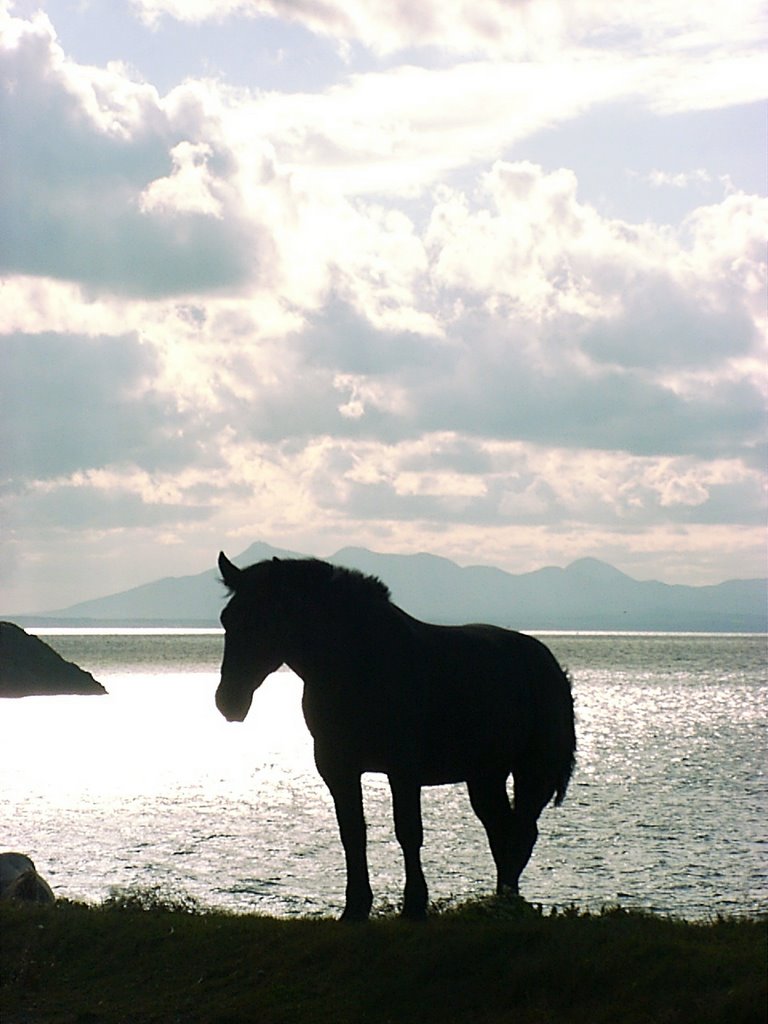
© Impress Corporation, Japan.
http://digitalcamera.impress.co.jp/01_07/contest/
This is a famous breed of Northern Japan, Aomori and the Shimokita and Shiriya Peninsula (Shimokita Hantoo 下北半島, 尻屋崎). These horses are kept outside even in the winter storms, where they stand still with their noses toward the cold wind and wait for spring ... They have long warm hair and are very sure-footed in the rough terrain. They are a great attraction for tourists. I saw them in summer, a sturdy view in the rugged terrain, against the backdrop of the Hokkaido Mountains over the sea.
Kandachi is also used as kigo for the deer standing in the winter forest.
ooo ooo ooo ooo ooo ooo ooo ooo ooo
bringing the horses to the sheds, uma sage(ru) 馬下げる
To protect them from the coming snow, horses are brought back, usually to the cowsheds, to pass the winter time.
stilts, "bamboo horses", take-uma, takeuma 竹馬
:::::::::::::::::::::::::::::::::::::::::::::::::::::::::::::::::::::::::::::::::::::::::::::::::::::
Kigo for the New Year
"Spring Horse", pronounced harukoma 春駒 はるこま
spring horse dance, harukoma no mai 春駒の舞、harukoma odori 春駒踊り
spring horse performance, harukoma manzai 春駒万歳
Spring Horse, is a performer who makes the rounds on New Year's Day, singing songs at people's gates. He wears a horse head contraption of carries a horse heade made of wood or bamboo. This in one of the many performances of wandering artists in Japan (kadozuke geinoo 門付け芸能). The man with the horse head dances to the tune of a shamisen and drum. It can also be a young man dressed as a girl, holding the horse between her legs, trying to make people laugh. The performers get a little money for their dance and wander off to the next corner.
Issa refers to this custom, which is still alive to our day in many rural communities, especially in Northern Japan and the Sado Island. If you happen to see this Spring Horse, you will be lucky for the rest of the year. A local song in the area goes like this:
"Well, well, well, how lucky!
I saw the Spring Horse in my dream!
That's good enough for this year's good luck!"
In Okinawa, there is a similar custom called
Juri Horse, juriuma じゅりうま, ジュリ馬 , 尾類馬
a dance on the 25th of January.
JURI is the Okinawa dialect for joroo 女郎, the ladies of redlight districts.
Look at Photos of the Okinawa Performance
Spring Horse Performers in Northern Japan

http://www.manabi.pref.gunma.jp/jigyodan/map/shiryo/harukoma.htm
In English we have "stick horses", in German "Steckenpferd".
http://www.bigblackbear.com/stickhorses.html
Some "Spring Horse" haiku by Issa
「春駒のうたでとかすや門の雪」
haru koma no uta de tokasu ya kado no yuki
melting to the tune
of the New Year's singer...
snow at the gate
(Tr. David Lanoue)
... ... ...
The following three are translated by Sakuo Nakamura
「春駒は竹でしてさえいさみけり」
harukoma wa take de shite sae isami keri
even if made of bamboo
the spring horse
looks brave
Issa refers to a toy of this name, made of bamboo looking like a horse head.
Look at a doll with Fukusuke and the Spring Horse
「春駒を人のしてさえいさみけり」
harukoma o hito no shite sae isami keri
if he plays "spring horse"
he looks like
a brave horse
「春駒や人が真似てもいさましき」
harukoma ya hito ga manete mo isamashiki
if he gestures
like the spring horse
he looks brave
.................................................................................
observance kigo for the New Year
uma norizome 馬騎初 (うまのりぞめ) First riding of the horses
..... kiba hajime 騎馬始(きばはじめ)、nori hajime 騎始(のりはじめ)、norizome 騎初(のりぞめ)、hatsu nori 初騎(はつのり)
baba hajime 馬場始(ばばはじめ)"first riding ground"
Imperial Court Ceremony.
During the Muromachi period, it was helt on the second day of the first lunar month.
In the Edo period, on the fifth day.
SAIJIKI – NEW YEAR OBSERVANCES
:::::::::::::::::::::::::::::::::::::::::::::::::::::::::::::::::::::::::::::::::::::::::::::::::::::
. . hakubasai, hakuba sai 白馬祭(はくばさい)
Festival of the White Horse
..... hakuba sechi-e 白馬節会
nanuka no sechi-e なぬかのせちえ【七日の節会】
Seasonal Feast on the seventh day (of the New Year)
*****************************
Worldwide use
Germany
Pferd, Fohlen, Pony
Horse meat, baniku (ばにく/ 馬肉) basashi, sakuranabe
and Haiku
:::::::::::::::::::::::::::::::::::::::::::::::::::::::::::::::::::::::::::::::::::::::::::::::::::::
North America
Here in California, rodeos and horse backing riding, etc are summer activities.
Robert Wilson
*****************************
Things found on the way
源の義経 Minamoto no Yoshitsune (1159 - 1189)
. Yoshitsune and his horses 義経の馬 .
太夫黒 Tayuguro, Tayu-guro
Ippondatara, Ippon-datara 一本ダタラ - Ippon tatara
ipponashi 一本足
:::::::::::::::::::::::::::::::::::::::::::::::::::::::::::::::::::::::::::::::::::::::::::::::::::::

Bato Kannon with a horse head
Horse-headed Deities of Japan
:::::::::::::::::::::::::::::::::::::::::::::::::::::::::::::::::::::::::::::::::::::::::::::::::::::
The Kabuki Horse . 歌舞伎の馬

"The Kabuki stage horse is a work of art, a splendid structure of wood and velvet borne by two specialist assistants. These assistants have exercised a monopoly for generations and there is very little about the behavior of horses that they do not know and reproduce. Their beasts toss their heads, paw the ground, back away from obstacles and fret at the bit like any thoroughbred. Trotting is a proud specialty and the authors have even seen a gentle canter.
The actor who rides such horses must give a tip known as "hay money" (kaibaryô) to the artists if he does not wish to risk an undignified fall - the pleasing tradition persists at least, even if present-day stage discipline militates against any such calculated mishaps"
(Aubrey and Giovanna Halford in "The Kabuki Handbook").
:::::::::::::::::::::::::::::::::::::::::::::::::::::::::::::::::::::::::::::::::::::::::::::::::::::
Amulet to hit the target at Yabusame
from OkuniTama Shrine 大国魂神社
. Atariya 当たり矢 arrow to hit good luck .
*****************************
HAIKU
- uma 馬 - koma 駒 horse, horses -
All haiku and hokku by
. Matsuo Basho 松尾芭蕉 - Archives of the WKD .
ritt übers moor.
ich lenke das pferd dorthin,
wo der kuckuck ruft.
Matsuo Basho
http://lulus-world.blogspot.com/2006/04/spring-bei-uns-im-engadin-ist-noch.html
:::::::::::::::::::::::::::::::::::::::::::::::::::::::::::::::::::::::::::::::::::::::::::::::::::::::
A sudden shower falls -
and naked I am riding
on a naked horse!
Issa
http://www.toyomasu.com/haiku/
Issa and the Horse Shit - 馬糞山
with a lovely haiga by Nakamura Sakuo
:::::::::::::::::::::::::::::::::::::::::::::::::::::::::::::::::::::::::::::::::::::::::::::::::::::::
竹馬や いろは に ほへと ちりぢりに
take uma ya iroha ni hoheto chirijiri ni
Kubota Mantaroo
bamboo horse -
once we studied the iroha syllabary
now we are scattered in all directions
(Tr. G. Blankestijn)
................................................. American Version
> bamboo stick-horses--
> we who learned our ABC's
> gone our separate ways...
Translation and discussion, by Larry Bole
Old friends from childhood are called Chikuba no Tomo 竹馬の友, friends of the bamboo stilts.
.......................................................................
繋ぎ馬雪一双の鐙かな
tsunagi-uma yuki issoo no abumi kana
a tethered horse
with snow in both
stirrups ...
The cut marker KANA is at the end of line 3.
. Yosa Buson 与謝蕪村 in Edo .
*****************************
Related words
***** Donkey, roba 驢馬、ロバ
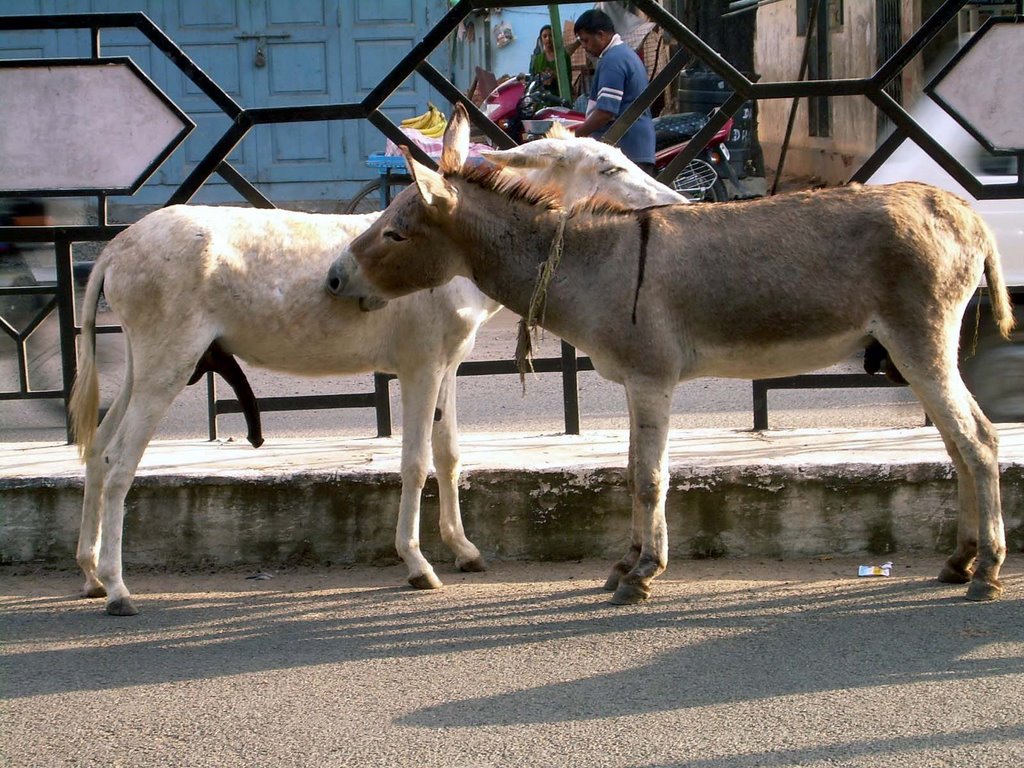
exhaust fumes
a donkey crops grass
on the road divider
Johannes Manjrekar, India, August 2006
***** mule
an ghrian os cionn na Himáilithe
ólann mo mhiúil
as an nGainséis
the sun above the Himalayas
my mule is drinking
from the Ganges
Gabriel Rosenstock at
http://ireland.poetryinternational.org/cwolk/view/28470
xxxxxxxxxxxxxxxxxxxxxxxxxxxxx
***** Cow (ushi)
:::::::::::::::::::::::::::::::::::::::::::::::::::::::::::::::::::::::::::::::::::::::::::::::::::::
***** plowing, tagayashi 耕たがやし
kigo for all spring
spring plowing, shunkoo 春耕(しゅんこう)
man plowing the fields, koojin 耕人(こうじん)
cow for plowing, koogyuu 耕牛(こうぎゅう)
horse for plowing, kooba 耕馬(こうば)、bakoo 馬耕(ばこう)
The Chinese character is made up of a plow and an enclosure.
Plowing represents a joyful time for the farmer and haiku should reflect this.

first plowing -
the waterbuffalo trods
steadily
Gabi Greve, China 1988
:::::::::::::::::::::::::::::::::::::::::::::::::::::::::::::::::::::::::::::::::::::::::::::::::::::
. komakusa 駒草 (こまくさ) "young horse plant" .
Dicentra peregrina
. komatsunagi 駒繫 (こまつなぎ) "binding a horse" plant .
Indigofera pseudo-tinctoria
. Shiro - Japanese Castle Legends お城と伝説 .
at Matsumoto Castle, Nagano, there was a famous cherry tree called 八幡太郎駒繋ぎ桜,
Hachimantaro koma tsunagi, where "Hachiman Taro bound his horse", - its stump is still there and now a new tree is blossoming.
:::::::::::::::::::::::::::::::::::::::::::::::::::::::::::::::::::::::::::::::::::::::::::::::::::::
Horse meat, baniku (ばにく/ 馬肉) basashi, sakuranabe
. Koma 駒 Horse as Folk Toys .
:::::::::::::::::::::::::::::::::::::::::::::::::::::::::::::::::::::::::::::::::::::::::::::::::::::
[ . BACK to WORLDKIGO . TOP . ]
[ . BACK to DARUMA MUSEUM TOP . ]
:::::::::::::::::::::::::::::::::::::::::::::::::::::::::::::::::::::::::::::::::::::::::::::::::::::



 Posts
Posts


23 comments:
春駒踊りはとても良い記事ですね。
sakuo
bamboo stick-pony
childhood classmates of Japanese language lessons
all scattered now
bamboo stick-pony
Japanese alphabet school childhood chums
all scattered now
"chibi" (pen-name for Dennis M. Holmes)
:::::::::::::::::::::::::::::::::::::::::::::::::::::::::::::::::::::::::::::::::::::::::::::::::::::
......................................................................
little chestnuts
pissed on by the horse...
shiny new
shibaguri ya uma no bari shite utsukushiki
芝栗や馬のばりしてうつくしき
by Issa, 1806
Tr. David Lanoue, http://cat.xula.edu/issa/
::::::::::::::::::::::::::::::::::::::::::::::::::::::::::::::::::::::
winter dawn ~
a lone horse shivers
near the river
.
new foals rest
behind a weathered
paddock fence
bob
http://groups.yahoo.com/group/happyhaiku/message/4714
.
Donkeys in Kenya
The Peacocks have noted with concern that DONKEYS are being
mistreated by the people who own them. They are generally overworked
and they rarely eat.
every day
donkey on the way
searching for food
up the hill
pulling the cart
the donkey is tired
~ Sebastian Kimeu
wounded donkey
pulls the heavy cart
uphill
~ Jelida Kerubo
the donkey
walking all the day
no rest
~ Amerpreet Maujan
rain water runs
a donkey dies afterwards
electric shock
very inhuman
a wounded donkey
loaded with goods
~ Husein Haji
oh a poor donkey
carrying a heavy sack
full of maize
~ Joan Baraza
ohh donkey
carry heavy loads
along the road
~ Amarpreet Maujan
http://groups.yahoo.com/group/kenyasaijiki/message/651
Evacuated horses return to Fukushima
Horses evacuated from Fukushima Prefecture after the nuclear accident are returning to their homes for a performance in a traditional event.
Minamisoma City sent 52 horses used in the performance to a town in Hokkaido, northern Japan. It had become difficult to get hay for them and many owners themselves left after the nuclear accident at the Fukushima Daiichi power plant.
The central Fukushima region of Soma has held the summer festival called "Soma-noma-oi" for many years. The festival is said to have originated more than 1,000 years ago for the training of warriors.
Eight horses arrived in Minamisoma on Saturday after a drive of 17 hours in a special trailer.
The owners of the horses came to see them after 8 months of separation.
The remaining 44 horses will return home by the end of May to take part in the festival in July.
http://www3.nhk.or.jp/daily/english/20120415_10.html
初午に狐の剃りし頭哉
hatsu uma ni / kitsune no sorishi / atama kana
Matsuo Basho
the fox cuts his hair
Kobayashi Issa and the White Colt
koma tsunagu kado no kuize ni wakaba kana
new leaves
on the stump by the gate
where the colt's tied
snip-
It seems appropriate to translate these hokku on January 14. These two summer hokku were written on the second of the 12th month (January 14, 1804), when Issa was in the area just east of Edo, so they couldn't based on direct observation.
Issa places the words "The White Colt" (白駒)
just before them in his diary, indicating that they are written in response a "base poem," in this case a Chinese poem from the ancient Book of Poems, the Shi-jing (詩経). In 1803 Issa began reading and studying the Chinese classics, especially the Book of Poems and the Book of Changes (Yi-jing or I Ching), and he continued to study them for several years. In this hokku he refers to Book of Poems no. 186, a poem about a white colt, an image for a person who is highly respected or in some interpretations loved by the speaker of the poem.
Some commentators claim it was written by a king who hoped to persuade a sage or wise advisor to give up his desire to live in the country and return to the court instead. Here is the James Legge translation, widely available on the net, with three places in square brackets amended so they correspond more closely to the original, which Issa read:
MORE by Chris Drake :
Matsuo Basho in Kaii province
甲斐の山中に立ち寄りて
Staying at a lodging in Yamanaka, Kaii province
行く駒の麦に慰む宿り哉
ゆく駒の麥になぐさむやどり哉
yuku koma no mugi ni nagusamu yadori kana
行駒の麦に慰むやどり哉
iuku koma no mugi ni nagusamu yadori kana
The horse carrying me
Enjoys eating the ears of
Barley while resting!
Tr. Oseko
MORE :
黒駒太子 -Prince Shotoku Taishi on his Black Horse
里宮に黒駒太子黍の秋
satomiya ni Kurokoma Taishi kibi no aki
at the village shrine
resides Taishi on his Black Horse -
millet in autumn
Nishimoto Itto 西本一都 (1907 - 1991)
MORE about satomiya shrines
Matsuo Basho in Kiso
桟やまづ思ひ出づ馬迎へ
kakehashi ya mazu omoi-izu uma mukae
this hanging bridge -
the first thing that comes to mind
is the meeting of the tribute horses
MORE about this bridge
http://matsuobasho-wkd.blogspot.jp/2012/06/kiso-nagano.html
Matsuo Basho
町医師や屋敷方より駒迎へ
machi ishi ya yashikigata yori koma mukae
the doctor of the town -
from a samurai mansion they come
picking him up with a horse
MORE about the town doctor
大馬の尻引こする野梅哉
oouma no shiri hikkosuru no ume kana
big horse rump
and blossoming wild plum
rub hard together
The verb hikkosuru (to rub hard/vigorously) suggests a blossoming plum branch (or branches) pushing back as a horse's rump rubs against it, bending it with each rub. The horse began to rub its itching rump against the tree, but subject and object in this hokku are (deliberately?) ambiguous. I think the hokku can be read as evoking a mutual process in which the branches of a wild plum tree (implied to be in blossom, since the hokku was written in the first month, approximately February) are rubbed by and simultaneously rub the rump of a large horse. Issa was very sensitive to verbal nuances, so it seems likely he was aware that subject and object move back and forth as both horse and bent branch rub in opposite directions. Perhaps the horse and the limb have a nice rhythm going between them.
Read the full comment by
Chris Drake
:
Nengajoo 年賀状 New Year Cards 2014
2014 is the Year of the Horse.
Kobayashi Issa
goroppiki uma hoshite oku kareno kana
withered field
with five or six horses
drying in the sun
This metaphorical hokku is from the beginning of the 10th month (November) of 1820, when Issa was in his hometown. In late autumn and early winter farmers are busy drying, that is, preserving food for the coming months of heavy snow, placing vegetables and fruit on porches or hanging them on strings from eaves that get a lot of sunlight. It is already fairly cold, and for those who have horses, the barns are getting chilly and dirty. One farmer (or a group of farmers?) has taken his horses out to a nearby field so they can get some sunlight and stay warm, at least during the day. To Issa the horses, as they soak in the warming light of the sun, give the withered field scattered points of energy that suggest the return of life to the field the next spring.
It's possible to take the owner(s) of the horses as the implied subject of "leave to dry," but it's equally possible to take the withered field as the subject that is responsible for the drying/preserving being done. If it is the field that is responsible for drying/preserving the horses, then hoshite oku means "to dry in order to preserve for the future," a meaning that fits very well with the rest of the hokku. The owner of the horses is mainly interested in simply keeping his horses warm and dry, so it seems likely Issa is writing about the field itself, which mysteriously loves the horses and wants to help preserve them and keep them strong through the snowy months ahead. If so, then the bodhisattva-like field seems to cherish the horses, as if they had been entrusted to the field for safekeeping.
I was helped by the reading of Kawashima Tsuyu in Iwanami shoten, Nihon koten bungaku taikei 58.358.
Chris Drake
.
Kobayashi Issa
古郷や馬も元日いたす顔
furusato ya uma mo ganjitsu itasu kao
in my hometown
even horses' faces
say Happy New Year!
This hokku is from New Year's Day in 1810, when Issa was in Edo, so Issa is imagining what this day is like back in his hometown. It would be three more years before he could actually return to live again in his hometown, but he was already ardently thinking about his home and planning to return. His father raised and rented out pack and passenger horses for people traveling on the main road that ran through Issa's hometown, so he saw horses up close when he was a boy. In Japan, if a family had a small stable, it was usually placed at the end of the main house and connected to it by a common roof, so to a certain extent horses and humans shared a single daily life environment -- and range of facial expressions. Although Issa speaks only of horses here, surely he ultimately also means all living creatures, if only we look at their expressions carefully enough.
Today, Jan. 31, 2013, is lunar New Year's, so please allow me to wish a very happy Year of the Horse to everyone reading this! I hope this year will be a period of world peace and justice and of personal peace, love, and many renku sequences, haiku, and haibun for all of you!
In contemporary urban Japan the Year of the Horse is popularly believed to have started on Jan. 1. Only in a few remote country villages do people still celebrate the beginning of the lunar new year in a major way, although in China, Korea, and elsewhere in east Asia, it is still a very important holiday. In terms of yin-yang divination and the zodiacal animals that govern each year, the new year actually starts today. More important, Basho, Buson, Issa and other Edo-period haijin celebrated and wrote about lunar New Year's, which for them coincided with the rebirth of grasses, trees, flowers and all the animals, including us, who depend on them.
Chris Drake
2014 is the Year of the Horse.
.
Kobayashi Issa
逢坂や手馴し駒にいとまごひ
oosaka ya te nareshi koma ni itomagoi
the Kyoto border!
horsemen say farewell
to the horses they've raised
This hokku is from the ninth month (October) of 1816, when Issa was living in his hometown. It is about an ancient but continuing custom that Issa may know about from firsthand experience if he has visited one of the famous horse-raising areas in his native province of Shinano. In the late ancient period the emperor and his supporters established a series of horse pastures in four different provinces where horses were raised at the expense of local elites and then sent to Kyoto, though the horses raised in the high pastures of Shinano were in the most demand, and eighty outstanding Shinano horses were presented to the court in Kyoto every year. The horses from Shinano were delivered on lunar 8/16 in a ceremony on Osaka Mountain, a low mountain that marked the eastern edge of greater Kyoto and in the ancient period had a road barrier standing at the border. Osaka, short for Osaka Mountain, literally means Slope Where Travelers Meet (逢坂) and is not related to the city of Osaka (大阪), which is written with different characters. On this mountain the horsemen in charge of the eighty horses from Shinano would turn the horses over to members of the imperial stables, who would then display them in front of the emperor and high-ranking aristocrats so they could choose the ones they liked. During the medieval period, the court declined in power, and the practice died out, but the Edo shogunate revived the custom of sending Shinano horses since it wanted to placate the court, which had lost real political and economic power, and build friendly relations between the shogun and the emperor. In Issa's time, it was the Governor of Kyoto, a representative of the shogun, who arranged for the delivery of the horses to representatives of the imperial stables who were waiting on Osaka Mountain.
The hokku seems to be intensely emotional, since horses were usually delivered when they were five. Many of the horsemen who have been responsible for raising and training the horses have known the horses intimately for more than four years, and they are no doubt saying difficult goodbyes to the horses they have spent so much time with. Surely many of the horsemen felt considerable sadness as soon as they saw that they had reached the outer border of Kyoto, and in other hokku Issa evokes horsemen putting flowers on their horses when they say goodbye to them or tying bags of ground buckwheat to them so they won't be lonely for Shinano food. Issa may be implying that the horses, too, have similar feelings, and in other hokku he suggests that they may find life harder from now on since some are still a bit wild and unruly by Kyoto standards and will have to be broken in further.
Chris Drake
Komagata shrines in Tohoku
.
第七百九十四話「駒形神社(柿ノ沢)」- Komagata Jinja
第二百二十七話「駒形神社(綾織)」
第二百五話「駒木の駒形神社」
第七十九話「荒川駒形神社」
.
Tono Jisha Meguri 遠野寺社巡り temples and shrines in Tono, Iwate
.
蒼前 お蒼前様 O-Sozen sama, protector of horses,
7 legends to explore
.
https://japanshrinestemples.blogspot.jp/2017/08/yama-no-kami-12-regional-aichi-aomori.html
.
Komagatachoo 駒形町 Komagata district
Taito ward, 台東区, Taitō, with two sub-districts 駒形一丁目 / 駒形二丁目. South of 浅草 Asakusa
.
The name Komagata-Cho is mentioned in books since about 1661.
(浅草駒形 Asakusa Komagata).
koma 駒 is another spelling for uma 馬 horse.
The hall 駒形堂 Komagata Do could be seen from boats down the river Sumidagawa, looking like a white horse running, koma kake 駒駆け.
komakake changed in the local dialect to Komagata.
.
Komagata doo 駒形堂 Komagata Do Hall
.
more
https://edoflourishing.blogspot.jp/2018/03/komagata-district.html
.
EDO - Samegahashi district "Shark bridge" 鮫ヶ橋 / 鮫河橋
- - - - - Another hint for the naming:
In the Edo period, a horse with white eyes was called
sameuma, same-uma 𩥭(さめうま)
- - - - - sameuma kanji with horse and fish
A tale knows this:
Once a priest from the temple 牛込行願寺 Gyogan-Ji in Ushigome had brought such a Sameuma as an offering. But he fell down from the bridge and both were killed. The bridge was then called after the horse,
さめ馬ヶ橋 Sameumagahashi .. Samegahashi.
.
https://edoflourishing.blogspot.com/2018/07/samegahashi-district-shinjuku.html
Legend from Miyagi, 名取市 Natori city 増田 Masuda
.
umazuka, uma-zuka 馬塚 horse mound
A place to venerate 第六天神 Dairokutenjin.
Once the mikoshi 神輿 portable shrine of 小豆島牛頭天王 Gozu Tenno from Shodoshima passed here. The weather suddenly turned wild and the shinme 神馬 sacred horse died.
Now people can experience healing for cattle and horses.
. Dairokuten Ma-O 第六天魔王 Big Number Six Heavenly Deity .
.
https://japanshrinestemples.blogspot.com/2020/03/gozu-tenno-legends.html
.
Post a Comment