4/06/2005

Deer (shika)

[ . BACK to WORLDKIGO TOP . ]
. Legends about the deer .
::::::::::::::::::::::::::::::::::::::::::::::::::::::::::::::::::::::::::::::::::::::::::::::::::::: 

Deer (shika)

***** Location: Japan, worldwide
***** Season: Various, see below
***** Category: Animal


*****************************
Explanation

The deer (Cervus nippon) is a sacred animal in Buddhism and in Shintoism too.
It has been introduced to other countries under the name of Shika Deer or even Sika Deer, see below.

There are many other kinds of deer.
Roe Deer (Capreolus capreolus) is a deer species of Europe and Asia Minor.
Red Deer (Cervus elaphus), known as Elk in North America.

:::::::::::::::::::::::::::::::::::::::::::::::::::::::::::::::::::::::::::::::::::::::::::::::::::::


Ogata Gekko 尾形月耕 (1859 - 1920)


kigo for all autumn
this is the most important haiku season for deer, where it is identified with the momiji maple leaves

deer, shika 鹿 しか
..... suzuka すずか
..... sugaru すがる
"red maple-leaf bird", momijidori 紅葉鳥

stag, male deer, ojika 牡鹿
mejika 牝鹿(めじか)emale deer
..... saojika, 小男鹿
great deer, Elk, oojika 大鹿

deer's voice / deer "cries":  shika no koe 鹿の声
shika naku 鹿鳴く(しかなく) deer is calling
deer is barking, mating call of a deer
(see discussion below)

"longing for a wife", mating deer, tsuma kou shika 妻恋う鹿 
shika no tsuma 鹿の妻(しかのつま)"wife of the deer"
tomojika 友鹿(ともじか) deer together

deer flute / deer call (mimics sound of a deer calling)
shikabue 鹿笛

The longing cry of a deer in autumn has been subject of poetry all over the world. During the mating season in October and November one can hear the buck cry and see them fight for the bride.


yoru no shika 夜の鹿(よるのしか)deer at night

shikagari 鹿狩(しかがり) deer hunt, deer hunting

shinroku 神鹿(しんろく)"deer of the gods"

xxxxxxxxxxxxxxxxxxxxxxxxxxxxx

春日のの鹿も立ちそう花御堂
kasuga no no shika mo tachisoo hana midoo

Kasuga Field's deer
also attend, I see...
Buddha's birthday flowers

Kobayashi Issa, Tr. David Lanoue

Comment by Nakamura Sakuo
The deer is a servant of the Shinto-shrine, Kasuga Shrine.
Hanami-dou (blossom-filled temple) is Buddha’s holy house.
Judging from Christian religious point of view they are both heathen.
According to Western commonsense, it seems to be that an Arab’s camel visits a synagogue.
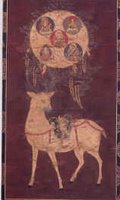


Read more about the Deer, Kasuga Shrine Mandala
and the Flower Pavillion (Hana Midoo)


In Buddhism, the Deerpark of Varanasi, where Shakyamuni Buddha held his first sermon, is the most famous place for deer.

Buddhist Dharma Wheel with Deer
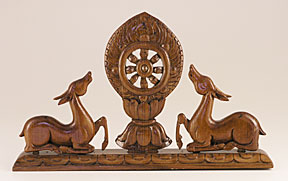

© Tibetan Treasures
http://www.tibetantreasures.com/NewFiles/4fhcw12.0306.lg.jpg

.............................................................................


さをしかの角に結びし手紙哉
saoshika no tsuno ni musubishi tegami kana

tied around one
of the stag's antlers --
a letter


- - - Comment from Chris Drake :
This hokku is from the 8th month (September), at the beginning of the deer mating season, when mature stags' antlers are at their full length. At this time Issa was traveling around near his hometown, but the hokku in Issa's diary following this one is about deer in the deer park in Nara, so I take the present hokku to be about a stag in the Nara deer park, too. Like foxes, monkeys, and several other animals, deer were sacred in Japanese shamanism, and the deer in the Nara park are believed to be manifestations of the three main gods of the nearby Kasuga Shrine: they act as messengers for these gods and also carry the gods when the gods want to travel between this world and the other world.
The Nara deer park
is also revered by Japanese Buddhists as the manifestation in Japan of the deer park in Sarnath, India, where Shakyamuni Buddha preached his first sermon. As in Sarnath, the park is a sanctuary for deer, and the Shinto priests of the Kasuga Shrine and the monks of the nearby Kofukuji Buddhist temple guard the deer very strictly. In fact, in Issa's time killing a deer was punishable by death. In medieval art that fuses Shinto and Buddhist images and spirituality, the head deity of Kasuga Shrine is commonly shown riding on a stag, and just as often only a divine stag is shown, sometimes standing below a full moon or with a full-moon-shaped mandala on its back.
Because they are protected,
the deer in Nara are unafraid of humans and sometimes approach them for food. Issa may have seen the stag in this hokku from close range, since he can see that the folded paper knotted around one of its antlers is a letter. In Issa's time letters were folded sideways until they were long and narrow. This allowed the sender to loop them around other objects and tie them tightly. Perhaps Issa imagines it's a love letter.
Deer mating in the fall
has been a common image in waka for strong, intense love since ancient times -- and Issa actually does mention love in the next hokku in his diary, which is about Nara deer. Perhaps a man who knows waka has written a love letter he wants to keep secret, and he has agreed with his equally secretive lover to tie it around a stag's antler. Or, since does are in heat now, the stag must be a bit rambunctious and excited, so perhaps the man wants to express the strength of his love to his lover by tying it around a stag's antler.

.............................................................................

小男鹿や後の一声細長き
saoshika ya ato no hito koe hosonagaki

a stag,
later a single long
thin cry

Tr. Chris Drake

This autumn hokku is from lunar 8/21 (October 10) of 1808, when Issa climbed a mountain not far from his hometown with two of his haikai students. The time is the height of the deer mating season, and on this day Issa wrote several hokku about lonely, suffering stags crying. In the present hokku Issa evokes a stag crying out with deep longing for a doe. Earlier its voice had been fierce and strong, but at last it grows weaker, and after a silence its final cry is deeply moving in its fragility, as if the stag were forcing himself to continue his long, thin stream of sound by sheer will power, even though there is no response. Issa notes in another hokku that it was common for stags to cry all night long, so the exhausted deer in this hokku may have rested and moved on to a new site on the mountain.

The sad-sounding cries of the stags were so moving that on the same day Issa wrote:

shika no koe hotoke wa nan to notamawaku

stag cries --
what do the Buddhas
say about this?


Issa asks the various Buddhas, surely including Amida, if they don't have some way of easing the pain of all these stags, who are literally crying from the depths of their being. Issa may be referring to words in various sutras, or, more likely, he may be making a direct appeal to the mercy of Amida and other Buddhas, asking them if they would be willing to speak out in some form or another.

The nightly cries of the stags seem to be causing Issa pain, since he knows no way of helping them or of separating himself from their difficult desire:

shika no mi ni natte shika kiku hitori kana

one man
listens to stags
as a stag himself


I take this "one man" (the phrase also means "single man") to refer to Issa. He is not shaking with lust or crying out deep, guttural sounds, but he feels the stag cries are somehow his own as well. In addition to being naturally sensitive to animals' feelings, Issa may also feel the stags express a kind of wild energy that is driving him to try to return to his hometown, receive half his father's house, and get married there in spite of strong opposition from his half brother, his mother-in-law, and many villagers. At the time he writes these hokku Issa is staying not in his natal home but with various students and at temples he knows near and in his hometown because he wants to negotiate further with his resisting brother about his father's inheritance. Three days after writing these hokku, Issa signed an agreement with his brother, who then refused to carry it out until an unspecified date in the future. Issa's wanderings continued, and when he returned to Edo he found he was homeless, since the small house he had been renting was now occupied by people he didn't know.

Chris Drake
. Kobayashi Issa 小林一茶 in Edo .


:::::::::::::::::::::::::::::::::::::::::::::::::::::::::::::::::::::::::::::::::::::::::::::::::::::

kigo for all sping

haru no shika 春の鹿 (はるのしか ) deer in spring

haramijika 孕み鹿 (はらみじか) pregnant deer


kigo for late sping

kigo about the horns (tsuno, Geweih)

otoshizuno 落し角 ( おとしづの) loosing the horns
..... shika no tsuno otsu 鹿の角落つ(しかのつのおつ)
..... wasurezuno 忘れ角(わすれづの)


:::::::::::::::::::::::::::::::::::::::::::::::::::::::::::::::::::::::::::::::::::::::::::::::::::::

kigo for all summer

shika no ko 鹿の子 (かのこ) fawn, Bambi
..... kojika 小鹿(こじか)
shika no komadara 三夏 鹿の子斑(かのこまだら)speckled fawn
shika no ko 鹿の子(しかのこ)"child of the deer)
oyajika 親鹿(おやじか) mother deer

. . . . .

kigo for early summer

fukurozuno 袋角 (ふくろづの) summer horns
lit. "horns in a bag"
shika no fukurozuno 鹿の袋角(しかのふくろづの)
shika no wakazuno 鹿の若角(しかのわかづの)young horns of the deer
..... rokujoo 鹿茸(ろくじょう)
. . . CLICK here for Photos !

:::::::::::::::::::::::::::::::::::::::::::::::::::::::::::::::::::::::::::::::::::::::::::::::::::::

kigo for all autumn

soozu 添水 そうず "animal chaser" deer scarer
shishiodoshi, shishi odoshi 鹿威し the deer scarer


. Japanese Garden - shishi-odoshi .

:::::::::::::::::::::::::::::::::::::::::::::::::::::::::::::::::::::::::::::::::::::::::::::::::::::

kigo for all winter

fuyu no shika 冬の鹿 (ふゆのしか) deer in winter

noro 麕 (のろ) Japanese deer
noroshika のろしか , ノロジカ
Capreolus capreolus
. . . CLICK here for Photos !


WASHOKU
Momijinabe 紅葉鍋 (もみじなべ) stew with deer meat

lit. "red leaves stew"

.................................................................................


CLICK for more photos
日本羚羊 Nihon Kamoshika

kamoshika 羚羊 (かもしか) Japanese serow
..... kamoshika 氈鹿(かもしか
kamoshishi かもしし
kandachi 寒立(かんだち) "standing in the cold"
Rupicapra rupicapra. Gemse, Gams, Gämse; Berggämse
(also used for antelope)


*****************************
Worldwide use

Ireland

quote
Fia Rua, Cervus elaphus, Red Deer
... most red deer in Ireland are descended from introduced animals. The only true native herd is in Killarney National Park in Co. Kerry; some animals from this herd have been moved to National Parks in Connemara and Glenveagh, to increase the native population. Also, many deer throughout the country are actually hybrids (mixes) of red and Japanese sika deer.
source : wicklowmountains nationalpark.ie


forest stroll...
among the tall pines
a glance of Fia Rua


- Shared by John Byrne -
Haiku Culture Magazine, 2013


:::::::::::::::::::::::::::::::::::::::::::::::::::::::::::::::::::::::::::::::::::::::::::::::::::::::

Mongolia

. Roe deer, Antelope, Saiga antelope .

:::::::::::::::::::::::::::::::::::::::::::::::::::::::::::::::::::::::::::::::::::::::::::::::::::::::

North America

In most parts of North America they are hunted in the rut and this is early winter (December).
Most deer is seen in spring, when the does are more daring, needing to feed to nurse the fawns. Then the fawns emerge in early summer. Aside from trees bare of leaves (allowing sightlines), autumn is the hardest time to see deer.

fawn
kigo for early summer

deer hunting
kigo for winter


More details about the seasonal behaviour of elks:
Elk through the seasons
source : www.rmef.org


*****************************
Things found on the way


. hakuroku 白鹿だるま white deer Daruma .
The white deer is a messenger of the Gods.


mikuji holder from Kasuga Taisha

.......................................................................

Discussion about translating:
"shika no nakigoe 鹿の鳴声"


Issa has various haiku about this sound
translated by David Lanoue


我形をうさんと見てや鹿の鳴
waga nari o usan to mite ya shika no naku

glimpsing suspicious me
the deer sounds
the alarm

This migh be translated differently to bring out the kire YA in the second line. Gabi

... ... ... ... ...

どこをおせばそんな音が出る山の鹿
doko o oseba sonna ne ga deru yama no shika

where were you poked
to make that sound...
mountain deer?


わか鹿や二ッ並んで対の声
waka shika ya futatsu narande tsui no koe

two young deer
side by side...
a duet


有明や十ばかり対に鳴く
ariake ya shika jû bakari tsui ni naku

sunrise--
ten deer at least
singing in pairs


鳴な鹿柳が蛇になるほどに
naku na shika yanagi ga hebi ni naru hodo ni

don't cry deer!
the willow tree only looks
like snakes


山寺や縁の上なるしかの声
yamadera ya en no ue naru shika no koe

mountain temple--
on the verandah
voice of a deer


鹿鳴や犬なき里の大月夜
shika naku ya inu naki sato no ôtsuki yo

cries of the deer--
in a village without dogs
a moonlit night


薮並やとし寄鹿のぎりに鳴
yabu nami ya toshiyori shika no giri ni naku

in the thicket
the old deer calls
for honor's sake


夜あらしや窓に吹込鹿の声
yo arashi ya mado ni fukikomu shika no koe

night storm--
blowing in the window
voice of a deer


鹿鳴や川をへだてて忍ぶ恋
shika naku ya kawa o hedatete shinobu koi

they cry to each other
across a river
deer in love


ほたへるや犬なき里の鹿の声
hotaeru ya inu naki sato no shika no koe

barking--
in a village without dogs
voices of deer

ooo ooo ooo ooo ooo ooo ooo ooo ooo ooo ooo ooo

あきらめて子のない鹿は鳴ぬなり
akiramete ko no nai shika wa nakinu nari

giving up
the childless deer
sings no more


In other words, the deer doesn't bother with a mating call. This haiku, composed in the Ninth Month of 1821, seems to refer to Issa's own frustration as a would-be parent. His first three children by this point in time had all died.


Comment by Gabi Greve:
I wonder about the translation SINGS ... Here is my first version

> giving up -
> the childless deer
> makes no more calls


(Discussing this translation here)

Listen to the voice of Deer in Nara here, says Sakuo. Click the NOTE MARK ♪.
http://www.pref.nara.jp/nara/oto/2.html


............ Some further versions of translating this haiku

I'm afraid "makes no more calls" seems to mean that he decides not to use the phone any more(!). A possibility is "calls no more", but this has a somewhat archaic feel to it. "has lost his voice" or "loses his voice" might be worth considering, though David's "sings no more" seems just fine to me, with the footnote.

Norman

Aaaa, so true. So here is my next try

> giving up -
> the childless deer
> calls no more for love

Gabi

xxxxxxxxxxxxxxxxxxxxxxxxxxxxx

The English verb for the call of a deer (in rut, especially) is "bell."
(Presumably related to "bellow"?)

Lewis Cook

xxxxxxxxxxxxxxxxxxx

giving up -
no more belling
from the childless deer

Norman

xxxxxxxxxxxxxxxxxxx

BELL sounds strange to my German ears too, even if it might be the right word biologically ...

bellen, ... that is what a dog does in German, to bark.
Gabi

xxxxxxxxxxxxxxxxxxxxxxxxxxxxx

"To bell" was a new verb to me too... but yes, my (English) dictionary confirms it.

That is, if we are talking about a MALE deer. There is still a puzzle in my mind -- how would a stag know that he was childless? I did not think that deer lived in couples...
And if we are talking about a FEMALE deer, then bell would not be the verb to use...

And how about "child"less? In English, a young deer is called a fawn -- but a fawn stops being a fawn after a year (I believe), while it could theoretically remain the stag's "child" all its lifetime...

This haiku is challenging our English vocabulary, as well as our Japanese!

Isabelle.

xxxxxxxxxxxxxxxxxxxxxxxxxxxxx

The kidai here is surely the mating call of the male shika. In drawing the metaphor of himself, it seems the poet has sacrificed verisimilitude, but that doesn't lessen theimpact of the haiku for me.

Norman

xxxxxxxxxxxxxxxxxxxxxxxxxxxxx

giving up <>
the childless deer does not even
cry any more

I find CRY is a better humanification than SING in this haiku, if there has to be one anyway ...
Gabi

xxxxxxxxxxxxxxxxxxxxxxxxxxxxx

I've read that mating call of the deer is called "bugling"

giving up
childless deer
bugles no more

Natalia L. Rudychev

xxxxxxxxxxxxxxxxxxxxxxxxxxxxxxxxxxxxxxxxxxxxx

with no offspring
the shika buck gives up --
whistles no more

I felt using the name of the deer and its sex important to understanding the poem. Also, I think the sound more a whistle. I have heard the deer and hunters name its call as a whistle.

Chibi

xxxxxxxxxxxxxxxxxxxxxxxxxxxxx

As for the ... shika buck ...
I think this is not necessary. SHIKA is a Japanese word, simply meaning deer, not any special kind ... and no normal American will understand it. Better leave it out in this case, I suggest.

> with no offspring
> the buck gives up --
> whistles no more

Gabi

xxxxxxxxxxxxxxxxxxxxxxxxxxxxx

Shika (Cervus nippon), more commonly known in English as 'sika', is well-known here (and in Britain and France) where it has been naturalised for more than a century. I agree with Chibi, and tend to specify 'sika' in haikai, because the rutting season is not the same for all deer - roe deer, for instance, have a summer rut.

Search results on Google:
155,000 pages for "sika deer"
880 for "shika deer"

The name 'sika' is also used exclusively in French (compare German 'Sikahirsch') so, because the word is long-established, we'd need to look back long before Googel to find the origin of the "misspelling". Language changes all the time - words borrowed from other languages, all the more easily. This year's misspelling may be correct next year...

Norman

SHIKA 鹿 しか in Japanese starts with the sound SHI.
SIKA is a mis-spelling.
Gabi


xxxxxxxxxxxxxxxxxxxxxxxxxxxxx

It impresses me more and more the ripples that this frog causes in the haiku pond!!

Gabi san and Norman san
We have hundreds of "shika" deer on the Berry College Campus in Rome, Georgia. I have always heard (herd ... hehe) them called "shika" here in Georgia, but, I can see by Norman's exploration the more popular "google"ese is "sika".

fauxku:

fawnless
noble sika --
no bell

hehe... chibi

xxxxxxxxxxxxxxxxxxxxxxxxxxxxx


Contribution by Larry Bole
Translating Haiku Forum 


I don't know how a stag would know he has a son, but this seems to be a topic in Japanese haiku.

In Nobuyuki Yuasa's translation of Issa's "The Year of My Life" (Ora ga Haru), Issa both writes and quotes a couple of haiku by others on the topic.

This is from Chapter 13 (no Japanese available):

"According to Buddha's teaching, man and beast are one in their essential nature. If that be true, then the mutual love between a child and his parent mut be the same for animals as for men, and there can be no difference between them."

[There follow six haiku, three by others, and three by Issa, illustrating his proposition]

A human father
Drove away a crow
For the children
Of the sparrows.

--Onitsura


For his child's sake
A father deer
Calls out against danger
On a summer hill.

--Gomei


A father frog
Stepped out,
Child on his back
To join the chorus.

--Tooyoo


A wind rustling
Through bamboo leaves
Brought a father deer
Hurrying home.

Out in the darkness
Of the passing rain,
I hear the crying
Of the childless deer.

Round the bush
That hides her children
A mother lark
Circles, singing.

-- Issa

ooo ooo ooo ooo ooo ooo ooo ooo ooo ooo ooo ooo


HOERU 吼える ほえる

吼る鹿おれをうさんと思ふかよ
hoeru shika ore o usan [to] omou ka yo

barking deer
do you think I'm
a suspicious character?


Tr. David Lanoue

ooo ooo ooo ooo ooo ooo ooo ooo ooo ooo ooo ooo

Here is a haiku by Basho about the voice of the deer:
shirigoe = the lingering cry


ぴいと啼く尻声悲し夜の鹿
pii to naku shirigoe kanashi yoru no shika

crying beeeee” . . . ,
the lingering sound so sad:
night deer

Tr. Barnhill


Hee ........ the lingering cry
Is mournful:
The deer at night.

Tr. Blyth


they make a cry ‘beeeee’ ...
a lingering sound so sad:
the deer of the night

Tr. Chilcott


Written in 1694 元禄七年九月十日 in a letter to Sanpuu 杉風 Sanpu.

The sound BI is usually written like this び.
びいと啼く尻聲悲し夜乃鹿

- kanashii, kanashiki 悲しい, 悲しき sad, miserable sorrowful -
. Matsuo Basho 松尾芭蕉 - Archives of the WKD .


:::::::::::::::::::::::::::::::::::::::::::::::::::::::::::::::::::::::::::::::::::::::::::::::::::::

SIKA DEER (Shika Deer)
Sika deer are not native to Europe.
Originally from Asia,
these chestnut-brown creatures have now established themselves in small pockets across the country. Their short and stocky shape is well suited to life on woodlands and marshes. They can push through the reedbeds and remain hidden, and their muscular form makes them good swimmers.
Males invest an enormous amount of energy into growing their antlers which become bigger each year. These status symbols are shed in April or May.
The mating season runs from August until October, and young are born eight months later.
Sika deer have been mating with the native red deer and the result is a declining number of pure-bred deer. Without genetic analysis it is hard to distinguish between the hybrids and the pure-breeds.
http://www.bbc.co.uk/wales/nature/sites/wildlife/pages/sika_deer.shtml

Japanese Sika Deer
have been introduced into a number of other countries including Australia, Austria, Denmark, Germany, Britain, France, Ireland, Jolo Island (south of the Philippines), New Zealand, Poland, Morocco and the United States (Maryland). In many cases they were originally introduced as ornamental animals in parkland, but have established themselves in the wild.
Sika, romanized shika in the Hepburn system, is the Japanese word for deer in general. The full Japanese word for Cervus nippon is nihonjika.
More is in the Wikipedia on Sika Deer


*****************************
HAIKU


The Deer (Haiku)

The Stag, majestic
Stood watching his herd as they
Waited to go eat

Stepping into the
Sunlight, he paused to taste the
Air, then said “OK”

Each doe as she passed
Bowed before him then went to
Eat the freshest grass

He watched as they all
Walked with graceful dignity
Through the green pasture

Then, in a playful
Spirit, he leapt into their
Midst and nibbled grass

The hunter paused in
Wonder as the herd approached
With the fawns dancing

A melody came
From the birds and the herd
Listened for danger

Camera arose
This hunter came only to
Take many pictures

The dance of the deer
Went on until the Stag heard
Twigs snap behind him

He called to the herd
“Time to go, gather your babes
We must leave this place”

Then disappearing
Into the forest, the Stag
Was the last to leave

Scenting Man, he turned
Toward the hunter raising his head
High, then he was gone

Time stopped, the hunter
Sat amazed at his last shot
Of the wondrous buck


This is what memories are made of….
Copyright © 2005 Spritsong (Dee Anne Blades) Shadow Poetry

:::::::::::::::::::::::::::::::::::::::::::::::::::::::::::::::::::::::::::::::::::::::::::::::::::::

Deer Haiku and Haiga by Narayanan Raghunathan, India
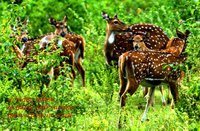


so many forests ~
so many deer summer
perspectives in green


Click on the following Haiku to see the Haiga

mysterious jungle
great cosmos of deer
peaceful dhyaana ~


nigoodam vanam
maha harina prapancham
shaanthi dhyaanam ~
[ Sanskrit ]

mother deer asleep ~
a triplet of fawns
wander into twilight


Quoted from wonderhaikuworlds.com
twilight stars emerge ~
a herd of deer re-align
their luminous spots  

shyam

a stag, solitary
among sunlit grass ~
distant human voices  

shyam

deers at dusk
tasting the leaves of grass -
strange footsteps

Ninasha

:::::::::::::::::::::::::::::::::::::::::::::::::::::::::::::::::::::::::::::::::::::::::::::::::::::

autumn stars
as deep in the woods
stags hunt

my hands
warm in my pockets
... the calls of stags

through the dark
of the autumn evening
deer tracks


Ella Wagemakers
Autumn 2011


*****************************
Related words

. shika tsunokiri 鹿角切り cutting the antlers of deer  
at Kinkazan, Miyagi
at Kasuga Taisha shrine, Nara

***** WASHOKU ... Meat from the Mountains  

. ANIMALS in all SEASONS - SAIJIKI

. Legends about the deer .

::::::::::::::::::::::::::::::::::::::::::::::::::::::::::::::::::::::::::::::::::::::::::::::::::::: 

[ . BACK to DARUMA MUSEUM TOP . ]
[ . BACK to WORLDKIGO . TOP . ]

:::::::::::::::::::::::::::::::::::::::::::::::::::::::::::::::::::::::::::::::::::::::::::::::::::::  

December singers (sekizoro)

[ . BACK to Worldkigo TOP . ]
::::::::::::::::::::::::::::::::::::::::::::::::::::::::::::::::::::::::::::::::::::::::::::::::::::: 

December Singers (sekizoro)

***** Location: Japan
***** Season: Mid-Winter
***** Category: Humanity


*****************************
Explanation
sekisooro sekisoro sekizooro
December Singers, Twelfth Month Singers,
Year End Singers . sekizoro 節季候

..... sekkizoro せっきぞろ
..... female singers, old ladies, ubara 姥等 うばら
..... hitting the breasts, mune tataki 胸敲 むねたたき


Short for a greeting of the changing season: 節季(せっき)にて候.

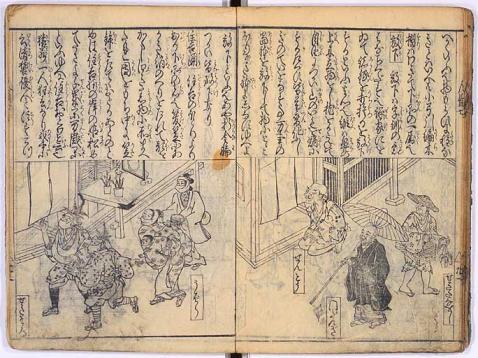
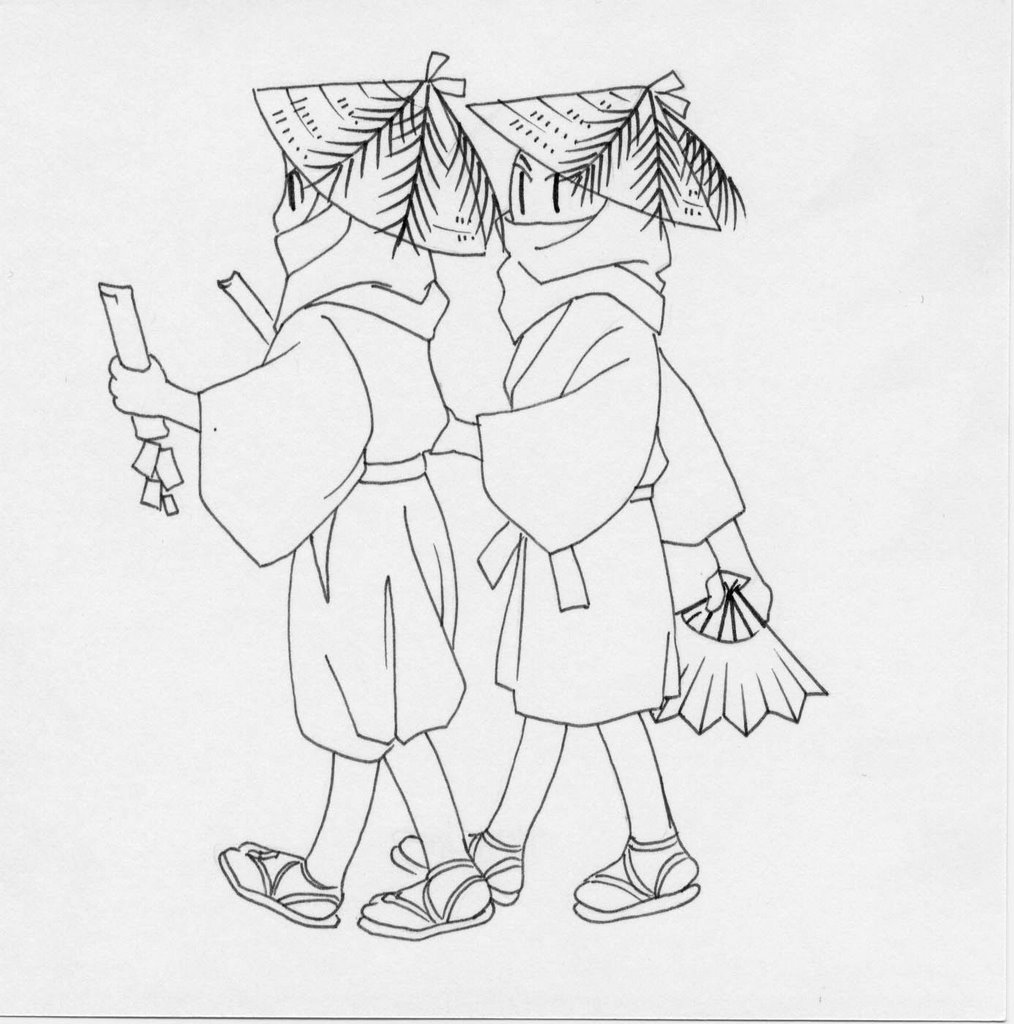
Sekizoro refers to a Twelfth Month custom in which strolling singers wandered from town to town, singing festive celebration songs.

They wore large straw hats, decorated with auspicious fern. The faces where covered with white or red towels. Around the hips, they wore red aprons. Some hit their breasts like drums during the performance. Others rattled some small bamboo tools.
They shouted "Congratualtions for New Season!" and got rice or money in return from the townspeoople. They used to walk around Edo and other big cities from December 20 till the end of the year.
They were in fact a group of very poor beggars, giving a comic performance to make some money.

Their standard song at each home was like this:

サッサ節季候、毎年毎とし、旦那のお蔵へ金銀お宝飛び込め舞い込め!

T'is the end of the season!
As in every year, in every year,
may the treasures, silver and gold
gather and fly to the storehouse
of this honorable home owner!

.............................................................................


http://www.museum.tokushima-ec.ed.jp/hasegawa/shokunin/i_044.htm


*****************************
Worldwide use


*****************************
Things found on the way


*****************************
HAIKU


- - - - - Some Haiku by Kobayashi Issa - - - - -

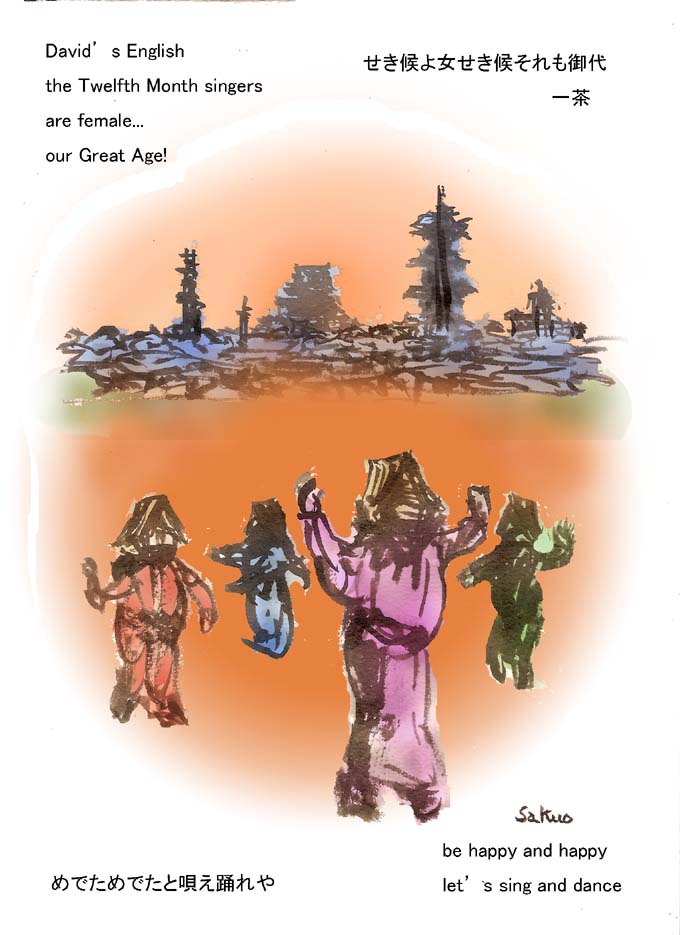
sekizoro yo onna sekizoro sore mo miyo
せき候よ女せき候それも御代

the Twelfth Month singers
are female...
our Great Age!

Tr. David Lanoue

Miyo ("reign") is short for the Emperor of Japan's reign or dynasty. Issa seems to be using it here as an expression of "this modern age we live in" -- wherein even women participate in an activity once reserved exclusively for men.


be happy and happy
let's sing and dance

Haiga and renku by Nakamura Sakuo


..................................


1818 鶺鴒の尻ではやすやせっき候
sekirei no shiri de hayasu ya se[k]kizoro

performing behind a waterfall...
Twelfth Month singers


1818 えどの世は女もす也節き候
edo no yo wa onna mo su nari sekkizoro

Edo's world--
women also are
Twelfth Month singers

Tr. David Lanoue


せき候の尻の先也角田川
sekizoro no shiri no saki nari sumida-gawa

Twelfth Month singers--
their butts facing
Sumida River


Haiga by Nakamura Sakuo


sekizoro no shiri no saki nari sumidagawa

just beyond the hips
of year-end street dancers
the Sumida River

Tr. Chris Drake

This hokku is from the last day or next-to-last day of the lunar year (January 24 or 25, 1819). 1819 is the Gregorian-calendar year recorded in Year of My Life. The Sumida River is in Edo, but at the time this hokku was written, Issa was living in his snow-country hometown, so this must be a hokku of imagination and memory: based on his memories of Edo, Issa seems to be picturing what it must be like in Edo now at the end of the year.

In Issa's hokku year-end street performers stand in a small group in front of a riverside home. The big Sumida River ran right through Edo, and riverside houses to the north of downtown Edo were fairly cheap to rent. Since Issa lived by the Sumida for a while, I take the hokku to be a memory from the time he lived in Edo. There are no houses on the other side of the street, only an embankment and then the big river. As the performers leap into the air and do their dances, the river feels closer, and the energy of the river and the energy of the rapidly moving men seems somehow continuous. To Issa the fast-running, powerful river seems to flow just beyond -- and through? -- the powerfully moving legs and hips of the dancers.

The begging street performers called sekki-zoro or seki-zoro went around from door to door at the very end of the year. Sekki/seki meant account-settling at the end of the year, when all bills had to be paid, and the beggars went around in groups of two, four, or six people at the same time that bill collectors were also going around to people's houses. To announce themselves, they chanted sekki-zoro, sekki-zoro, "It's bill-paying time, bill-paying time." They were a kind of holy beggar, as indicated by their clothing. They wore straw hats with ferns stuck in them, and they covered their faces with a red cloth, leaving only their eyes uncovered, an appearance that suggests they were originally wandering shamans who wore masks and spoke trance words of various gods in return for donations. When they stood in front of someone's gate or door they would sing a loud chant about how they visit every year at this time and how they will leap and jump into the owner's yard or garden.

As they chanted they beat the ground with split bamboos, struck wooden clappers together, and played a small drum. They would continue the percussion sounds and chanting-dancing until the owner appeared and gave them a coin or two or some rice, at which point they would sing a blessing for the end of the year and for the coming year and then move on. Contemporaries often referred to them as "noisy," but their trick-or-treat approach seems to have been effective. During this same time of the year, there were various groups of street musicians, story-tellers, and entertainers who performed their art with a year-end twist to it for donations. Skilled manzai ( 萬歳 ) singers and dancers, for example, were usually invited into the house for their artistic blessing-performance. In contrast, the sekizoro seem to have been basically beggars who put on special performances at the end of the year. Many scholars believe they were once mountain people (foresters, hunters) who came down to the towns at the end of the year to give their blessings to town people. By Issa's time, only the outer appearance of the older shamanic blessing ceremony seems to have remained, though the energy of the performers was itself surely a blessing in itself.

Chris Drake

.............................................................................

- Kobayashi Issa with comments by Chris Drake

sekizoro ni keraretamau na ato no chigo

child following
the year-end beggars
careful, don't get kicked!


This hokku is from the 10th month (November) of 1813, when Issa was visiting some hot springs near his hometown. He seems to be imagining the end of the year already, since actual groups of singing and dancing year-end beggars known as seki-zoro (also sekki-zoro) didn't appear until later, just before the end of the 12th month.

In the hokku, Issa sees a young child walking close behind a group of the beggars, following them in the street or perhaps just standing behind them watching. Or perhaps there are two or three children watching. Issa worries about the child and warns him/her not to get too close, since when the beggars begin a vigorous dance their feet go flying.


oku-ono ya koyabu-gakure mo sekki-zoro

even inside
a grove deep in Ono --
year-end beggars


In the 11th intercalary or extra lunar month (around December) in 1813, when this hokku was written, Issa was traveling around to various places near his hometown in Shinano in central Honshu. The end of the year -- when these beggars appear -- is still a month away, so this hokku must be a poem of imagination, perhaps based on an experience when Issa was in and around Kyoto, since there is an Ono on the outskirts of Kyoto, as pointed out by Issa scholar Maruyama Kazuhiko. The Ono near Kyoto is the area in which the famous woman waka poet Ono no Komachi's clan once lived and is now about 40 minutes by local bus from downtown Kyoto. However, there is also an Ono in the outskirts of Shiojiri in central Nagano Prefecture, the modern name of Shinano. It is not clear which Ono Issa is referring to. The Ono in Shiojiri is not too far from the Higashiyama area north of Shiojiri that Issa seems to be referring to in a hokku about rapeseed flowers, as Gabi once pointed out, so Issa may be writing about an earlier experience of seeing these beggars in Shinano. (For the Ono Shrine in Shiojiri see www.genbu.net/data/sinano/ono_title.htm .) Oku, 'remote, deep in,' is also the name of a different Oku, the northern area visited by Basho in Oku no hosomichi (Narrow/Slender Roads Through the Far/Remote/Deep Interior).

Sekki-zoro (also seki-zoro) is a kind of beggar that went around to people's houses at the end of the year. Apparently they first appeared near Kyoto and annually walked through Kyoto streets from 12/22 to 12/28, the time when everyone was preparing for New Year's and trying to pay all their bills for the year. Sekki-zoro is a formal phrase chanted by the beggars that literally means "It's the end of the year when all bills must be paid." The beggars, wearing ferns stuck into their rush hats and red cloths that covered their faces below their eyes, went around in small groups chanting this and similar phrases at people's doorways and gates. When the owner responded, they would perform a short song and dance prayer for good fortune in the new year, and in return they would receive a few copper coins or some rice. If the owner didn't respond, however, they would make even louder music until s/he appeared.

At this time of year Kyoto, Edo, and to a lesser extent other cities and towns, were filled with semi-religious and religious beggars, including these Sekizoro beggars, who were very much of the "semi-" type. The cloths they wore over their lower faces are thought to have been a kind of mask indicating that, earlier in their history, the beggars were believed to be shamanically possessed by various gods, with each beggar representing a god visiting human houses. It's doubtful, though, that Issa believes these modern beggars who continue to wear old shamanic clothing are actually possessed by gods. In fact, many people in Issa's time apparently didn't like the way the beggars aggressively chanted and noisily banged bamboo clappers and other hand percussion instruments loudly at people's gates and doors until the people inside virtually had to come out.

Issa (or at least his imagined persona) seems to be amazed that he can hear the beggars chanting and banging their loud instruments even inside a small thicket or perhaps a small bamboo grove far from any area where there is wealth. It is presumably the beggars' noisy sounds that tell Issa they're hidden within the small grove, and the house or hut in the grove must be a small one, though it can't be seen. The "even" suggests that Issa is surprised to hear the beggars have come to beg at the house of an impoverished or barely surviving farmer or craftsperson. Perhaps Issa is amazed at the tenacity of the beggars, who are almost literally going around to every house in this area in the hills. Issa may even be wondering why the beggars are begging so aggressively from someone who may be as poor as they are. There seems to be a skeptical undertone to this hokku.

Chris Drake

:::::::::::::::::::::::::::::::::::::::::::::::::::::::::::::::::::::::::::::::::::::::::::::::::::::


. Matsuo Basho 松尾芭蕉 - Archives of the WKD .


節季候の来れば風雅も師走哉
sekizoro no kureba fuuga mo shiwasu kana

when they come
the Sekizoro Singers, then elegance adorns
the last month of the year . . .

Tr. Gabi Greve

Written on the last day of 1690, 元禄3年

- - - - -


Sekizoro singers - Haiga by Yosa Buson 与謝蕪村
Miho Museum


節季候を雀の笑ふ出立かな
. sekizoro o suzume no warau detachi kana .
sparrows laugh at the Sekizoro singers
- - - - - And
MORE hokku about laughing by Matsuo Basho.


source : image.space.rakuten.co.jp

:::::::::::::::::::::::::::::::::::::::::::::::::::::::::::::::::::::::::::::::::::::::::::::::::::::

- quote -
Hanabusa Itcho Twelve Months: New Year
This work also depicts the scenery of the second day of the year. Unlike the quiet New Year's Day, children are out and about on the street and as can be seen on the left, kadozuke-geinin (traveling performers) such as manzai and shishimai are present.
The artist of this work, Itcho Hanabusa is a painter representative of the mid-Edo period. While his style of painting came from the Kano school, he also depicted many street customs and this painting was much admired by people. It is possible to see this style in this painting.
Kadozuke refers to artists who come up to the front of peoples' houses and play music and this was also a special attraction of the New Year. The types of Kadozuke for New Year included lion dancing, banzais, grand performance of kagura (scared music and dancing), torioi (strolling singers), etc.
Though not included in this picture, the lion dancing in particular added a strong story line with the element of acrobatics and clownery and so along with flutes and drums, it was an Edo entertainment that merrily lifted the spirit of the New Year.
- source : Tokyo Metropolitan Library -

Manzai 漫才. 万歳 / Banzai 萬歳
kigo for the New Year

senzu manzai 千秋万歳(せんずまんざい)for the New Year
manzai raku 万歳楽(まんざいらく)music for the manzai

Mikawa manzai 三河万歳(みかわまんざい)from Mikawa (Nagoya)
Yamato manzai 大和万歳(やまとまんざい)from Yamato (Nara)
Oowari manzai 尾張万歳(おわりまんざい)from Owari (Nagoya)

manzai dayuu 万歳大夫(まんざいだゆう)manzai performer
saizoo 才蔵(さいぞう)helper of the manzai performer


This performance dates back to the Heian period in the capital of Japan. Two actors come to the local shrine with a message from the deities. The two performed in a comical way, teasing each other or pretending to be dumb and not understand.
During the Edo period, many areas of Japan started their own performances, giving it a lot of local colorit. Today some are still active and practised.

CLICK for more photos CLICK for many more photos


山里は万歳遅し梅の花

yamazato wa manzai ososhi ume no hana

Matsuo Basho
written in 1691 - mid-First lunar Month, February

mountain village
and the New Year's dancers are late:
plum blossoms


The itinerant Manzai dancers perform dances for households around New Year's... The dances are said to bring good fortune.
Tr. Barnhill


in the mountain village
Manzai dancers are late--
plum blossoms


Manzai dancers are a troupe of itinerant players who go from house to house in the New Year season and perform good-luck dances for a small amount of rice or money.
Tr. Ueda


Most every translation I've seen calls them dancers.
Apparently only Hiroaki Sato gets it right:

In this mountain village
the comedians are late:
plum blossoms

Tr. Sato

So it makes me wonder: are the Manzai performers dancers or comedians (perhaps doing a type of physical comedy routine we call slapstick?), or a little of both? Or were they dancers back in Basho's day, but comedians later on?

Contribution by Larry Bole

STONE MEMORIAL of this HAIKU !


. Matsuo Basho 松尾芭蕉 - Archives of the WKD .


::::::::::::::::::::::::::::::::::::::::::::::::::::::::::::::::::::::::::::::::::::::::::::::::::::: 


Traditional Manzai in the Edo period are comedian-entertainers and often worked on a stage or in a Shinto shrine. They only start going around after the New Year has started and do it until the kadomatsu, the pine decorations are taken away.

They are called according to the area where this happens, for example
三河万歳 Mikawa Manzai, Yamato Manzai大和万歳,
Oowari Manzai 尾張万歳
.
This custom goes back to the Muromachi period.

まんざいらく(万歳楽) Manzai Raku
is an old form of Chinese dance, in Japan known as a Gagaku Court Performance of four or six performers.
Banzai is short for Senzu Manzai 千秋万歳.


CLICK for more Yamato Manzai
Yamato Manzai


:::::::::::::::::::::::::::::::::::::::::::::::::::::::::::::::::::::::::::::::::::::::::::::::::::

Mikawa Manzai
is believed to have originated in Nishio about 730 years ago. The second resident priest, Otsuzenshi, of Jissoji temple learned and brought this comedic art form back from China and taught it to the local people. Manzai in Kota town dates back to the beginning of the Meiji Period, when it was performed mainly in the Kanto District as a Shinto prayer for peace and security, a bumper crop, and the health and prosperity of the nation and was performed with the character of Saizou playing the comical role and Nishio-no-tayu assuming the main or straight role.

In 1977, the Kota-cho Mikawa Manzai Preservation Association was founded and effort has been made in the preservation and promotion of this traditional form of entertainment. Manzai programs in Kota include "Gomonbiraki no Mai," "Goten Manzai," "Kazoeuta," "Sankyoku Manzai", as well as others.
In December 1995,Mikawa Manzai was designated as a National Significant Intangible Folk Cultural Asset in conjunction with Nishio city and Anjo city.
© www.sk.aitai.ne.jp

Reference about Mikawa Manzai


During the Edo period, manzai performers from Nagoya (Mikawa, the place related to Tokugawa Ieyasu) would come to Edo and sell goods from their area and make their performances

saizooichi, saizoo ichi 才蔵市 (さいぞういち)
Saizo Market


observance kigo for mid-winter


:::::::::::::::::::::::::::::::::::::::::::::::::::::::::::::::::::::::::::::::::::::::::::::::::::


Owari-Manzai
Manzai goes basically by Tayu who leads the story with an ogi, and Saizo who follows tapping the tsuzumi, while sankyoku manzai is performed by three players with three musical instruments, tsuzumi, shamisen, and kokyu. The sankyoku is one of the characteristics of Owari manzai. Manzai existed basically for blessing people at their own residences, but these Owari manzaists organized touring troupes and had stage performances, which was another one of their characteristics.
© Kotaro Kitagawa


Reference about Owari Manzai


kadozuke 門付け a strolling musician
sing and play from door to door to earn money


:::::::::::::::::::::::::::::::::::::::::::::::::::::::::::::::::::::::::::::::::::::::::::::::::::::


kigo for the New Year

hatsuseki, hatsu seki 初席 はつせき "first seat"
to watch a comic yose performance
... hatsu yose 初寄席(はつよせ)
... yosebiraki, yose biraki 寄席開き(よせびらき)
katarizome 語初(かたりぞめ)first talk (of rakugo)
. . . CLICK here for Photos !

This took place from January 1 to 10. There were special treats and stories just for this time of year.


. NEW YEAR
KIGO for HUMANITY


:::::::::::::::::::::::::::::::::::::::::::::::::::::::::::::::::::::::::::::::::::::::::::::::::::::


万歳の子も万歳の十二歳
manzai no ko mo manzai no nijuusai

the child of the manzai troup
is coming of age (manzai)
at twelve years


Takahama Kyoshi 高浜虚子


Coming of age in Edo
The temple visit at the 13th birthday:
. juusanmairi 十三参り 13 temple visits


*****************************
Related words

***** December

***** Rakugo, comic storytelling performances Japan


***** WKD : Fern (shida)

:::::::::::::::::::::::::::::::::::::::::::::::::::::::::::::::::::::::::::::::::::::::::::::::::::::


. Banzai Daruma 万歳だるま
and more haiku


[ . BACK to DARUMA MUSEUM TOP . ]
[ . BACK to WORLDKIGO . TOP . ]
- #manzai #sekizoro -
::::::::::::::::::::::::::::::::::::::::::::::::::::::::::::::::::::::::::::::::::::::::::::::::::::: 

4/02/2005

Dandelion (tanpopo)

[ . BACK to Worldkigo TOP . ]
:::::::::::::::::::::::::::::::::::::::::::::::::::::::::::::::::::::::::::::::::::::::::::::::::::::


memory loss
at the kitchen table -
who are you ?


:::::::::::::::::::::::::::::::::::::::::::::::::::::::::::::::::::::::::::::::::::::::::::::::::::::

Dandelion (tanpopo)

***** Location: Japan, other regions
***** Season: All Spring
***** Category: Plant


*****************************
Explanation

tanpopo 蒲公英 (たんぽぽ) dandelion
..... fujina ふじな、tana たな

shirobana tanpopo 白花たんぽぽ(しろばなたんぽぽ)
dandelion with white flowers

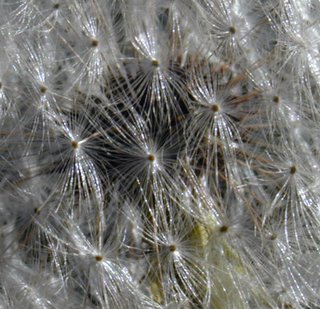
tanpopo no wata 蒲公英の絮(たんぽぽのわた)
dandelion fluffs

tsuzumigusa 鼓草(つづみぐさ)"tsuzumi drum flower"

seiyoo tanpopo 西洋たんぽぽ(せいようたんぽぽ)
Western dandelion

shokuyoo tanpopo 食用たんぽぽ(しょくようたんぽぽ)
edible tanpopo dandelion


. Ezo tanpopo 蝦夷たんぽぽ Ezo Dandelion
Taraxacum hondoense


:::::::::::::::::::::::::::::::::::::::::::::::::::::::::::::::::::::::::::::::::::::::::::::::::::::

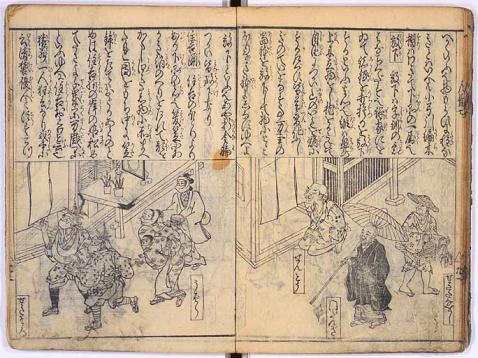
Each dandelion stem has a yellow flower head containing numerous radiating petals and each petal is a separate flower. In the sun, flower heads open wide and when cloudy or dark they close tightly. Europeans brought dandelion seeds to America in the 1700s. One of the most common weeds, it may be found almost everywhere in the United States and will grow almost anywhere. Dandelions bloom from late March through early January. The dandelion's long taproot contracts each year, pulling the leaves down to the soil (away from your lawn mower). Dandelion flowers don't need pollination; they grow directly from female ovules - making every dandelion a clone of its mother!

Dandelions, also known as "lion's teeth", are good for you - they're the richest known source of beta-carotene, also high in vitamin C! Young leaves are used in salads, boiled, or scrambled with eggs, as well as for coffee and wine. Parts of the dandelion can be used in an array of treatments for illnesses; in fact, pharmacists import over 100,000 pounds of dandelion root to the U.S. each year for use in tonics and liver medications! Dandelions also yield dyes for clothing, and most importantly supply endless amounts of entertainment and fascination as they turn into little white puffs to make a wish on.

Carol Raisfeld
http://home.alc.co.jp/db/owa/ph_diary?stage=show&diary_sn_in=400

xxxxxxxxxxxxxxxxxxxxxxxxxxxxx

*****************************
Worldwide use


*****************************
Things found on the way


sweet called tsuzumigusa つづみぐさ
served for the tea ceremony in spring


. WAGASHI - Japanese Sweets Saijiki  


*****************************
HAIKU


庭に咲く蒲公英に詩の思ひあり
niwa ni saku tampopo ni shi no omoi ari

in my garden
the flowering dandelions
have a feeling for poetry . . .

Tr. Gabi Greve

. Masaoka Shiki .


子規俳句 春 植物 蒲公英 たんぽぽ
source : www.webmtabi.jp

::::::::::::::::::::::::::::::::::::::::::::::::::::::::::::::::::::::::::::::::::::::::::::::::::::: 


たんぽぽのぽぽのあたりが火事ですよ
tanpopo no POPO no atari ga kaji desu yo  

the POPO part
of a tanPOPO
is on fire !

. Tsubouchi Nenten 坪内稔典  

This is a play with the sound of the word TAN POPO.
I guess Nenten sensei is aware of the meaning of POPO in German.


::::::::::::::::::::::::::::::::::::::::::::::::::::::::::::::::::::::::::::::::::::::::::::::::::::: 


backyard picnic
a birthday toast with
dandelion wine


http://home.alc.co.jp/db/owa/ph_diary?stage=show&diary_sn_in=400


... ... ...


surprise sneeze
the dandelion blows away
without a wish


http://home.alc.co.jp/db/owa/ph_diary?stage=show&diary_sn_in=401

Two Photos and Haiku © by Carol Raisfeld

xxxxxxxxxxxxxxxxxxxxxxxxxxxxx


lone dandelion stalk
all of its seeds blown away
unsure what it is


Gabriel Rosenstock (Ireland)
http://groups.yahoo.com/group/happyhaiku/message/1848

xxxxxxxxxxxxxxxxxxxxxxxxxxxxx


Dandelion... weed?
for me a feathery
star all of gold...

Pissenlit... herbe folle?
J'y vois une étoile plumée
et tout dorée...

© by Richard Vallance 2005
http://groups.yahoo.com/group/happyhaiku/message/1662


:::::::::::::::::::::::::::::::::::::::::::::::::::::::::::::::::::::::::::::::::::::::::::::::::::::


dandelions -
even my weeds
turn mandala


© Gabi Greve, Spring 2005
http://happyhaiku.blogspot.com/2005/04/mandala-02.html


.................................................................................


snow fluffs
on dandelion fluffs -
winter begins


Gabi Greve, December 2011


Dandelion in Frost, 2006


:::::::::::::::::::::::::::::::::::::::::::::::::::::::::::::::::::::::::::::::::::::::::::::::::::

Dandelions crown
grey to dandelion puffs -
Grandchildren dare flight


© Michael R. Collings, June 2007


:::::::::::::::::::::::::::::::::::::::::::::::::::::::::::::::::::::::::::::::::::::::::::::::::::::

dandelion...
eat the whole
weed!

together we sip
the bubbles


- the whole dandelion is edible, the flower head makes a bubbly wine, the leaves a peppery salad, and the roots a chickory drink similar to coffee Enjoy Earth Day!

- Shared by Dennis Chibi, April 22 -
Joys of Japan, 2012


*****************************
Related words

. . . . SPRING
the complete SAIJIKI


[ . BACK to WORLDKIGO . TOP . ]
:::::::::::::::::::::::::::::::::::::::::::::::::::::::::::::::::::::::::::::::::::::::::::::::::::::

Daruma Flower

[ . BACK to WORLDKIGO  TOP . ]
::::::::::::::::::::::::::::::::::::::::::::::::::::::::::::::::::::::::::::::::::::::::::::::::::::: 

Daruma Flower (Darumasoo, Japan)

***** Location: Japan
***** Season: Spring
***** Category: Plant


*****************************
Explanation

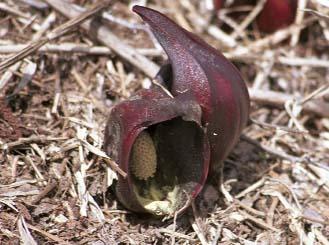
Daruma Flower, Darumasoo 「達磨草」(だるまそう)

This flower is also called
Zen Meditation Flower, zazensoo 座禅草 (ざぜんそう)
Symplocarpus renifolius

It resembles Daruma Daishi, the founder of Zen.

It belongs to the family of sweet potatoes. renifolius refers to the kidney-shape of the flowers. In Japan, this form is more associated with the halo of a Buddha statue. And protected by this halo, Daruma sits quietly in Zen meditation !

xxxxxxxxxxxxxxxxxxxxxxxxxxxxx


http://www5e.biglobe.ne.jp/~t_hirata/zazensoo.htm

xxxxxxxxxxxxxxxxxxxxxxxxxxxxx

Perennial growing to 0.5m. It is hardy to zone 4. It is in flower from February to April, and the seeds ripen from August to September. The scented flowers are hermaphrodite (have both male and female organs) and are pollinated by Insects.

The plant prefers light (sandy), medium (loamy) and heavy (clay) soils. The plant prefers acid and neutral soils and can grow in very acid soil. It can grow in semi-shade (light woodland) or no shade. It requires moist or wet soil.

Read more about its medical and poisonous properties:
http://www.ibiblio.org/pfaf/cgi-bin/arr_html?Symplocarpus+renifolius&CAN=LATIND

*****************************
Worldwide use


*****************************
Things found on the way


*****************************
HAIKU


Copyright © 2000 Shunji Mori
http://www.dynax.co.jp/sinsen/photo/hana_koyomi/gf_zazensou.html

More photos of this plant
http://www.dynax.co.jp/sinsen/gallery/hakuba/zazensouen.html

xxxxxxxxxxxxxxxxxxxxxxxxxxxxx


覆はれて首すくめをり座禅草
oowarete kubi sukume-ori zazensoo

covered
ducking its head -
Zen Meditation Flower

(Tr. Sakuo Nakamura)

足立武久 Adachi Takehisa
http://www5b.biglobe.ne.jp/~t_adachi/akanaF.html

xxxxxxxxxxxxxxxxxxxxxxxxxxxxx


座禅草思ひおもひの座禅組み 
zazensoo omoi-omoi no zasen kumi

Daruma Flowers -
sitting in Zen meditation
in so many ways
(Tr. Gabi Greve)

堤 ふさを
http://www.town.kusu.mie.jp/kusu380/ks7m.html

xxxxxxxxxxxxxxxxxxxxxxxxxxxxx


水ひそむ木道端の座禅草
mizu hisomu mokudoo-bata no zazensoo

hiding in water
along the wooden pathway -
Zen Meditation Flowers
(Tr. Sakuo Nakamura )

Nakagawa
http://www1.odn.ne.jp/~cas67510/haiku/haisakuhinb.html

Pathways for visitors, made of logs lead through many of the swamps of Japan.


xxxxxxxxxxxxxxxxxxxxxxxxxxxxx


On the way to the temple
a Zen Meditation Flower bows down
all the pilgrims

Vasile Moldovan, RO


*****************************
Related words

***** Skunk Cabbage (Mizu Bashoo)

***** Daruma mikan 達磨蜜柑(だるまみかん)
mikan named Daruma


***** . KIGO with Daruma San


::::::::::::::::::::::::::::::::::::::::::::::::::::::::::::::::::::::::::::::::::::::::::::::::::::: 
[ . BACK to WORLDKIGO  TOP . ]
[ . BACK to DARUMA MUSEUM TOP . ]
::::::::::::::::::::::::::::::::::::::::::::::::::::::::::::::::::::::::::::::::::::::::::::::::::::: 

Daruma Index

*****************************
Safekeep Copy Only

……………………………………………………………………………AAA Aizu Daruma 会津だるま Papermachee DollsAkubi あくび <> Akubi ― Daruma Yawning..... http://www.amie.or.jp/daruma/akubi-mini.html..... http://www.amie.or.jp/daruma/FUDE-ARAI-mini.html..... http://groups.yahoo.com/group/Darumasan-Japan/message/460..... http://darumasan.blogspot.com/2004/11/akubi-daruma-yawning.html..... Yawning and your HealthAME, DAGASHI Sweets 飴、駄菓子Aoi Me no Daruma 青い目の達磨 <> ME - Blue Eyes of Daruma..... Eye-opening Ceremonies for BuddhastatuesAsakusa Kannon 。。。浅草観音、東京Asti, Sergio and his Daruma Design (Sergio Asti)Atsugi Daruma 厚木だるまAyame あやめ 菖蒲 <> Iris Dolls and Daruma……………………………………………………………………………BBBBasho and Haiku 松尾芭蕉の俳句 Matsuo Basho (Matsuo Bashoo)Bentoobako 弁当箱 <> Bentoobako ― Lunchbox with Daruma へのへの HE NO HE NO.....http://groups.yahoo.com/group/Darumasan-Japan/message/449..... ..... Photos Bicycle called Daruma  だるま自転車Books about Daruma..... ABC Introduction to Daruma San..... More Books about DarumaBuddhist Protective Deities for the Individual (ichidai mamori honzon)..... Buddhism and ShintoismBUSEN sensei Photo GalleryBushuu Daruma Koshigaya Daruma, 武州だるま、越谷だるま 張子……………………………………………………………………………CCCCHA 茶 <> The world of Tea..... Photo Gallery, Teapots, Teacups..... Kyusu 急須..... History of Drinking Tea..... SenchaChichibu Daruma 。秩父だるまChina, Korea and Bodhidharma (01) 中国、韓国のだるま..... China, Korea and Bodhidharma (02)..... Chinese PoetryChokinbako 貯金箱 <> Piggybank with Daruma..... More Pictures CHOOCHIN, lanterns 提灯とだるまClivia クリビア <> A Flower named DarumaCoconut Daruma .. ココナツだるま、自然のだるまColours Traditional Japanese Colors 日本の伝統的色、色彩……………………………………………………………………………DDDDarumabune, a Boat だるま舟Daruma-dera > Daruma TemplesDaruma-enaga だるま柄長 <> A Bird named DarumaDaruma Geisha in Postwar JapanDaruma Ichi Markets to Sell Daruma / 達磨市Daruma Magazine of Japanese AntiquesDaruma Memorial Day .. Daruma-ki, Japan 達磨忌Daruma Temples  達磨寺 Daruma-dera, Daruma-ji..... Photo Gallery..... Overview..... Hoorin-ji Kyoto..... Nishi-Izu 西伊豆 <> West-IzuDivali Festival, Lakshmi and the Ramayana in IndiaDorei  土鈴 <> Clay BellsClay Bells..... Photo Gallery..... With Winter MotivesDoosojin, the Wayside Gods 道祖神……………………………………………………………………………EEEEihei-Ji 永平寺 .. A Visit to a COLD Zen-templeEisei Bunko MuseumEma 絵馬 <> Votive Plaques, Prayer Boards..... Photo Gallery..... Ema Message 548..... EMA <> Votive Tablets with Fudo Myo-OEngimono for good luck  A Summary 縁起物のまとめ..... Darumasan-Japan/message/467 (maneki neko)Enku 円空 <> Master Carver Enku sanEscher and Daruma <> The illusions of M.C.EscherE-Tegami 絵手紙 <> Handpainted Letters and Postcards (like Haiga)……………………………………………………………………………FFFFeng Shui 風水 <> Chinese PhilosophyFishhook Daruma Fishlure 魚のルーアーFriendship Dolls from 1927Fude 筆 <> Daruma holding a PenFude-arai 筆洗い <> Brush-washerFudo Myoo 不動明王 <> The Unmovable Wisdom God (Fudoo Myoo-oo)..... His own Blog with many related topics  ..... Oyama Fudo, Feb. 28 FestivalFukuda Kodoojin 福田古道人 <> Painter, ArtistFundoshi 褌 <> Fundoshi (loincloth) 褌 Fudo Myo-O and Daruma on Loincloth !Furoshiki 風呂敷 <> Cotton Wrapper ClothFuurin 風鈴 <> Wind ChimesFushimi Clay Dolls / 伏見土人形……………………………………………………………………………GGGGakki, Musical Instruments (01) Big Drum Daiko 大鼓 and TsuzumiGangu 玩具 <> Toys with Daruma..... Photo Gallery..... Darumasan-Japan/message/452 A Whistle..... Mini Gallery Gangu ..... Dice Holder, an antique..... Hagoita, battledore racket 羽子板..... Tools for Gambling <> Bakuchi doogu 博打道具GERMAN..... ..... Daruma-Museum, Okayama Auf Deutsch !Geta Sandals 下駄Glass Plate ガラス <> Glass Plate (Nr. 27)Gyoki Bosatsu Gyooki 行基菩薩Gyuumei san 牛鳴さんのだるま <> Paintings of Mr. Gyuumei ……………………………………………………………………………HHHHachimaki 鉢巻 はちまき <> Papermachee Dolls with a HeadbandHagaki はがき <> Postcards..... Photo Gallery..... Album picture ..... Hagaki by David Bull H A I K U 俳句  ..... ..... My Haiku Gallery..... ..... My Haiku Topics ..... Frogs farting and some Zen :o)..... My HAIKU FORUM.....  KOAN and Haiku (01) ::公案と俳句Hakata Dolls / 博多人形 more Hakata Clay DollsHako 箱 <> Hako / BoxesHamada Shooji 浜田庄司 <> Mashiko Potter and Mingei..... More Darumasan-Japan/message/126Hanabi 花火 <> Fireworks in Summer in JapanHanga 版画 <> Woodblockprints of Daruma..... Photo Gallery.....Darumasan-Japan/message/250..... Darumasan-Japan/message/397..... Daruma market in Odawara by Sekino Jun-ichiroo 関野潤一郎..... Darumasan-Japan/message/461..... Helen Hyde and Daruma Prints..... Darumasan-Japan/message/562..... Darumasan-Japan/message/563..... Jim Breen and an Ukiyo-e Gallery..... Darumasan-Japan/message/566..... Japanese Prints and the World of Go / William PinckardHanuman, the Indian Monkey GodHariko 張子 <> Papermachee Dolls..... The Papermachee Doll Museum..... Darumasan-Japan/message/70..... Mizuho Hariko Store..... Mihara Daruma and the Aoyama Collection..... Chichibu Daruma and Gingko Trees 秩父だるま..... Mu-Jiko, Roadsafety Daruma..... Kintaroo, the Golden Boy 金太郎..... ..... Photo Gallery..... Making your own Daruma Papermachee DollPopeye Doll Museum, Japan ..HEALTH - Some Taoist Lore .. .. DaMo QuigongHENRO Daruma Pilgrims in Japan, a new Gallery..... Pilgrimages to Fudoo Temples.....Henro, Junpai 遍路、巡拝 <> Pilgrims in Japan..... Pilgrim Resouces Pages, including most of the below..... Circle of Life, Shikoku Pilgrimage..... Shikoku Henro 四国遍路 <> Shikoku Pilgrimage to 88 Temples..... Darumasan-Japan/message/352..... Shuin-choo, Nookyoo-Choo, Stamp Books (shuuinchoo)..... Darumasan-Japan/message/398..... Senja-Fuda, Name Stickers (senjafuda 千社札)..... Walking as Healing ExerciseHige 髭 ひげ <> Daruma and his BeardHime 姫だるま <> Princess Daruma from Matsuyama 松山..... Matsuyama Hime Daruma..... Hime 姫だるま <> A Group of all Kinds of Princess Dolls..... Groups of Hime DarumaHimeji Daruma / 姫路張子Honen Shoonin and Pure Land Buddhism法然上人Hoo-oo 鳳凰 <> The Phoenix in Asian Art, Special FeatureHoosoo 疱瘡 <> Smallpox, Red and Daruma (by Bernard Faure) EssayHossu 払子 <> Daruma holding a Flywhisk..... Jimotsu - What is Daruma holding?.....Darumasan-Japan/message/89Hotaru 蛍 <> Fireflies and DarumaHOTEI and the seven gods of good luck 布袋と七福神Hyakunin Isshu 百人一首 <> 100 Poems by 100 Poets..... Darumasan-Japan/message/362..... Darumasan-Japan/message/428..... ..... Woodblock Prints by David Bull..... Woodblock Prints from a German Collection……………………………………………………………………………III Ichidai 一代守り本尊 <> Personal Protector / Ichidai Mamori HonzonInari 稲荷 <> The Fox CultInkan, Hanko 印鑑、判子 <> Stamps and SealsInoue Hisashi and Japanese HumanismIppitsu 一筆 <> Daruma painted in One-Stroke (ensoo円相)Irezumi 刺青 <> TatooIshi 石 <> Daruma from StoneIssa and Daruma Haiku 小林一茶とだるまの俳画……………………………………………………………………………JJJ Jizo Bosatsu 地蔵菩薩 <> Jizoo..... Asekaki Jizo, Sweating Jizo..... Darumasan-Japan/message/364Juusanbutsu .. 13 Protector Deities 十三仏 (Jusanbutsu)……………………………………………………………………………KKK Kagami 鏡 <> Mirrors and Buddhist Rituals..... Darumasan-Japan/message/139..... Darumasan-Japan/message/161Kagamibuta 鏡蓋 <> A kind of > Netsuke with DarumaKakebotoke 掛仏 <> Votive Plaque to hang on a WallKakejiku 掛け軸 <> Scrolls and Paintings (see also Zenga)..... Photo GalleryText..... Darumasan-Japan/message/115..... Scroll by Gozan..... Shikishi by Inagaki sensei 稲垣伯堂..... Daruma with a bee by 馬堀喜孝Kamakurabori 鎌倉彫り <> Kamakurabori - Daruma and Laquerware.....Darumasan-Japan/message/65Kamibukuro 紙袋 <> Paper Bags (#13)Kanamono, Metal Figures  金物Kanban 看板 <> Shop SignKanda Myoojin 神田明神と銭型 <> and Zenigata ItemsKanzan and Jittoku 寒山と拾得 <> Two Zen Friends (Han Shan and Ji-De).....Darumasan-Japan/message/11..... Darumasan-Japan/message/306..... Happy Haiku/message/271Kappa 河童 <> The Water GoblinKashigata 菓子型 <> Cake MoldsKashiwa Daruma / 柏だるまKasugabe Dolls / 春日部張子Katsugen undo 活元運動 <> Healthy Asian ExercisesKimono 着物 <> Old Dresses with Daruma Patterns..... .....Kimono, Yukata, Nagajuban 着物、浴衣、長じゅばん..... ..... Photo Gallery..... Kimono PatternsKiri-e, cut-out pictures 切絵Kobijutsu 古美術 <> Antiques with Daruma..... ..... Photo GalleryStatues are also in the album for OKIMONO..... Album ..... Antiques Magazines 古美術雑誌Darumasan-Japan/message/81..... ..... Antique Fairs and Daruma Fairs in January..... Granite Statue..... Small Statue, Daruma holding Daruma..... Coral Statue, very special..... Painting on Glass, two superb pieces..... Bronze Statue..... Ivory Statue, China..... Mask from Okinawa   .....   Hirado-Plate, small..... Snuff Bottle, very special piece..... Serving Bowl with Daruma , antique..... ANTIQUES <> Incense Container, Kutani..... ANTIQUES <> Pipe with Daruma Face..... ANTIQUES <> Tobacco PouchKobori Enshuu Garden Designer, 小堀遠州Koinobori 鯉幟 <> Carp StreamersKokeshi こけし <> Wooden DollsKokeshi (1) こけし ..... Kokeshi (2) こけし ..... Kokeshi (3) こけしKoo お香 <> Incense and DarumaKoshigaya Daruma 越谷張子 Hariko DollsKooshuu Takeda Shingen 甲州 武田信玄 <> Daruma from YamanashiKoya-San and Kobo Daishi 高野山と弘法大師..... Koyasan in Wakayama .....Koya-san A Haiku Walk and Light Offerings to the BuddhasKutani-yaki 九谷焼 <> Kutani Pottery..... ..... Photo Gallery of Kutani Daruma ..... Darumasan-Japan/message/239..... Darumasan-Japan/message/483..... Darumasan-Japan/message/577Kuya Shonin Kuuya Shoonin, Saint Kuya 空也上人Kyoiku 教育 <> Education with Daruma, Educational Material..... Education with Daruma ..... Teaching Material about Japan

……………………………………………………… LLLLabyrinth .. Ariadne and the Honey PotLafcardio Hearn, Koizumi Yakumo (Yagumo) Lafcadio Hearn 小泉八雲とだるまLittle Daruma and his Friends, Childrens Books with Daruma-chan だるまちゃん……………………………………………………… MMMMagaibutsu 磨崖仏 <> Buddha Statues in Cliffs and RocksIshi (2) - Stones and Daruma..... Buddha Statues in Cliffs and RocksO-Mamori, Amulettes and Talismans お守りMandala Therapy .. .. .. .. Mandala for Life .. A Haiku and Picture SelectionManekineko 招き猫 <> Cats and Daruma 猫と達磨 Beckoning Cats..... Photo GalleryManholes with Daruma マンホールにも達磨Mantra of Fudoo Myoo-Oo (Fudo Myo-O)Ma-Ru-Da-Ru-Ma まーるーだーるーまー <> Backward, forwardMatsushima、Fuku-ura 松島、福浦 <> Matsushima near Sendai..... Part II Matsukawa Daruma 松川張子Matsuyama Princess Daruma / 松山姫だるまMenpeki Kunen, Wallgazing for nine years Daruma and MeditationMenuki 目抜き <> Sword DecorationMihara Daruma / 三原だるまMiharu Daruma 三春だるま Papermachee DollsMikawa Dolls / 三河だるまMikaeri Amida at Temple Eikan-DooMIMIKAKI Earcleaner 耳掻きにだるまの話. Earpicks..... Figurine of Kutani  FigurineMingei Shiryookan 民芸資料館 <> Folk Craft Museum, TokyoMitsumine Shrine 三峰神社Miyamoto Musashi 宮本武蔵 <> Miyamoto Musashi and DarumaMoskitoes and Daruma, Kutani Pottery (mosquitoes) 蚊とだるまMousepad, made as Nishijin orimono 西陣織のマウスパッドMusubi-Daruma 結びだるま <> Daruma bound by a Rope……………………………………………………… NNNNagarjuna 龍樹 Ryuuju and the Middle WayNagoya Dolls / 名古屋張子中村コレクション <> Nakamura Collection of Papermachee DollsNantenboo 南天坊 Zen Priest and his PaintingsNETSUKE Corner.....Netsuke Photo Gallery..... NETSUKE of TSUGE WOOD  根付-柘..... Netsuke of Ivory (zooge) with Daruma..... NETSUKE - Daruma Face with Wrinkles.....  根付 だるまの顔..... Netsuke, Daruma with Onyx Eyes..... ..... See here for regular updates of my Netsuke collectionNewsweek Daruma 9月の選挙とだるまNew Year Cards nengajoo年賀状Nihon Shoki 日本書記 <> Old Legends of Japan..... Prince Shootoku Taishi meets Daruma san 聖徳太子とだるまNirvana Ceremony 涅槃会、常楽会Nishijin Weaving 西陣織のMousepadNogata Dolls / 直方張子だるまNOREN Door Curtains 暖簾 のれん……………………………………………………… OOOO-Bake Daruma and the Japanese Ghosts お化け達磨!お化けだるまOdoru 踊るだるま <> Daruma Dancing !Oiran to Daruma 花魁と達磨 <> Daruma and the Courtesans (geisha)Okimono 置物 <> Seated and Standing DarumaOkinawa Dolls / 沖縄民芸とだるまOoasahiko and Hakuchoo Daruma also : Naruto, the German HouseOomi Daruma Papermachee Dolls 近江だるまDemons ONI 鬼 <> .. Oni, Namahage and moreOnomichi 尾道 <> A Temple Town.....PhotoalbumOume Aome Sumiyoshi Jinja  青梅 住吉神社Otoshidama お年玉 noshibukuro 熨斗袋<> Envelopes for the New Year and moreOxherding Pictures, Searching for the Ox..... Part II ……………………………………………………… PPPPutter Cover .. a MUST for the Golf Fan ! ゴルフに最高……………………………………………………… RRRRingo Apple 林檎だるま 林檎Rikyu Gray Sen no Rikyu and the Color GRAY 利休と鼠色Ritual Decorations (shoogongu) 荘厳具 including:... Banner (ban) 幡... Canopy (tengai) 天蓋... Flower Garlands (keman) 華鬘Rush-Leaf Daruma (royoo) 芦葉達磨 Daruma on a reed……………………………………………………… SSSSagawa Art MuseumSaigyo Hooshi (西行法師) and the Cherry Blossoms Saijiki for Buddhist Events 俳句仏教歳時記Sai no Kawara 賽の河原 <> The Limbo World for Dead Children..... Part II Sake 酒 <> Ricewine..... Part I ..... Part II ..... Part III ..... Tokkuri 徳利, Sake Pourers..... Part IVSankaku 三角だるま 三角ダルマ <> Triangular Daruma Dolls..... Mini Gallery Santooka 種田山頭火 <> A Wandering Haiku Master, Taneda Santoka..... Santoka, Shinjin Datsuraku and the Begging BowlSaru - Monkey 猿とだるまSatsuma-Yaki 薩摩焼 <> Satsuma WareSCROLLS with Daruma 掛け軸 と達磨Sencha 煎茶 <> Tea with Daruma see > CHASengai Gibon せんがい 仙厓義梵 <> Sengai and Zen and a FrogSengaku-ji Temple and the 48 Ronin StorySensu 扇子 <> Hand Fans, Uchiwa 団扇 Setsubun Festival .. Throwing Beans for Good Luck 節分Shakuhachi  尺八 <> Bamboo FluteShamoji しゃもじ <> Rice Spoon, LadleShichifuku-jin 七福神 <> Seven Gods of Good LuckShikoku Henro 四国遍路 <> Shikoku Pilgrimage to 88 Temples see also > HENROShimenawa 注連縄Shino-Yaki 志野焼 <> Shino-PotteryShirakawa Daruma Papermachee Dolls 白川だるま張子Shiroi Hotoke 白仏 <> White Buddha DarumaShishi-odoshiししおどし <> Deer Scarer in the garden Shishuu 刺繍 <> Stiching Paintings, Embroidery, Nishijin Shizen 自然 <> Photoalbum with natural Daruma forms..... Shizen . Natural Daruma Shapes .. Stalagmites, Ikura-Cave 井倉洞Sekiri セキリ <>Sekiri Daruma carrying one sandal..... Sekiri Daruma II Soba 蕎麦 そば <> Daruma Eating Buckwheat NoodlesSokrates meets DarumaSokushinbutsu 即身仏 <> Living Mummies, Buddhist Mummies in Japan,Haguro san, Dewa Sanzan, Northern Japan..... Haguro San 羽黒出羽三山Soroban, Abacus ..そろばん 算盤 AbakusSpecial Purpose Daruma, an online store オンラインのお店Spoon <> Silver Spoon with Daruma Handle (07/08)Star Shrines .. Hoshi Jinja, Myooken Bosatsu (Myoken Bosatsu)Suijinsama 水神様 <> The Gods of the Four Elements, the Water God..... SUIJIN God of WaterSuika スイカ <> Daruma as a WatermelonSumi 墨 <> Charcoal DarumaSumida Pottery <>Vase with DarumaSunafumi 砂踏み <> O-Sunafumi, Stepping on Sacred Sand..... More about Sunafumi ..... Sunafumi <> Walking on Holy Sand (2)……………………………………………………… TTTTabako-ire タバコ入物 <> Tobacco ContainerTabako-ire タバコ入物 <> Tobacco Container, a .DOC file ..... Mini Gallery ..... Tabako Ire IITabi socks 足袋にだるまTakahata Fudo and a Daruma MarketTake 竹 <> BAMBOO..... Photo Gallery of Bamboo Art in Asia.....Take - Bamboo Art 竹とだるま..... Darumasan-Japan/message/249..... Darumasan-Japan/message/233..... My Bamboo Photos and HaikuTakeda Princess Daruma / 竹田の姫達磨Taki 滝 <> Waterfalls named DarumaTaki 滝 <> Waterfalls named DarumaTakiguchi Susumu Ryuuseki滝口ススム <> World Haiku Club ChairmanTako 蛸 <> Octopus, Mr. Takao-san and the Tako-sugi Cedar TreeTamashima Dolls / 玉島張子と良寛さんTanabata 七夕 <> Star Festival on July 7..... Tanabata II TANCHU TERAYAMA and Zen Calligraphy: HitsuzendoTanuki 狸 <> Tanuk i ― A Badger posing as Daruma..... Darumasan-Japan/message/129Taoism (Daoism) and Chinese Lore..... Shuilu Liberation Ceremony / CHINA..... Things Chinese with Nature / PenjingTAXI,Daruma on a Taxi roof タクシの屋根にもだるまTelephone Cards with DarumaTENGU and DARUMA Tengu 天狗の面 <> Long-Nosed Goblins.....At Mt. Takao..... Picture with Tengu and O-Kame (Kokeshi)Tengu Festival in Sakaide..... Tengu Festival in SakaideTengu Kokeshi.....Tengu KokeshiTenugui 手ぬぐい <> Small Hand TowelsTibet チベット <> Padama Sangye: The Daruma ConnectionTokusa Fudo Temple, KanagawaTooshoo-Gu 東照宮 <> Tosho-Gu Tokugawa Ieyasu 東照宮と徳川家康Tora Tiger Kokeshi トラだるま Hanshin TigersTorii 鳥居 <> Gate of a Shinto ShrineTsuba 鍔 <> Sword Guard, sword fittings Tsuchi ningyoo <> Clay Dolls..... The Museum for Clay Dolls..... Photo Gallery..... Mini Gallery ..... Ebisu with Daruma, Clay Doll..... Clay Dolls for all seasons .. Daruma on Clay DollsTsuchiya Koitsu 土屋こういつ <> Woodblock PrintsTsumayooji (tsumajoji) 爪楊枝 つまようじ <> Toothpicks-holder (#29)Tsuyama Dolls / 津山の姫達磨、奴だるま……………………………………………………… UUUUdon Noodles with Daruma 達磨にうどん ウドンUrushi 漆 ウルシ <> Lacquer Ware and DarumaUsami Kannon Temple, IzuUto Princess Daruma / 宇土姫達磨……………………………………………………… VVVVinegar Tasters, The three Vinegar Tasters of Chinese Art……………………………………………………… WWWWabi and Sabi  Wabi-Sabi 侘び寂び わびさびWaraji 草鞋 わらじ <> Straw Sandals Modoroki Shrine, KyotoWashi, Japanese Paper 和紙WHO is Daruma? WHAT is Daruma? A good question...... Part I ..... Part II

……………………………………………………… YYYYakimono 焼物 <> Daruma in and on potteryGeneral Overview..... General Overview..... Darumasan-Japan/message/126..... Darumasan-Japan/message/209..... Darumasan-Japan/message/404..... Bizen Pottery..... Bizen in Mini Gallery ..... Satsuma Ware..... Sumida Pottery <>Vase with DarumaYakko Daruma / 奴だるま Papermachee DollsYakuri Daruma / 八栗だるま張子 Papermachee DollsYamabuki-Iro, Yellow Daruma 山吹色の黄色だるま、千両箱にだるまYamanashi 山梨親子だるま Papermachee Dolls from YamanashiYamashina-e 山科絵 <> Pictures from Yamashina TownYatate 矢立 <> writing utensilsYoshino 吉野と桜 <> Yoshino Mountains and Cherry TreesYoyogi Hachimangu, Tokyo 代々木 八幡宮Yukidaruma 雪だるま <> Snowman DarumaYuuhi, Asahi 夕日,朝日 <> Sunset, Sunrise with Daruma

……………………………………………………… ZZZZEN 禅 ..... Opening the Hand of Thought / Kosho Uchiyama..... Zenga 禅画 <> Paintings in the Zen Spirit > see Kakejiku


:::::::::::::::::::::::::::::::::::::::::::::::::::::::::::::::::::::::::::::::::::::::::::::::::::::


WHC Worldkigo Discussion Group
http://groups.yahoo.com/group/WHCworldkigo/

Back to the WHC Worldkigo Index
http://worldkigodatabase.blogspot.com/