:::::::::::::::::::::::::::::::::::::::::::::::::::::::::::::::::::::::::::::::::::::::::::::::::::::
Welsh Onion Head (negi boozu)
***** Location: Japan
***** Season: Late Spring
***** Category: Plant
*****************************
Explanation
The Welsh Onion, Allium fistulosum and others of this lily family.
The Japanese name comes from the look of it, almost a personification for the
"Bald Head of Priest", boozu 葱坊主
welsh onion flower, negi no hana 葱の花
welsh onion jewel, negi no gibo 葱の擬宝
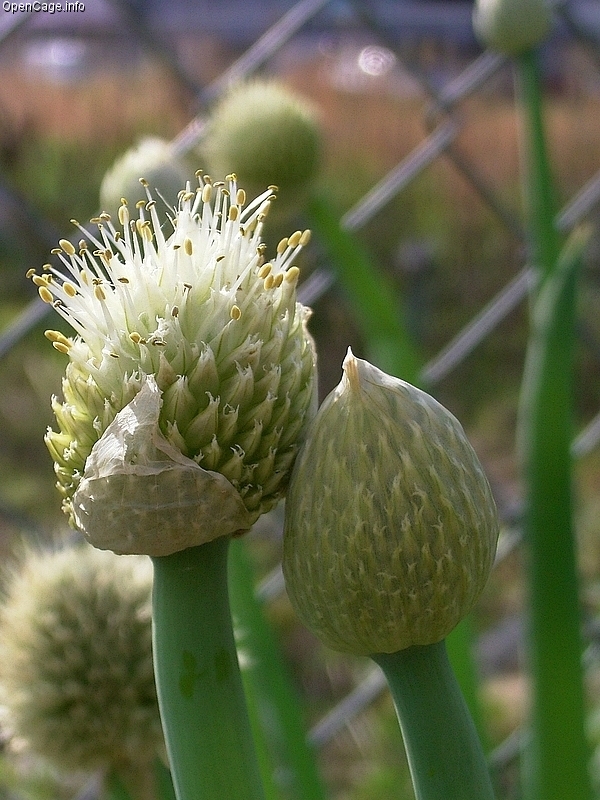
http://opencage.info/pics/large_2121.asp
The origin of this plant is China, Sibiria and the Altai region, but it was introduced to Japan very early and is already mentioned in the "Nihon Shoki" Chronicles.
In April and May, the heads start sticking out on long stalks and before the flower openes they look like a bald head of a priest (at least to the Japanese eye).
The plant as food is a kigo for winter, see below. It has medical properties and is eaten in soups and stews.
..........................................................................................
Let us look at the Japanese word for monk or priest, boozu.
This is originally the word for the head priest of a temple or retreat (ichiboo 一坊、一寺) and only later was used for any monk. Some priests and monks were called Tera Hooshi or Yama Hooshi at Temple Enryaku-Ji (寺法師、山法師), but in contrast to them, the priests and monks from Temple Mii-Dera were called boozu or Honorable Priest, goboo 御坊.
Later during the Edo period, young priests who worked for a local lord (daimyoo) or the Edo government were also called boozu. Nowadays, any young boy with a shaven head is a boozu.
(Quoted from Saijiki for Buddhist Events ).
The flower of the Dogwood looks similar to these Mountain Priests, see the entry for Dogwood .
...................................................................
The round head of the leek flower is also called "Jewel" gibo 擬宝珠. Here is a picture of such a form on the border of a bridge. You also find this pattern of a figure as the head tile of a temple.

http://www.linkclub.or.jp/~mcyy/kyo/uji/01.html
...................................................................
Talking of BOOZU, here is another natural phenomen which the Japanese call by this name, now a "Bald Priest Head in Hell", jigoku boozu.
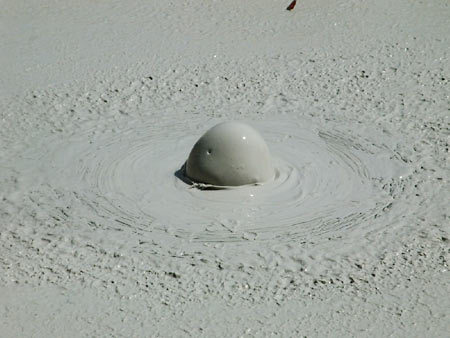
http://www.ajkj.jp/ajkj/oita/beppu/kanko/jigoku/jigoku_bouzu.html
The bubbeling mud of many hot springs forms to look like a bald head!
*****************************
Worldwide use
USA
View all Allium thumbnails at the PLANTS Gallery
*****************************
Things found on the way
Maho Sensei Negima
Negi's name is actually a pun. In Japanese, Negi means scallion, or green onions or Welsh onions, and are also in the same family as leek, which is a national symbol of Wales, where Negi comes from. Many of his students address him using the playful "-bozu" honorific, which means something along the lines of "kiddo" or "squirt", but "negibozu" ("onion head") is also a slang term meaning a callow or inexperienced youth.
http://www.imdb.com/title/tt0480493/trivia
:::::::::::::::::::::::::::::::::::::::::::::::::::::::::::::::::::::::::::::::::::::::::::::::::::::
. Octopus Priest, tako boozu 蛸坊主
:::::::::::::::::::::::::::::::::::::::::::::::::::::::::::::::::::::::::::::::::::::::::::::::::::::
Origa (Olga Hooper) has a nice haiga with this flower
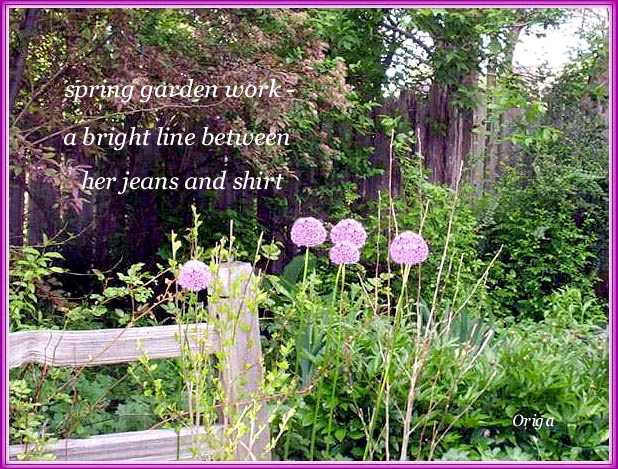
http://www.livejournal.com/users/origa/54405.html
*****************************
HAIKU
At an NHK program, this plant was the object of a Haiku Meeting.
http://www.nhk.or.jp/haiku/html/haiku15-4-12.htm
(Tr. Gabi Greve)
葱坊主一本足りない色鉛筆
negi boozu ippon tarinai iro enpitsu
Welsh onion heads -
of my color pencils
one is missing
. . . . .
葱坊主睡魔のおりてきし真昼
negi boozu suima no orite kishi nirune
Welsh onion head -
sleep comes over me,
time for a midday nap
:::::::::::::::::::::::::::::::::::::::::::::::::::::::::::::::::::::::::::::::::::::::::::::::::::::
人間に退屈しおり葱坊主
ningen ni taikutsu shiori negi boozu
getting tired of
being a human -
Welsh onion heads
Matsuzaki Tetsunosuke 松崎鉄之介
Quoted from the Saijiki for Buddhist Events
:::::::::::::::::::::::::::::::::::::::::::::::::::::::::::::::::::::::::::::::::::::::::::::::::::::

negi boozu -
my neighbour plants
a few more
Gabi Greve, Spring 2010
*****************************
Related words
***** Stone Leek, Welsh Onion, Green Onion,
Chinese Onion, Spring Onion
these and the following are kigo for all winter .
The plants have small bulbs and long green stalks.
stone leek, negi 葱、
. . . nebuka (root-deep) 根深
leek leaves, leafy leeks, hanegi 葉葱
leek soup, negijiru 葱汁
leek rice gruel, negizoosui 葱雑炊
leek field, negibatake 葱畑
pulling out leeks, negi nuku 葱抜く
Welch Onion (alternative spelling), Poree, Lauch
. WASHOKU
Leek in Japanese Food
and more LEEK KIGO !
..................................................................................
葱白く洗いたてたるさむさ哉
negi shiroku araitate taru samusa kana
leeks washed
all white and clean -
such a coldness!
Matsuo Basho
http://homepage2.nifty.com/zatsugaku/zatugaku/980913.html
:::::::::::::::::::::::::::::::::::::::::::::::::::::::::::::::::::::::::::::::::::::::::::::::::::::
立ち並ぶこけしの如き葱坊主
tachinarabu kokeshi no gotoki negi boozu
standing in a row
like kokeshi dolls -
welsh onion heads
source : santoukahuu
. Kokeshi wooden dolls and haiku
:::::::::::::::::::::::::::::::::::::::::::::::::::::::::::::::::::::::::::::::::::::::::::::::::::::
[ . BACK to WORLDKIGO . TOP . ]
[ . BACK to DARUMA MUSEUM TOP . ]
:::::::::::::::::::::::::::::::::::::::::::::::::::::::::::::::::::::::::::::::::::::::::::::::::::::



 Posts
Posts


1 comment:
staying glued
to the banked fire...
a priest
uzumibi ni tsukuri-tsuketaru hooshi kana
埋火に作りつけたる法師哉
by Issa, 1810
The "priest" (hyooshi) is a Buddhist priest or monk.
A "banked fire" is a fire covered with ashes to ensure low burning.
Tr. David Lanoue
http://cat.xula.edu/issa/
Post a Comment