:::::::::::::::::::::::::::::::::::::::::::::::::::::::::::::::::::::::::::::::::::::::::::::::::::::
Mushrooms (ki no ko, kinoko)
***** Location: Japan, worldwide
***** Season: Various, see below
***** Category: Plant
*****************************
Explanation
Mushrooms are a delicacy of autumn, with their many varieties growing in the ground or on trees. Let us look at some kigo with these "children of the trees" ki no ko, take 茸.
Gabi Greve

:::::::::::::::::::::::::::::::::::::::::::::::::::::::::::::::::::::::::::::::::::::::::::::::::::::
Late Autumn
mushrooms, kinoko, ki no ko, take 茸, 菌
first mushroom, hatsu-take hatsutake 初茸
mountain with mushrooms, takeyama 茸山
pine mushroom, matsutake 松茸
..... one of the most expensive !
hackberry mushrooms, enokidake 榎茸
chestnut mushroom, kuridake 栗茸
pasania mushroom, shiitake 椎茸
..... Cortinellus shiitake
..... Many farmers grow them on old logs behind the barn, for the family delight.
.................................................... Details are here:
Shiitake Mushrooms Japan
meadow mushrooms, shimeji 湿地茸, 占地, しめじ
Hon-shimeji (Lyophyllum shimeji)
..... Agaricus campestris, A. hortensis and others
rice with fresh mushrooms, kinoko meshi, takenoko meshi 茸飯
..... a delicacy on a cold autumn night
more dishes are in the WASHOKU saijiki.
looking for mushrooms in the forest,
mushroom hunting, kinokogari, takegari 茸狩
picking mushrooms, kinoko tori 茸採り(きのことり)
bag for mushrooms, kinoko kago 茸籠(きのこかご)
mat to spread mushrooms to dry, kinoko mushiro 茸筵(たけむしろ)
:::::::::::::::::::::::::::::::::::::::::::::::::::::::::::::::::::::::::::::::::::::::::::::::::::::
Kuritake 栗茸 (Chestnut mushroom)
By LINDA INOKI, the Japan Times

Autumn is a wonderful season to walk in the woods, where mushrooms spring up like little miracles from their invisible parent plants. Mushroom-hunting is very popular in Japan, but when the tasty kuritake, or chestnut mushroom, appears, hunters know that the end of the season is nigh. This attractive species (Naematoloma sublateritium) grows in clusters of up to 20 on the dead stumps of trees, such as chestnuts and oaks. The tops of their caps are a brick red color fading to a creamy yellow, and as the mushrooms age, the caps often split to reveal slashes of white flesh.
Unlike green plants, fungi cannot produce their own food and rely on ready-made carbohydrates from the environment around them. This means that they are either parasites or saprophytes, feeding on either living or dead organic matter, such as trees and plants. Chestnut mushrooms are saprophytes, a group that helps in the vital work of recycling the forest.
Sometimes people mistake the bitter yellow nigakuritake (the sulfur tuft or N. fasciculare ) for a chestnut mushroom, which is unfortunate because it is deadly poisonous.
http://www.japantimes.co.jp/cgi-bin/getarticle.pl5?fe20051102li.htm
:::::::::::::::::::::::::::::::::::::::::::::::::::::::::::::::::::::::::::::::::::::::::::::::::::::
Early Winter
Enokidake 榎茸 (えのきだけ) velvet shank
Flammulina velutipes
Enokitake-Pilz
Yukiwaritake 雪割茸 (ゆきわりたけ) "snow splitting mushroom"
yukitake, snow mushroom 雪茸(ゆきたけ)
yuki no shita 雪下茸(ゆきのした)雪の下(ゆきのした)
..... yukiyari ゆきやり
speciality of Hokkaido. Biologically, it is not clear what kind of family this belongs to, maybe a kind of enoki or nameko.
:::::::::::::::::::::::::::::::::::::::::::::::::::::::::::::::::::::::::::::::::::::::::::::::::::::
All Winter
kandake 寒茸 (かんたけ) mushrooms in the cold
Nameko なめこ nameko mushroom
Pholiota nameko
..... nametake なめたけ
nameko soup, namekojiru 滑子汁(なめこじる)
A small, amber-brown mushroom with a slightly gelatinous coating, It is enjoyed in miso soup and nabemono hodgepodges.
der Nameko
::::::::::::::::::::::::::::::::::::::::::::::::::::::::::::::::::::::::::::::::::::::::::::::::::::
eringi エリンギ king trumpet mushroom
Mannstreu- oder Kräuterseitling
*****************************
Worldwide use
Germany
Pilze, Pilzesuche, Steinpilze, Butterpilze, Fliegenpilze
*****************************
Things found on the way
*****************************
HAIKU
. Matsuo Basho 松尾芭蕉 - Archives of the WKD .
茸狩やあぶなきことに夕時雨
takegari ya abunaki koto ni yuu shigure
take-gari
gathering mushrooms -
we almost got drenched
in a drizzle in the evening
Written in the autumn of 1689 元禄2年晩秋.
Basho had returned from his trip to "Oku no Hosomichi" and spent some time in his hometown, Iga Ueno.
This hokku is either from real experience or a poem for a painting.
Maybe he was out gathering mushrooms and just made it home in time.
abunaki koto - to be in danger of something

source : nittokusin.jp/kinoko
hunting for matsutake mushrooms in Osaka
from 攝津名所圖會(1798)
- - - - -
松茸やかぶれた程は松の形
. matsutake ya kabureta hodo wa matsu no nari .
- - - discussion of this hokku, mushrooms and food
松茸やしらぬ木の葉のへばり付く
matsutake ya shiranu ko-no-ha no nebaritsuku
o dear mushroom !
an unknown leaf
is sticking on to you
Tr. Gabi Greve
Дорогой грибок,
прилепился к тебе
неизвестный листик.
Tr. Russian : Zhanna P. Rader
mój drogi grzybie!
lepi się do ciebie liść
nie wiadomo skąd
Tr. Polish : Grzegorz Sionkowski
Read the discussion evolving about the translation of this haiku !

source : itoyo/basho
Written in the autumn of 1691. 元禄4年秋。
- - - - -
初茸やまだ日数経ぬ秋の露
hatsutake ya mada hikazu henu aki no tsuyu
the first mushrooms !
only a few days have passed
with dew in autumn
Tr. Gabi Greve
Written in 1693, 元禄6年.
At the home of Taisui 岱水 in Fukagawa. Taisui lived close to Basho and they had frequent haikai meetings.
It is only a few days since the beginning of autumn, but the mushrooms are already out and full of delicious dewdrops.
first mushroom, hatsu-take hatsutake 初茸
- - - kigo for late autumn
. Matsuo Basho 松尾芭蕉 - Archives of the WKD .
:::::::::::::::::::::::::::::::::::::::::::::::::::::::::::::::::::::::::::::::::::::::::::::::::::::::
Kobayash Issa 小林一茶
手の前に蝶の息つく茸哉
te no mae ni chô no ikitsuku kinoko kana
it's all yours
butterfly, take a rest
on the mushroom
ぞくぞくと人のかまはぬ茸哉
zoku-zoku to hito no kamawanu kinoko kana
one by one
ignored by people...
mushrooms
念仏のころりと出たる茸哉
nembutsu no korori to detaru kinoko kana
a "Praise Buddha!"
pops to my lips...
mushrooms
Amida Prayer (Namu Amida Butsu)
うつくしやあら美しや毒きのこ
utsukushi ya ara utsukushi ya doku kinoko
it's so pretty!
so pretty!
the poison mushroom
Is this haiku metaphorical? Shinji Ogawa thinks so:
"It can be argued that the haiku alludes to feminine beauty."
.................................................................................
. beni tengutake 紅天狗茸 Amanita muscaria .
Tengupedia Introduction
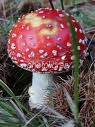
此おくは魔所とや立る天狗茸
kono oku wa ma-doko to ya tateru tengutake
this deep forest
being haunted...
Tengu's mushrooms sprout
天狗茸立けり魔所の這入口(はいりぐち
tengutake tachikeri ma-doko no iriguchi ni
Tengu's mushrooms sprout--
the entrance to
a haunted place
tengutake (tengu kinoko) 天狗茸 Amanita muscaria
A very poisonous mushroom, also called "the Death Cup".
Fliegenpilz
kigo for autumn
More haiku by Issa / Tr. David Lanoue
:::::::::::::::::::::::::::::::::::::::::::::::::::::::::::::::::::::::::::::::::::::::::::::::::::::
My voice
Vanishes in the wind:
Mushroom-hunting.
Masaoka Shiki (1866-1902)
http://www.japantimes.co.jp/cgi-bin/getarticle.pl5?fe20051102li.htm
xxxxxxxxxxxxxxxxxxxxxxxxxxxxx
fog rising -
mushrooms push aside
a bed of pine needles
(Published in: The Heron's Nest VI:11, 2004)
H. Curtis Dunlap
http://webwiseguy.com/haiku/1.html
:::::::::::::::::::::::::::::::::::::::::::::::::::::::::::::::::::::::::::::::::::::::::::::::::::::
mushroom or toadstool
take your pick
—carefully
doris kasson
August 2009
. . . CLICK here for toadstool Photos !
*****************************
Related words
*****
:::::::::::::::::::::::::::::::::::::::::::::::::::::::::::::::::::::::::::::::::::::::::::::::::::::
WASHOKU ... Japanese Food SAIJIKI
[ . BACK to WORLDKIGO . TOP . ]
:::::::::::::::::::::::::::::::::::::::::::::::::::::::::::::::::::::::::::::::::::::::::::::::::::::



 Posts
Posts


6 comments:
Jealous:
the garden snails and I
love the same mushrooms
Zhanna P. Rader
(Cicada, Eight, v.3, #3, 1987 and Cicada, Nine, vol.3, #4, 1988)
::::::::::::::::::::::::::::::::::::::::::::::::::::::::::::::::::::::
.....................................
Shiitake Mushrooms, a KIGO
the chicken
scratches up
a mushroom
niwatori no kaki-ideshitaru kinoko kana
.鶏のかき出したる茸かな
by Issa, 1822
In Japanese as in English, this haiku reads as a simple declarative sentence that depicts, in simple terms, a simple scene. Is it too simple, too mundane to be considered poetry?
Or is it poetry precisely because of its simplicity, because of Issa's patient attention to a here-and-now scene that others might overlook? The reader must decide.
Tr. David Lanoue
http://cat.xula.edu/issa/
They've always tickled my imagination (and taste good besides!).
two mushrooms ...
where are the elves
I saw as a child?
:>) Ella Wagemakers
www.ewchameleon.com
御子達よ赤い木の子に化されな
o-kodachi yo akai kinoko ni bakasare na
watch out, kids!
don't let those red mushrooms
cast a spell
Kobayashi Issa
(Tr. David Lanoue)
.
紅茸のつむり幼き墳墓の地
benidake no tsumuri osanaki funbo no chi
young head
of a russula mushroom
ancestral graveyard
飯田龍太 Iida Ryuta
(Tr. Fay Aoyagi)
Post a Comment