:::::::::::::::::::::::::::::::::::::::::::::::::::::::::::::::::::::::::::::::::::::::::::::::::::::
December Singers (sekizoro)
***** Location: Japan
***** Season: Mid-Winter
***** Category: Humanity
*****************************
Explanation
sekisooro sekisoro sekizooro
December Singers, Twelfth Month Singers,
Year End Singers . sekizoro 節季候
..... sekkizoro せっきぞろ
..... female singers, old ladies, ubara 姥等 うばら
..... hitting the breasts, mune tataki 胸敲 むねたたき
Short for a greeting of the changing season: 節季(せっき)にて候.
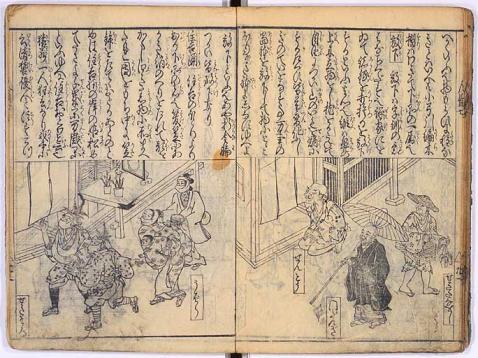
Sekizoro refers to a Twelfth Month custom in which strolling singers wandered from town to town, singing festive celebration songs.
They wore large straw hats, decorated with auspicious fern. The faces where covered with white or red towels. Around the hips, they wore red aprons. Some hit their breasts like drums during the performance. Others rattled some small bamboo tools.
They shouted "Congratualtions for New Season!" and got rice or money in return from the townspeoople. They used to walk around Edo and other big cities from December 20 till the end of the year.
They were in fact a group of very poor beggars, giving a comic performance to make some money.
Their standard song at each home was like this:
サッサ節季候、毎年毎とし、旦那のお蔵へ金銀お宝飛び込め舞い込め!
T'is the end of the season!
As in every year, in every year,
may the treasures, silver and gold
gather and fly to the storehouse
of this honorable home owner!
.............................................................................
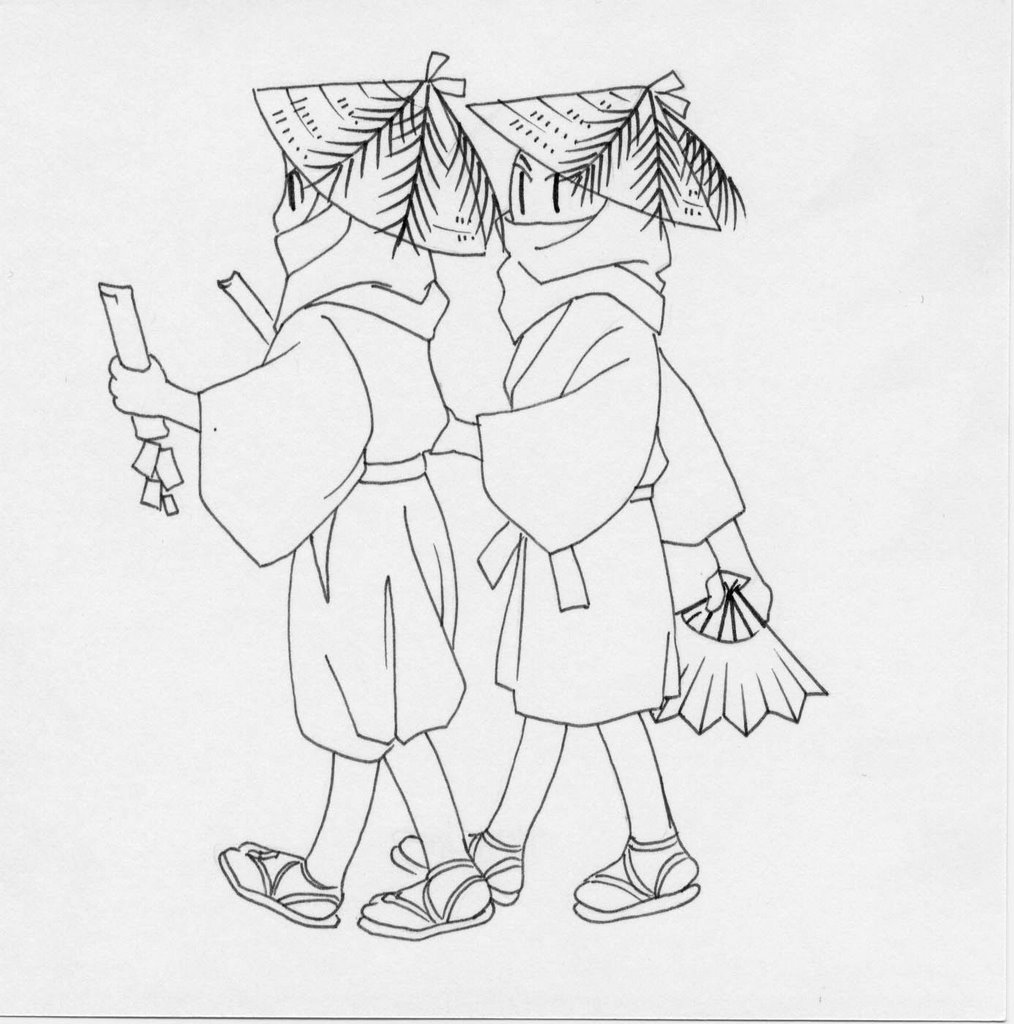
http://www.museum.tokushima-ec.ed.jp/hasegawa/shokunin/i_044.htm
*****************************
Worldwide use
*****************************
Things found on the way
*****************************
HAIKU
- - - - - Some Haiku by Kobayashi Issa - - - - -
sekizoro yo onna sekizoro sore mo miyo
せき候よ女せき候それも御代
the Twelfth Month singers
are female...
our Great Age!
Tr. David Lanoue
Miyo ("reign") is short for the Emperor of Japan's reign or dynasty. Issa seems to be using it here as an expression of "this modern age we live in" -- wherein even women participate in an activity once reserved exclusively for men.
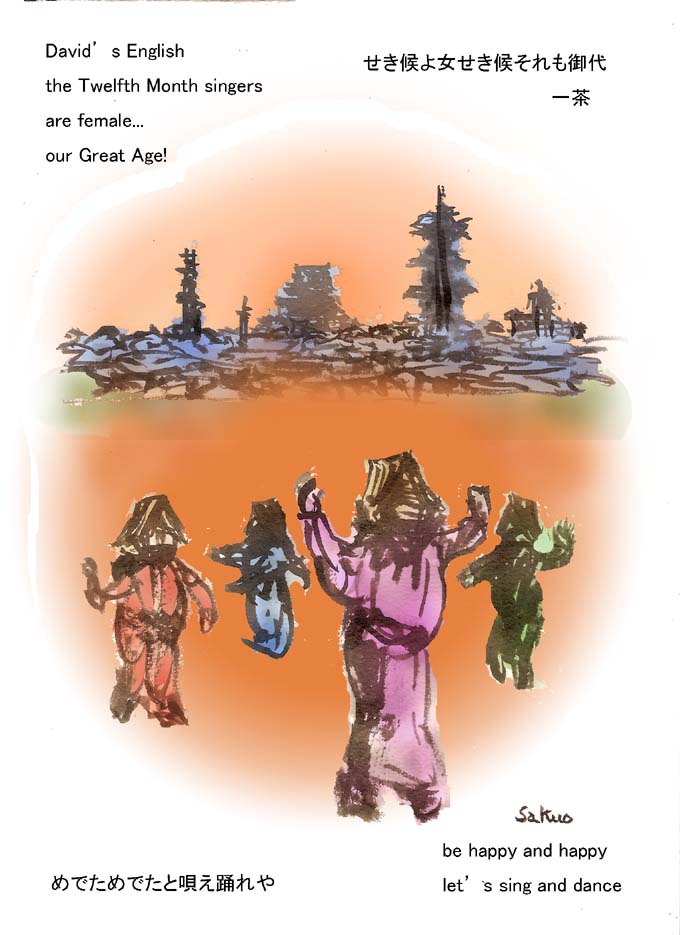
be happy and happy
let's sing and dance
Haiga and renku by Nakamura Sakuo
..................................
1818 鶺鴒の尻ではやすやせっき候
sekirei no shiri de hayasu ya se[k]kizoro
performing behind a waterfall...
Twelfth Month singers
1818 えどの世は女もす也節き候
edo no yo wa onna mo su nari sekkizoro
Edo's world--
women also are
Twelfth Month singers
Tr. David Lanoue

せき候の尻の先也角田川
sekizoro no shiri no saki nari sumida-gawa
Twelfth Month singers--
their butts facing
Sumida River
Haiga by Nakamura Sakuo
sekizoro no shiri no saki nari sumidagawa
just beyond the hips
of year-end street dancers
the Sumida River
Tr. Chris Drake
This hokku is from the last day or next-to-last day of the lunar year (January 24 or 25, 1819). 1819 is the Gregorian-calendar year recorded in Year of My Life. The Sumida River is in Edo, but at the time this hokku was written, Issa was living in his snow-country hometown, so this must be a hokku of imagination and memory: based on his memories of Edo, Issa seems to be picturing what it must be like in Edo now at the end of the year.
In Issa's hokku year-end street performers stand in a small group in front of a riverside home. The big Sumida River ran right through Edo, and riverside houses to the north of downtown Edo were fairly cheap to rent. Since Issa lived by the Sumida for a while, I take the hokku to be a memory from the time he lived in Edo. There are no houses on the other side of the street, only an embankment and then the big river. As the performers leap into the air and do their dances, the river feels closer, and the energy of the river and the energy of the rapidly moving men seems somehow continuous. To Issa the fast-running, powerful river seems to flow just beyond -- and through? -- the powerfully moving legs and hips of the dancers.
The begging street performers called sekki-zoro or seki-zoro went around from door to door at the very end of the year. Sekki/seki meant account-settling at the end of the year, when all bills had to be paid, and the beggars went around in groups of two, four, or six people at the same time that bill collectors were also going around to people's houses. To announce themselves, they chanted sekki-zoro, sekki-zoro, "It's bill-paying time, bill-paying time." They were a kind of holy beggar, as indicated by their clothing. They wore straw hats with ferns stuck in them, and they covered their faces with a red cloth, leaving only their eyes uncovered, an appearance that suggests they were originally wandering shamans who wore masks and spoke trance words of various gods in return for donations. When they stood in front of someone's gate or door they would sing a loud chant about how they visit every year at this time and how they will leap and jump into the owner's yard or garden.
As they chanted they beat the ground with split bamboos, struck wooden clappers together, and played a small drum. They would continue the percussion sounds and chanting-dancing until the owner appeared and gave them a coin or two or some rice, at which point they would sing a blessing for the end of the year and for the coming year and then move on. Contemporaries often referred to them as "noisy," but their trick-or-treat approach seems to have been effective. During this same time of the year, there were various groups of street musicians, story-tellers, and entertainers who performed their art with a year-end twist to it for donations. Skilled manzai ( 萬歳 ) singers and dancers, for example, were usually invited into the house for their artistic blessing-performance. In contrast, the sekizoro seem to have been basically beggars who put on special performances at the end of the year. Many scholars believe they were once mountain people (foresters, hunters) who came down to the towns at the end of the year to give their blessings to town people. By Issa's time, only the outer appearance of the older shamanic blessing ceremony seems to have remained, though the energy of the performers was itself surely a blessing in itself.
Chris Drake
.............................................................................
- Kobayashi Issa with comments by Chris Drake
sekizoro ni keraretamau na ato no chigo
child following
the year-end beggars
careful, don't get kicked!
This hokku is from the 10th month (November) of 1813, when Issa was visiting some hot springs near his hometown. He seems to be imagining the end of the year already, since actual groups of singing and dancing year-end beggars known as seki-zoro (also sekki-zoro) didn't appear until later, just before the end of the 12th month.
In the hokku, Issa sees a young child walking close behind a group of the beggars, following them in the street or perhaps just standing behind them watching. Or perhaps there are two or three children watching. Issa worries about the child and warns him/her not to get too close, since when the beggars begin a vigorous dance their feet go flying.
oku-ono ya koyabu-gakure mo sekki-zoro
even inside
a grove deep in Ono --
year-end beggars
In the 11th intercalary or extra lunar month (around December) in 1813, when this hokku was written, Issa was traveling around to various places near his hometown in Shinano in central Honshu. The end of the year -- when these beggars appear -- is still a month away, so this hokku must be a poem of imagination, perhaps based on an experience when Issa was in and around Kyoto, since there is an Ono on the outskirts of Kyoto, as pointed out by Issa scholar Maruyama Kazuhiko. The Ono near Kyoto is the area in which the famous woman waka poet Ono no Komachi's clan once lived and is now about 40 minutes by local bus from downtown Kyoto. However, there is also an Ono in the outskirts of Shiojiri in central Nagano Prefecture, the modern name of Shinano. It is not clear which Ono Issa is referring to. The Ono in Shiojiri is not too far from the Higashiyama area north of Shiojiri that Issa seems to be referring to in a hokku about rapeseed flowers, as Gabi once pointed out, so Issa may be writing about an earlier experience of seeing these beggars in Shinano. (For the Ono Shrine in Shiojiri see www.genbu.net/data/sinano/ono_title.htm .) Oku, 'remote, deep in,' is also the name of a different Oku, the northern area visited by Basho in Oku no hosomichi (Narrow/Slender Roads Through the Far/Remote/Deep Interior).
Sekki-zoro (also seki-zoro) is a kind of beggar that went around to people's houses at the end of the year. Apparently they first appeared near Kyoto and annually walked through Kyoto streets from 12/22 to 12/28, the time when everyone was preparing for New Year's and trying to pay all their bills for the year. Sekki-zoro is a formal phrase chanted by the beggars that literally means "It's the end of the year when all bills must be paid." The beggars, wearing ferns stuck into their rush hats and red cloths that covered their faces below their eyes, went around in small groups chanting this and similar phrases at people's doorways and gates. When the owner responded, they would perform a short song and dance prayer for good fortune in the new year, and in return they would receive a few copper coins or some rice. If the owner didn't respond, however, they would make even louder music until s/he appeared.
At this time of year Kyoto, Edo, and to a lesser extent other cities and towns, were filled with semi-religious and religious beggars, including these Sekizoro beggars, who were very much of the "semi-" type. The cloths they wore over their lower faces are thought to have been a kind of mask indicating that, earlier in their history, the beggars were believed to be shamanically possessed by various gods, with each beggar representing a god visiting human houses. It's doubtful, though, that Issa believes these modern beggars who continue to wear old shamanic clothing are actually possessed by gods. In fact, many people in Issa's time apparently didn't like the way the beggars aggressively chanted and noisily banged bamboo clappers and other hand percussion instruments loudly at people's gates and doors until the people inside virtually had to come out.
Issa (or at least his imagined persona) seems to be amazed that he can hear the beggars chanting and banging their loud instruments even inside a small thicket or perhaps a small bamboo grove far from any area where there is wealth. It is presumably the beggars' noisy sounds that tell Issa they're hidden within the small grove, and the house or hut in the grove must be a small one, though it can't be seen. The "even" suggests that Issa is surprised to hear the beggars have come to beg at the house of an impoverished or barely surviving farmer or craftsperson. Perhaps Issa is amazed at the tenacity of the beggars, who are almost literally going around to every house in this area in the hills. Issa may even be wondering why the beggars are begging so aggressively from someone who may be as poor as they are. There seems to be a skeptical undertone to this hokku.
Chris Drake
:::::::::::::::::::::::::::::::::::::::::::::::::::::::::::::::::::::::::::::::::::::::::::::::::::::
. Matsuo Basho 松尾芭蕉 - Archives of the WKD .
節季候の来れば風雅も師走哉
sekizoro no kureba fuuga mo shiwasu kana
when they come
the Sekizoro Singers, then elegance adorns
the last month of the year . . .
Tr. Gabi Greve
Written on the last day of 1690, 元禄3年
- - - - -

Sekizoro singers - Haiga by Yosa Buson 与謝蕪村
Miho Museum
節季候を雀の笑ふ出立かな
. sekizoro o suzume no warau detachi kana .
sparrows laugh at the Sekizoro singers
- - - - - And
MORE hokku about laughing by Matsuo Basho.
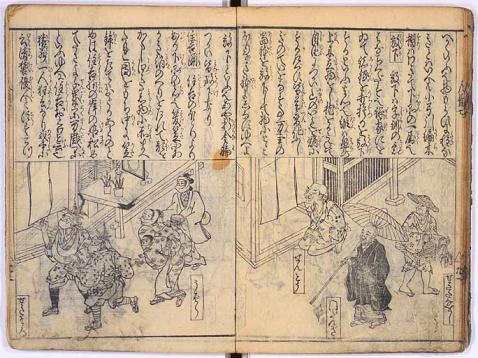
source : image.space.rakuten.co.jp
:::::::::::::::::::::::::::::::::::::::::::::::::::::::::::::::::::::::::::::::::::::::::::::::::::::
- quote -
Hanabusa Itcho Twelve Months: New Year

The artist of this work, Itcho Hanabusa is a painter representative of the mid-Edo period. While his style of painting came from the Kano school, he also depicted many street customs and this painting was much admired by people. It is possible to see this style in this painting.
Kadozuke refers to artists who come up to the front of peoples' houses and play music and this was also a special attraction of the New Year. The types of Kadozuke for New Year included lion dancing, banzais, grand performance of kagura (scared music and dancing), torioi (strolling singers), etc.
Though not included in this picture, the lion dancing in particular added a strong story line with the element of acrobatics and clownery and so along with flutes and drums, it was an Edo entertainment that merrily lifted the spirit of the New Year.
- source : Tokyo Metropolitan Library -
Manzai 漫才. 万歳 / Banzai 萬歳
kigo for the New Year
senzu manzai 千秋万歳(せんずまんざい)for the New Year
manzai raku 万歳楽(まんざいらく)music for the manzai
Mikawa manzai 三河万歳(みかわまんざい)from Mikawa (Nagoya)
Yamato manzai 大和万歳(やまとまんざい)from Yamato (Nara)
Oowari manzai 尾張万歳(おわりまんざい)from Owari (Nagoya)
manzai dayuu 万歳大夫(まんざいだゆう)manzai performer
saizoo 才蔵(さいぞう)helper of the manzai performer
This performance dates back to the Heian period in the capital of Japan. Two actors come to the local shrine with a message from the deities. The two performed in a comical way, teasing each other or pretending to be dumb and not understand.
During the Edo period, many areas of Japan started their own performances, giving it a lot of local colorit. Today some are still active and practised.

山里は万歳遅し梅の花
yamazato wa manzai ososhi ume no hana
Matsuo Basho
written in 1691 - mid-First lunar Month, February
mountain village
and the New Year's dancers are late:
plum blossoms
The itinerant Manzai dancers perform dances for households around New Year's... The dances are said to bring good fortune.
Tr. Barnhill
in the mountain village
Manzai dancers are late--
plum blossoms
Manzai dancers are a troupe of itinerant players who go from house to house in the New Year season and perform good-luck dances for a small amount of rice or money.
Tr. Ueda
Most every translation I've seen calls them dancers.
Apparently only Hiroaki Sato gets it right:
In this mountain village
the comedians are late:
plum blossoms
Tr. Sato
So it makes me wonder: are the Manzai performers dancers or comedians (perhaps doing a type of physical comedy routine we call slapstick?), or a little of both? Or were they dancers back in Basho's day, but comedians later on?
Contribution by Larry Bole
STONE MEMORIAL of this HAIKU !
. Matsuo Basho 松尾芭蕉 - Archives of the WKD .
:::::::::::::::::::::::::::::::::::::::::::::::::::::::::::::::::::::::::::::::::::::::::::::::::::::
Traditional Manzai in the Edo period are comedian-entertainers and often worked on a stage or in a Shinto shrine. They only start going around after the New Year has started and do it until the kadomatsu, the pine decorations are taken away.
They are called according to the area where this happens, for example
三河万歳 Mikawa Manzai, Yamato Manzai大和万歳,
Oowari Manzai 尾張万歳 .
This custom goes back to the Muromachi period.
まんざいらく(万歳楽) Manzai Raku
is an old form of Chinese dance, in Japan known as a Gagaku Court Performance of four or six performers.
Banzai is short for Senzu Manzai 千秋万歳.

Yamato Manzai
:::::::::::::::::::::::::::::::::::::::::::::::::::::::::::::::::::::::::::::::::::::::::::::::::::
Mikawa Manzai
is believed to have originated in Nishio about 730 years ago. The second resident priest, Otsuzenshi, of Jissoji temple learned and brought this comedic art form back from China and taught it to the local people. Manzai in Kota town dates back to the beginning of the Meiji Period, when it was performed mainly in the Kanto District as a Shinto prayer for peace and security, a bumper crop, and the health and prosperity of the nation and was performed with the character of Saizou playing the comical role and Nishio-no-tayu assuming the main or straight role.
In 1977, the Kota-cho Mikawa Manzai Preservation Association was founded and effort has been made in the preservation and promotion of this traditional form of entertainment. Manzai programs in Kota include "Gomonbiraki no Mai," "Goten Manzai," "Kazoeuta," "Sankyoku Manzai", as well as others.
In December 1995,Mikawa Manzai was designated as a National Significant Intangible Folk Cultural Asset in conjunction with Nishio city and Anjo city.
© www.sk.aitai.ne.jp
Reference about Mikawa Manzai
During the Edo period, manzai performers from Nagoya (Mikawa, the place related to Tokugawa Ieyasu) would come to Edo and sell goods from their area and make their performances
saizooichi, saizoo ichi 才蔵市 (さいぞういち)
Saizo Market
observance kigo for mid-winter
:::::::::::::::::::::::::::::::::::::::::::::::::::::::::::::::::::::::::::::::::::::::::::::::::::
Owari-Manzai
Manzai goes basically by Tayu who leads the story with an ogi, and Saizo who follows tapping the tsuzumi, while sankyoku manzai is performed by three players with three musical instruments, tsuzumi, shamisen, and kokyu. The sankyoku is one of the characteristics of Owari manzai. Manzai existed basically for blessing people at their own residences, but these Owari manzaists organized touring troupes and had stage performances, which was another one of their characteristics.
© Kotaro Kitagawa
Reference about Owari Manzai
kadozuke 門付け a strolling musician
sing and play from door to door to earn money

:::::::::::::::::::::::::::::::::::::::::::::::::::::::::::::::::::::::::::::::::::::::::::::::::::::
kigo for the New Year
hatsuseki, hatsu seki 初席 はつせき "first seat"
to watch a comic yose performance
... hatsu yose 初寄席(はつよせ)
... yosebiraki, yose biraki 寄席開き(よせびらき)
katarizome 語初(かたりぞめ)first talk (of rakugo)
. . . CLICK here for Photos !
This took place from January 1 to 10. There were special treats and stories just for this time of year.
. NEW YEAR
KIGO for HUMANITY
:::::::::::::::::::::::::::::::::::::::::::::::::::::::::::::::::::::::::::::::::::::::::::::::::::::
万歳の子も万歳の十二歳
manzai no ko mo manzai no nijuusai
the child of the manzai troup
is coming of age (manzai)
at twelve years
Takahama Kyoshi 高浜虚子
Coming of age in Edo
The temple visit at the 13th birthday:
. juusanmairi 十三参り 13 temple visits
*****************************
Related words
***** December
***** Rakugo, comic storytelling performances Japan
***** WKD : Fern (shida)
:::::::::::::::::::::::::::::::::::::::::::::::::::::::::::::::::::::::::::::::::::::::::::::::::::::
. Banzai Daruma 万歳だるま
and more haiku
[ . BACK to DARUMA MUSEUM TOP . ]
[ . BACK to WORLDKIGO . TOP . ]
- #manzai #sekizoro -
:::::::::::::::::::::::::::::::::::::::::::::::::::::::::::::::::::::::::::::::::::::::::::::::::::::



 Posts
Posts


8 comments:
Thank you, Gabi san for your precious information.
This is a treasure for haiku lovers.
We know the word [settsuki節季] but we don't see really those female singer.
Your study is very helpful to understand the life style in Edo era.
sakuo.
Issa Haiku and Japanese Culture ... a LIST
Here you can check more cultural items that we have covered so far.
Thanks for being with me in the Edo Period, Sakuo san !
GABI
::::::::::::::::::::::::::::::::::::::::::::::::::::::::::::::::::::::
Is there any one who know the song that Sekizoro has sung.
I have remembered s funny song that I sang in my boyhood.
But it is not sure that the song is exactly sekizoro's song.
it begins as follows,
[ Chan Chara okashi Chara okashi an kono kao mariya Mada okashi...]
sakuo
.
天窓から湯けむり立って節季候
atama kara yu kemuri tatte sekkizoro
hot bath steam
rising from his head...
Twelfth Month singer
Issa / Tr. David Lanoue
節季候を雀の笑ふ出立かな
sekizoro o / suzume no warau / detachi kana
Matsuo Basho
Kobayashi Issa
万ざいや門に居ならぶ鳩雀
manzai ya kado ni inarabu hato suzume
begging actors at the gate--
pigeons and sparrows
in a row
1811
Tr. David Lanoue
Glossary of owarai terms
- snip
conte
コント (konto). From the French word conte, konto refers to the style of manzai or owarai performance focusing on telling interesting tales, many of which, one must assume, are made up for the sake of humour. Also often called manzai konto (漫才コント). Short conte (ショートコント) are skits often less than 30 seconds long where the comedians act out some sort of odd encounter or conversation.
- snip
neta
ネタ (neta). Reverse spelling of the word tane (種), meaning "seed" or "pit". A neta is the background pretense of a konto skit, though it is sometimes used to refer to the contents of a segment of an owarai act, a variety show, or a news broadcast. Warai Meshi almost won the 2004 M-1 Gran Prix by doing several acts on a neta about the somewhat poorly built human models in the Asuka Historical Museum in Nara. The neta of variety shows hosted by London Boots Ichigo Nigo almost always have to do with cheating girlfriends and boyfriends. See also shimoneta.
.
more
https://en.wikipedia.org/wiki/Glossary_of_owarai_terms
.
Gifu 岐阜県 揖斐郡 Ibi district 揖斐川町 Ibigawa town
漫才岩 Manzai-Iwa - Manzai Rock
.
A group of Manzai dancers coming from Aichi, 三河 Mikawa, were asked to perform a dance by a man who was resting in the shadow of a rock.
They climbed the rock and danced.
The man gave them a lot of money, but when they reached the village, the money had turned into tree leaves.
The villagers told them that there lived a vicious tanuki 狸 badger near the rock.
.
https://omamorifromjapan.blogspot.com/2021/10/manzai-new-year.html
.
Post a Comment