:::::::::::::::::::::::::::::::::::::::::::::::::::::::::::::::::::::::::::::::::::::::::::::::::::::
Cicada (semi)
***** Location: Japan, other areas
***** Season: Various, see below
***** Category: Animal
*****************************
Explanation

Cicada are ubiquious animals during the Japanese summer and their song fills the air everywhere, especially among the cherry trees in temple and shrine compounds.
They come in many varieties with many differernt songs, so let us look at some cicada kigo. Unless mentioned below, they are all
kigo for late summer.
cicada being born, semi umaru 蝉 生まる
..... This is a kigo for early summer .
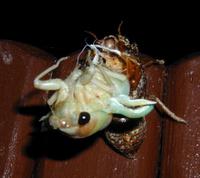
Click on photo for more detailed pictures by Gabi Greve.
.................................................................................
kigo for late spring
shunzen 春蝉(しゅんせん)cicada in spring
..... haru no semi 春の蝉(はるのせみ)
pine-tree semi, matsusemi (matsuzemi) 松蝉
spring cicada, harusemi (haruzemi) 春蝉
:::::::::::::::::::::::::::::::::::::::::::::::::::::::::::::::::::::::::::::::::::::::::::::::::::::
kigo for summer
.. .. .. cicada, locust, semi 蝉
first cicada, hatsu-semi 初蝉
voiceless cicada, female cicada、oshizemi 唖蝉
cicada in the morning, asazemi 朝蝉
cicada in the evening, yuuzemi 夕蝉
cool cicada, semi suzushi 蝉涼しい
..... in the evening, their song provides the feeling of coolness.
oil cicada, aburasemi (aburazemi)
..... Graptopsaltria nigrofuscata 油蝉. Her song makes a sizzeling sound of frying food.
min-min cicada, minminsemi (minminzemi)
..... Oncotympana maculaticollis みんみん蝉
..... cicada in deep mountais, miyamazemi 深山蝉
nii-nii cicada, niiniisemi (niiniizemi)
..... Platypleura kaempferri にいにい蝉
bear cicada, kumazemi 熊蝉 Cryptotympana japonensis
..... a particularly large variety with a black back, see below.
Cicada from Hokkaido, Ezosemi 蝦夷蝉
.... Ezo is the old name of Hokkaidoo.
Princess Spring Cicada, hime haru zemi 姫春蝉
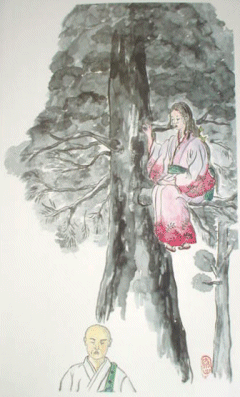
She is the incarnation of a princess, who fell in love with Kooboo Daishi. When he realized this unfulillable love, he carved a statue of himeself out of wood, placed it in the garden of her parents and left the village. The next morning, the poor princess climbed the statue to try and see her beloved priest, but could not. In pain, she started to cry and there she is till our day, crying and crying and crying...
http://ed.city.kasama.ibaraki.jp/~kasamaj/minwa/ue/minwa8.htm
Read more about Kukai, Kobo Daishi .
.. .. .. .. .. ..
cicada chorus, (lit. cicada winter sleet) semi shigure 蝉時雨
..... it does NOT mean cicadas in a real rain shower. It refers to the shrill sound many cicada make all at once.
catching cicadas, semi tori 蝉捕り (せみとり)
semi no koe 蝉の声 (せみのこえ)
lit. "voice of a cicada".
Various translations are possible, as can be seen from some haiku samples below.
READ ALSO : Voice of animals and
their translation in haiku
:::::::::::::::::::::::::::::::::::::::::::::::::::::::::::::::::::::::::::::::::::::::::::::::::::::
slough, molt, skin, empty cicada hull, utsusemi 空蝉
semi no kara, 蝉の殻
semi no monuke, 蝉の蛻
semi no nukegara, 蝉のぬけがら
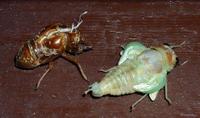
"Utsusemi" is also the name of a character in the "Tales of Genji".
The first Chinese character, 空蝉, means "emptyness" or the sky. Symbolically it is used for the frail life of humans in this world and often used in Japanese waka poems.
.............................................
"Bear Cicada", kumasemi, kumazemi 熊蝉
Cryptotympana facialis

熊蝉のじっと佇む風格よ
© PHOTO and Haiku
shige.shashin-haiku.jp
.....
Cicadas attack Japanese fiber optic cables
There is another amazing battle in Kansai this summer - NTT West Corporation VS cicadas.
"Kuma zemi (Kuma cicada)", which lives mainly in West Japan and whose body length is 6 - 7 cm, is the biggest cicada in the world. It is also said that buzzing volume of cicadas is the biggest in Osaka (as well as the people's voice volume).
In recent years, "Kuma zemi" misunderstands the optical fiber cables as dead branches and tries to lay eggs by sticking its ovipositor into the cables. A serious disconnection has been caused, and more than 1,000 damages have been reported in West Japan.
NTT West Corporation keeps developing a new type of cables, and their latest product is the cable with fiber protective barriers.
Cicada, known as the king of noise in summer, seems to be becoming the world's first IT insect pest.
Truth is indeed stranger than fiction.
Buzz buzz buzz buzz...
(aco)
© Hotwire Magazine Editors
I saw a special on TV about this, it is quite amazing how the mother cicada pierces the strong cables to insert her eggs!
Gabi Greve, August 2007
:::::::::::::::::::::::::::::::::::::::::::::::::::::::::::::::::::::::::::::::::::::::::::::::::::::
kigo for mid-summer
hatsu higurashi 初蜩 (はつひぐらし) first Higurashi
higurashi hajimete naku 蜩初めて鳴く(ひぐらしはじめてなく)
higurashi is singing
Tanna japonensis
:::::::::::::::::::::::::::::::::::::::::::::::::::::::::::::::::::::::::::::::::::::::::::::::::::::
Suzuki Harunobu 鈴木晴信

catching cicadas

carrying a cicada box
. Join the Ukiyo-E friends on facebook ! .

:::::::::::::::::::::::::::::::::::::::::::::::::::::::::::::::::::::::::::::::::::::::::::::::::::::
kigo for all autumn
cicada in autumn, aki no semi 秋の蝉 (あきのせみ)
..... autumn cicadas, shuusen 秋蝉 (しゅうせん)
This kigo brings out the sadness and appreciation of the near death of this animal.
remaining cicadas, nokoru semi 残る蝉 (のこるせみ)
chitchizemi ちっち蝉 (ちっちぜみ) Chitchi cicada
fam. Tibicininae
Its sound is チッチッチッ chitchitchi
about 3 cm long, black color. Sings in autumn in the pine forests.
Also known in Hokkaido, as Ezo chitchizemi.
.................................................................................
kigo for early autumn

"day-darkener", clear toned cicada, higurashi
蜩 (ひぐらし)
"evening cicada"
..... kanakana かなかな
Tanna japonensis
. WKD : Haiku with Higurashi .
monk-cicada, hooshisemi (hooshizemi) 法師蝉
.. .. .. tsuku-tsukuーbooshi ツクツクボウシ
tsukutsukushi, tsukutsukubooshi つくつく法師 (つくつくほうし)
kanzen 寒蝉(かんせん)semi in the cold
蛁蟟(つくつくほうし)、kutsukutsu booshi くつくつほうし
Meimuna opalifera
Its voice is especially shrill in autumn, evoking nearby death.
. . . CLICK here for Photos !
*****************************
Worldwide use
Croatia
Cvrchak "cvrchi"
In Croatian the name for semi is cvrèak (cvrchak), and for the cricket "zrikavac" or "shturak", also "crn-bel". This last specially for autumn time.
There is a very famous poem about "cvrchak" -semi of Vladimir Nazor, and about "crn-bel" (the cricket in autumn) of Fran Galovic.
Tomislav Maretic
:::::::::::::::::::::::::::::::::::::::::::::::::::::::::::::::::::::::::::::::::::::::::::::::::::::
Florida
kigo for all summer
cicadas' song
background percussion
for a crackling fire
Laura Sherman
. FLORIDA SAIJIKI .
:::::::::::::::::::::::::::::::::::::::::::::::::::::::::::::::::::::::::::::::::::::::::::::::::::::
North America
Cicada is a flying, plant sucking insect that emerges in period cycles. Nymphs suck juices from roots of plants. Egg laying females cause significant damage to trees during their brief, adult stage. They are not harmful to humans. Counter to some rumors, they do not bite, nor do they often land on a human or animal.
The adult Cicadas' entire purpose in life is to mate and produce offspring. You can hear the males' mating "song" from early morning to nightfall. In heavily infested areas, the noise can be quite disturbing. About five to ten days after mating, the female lands on twigs of deciduous trees, cuts slits in them, and lays her eggs in the slit.
Adults do not eat. Rather, damage to trees is caused by the adult female as she cuts slices in twigs to lay her eggs. Shortly after mating, the male Cicada dies.
The eggs hatch, producing tiny nymphs that fall to the ground. These nymphs burrow into the soil and feast on underground roots. They remain there for years, slowly growing, until their periodic cycle calls them to emerge again as adults.
http://www.gardenersnet.com/atoz/cicada.htm
:::::::::::::::::::::::::::::::::::::::::::
Dogday cicada / Dog Day Cicada
large American cicada (Cicada pruinosa), which trills loudly in midsummer.
. . . CLICK here for Photos !
They produce their highest pitch trills at hottest hours of the day when sun is at its highest position.
waking up
with a dogday cicada
- another hangover
Camilla Sayf, Kigo Hotline Forum 2009
*****************************
Things found on the way
Musings about the coming of autumn
by susan delphine delaney, plano, texas
to me, the coming of the cicada, and its friends the crickets, who are now swarming to doors, is an infallible sign that autumn and cool are coming.
the sunsets are now tinged with the dusky purple of autumn many nights, and the geckos have started to come inside (even though it is still 100 degrees farenheit outside).
the orb weaver spiders have begun to spin their giant webs across the sidewalk where they make an audible sound when you walk into them.
and best of all, the skies are showing cirrus clouds, made of tiny particles of ice. it is 100 degrees down here, but high in the atmosphere, ice has returned.
the cloudforms are complex, with the clouds of summer (medium high, tall) and autumn (low, moisture filled, and the high cirrus) all in the same day, all at the same time.
the earth has tipped and the relief from this heat is getting closer.
:::::::::::::::::::::::::::::::::::::::::::::::::::::::::::::::::::::::::::::::::::::::::::::::::::::::

statue of a Bosatsu with a cicada decoration
宝冠に蝉の飾りをつけた菩薩像
- source : temujincobra.blog
*****************************
HAIKU
閑かさや岩にしみ入る蝉の声
shizukasa ya iwa ni shimiiru semi no koe
extreme quietude -
the shrilling of cicadas
seeps into rocks
Matsuo Basho
(Tr. Gabi Greve)
See also: Haikutopics: the voice of animals
Oku no Hosomichi - - - Station 26 - Ryushakuji - - -
. Matsuo Basho 松尾芭蕉 - Archives of the WKD .
koe ni mina nakishimaute ya semi no kara
The shell of a cicada:
It sang itself
Utterly away.
Basho, trans. Blyth
More haiku about the cicada shell ...
Compiled by Larry Bole
"monuke" in addition to meaning the shed skin of an insect, can also mean a "place left behind".
ware to waga kara ya tomurau semi no koe
Mourning over its dead body,
And over itself--
The voice of the cicada.
Yayu, trans. Blyth
utsu semi wa moto no hadaka ni modorikeri
Empty cicada shell:
as we come
we go back naked.
Fukaku (death poem), trans. Hoffmann
furuike ya sakasa ni ukabu semi no kara
an old pond-
floating upside down
a cicada's shell
Shiki, trans. Kim Komurasaki
utsu-semi ya kono mi hitotsu ni ku wo atsume
a cicada's shell -
in this single body
pains accumulate
Masajo (1955), trans. Susumu Takiguchi
Cicada shells and dewdrops, two items easily to be observed (shasei) in rural Japan and also metaphors for the Buddhist world view of change and rebirth.
:::::::::::::::::::::::::::::::::::::::::::::::::::::::::::::::::::::::::::::::::::::::::::::::::::::
Issa has more than 40 haiku about the cicada.
聞倦て人は去也枝の蝉
kiki aite hito wa saru nari eda no semi
tired of listening
the man walks away...
cicada on a branch
.. .. ..
蝉時雨蝶は日やけもせざりけり
semi shigure chô wa hiyake mo sezari keri
cicada song pouring down--
for the butterfly too
no sunburn
http://cat.xula.edu/issa/searchissa.php?haiku_id=382.05a
.. .. ..
草の葉やたっぷりぬれて蝉の鳴
kusa no ha ya tappuri nurete semi no naku
leaves of grass--
utterly drenched the cicada
sings
Tr. David Lanoue
semi shigure,
The shrill sound of a thousand cicadas in a temple garden envelops us as if it was a kind of rain, as explained above in the kigo introduction. But it does not bring any wetness, although it can make us shiver indeed with its intensity. Sometimes the whole body seems to vibrate with the intense shrilling.
shigure itself, a shower or drizzlel is a kigo for early winter.
WHC World Kigo Database: Rain in various kigo ••
:::::::::::::::::::::::::::::::::::::::::::::::::::::::::::::::::::::::::::::::::::::::::::::::::::::
秋の蝉大樹の下の力石
aki no semi taiki no shita no chikara ishi
autumn cicadas -
below the large tree
the power stones
渡辺僚子 Watanabe Ryooko
Power Stones
:::::::::::::::::::::::::::::::::::::::::::::::::::::::::::::::::::::::::::::::::::::::::::::::::::::
samurai legends -
tsukutsukubôshi cicadas
at Sumadera
Alan Summers, UK
World Haiku Review Japan Article
Vending machines and cicadas
n.b. when these cicadas sing it means a special 'inbetween season' at Suma temple of not yet Autumn.
:::::::::::::::::::::::::::::::::::::::::::::::::::::::::::::::::::::::::::::::::::::::::::::::::::::
みんみんの峠を越えし風呂敷よ
minmin no tooge o koeshi furoshiki yo
I crossed the pass
with the minmin cicadas -
oh this furoshiki !
Kunitake Izayoi 国武十六夜
Tr. Gabi Greve
Furoshiki and Haiku
:::::::::::::::::::::::::::::::::::::::::::::::::::::::::::::::::::::::::::::::::::::::::::::::::::::
hatsu semi ya mune no oku made hibiki ori
first cicada -
deep into the heart
your reveberations
.
erste Zikaden -
bis tief ins Herz
vibriert alles
.. .. ..
entering life
with a shout of joy
a thousand cicadas
I woke up at sunrise, the whole valley seemed to be steeped in this shrill sound, you could almost see it.
The joy of coming out of the cocoon into life all at the same morning, that is always only one morning every year... whow !
Gabi Greve, 2004
http://groups.yahoo.com/group/happyhaiku/message/1785
http://groups.yahoo.com/group/happyhaiku/message/212
cicada chorus -
the silence of meditating
for peace
September 11, 2011
. Japan after the BIG earthquake March 11, 2011 .
:::::::::::::::::::::::::::::::::::::::::::::::::::::::::::::::::::::::::::::::::::::::::::::::::::::
futatsu ite hitotsu wa nakazu aki no semi
There were two there;
One didn't sing.
Cicadas of autumn.
Matsumoto Koyuu-Ni 松本古友尼
Tr. Blyth
:::::::::::::::::::::::::::::::::::::::::::::::::::::::::::::::::::::::::::::::::::::::::::::::::::::
five-seven-five-stop
the cicada so shrill
the sky shouts loudly
(tr. Gabi Greve)
fuenf-sieben-fuenf-stop
Still erklingt die Zikade
Laut schreit der Himmel
Wolf
http://www.hsv-forum.de/forum/showthread.php?t=36476
xxxxxxxxxxxxxxxxxxxxxxxxxxxxxxxxxx
Cicada from Croatia
driving down
the mountain to the sea
first cicadas
sudden shower
the cicada's orchestra
ceases their song
mosquito's buzzing
till the first cicada's song
oh, my sleeplessness
when I approach
the cicada's song slows down
when I leave, it speeds up
soundless cicada
slowly approaching
to the singing one
through the cicada's
wings you can see
the remote islands
on the olive-tree
an ant goes round
the singing cicada
a caught cicada --
chirping can be heard
from my hand
cicada in the sea .
saved thanks to little boy
in his rubber-ring
good by cicadas !
our meeting next year
on the same place
Tomislav Maretic
xxxxxxxxxxxxxxxxxxxxxxxxxxxxxxxxxx
dog days -
even the cicada complains
from the shade
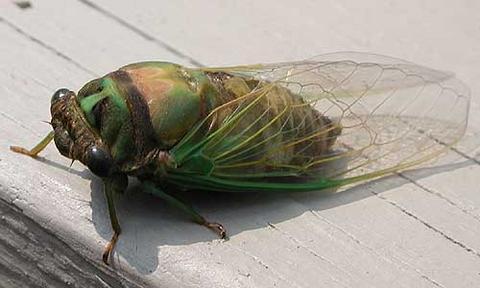
Haiku and Photo © by Carol Raisfeld
http://home.alc.co.jp/db/owa/ph_diary?stage=show&diary_sn_in=215
:::::::::::::::::::::::::::::::::::::::::::::::::::::::::::::::::::::::::::::::::::::::::::::::::::::
crying
as it’s dragged away by ants-
cicada in autumn
rota hua
cheentiom se khincha jaa raha -
pathjhad me jheengor
Masaoka Shiki, tr. into Hindi
Angelee Deodhar
*****************************
Related words
***** Insects (mushi) Autumn insects, aki no mushi, Japan
. ANIMALS in all SEASONS - SAIJIKI
:::::::::::::::::::::::::::::::::::::::::::::::::::::::::::::::::::::::::::::::::::::::::::::::::::::::::::::::::::::::::::
[ . BACK to DARUMA MUSEUM TOP . ]
[ . BACK to WORLDKIGO . TOP . ]
:::::::::::::::::::::::::::::::::::::::::::::::::::::::::::::::::::::::::::::::::::::::::::::::::::::::::::::::::::::::::::




 Posts
Posts



10 comments:
美作の千年杉の蝉時雨
Mimasaku no sen-nen sugi no semi shigure
the thousand year old cedar
at Mimasaku -
shrill chorus of cicadas
Etsuko Yanagibori
Look at a great photo of this old friend of mine in the local temple, where Etsuko visited in 2004.
http://blogs.yahoo.co.jp/etuko_ya/7236341.html
Gabi
......................................................................
semi shigure, some translations
When the cicada all burst out singing simultaneously the sound is akin to rain, hence "semishigure" which literally means "cicada rain." Voices of cicada piercing
the silence is a nostalgic memory for Japanese.
in
confectionery.jp/
.. .. ..
cicada serenade
in
ueno.cool.ne.jp/mirukashihime/geoboo50.html
.. .. ..
“Semi shigure” describes the shower of cicada song
in
www.mediatinker.com/blog/archives/006271.html
.. .. ..
"Semi Shigure" (Cicada's Lament), a Movie
in
shoujo.tripod.com/emi.html
.. .. ..
incessant cicadas --
in
http://www.worldhaikureview.org/1-3/womenpoets2.shtml
.. .. ..
semi shigure, which can be roughly translated as chorus of cicadas
in
www.sumitomocorp.co.jp/english/ economy/trend/img/econo0406e.pdf
.. .. ..
蝉時雨つくづく法師きこえそめぬ. semishigure tsukutsukubooshi
kikoesomenu
cicada shower —
tsukutsukubooshi
lets loose its first call
in
www5d.biglobe.ne.jp/~koshi/hukio/eiyaku03.html
.. .. ..
takioto no izuki no hima ya semishigure
the sound of the waterfall
pausing between breaths —
cicada shower
in
www5d.biglobe.ne.jp/~koshi/hukio/eiyaku01.html
.. .. ..
chirping shower of cicadas
in
www.geocities.jp/yajiscafe/ seasons/natsu/cicada/cicada01.html
.. .. ..
Semishigure ni kiesou na koe de ...
In a voice almost drowned out by the chorus of cicadas
in
www.lava.net/~raistlin/dai/enrai.html
...................................
Cicada Goods
http://www.cicadamania.com/cicadas/
......................................................................
美作の 句はとても素敵です。
場所も良い。
千年杉も良い。
蝉時雨が 様になります。
大きい時空を感じます。
sakuo
Tibicen canicularis / PHOTOS !
The Tibicen genus of cicadas is the most prevalent in the United States. These large-bodied cicadas appear annually, after feeding on tree roots for 2-3 years in their nymphal stage. Due to overlapping generations, Tibicen cicadas are present every year during late summer.
Tibicen cicadas are 1-2 inches long, with characteristic green, brown, and black markings on the top of the thorax, and tented, membranous wings extending past the abdomen. The fore pair are about twice the length of the hind pair. Males produce loud calls in the afternoon or evening (depending on the species) to attract females.
These sounds, distinctive for each species, are produced by organs below the abdomen's base. These calls range from a loud buzz to a long rattling sound. Adults are not known to eat.
http://en.wikipedia.org/wiki/Tibicen
寒いぞよ軒の蜩唐がらし
samui zo yo noki no higurashi toogarashi
it's cold!
a cicada in the eaves
with red peppers
by Issa
The peppers are being stored on the thatch of the eaves. Issa plays with the similar sounds of higurashi ("cicada") and toogurashi ("red peppers").
This undated haiku was written at some point in the Bunka Era (1804-1818). The higurashi is a type of cicada. The name, as Shinji Ogawa points out, means "evening cicada." One dictionary calls it, a "clear toned cicada." Shinji explains, "An evening cicada sings in rich modulation in a sing-song way."
While ordinary cicadas are associated with summer, higurashi is an autumn season word in haiku, "based on the elegant tones."
Tr. David Lanoue
.
声そろへ摂社末社の法師蝉
koe soroe sessha massha no hooshizemi
they align their voices
at the Sessha and Massha shrines -
these monk-cicadas
. Takaha Shugyoo 鷹羽狩行 Takaha Shugyo .
MORE about the shrines
Matsuo Basho
梢よりあだに落ちけり蝉の殻
kozue yori / adani ochi keri / semi no kara
撞鐘もひびくやうなり蝉の声
tsuki-gane mo / hibiku yōnari / semi no koe
やがて死ぬけしきは見えず蝉の声 (
yagate shinu / keshiki wa miezu / semi no koe
.
KIGO and Basho
Legend
Ibaraki 茨城県 - - - - -
Once at 常陸 Hitachi a shabby looking monk begged at a home for a lodging, but was refused. When the master of the home later found out that it was Kobo Daishi, he climbed on a large 欅 zelkova tree and called out for the monk to come back.
弘法様よーい、弘法様よーい Kooboo sama yoooi, kooboosama yooi
Eventually the man turned into a 蝉 cicada calling ちばひめ chibahime.
- 若宮八幡宮の大けやき The Keyaki zelkova tree in the compound of the shrine Wakamiya Hachimangu in Hitachi Ota 常陸太田市.
It is said that to our day the cicadas of the region come to this tree on the 23rd of July (this is the day when Kobo Daishi is supposed to have passed here).
.
http://heianperiodjapan.blogspot.jp/2015/06/kobo-daishi-legends.html
.
Kobayashi Issa
moro-zemi no nakikoborekeri kasa no ue
endless cicadas
their loud cries falling
onto my rush hat
This hokku was written in the summer of 1822, when Issa was living in his hometown. Issa has on his wide rush traveling hat, and he seems to be walking through a forest area at a time when male cicadas of many types are crying out ceaselessly to females. Both female and male cicadas mate prodigiously, and the males here seem to know they will not live long, so they put everything have into their cries. They often sing in chorus, creating rhythmic waves of sound, so the total volume here must be tremendous. Cicadas usually cry from tree branches and trunks, and Issa experiences their collective stream of sonic desire as coming down onto him. He seems glad to have his hat on, since their throbbing, almost crazed cries coming from the depths of their being fall on him almost physically, like a hard, steady rain of sound.
According to Issa hokku sōsakuin 356 nakikoboru (鳴零) is a single compound verb that means something like 'cry profusely' or 'cry overflowingly, excessively, drippingly.'
Chris Drake
.
higurashi
- quote -
Gotenbayashi Forest
The forest is the battleground where the Shonai Clan and the new government army fought in the Japanese civil war between Imperial and shogunate forces. Today, there is a walking path.
In 1893, the poet, Masaoka Shiki visited and composed a poem about cicadas.
Kiyokawa, Shonai Town, Higashitagawa-gun, Yamagata Prefecture
- source : navishonai.jp/spot... -
蜩(ひぐらし)の 二十五年も 昔かな
higurashi no nijuugo nen mo mukashi kana
. Masaoka Shiki 正岡子規 (1867 - 1902) .
.
https://heianperiodjapan.blogspot.jp/2018/03/sennin-gotenbayashi.html
.
Post a Comment