:::::::::::::::::::::::::::::::::::::::::::::::::::::::::::::::::::::::::::::::::::::::::::::::::::::
Summer Purification Ceremony (nagoshi)
***** Location: Japan
***** Season: Late Summer
***** Category: Observance
*****************************
Explanation
The last day of the year (December 31, oomisoka) and the last day of the first half of the year (June 30, misoka) are specially celebrated with rituals of purification in the Shrines and Temples of Japan. The rituals of these two days are also called "Great Purification" ooharae 大祓.
In some areas, the summer ceremonies occur on the last day of July.
Many ceremonies are related to the court of the Tenno in Kyoto, since these rituals reach back to the Heian period.
In some shrines a special tea ceremony for the deities is performed, kencha sai 献茶祭.
Masters of all the tea ceremony schools take turns at holding tea ceremonies as an oblation in the shrine of Kita no Tenmangu, Kyoto.
Click HERE for some photos.
kegare けがれ、穢れ pollution must be cleansed in an ablution ceremony.
Gradually the Shinto concepts of imi (taboo) and kegare (pollution) became linked to the Buddhist prohibition on taking any life.
. Eta and Burakumin 穢多 to 部落民 .
. imi 忌み / 斎み taboo in Shintoism .
The official ceremony at the shrine Kita no Tenmangu 北の天満宮 starts at six in the evening. People can then walk through the purifying "Ring of Reeds", chi no wa (chinowa). They walk first through the left ring, then through the right ring and then through the left ring again. There is a special prayer for each turn, and on the last circle they repeat the name of "Somin Shorai " (Somin Shoorai) 蘇民将来(そみんしょうらい).
Somin was a poor man, but he offered food and lodgings to another rather poor-loking man who had come from the North to the South, who was in fact the deity Susano-O. This god gave him a ring of reeds to ward off illness, so Somin and his family lived well through the plagues, pests and diseases of their age.

Further down the road of the shrine there is a sweet shop which sells a special cake only for this day, Minazuki 水無月. The red beans on the white rice cake (symbolizing snow) are good for warding off evil for the coming six months.
In Kyushu, people take a dip in sea water to purify themselves, some even dip their horses and cows.
One prays in thank you for the first half year and asks for protection during the coming half of this year. In summer, diseases spread especially fast, so people thought help and consolation in purification rituals.
This Summer Event comes with many kigo, let us look at them. Detailed explanations are given after the list of kigo.
:::::::::::::::::::::::::::::::::::::::::::::::::::::::::::::::::::::::::::::::::::::::::::::::::::
Purification Ritual (Ceremony) , harae 祓
Summer Purification, natsu harai, natsu harae 夏祓 なつはらえ
Great Purification Ritual, ooharai, ooharae 大祓 おおはらえ
Summer Passing Purification Ritual, nagoshi no harae 夏越の祓
。。。。。(名越の祓)なごしのはらへ
June Purification Ritual, minazuki harai 六月祓
..... aranigo no harae 荒和の祓 (あらにごのはらえ)、荒和大祓神事
..... June Purification Ritual at the Imperial Court 宮中の六月祓(きゅうちゅうのみなづきはらい)
Ablutions, misogi 禊 みそぎ

sacred ring, chi no wa 茅の輪 , 芽輪 - ちのわ
purification hoop
ritual of passing through the sacred ring, wagoshi matsuri 輪越祭

.. passing throuhg a woven bamboo ring, suganuki 菅貫
for example at the Shrine Iwaya Jinja in Akashi during the Oshataka Boat Festival おしゃたか舟神事
purification of a river, kawaharae 川祓
small shrine by the river, kawayashiro 川社 かわやしろ
river for ablutions, misogigawa 禊川 みそぎがわ
- quote
Chinowa
Also called suganuki, a large ring made of cogon grass, Imperata cylindrica (chigaya チガヤ / 茅) and erected on the pathway leading to a shrine on the days of purification (harae) of the last day of the sixth or seventh month (called nagoshi harae or minazuki harae). Worshipers at the shrine pass through the ring as an act of purification from misdeeds (tsumi), impurities (kegare), or bad luck.
The Muromachi-period work Kuji kongen states that as participants passed through the ring, they recited a verse invoking long life to those who "perform the nagoshi no harai in the sixth month."
An extant fragment from the ancient gazetteer of the province of Bingo (Bingo no kuni no fūdoki) relates the legend of Somin Shōrai, a legendary hero who tied a magical ring braided of cogon grass around his waist and thus escaped an epidemic. The legend suggests that in ancient times the ring of woven grass was attached to the waist or hung around the neck. See also nagoshi no harae.
- source : Motosawa Masashi - Kokugakuin 2005
.............................................................................

floating human paper figures in the river,
katashiro nagasu 形代流す
floating hemp leaves in the river, asa no ha nagasu 麻の葉流す
You blow three times on the paper figure to get rid of the evil inside, and then float the paper on a river or hand it to the shrine, where it will be carried throught the purifying ring later.
katashiro ni shirami obusete nagashikeri
sending downstream
papers cut in human shapes
with lice on them
Kobayashi Issa
Translation and Comments by
. WKD : Chris Drake - about Issa .
.............................................................................
purification in the month without water (July)
mizunashizuki harae, minazuki harae 水無月祓

purification against fire, hi shizume no matsuri
chinkasai 鎮火祭
Click HERE for photos about this ceremonies and rituals
. Mizuawase no harai 水合の祓 purification of the court wells
..... mizuawase 水合(みずあわせ)well water purification
at the court of the Heian Period
.................................................................................
yoori, yo-ori 節折 (よおり)
purification ritual for the emperor and his family
occurs on the last day of the sixth and 12th month every year.
ori 折 refers to the node of a bamboo stalk. Two staks of a round bamboo (arayo あらよ【荒節】 / nikoyo (nigiyo) にこよ【和節】 ) are used to measure the hight of the Emperor's body, then cut to this length and used for the purification rituals.
:::::::::::::::::::::::::::::::::::::::::::::::::::::::::::::::::::::::::::::::::::::::::::::::::::::
Shinto purification ceremonies and rituals
Prayers are offered for the removal of all sin, pollution, and misfortune. The body and mind are purified and restored to a condition worthy of approaching the gods. The traditional pronunciation is harae, but today the word is usually pronounced harai. The origin of harae is described in the Kojiki myth of the god Izanagi no mikoto, who is said to have washed in order to remove pollution after visiting the land of the dead (yomi 黄泉 the yellow springs). Harae is performed at the beginning of all religious ceremonies and whenever a specific need arises.
In ancient times, two types of harae, called yoshi-harae and ashi-harae (literally, purification of good and purification of evil), seem to have been performed, but the meaning of the two terms is not clear. The Ôharae is a major ceremony performed twice a year nationwide and also on other contingent occasions when deemed necessary.
In Shinto, not only are the sins, pollutions, and misfortunes of the individual removed, but also evil and misfortune can be removed from a whole nation, life renewed, and the blessings of the gods brought down. The norito prayers used at the Ôharae is called Ôbarae no kotoba. It was the duty of the Nakatomi clan to recite it, and so it is also called by the name Nakatomi no harae. Ôharae today is performed on the last days of June and December of each year.
Harae is one of the most important ceremonies in Shinto, and various forms have developed, such as nagoshi no harae (purification performed on the last day of the sixth month by the lunar calendar, and marking the middle of the year), and mi no hi no harae (purification performed on days of the snake in the third month of the lunar calendar).
There is also a common practice of reciting alone or in unison, with slight changes, the Ôbarae no kotoba, which is regarded as a sacred liturgy. Shubatsu is a harae ceremony performed by priests before a ceremony or religious rite; the ceremony of temizu (purification of hands and mouth) is performed, the norito for harae is recited, and a wand called a haraigushi is waved.
. temizuya 手水舎 purification font, purification trough .
Harae-do
A building provided in shrines to purify the body and minds of priests and participants before the performance of a religious ceremony. In some shrines there is no separate building, and a certain place is set aside for the purpose.
Misogi 禊
The practice of using water to remove pollution and sin from body and mind. Its origin is found in the myth of the god Izanagi no mikoto, who purified himself by bathing in the sea after a journey to the land of Yomi. There is a widely practiced form of austerity in which misogi is combined with Buddhist cold water ablutions (mizugori).
In Shinto, this is called kessai, and make take the form of a warm bath, splashing cold water over oneself, or washing by the seaside or by a river.
A visitor to a Shinto shrine also performs an act called temizu, the washing of the hands and mouth. In another ceremony called shubatsu, salt is sprinkled. In Japan, people sprinkle salt over themselves after attending a funeral, sprinkle water at the gate of their homes morning and evening, and place small piles of salt at the entrance to restaurants; all these practices stem from misogi. The Japanese customs of washing and bathing are also related to misogi.
Chi no wa, chinowa 茅野輪
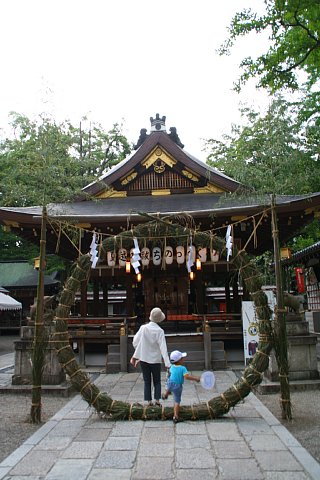
http://pds.exblog.jp/pds/1/200507/01/84/c0069684_3412642.jpg
An instrument for casting out sources of misfortune. People pass through this large sacred ring, made of loosely twisted miscanthus reeds, to obtain its exorcising effects. This ancient ceremony is practiced throughout Japan on the occasion of the Ôharae festival on June 30.
Quoted from "Basic Terms of Shinto"
. chinowa omamori ちのわ守り for summer purification .
Kibune jinja 貴船神社 Kifune Shrine, Kyoto

Chinowa ema 絵馬 votive tablets

Click for more Chinowa amulets !
. Amulets and Talismans from Japan .
. . . . .
Great Exorcism of the Last Day of the Sixth Month
Norito Text
Some shrines serve a special rice porridge, chinowagayu, chinowa-gayu 茅の輪粥.
For example the temple Hokkeji in Nara during the Summer Purification Ceremony called
蓮華会(夏祓) Renge-E.
RENGE-E 蓮華会(れんげえ) Lotus Flower Offering
kigo for late summer
Yoshino no kawazutobi 吉野の蛙飛 (よしののかわずとび)
kawazutobi 蛙飛(かわずとび)frog jumping ritual
Zaodoo kawazutobi 蔵王堂蛙飛(ざおうどうかわずとび)
frog jumping ritual at temple Zao-Do
The Lotus Flower Offering at Zao-Do Hall in temple Kinpusen-Ji in Yoshino (Nara) is very famous.
. . . CLICK here for Photos !
En-no-Gyoja is said to have received his first baby bath in Benten pond in Okuda, Yamatotakada City. Lotus flowers from this pond are offered to the Zao Gongen as this ceremony is performed.
In July, lotus flowers from Benten pond are offered to the Buddha in Zaodo, and a Kaeru Tobi (frog jumping) Event is held on the temple grounds. Large green frog are placed on a large float starts Chikurin-in at 1:00pm.
Lotus flower offering, Kaeru TobiEvent,Saito Dai Gomaku Fire Ceremony
source : www.pref.nara.jp
WKD
CEREMONIES, FESTIVALS, RITUALS .. SAIJIKI
WKD
Yoshino in Nara
:::::::::::::::::::::::::::::::::::::::::::::::::::::::::::::::::::::::::::::::::::::::::::::::::::::
purification against fire, hi shizume no matsuri
鎮火祭


Fire Extinguishing Festival, Chinkasai
... SEE
Fire Festivals (hi matsuri)
*****************************
Worldwide use
*****************************
Things found on the way
August 6, Kyoto: Nagoshi no Shinji
At Shimogamo Shrine (18:30-).
Men in fundoshi jump in the water to grab talismans.
:::::::::::::::::::::::::::::::::::::::::::::::::::::::::::::::::::::::::::::::::::::::::::::::::::::::
The sanskrit word for harai 波羅夷 (purification)
is parajika, paaraajika, the pronounciation has changed to harai.
Oharaibako, O-haraibako 御祓箱 . 御払箱 . 御払い箱 . お祓い箱
. O-Haraibako from Ise 伊勢の御はらい箱 .
*****************************
HAIKU

source : kotohogiya.shop-pro.jp
吹く風の中を魚飛ぶ御祓かな
fuku kaze no naka o uo tobu misogi kana
The wind gusts
and amidst it jump the fish--
purifying themselves, too, perhaps.
Tr. McAuley
The cut marker KANA is at the end of line 3.
Written around 1684 貞亨年間, Basho age 41 to 44.
This is most probably a text for a painting.
Allusion to a waka by Fujiwara no Ietaka 藤原家隆 (1158 - 1237)
in the collection Shinchoku senshuu 新勅撰集.
風そよぐならの小川の夕暮は御祓ぞ夏のしるしなりける
kaze soyogu Nara no ogawa no yugure wa
misogi zo natsu no shirushi nari keru
To Nara's brook comes
Evening, and the rustling winds
Stir the oak-trees' leaves.
Not a sign of summer left
But the sacred bathing there.
Tr. Kelly and Walsh, 1917
. Matsuo Basho 松尾芭蕉 - Archives of the WKD .
:::::::::::::::::::::::::::::::::::::::::::::::::::::::::::::::::::::::::::::::::::::::::::::::::::::::
溶けてゆけると形代のおもいけり
tokete yukeru to katashiro no omoikeri
memories
of the paper figures floating
and melting away
(Tr. Gabi Greve)
大坪重治 Ootsubo Shigeharu
現代俳句データベース
xxxxxxxxxxxxxxxxxxxxxxxxxxxxx
草の戸や畳かへたる夏祓
kusa no to ya tatami kaetaru natsu harae
reed door -
tatami mats changed for the
summer purification
(tr. Gabi Greve)
Tan Taigi 炭 太祇 たん・たいぎ(1738-1791)
http://www.geocities.jp/haikunomori/chuko/taigi2.html
xxxxxxxxxxxxxxxxxxxxxxxxxxxxx
加茂川に日の衰へし御祓かな
Kamo-gawa-ni hi-nootoroeshi misogi-kana
In den Fluß Kamo
läßt die Sonne nach;
die rituelle Waschung...
(訳:佐藤 貴白草: SATOH Kihakusoh)
MURAYAMA Kokyoo 村山古郷(1909-1986)
nagoshi-no-harae: die shintoistische Reinigung am Ende Juni
Haiku Romantische Strasse, Kihakusoo Satoh
xxxxxxxxxxxxxxxxxxxxxxxxxxxxx
針に糸通す水無月祓哉
hari ni ito toosu mizunashizuki harae
filling the thread
through the needle hole -
purification in the month without water
(Tr. Gabi Greve)
しゅーまん2号のお達者倶楽部の定型詩句集
http://blogs.yahoo.co.jp/schuman2gou/folder/1105198.html
*****************************
Related words
***** Year End Purification,
toshikoshi no harae 年越の祓
kigo for mid-winter
..... ooharae, oo harae 大祓(おおはらえ)great purification
onagamono 御贖物(おんあがもの) "Thanks offerings"
..... miagamono
The Year End purification ceremonies at court and many Shinto shrines are the most important in the whole year, leading over to a new start.
. . . CLICK here for Photos !
. Samekawa Ablutions (Samekawa misogi ) .
Late winter, in Hokkaido
.................................................................................
. Hatsu harai 初祓(はつはらい)
first purification ceremony
kigo for the New Year
:::::::::::::::::::::::::::::::::::::::::::::::::::::::::::::::::::::::::::::::::::::::::::::::::::::
kigo for late spring
mi no hi no harai 巳の日の祓 (みのひのはらい)
purification on the day of the snake
. Suma no misogi 須磨の御禊 (すまのみそぎ)
purification at Suma
..... Suma no harai 須磨の祓(すまのはらい)
on the day of the snake in the third lunar month
Now March 3.
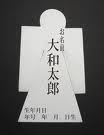
People prepare paper dolls (hitogata 人形, katashiro 形代 ) and float them on small paper ships to take away bad fortune.
The floating of hina dolls is a later version of this ritual.
. Amulets and Talismans from Japan .
:::::::::::::::::::::::::::::::::::::::::::::::::::::::::::::::::::::::::::::::::::::::::::::::::::::
Saturday, January 21, 2012
Misogi ritual takes place in tsunami-hit Kamaishi
A group of eight men walked into the cold ocean waters off tsunami-hit Kamaishi City in Iwate Prefecture on Saturday as part of a purification ritual.
A shrine in the neighboring town of Otsuchi holds the event on the coldest day of the year according to the traditional Japanese calendar.
But as the breakwater in Otsuchi was damaged by tsunami and is no longer safe, the venue this year was moved to Kamaishi.
The overnight low in Kamaishi City on Saturday morning dropped to minus 0.7 degree Celsius and light snow was falling.
After a priest held a ritual on the beach, 8 scantily-clad men simulated rowing a boat as they sang a song devoted to the god of the sea.
They then entered the water and consoled the souls of the tsunami victims, braving the waves and the cold.

One 55-year-old participant who is in the seafood processing business said, although some people no longer like the ocean because of the devastation caused by the tsunami, it remains his bread and butter.
He said he wants to use the opportunity to put the disaster behind him and work towards rebuilding the town.
source : NHK news
. Japan after the BIG earthquake March 11, 2011 .
:::::::::::::::::::::::::::::::::::::::::::::::::::::::::::::::::::::::::::::::::::::::::::::::::::::
***** . Last Day of the Year (oomisoka 大晦日)
***** . Yoshida kiyo harae 吉田清祓 (よしだきよはらえ)
purification ritual at Yoshida Shrine, Kyoto .
Yoshida ooharai 吉田大祓(よしだおおはらい)
great purification ritual at Yoshida
***** . Karasaki no harai 唐崎の祓purification at Karasaki .
Shrine Karasaki Jinja 唐崎神社, Otsu, Shiga
***** Tea Ceremony Saijiki 茶道の歳時記
***** Sweets from Japan, Wagashi
***** minazuki 水無月 (みなずき) Kyoto sweets for June purification
***** . Somin Shoorai Fu 蘇民将来符 Somin Shorai amulet .
:::::::::::::::::::::::::::::::::::::::::::::::::::::::::::::::::::::::::::::::::::::::::::::::::::::
. SAIJIKI
OBSERVANCES, FESTIVALS, RITUALS
[ . BACK to WORLDKIGO . TOP . ]
:::::::::::::::::::::::::::::::::::::::::::::::::::::::::::::::::::::::::::::::::::::::::::::::::::::



 Posts
Posts


13 comments:
http://blogs.yahoo.co.jp/schuman2gou/46363561.html
こんにちは、記事にしました。
だるまさんいっぱいありますね。^^v
般若心経のことなども読ませていただきました。
素晴らしいページです。
riding the plague god
the lice
float away
katashiro ni shirami obusete nagashi keri
形代に虱おぶせて流しけり
by Issa, 1816
On the last day of Sixth Month, a doll of straw or reed is set adrift on a river to exorcise disease and accident.
Tr. David Lanoue
http://cat.xula.edu/issa/
purification rite ...
her first appointment
with a gynaecologist
:>) Ella Wagemakers
www.ewchameleon.com
to the great river
fleas go flitting...
rite of purification
oogawa e hara-hara nomi wo misogi kana
.大川へはらはら蚤を御祓哉
by Issa
This haiku refers to a Shinto purification ritual that takes place in Sixth Month in the traditional Japanese calendar.
One of the observances is to launch special shrine boats in water; see Kiyose (Tokyo: Kakugawa Shoten, 1984) 162. Shinji Ogawa adds that the most popular forms of the ritual involve (1) entering a shrine through the chinowa (a large ring made of woven reeds) or (2) going to a river and releasing a paper boat containing a paper doll (katashiro).
As the doll drifts away it is thought to take "all unclean things with it."
Trl. David Lanoue
http://cat.xula.edu/issa/
Thank you once again for the great lessons you share with us about haiku, kigo, and the meanings behind some of Issa's poems.
R.W.
十ばかり蛙も並ぶ御祓哉
too bakari kawazu mo narabu misogi kana
about ten frogs
also waiting in line
at the Great Purification
Tr. and Comment by Chris Drake:
This hokku is from the end of the 5th month (June) in 1814, when Issa was back in his hometown. It's written about a month before the summer Great Purification performed at many Shinto shrines on 6/30, so Issa must be thinking about the upcoming purification ceremony already
MORE
http://groups.yahoo.com/group/translatinghaiku/message/3775
.
Matsuo Basho
吹く風の中を魚飛ぶ御祓かな
ふくかぜのなかをうをとぶみそぎかな)
fuku kaze no / naka o uo tobu / misogi kana
.
http://matsuobasho-wkd.blogspot.jp/2012/06/cultural-keywords.html
Kobayashi Issa
痩蚤を振ふや猫も夕祓
yase nomi wo furuu ya neko mo yuu-harai
shaking off
scrawny fleas, even the cat
does evening purification
Tr. Chris Drake
Probably the hokku refers to the last day of the 6th month, which was the end of lunar summer and also the end of the first half of the year in Shinto.
Read the comment of Chris here
Kobayashi Issa
早速に虫も鈴ふる御祓哉
sassoku ni mushi mo rin furu misogi kana
an insect too
quickly shakes a bell...
purification ritual
(Tr. David Lanoue)
Kobayashi Issa
夕あらし我形代を頼むぞよ
yuuarashi waga katashiro o tanomu zo yo
night storm--
I rely on my little
plague god
On the last day of Sixth Month, a doll of straw or reed is set adrift on a river to exorcise disease and accident.
.
David Lanoue
.
Kobayashi Issa
形代も吹ばとぶ也軽い身は
katashiro mo fukeba tobu nari karui mi wa
the little plague god
flies in the gust...
its body so light!
(Tr. David Lanoue)
.
http://edoflourishing.blogspot.jp/2013/03/issa-cultural-keywords.html
.
Kobayashi Issa
形代や乗て流て笹葉舟
katashiro ya nosete nagarete sasaha fune
little plague god--
setting sail on a boat
of bamboo grass
(Tr. David Lanoue)
Kobayashi Issa
鶯も水を浴せてみそぎ哉
uguisu mo mizu o abisete misogi kana
the nightingale
splashes too...
purification font
The bird bathes in the font that holds water for hand-washing purification at a shrine.
David Lanoue
.
The haiku has the cut marker KANA at the end of line 3.
.
Post a Comment