:::::::::::::::::::::::::::::::::::::::::::::::::::::::::::::::::::::::::::::::::::::::::::::::::::::::::::::::::::::::::::
Ricewine, rice wine (酒 sake, saké, saki)
***** Location: Japan
***** Season: various
***** Category: Humanity
*****************************
Explanation
Ricewine is one of the best things of life in Japan!

http://darumasan.blogspot.com/2006/12/sake-and-daruma.html
For all you need to know about this drink, check
Sake World Homepage - John Gauntner
WASHOKU : Jizake, local ricewine brands
:::::::::::::::::::::::::::::::::::::::::::::::::::::::::::::::::::::::::::::::::::::::::::::::::::::::::::::::::::::::::::
- quote
Kanpai! Sake through the ages

“A civilization stands or falls by the degree to which drink has entered the lives of its people, and from that point of view Japan must rank very high among the civilizations of the world,” observed essayist Kenichi Yoshida in “Japan is a Circle” (1975).
The first foreigners ever to record observations of the Japanese — Chinese envoys of the third century A.D. — noted, “They are much given to strong drink.” Traces on prehistoric pottery suggest fruit-brewing as early as the Jomon Period (c. 12,000 B.C. — c. 300 B.C.). The history we’re embarked on is therefore a very long one — with no end of parties to crash!
MORE
- source : Michael Hoffman - Japan Times - October 2013

Parody of Palace Servants
Heating Sake over a Fire of Maple Leaves
Okumura Masanobu (1686–1764)
.......................................................................
quote
Sake and Japanese Culture
Written by Dr. Koizumi Takeo, Professor,
Tokyo University of Agriculture
Since time immemorial, people have brewed alcohol and enjoyed it as part of their culture. In many parts of the world, alcohol has held a place of honor and been romanticized as an ideal. The Japanese are certainly no exception. Many centuries ago, they began blending their staple food, rice, with pure water and koji micro-organisms to make Nihon-shu (Japanese sake), skillfully taking advantage of nature and local environmental conditions to create a distinctive brew.
...
From beverage of the gods to a drink for the common man
The most potent alcohol in the world
Microorganisms: The secret behind that intriguing fragrance and taste
...
Sake as part of culture
Sake was created by the ancestors of today’s Japanese. For centuries it has been part of the life of almost every person on the archipelago, because of its importance in rites commemorating everything from birth to death. Sake is more than a drink taken to enjoy a tipsy time—it also serves a vital social purpose at the defining moments in life.
and much much more :
source : web-japan.org/nipponia, 2008
.......................................................................
The religious use of sake (o-miki お神酒)
In the word o-miki, the reading "ki" is assigned to the character for sake. As such, the final meaning would again be akin to "the sake that helps one prosper," but perhaps this time there is a bit more of a religious association. Linguistically, sakae-no-ki changed to sakae-no-ke, sakae-ke and sake-ke before arriving at the vernacular manifestation we use today.
source : JOHN GAUNTNER
.......................................................................
. Matsunoo Taisha 松尾大社 Matsunoo Grand Shrine
Matsuno'o Taisha - Matsu-no-o .
a Shrine to honor sake brewing, selling and drinking
:::::::::::::::::::::::::::::::::::::::::::::::::::::::::::::::::::::::::::::::::::::::::::::::::::::::::::::::::::::::::::
Sake is a beverage fermented from rice, which is a grain. This would make it more of a beer than a wine. Yet, sake is not carbonated, and flavor-wise is closer to wine than beer, although it is indeed uniquely different from wine. Sake is not a distilled beverage, and is not even remotely related to gin, vodka or other spirits.
http://www.sake-world.com/html/sake-faqs.html
... ... ...
Here is one story of John's Sake World about Haiku:
Kotsuzumi, "Koden"Junmaishu, Hyogo Prefecture
The name Kotsuzumi refers to a small drum used in a form of traditional Japanese dancing. The grandfather of the current president was a haiku poetry student of a famous haiku poet, and the name Kotsuzumi was given by that famous poet. He was so into his haiku writing that the sake brewery almost went under, I was told, and in fact the current owner and his father are also poets.
http://www.sake-world.com/html/sw-2004_8.html
A little detour:
More about the Japanese Drums
Japanese Drums by Gabi Greve
kasuyuzake かすゆざけ【糟湯酒】 water with sake lees
This is an old type of drink of the poor people since the Heian period.
:::::::::::::::::::::::::::::::::::::::::::::::::::::::::::::::::::::::::::::::::::::::::::::::::::::
Now let us go back to the kigo with SAKE!
Spring
Ricewine whilst viewing the Cherry Blossoms
hanamizake 花見酒
Cherry Blossoms - Kigo in the Database
:::::::::::::::::::::::::::::::::::::::::::::::::::::::::::::::::::::::::::::::::::::::::::::::::::::
Summer
sweet ricewine, amazake 甘酒、醴
Other kigo versions are:
one-night ricewine, hitoyozake 一夜酒
seller of sweet ricewine, amazake-uri 甘酒売り
shop for sweet ricewine, amazakeya 甘酒屋
Rice for cakes (mochi) is cooked until very soft (kayu) and then special mold (kooji, koji) is added and let ferment for seven, eight hours or over night, hence the naming.
It is drunk hot on warm summer evenings and during the Edo period, sellers would walk around to sell this beverage.
Nowadays it is more consumed on winter evenings.
We can now even buy prepared bags with freeze-dried contents, to be diluted with hot water for fast consumption.
... ... ...
Quote from the Muso Company:
Amazake is popular as a winter drink that warms our bodies. The history of Amazake goes back to the 4th century according to the Chronicles of Japan. Although it is often associated with winter, its season word in Haiku is summer. Years ago when diet was simpler, many people died from the heat of summer. During this period, people started to drink Amazake as a sweet nutritious drink to survive rigorous summers.
Because Amazake is made from brown rice Koji, it includes a rich amount of vitamins, essential amino acids, and glucose created by the Koji. Live enzymes in Amazake are also effective in strengthening the digestive system by accelerating appetite and regular elimination. Nutritionally rich Amazake is popular in and out of Japan for young and old alike since it contains no alcohol.
http://www.muso-intl.co.jp/ENGLISH/Beverages/Amazake.html
xxxxxxxxxxxxxxxxxxxxxxxxxxxxxxxxxxxx
Cold Rice Wine, hiyazake 冷酒
..... reishu 冷酒
..... hiyashizake 冷やし酒
Japanese wine (nihonshu 日本酒), another word for rice wine, is a favorite in summer too.
In summer it is consumed with the normal temperature of the day or nowadays, on the rocks with ice cubes.
:::::::::::::::::::::::::::::::::::::::::::::::::::::::::::::::::::::::::::::::::::::::::::::::::::::
Autumn
nihonshu no hi 日本酒の日 Sake Day
October 1
October is the 10th month.
The Chinese character for the cock 酉, which is the 10th animal in the Asian cycle of 12 animals, is also a part of the kanji for ricewine 酒.
This day has been established in 1965 as 酒造元旦, later re-named in 1978.
Chrysanthemum Ricewine, kiku no sake, kikuzake 菊の酒
(Mid-Autumn)
To prepare Chrysanthemum Wine, you have to float some Chrysanthemum petals in ricewine, appreciate their beauty first and then drink.
(See hokku by Basho below.)
. gumi no sake 茱萸の酒(ぐみのさけ)
sake with silverberries
gumi, a plant of the Elaeagnus family
Chrysanthemum Festival
rituals on the ninth day of the ninth month
xxxxxxxxxxxxxxxxxxxxxxxxxxxxxxxxxxxx
New Ricewine, shinshu 新酒
This ricewine is brewed with the first rice crop of a year.
first run of a new sake, abarashiri 新走
ricewine of this year, kotoshizake 今年酒
early rice sake, wasezake 早稲酒
xxxxxxxxxxxxxxxxxxxxxxxxxxxxxxxxxxxx
Ricewine while viewing the Full Moon of Autumn
tsukimizake 月見酒
WKD: MOON and his LINKS
:::::::::::::::::::::::::::::::::::::::::::::::::::::::::::::::::::::::::::::::::::::::::::::::::::::
Winter
Warm sake - toast of the town for winter
atsukan 熱燗 (kigo for all winter)
Hot sake is known as o-kan, or kan-zake in general. Nurukan refers to sake heated to about 40-45 C, whereas atsukan is piping hot sake. Atsukan has its appeal as a curiosity, but you really can't taste much.
Read more By JOHN GAUNTNER
http://www.sake-world.com/html/jt-1999_0.html
The pot to heat the sake can be made from copper or clay. You use a container (chooshi 銚子) and put it into the pot with hot water for indirect heating. A tokkuri (sake container 徳利) is also put into hot water to heat up and when the top feels right, it is taken out of the hot bath and ready for consumption.
Read Gabi Greve about

Tokkuri - Drinking Hot Sake with Daruma 徳利とだるま—焼物散歩
I remember a story about the "invention" of hot rice wine in Ancient China.
The troops would drink cold rice wine every night and have a hangover next day, not able to fight the enemy porperly. So a clever general would serve them heated sake, which made them drunk easily without drinking toooo much. Next morning they would have no hangover and fight the enemy to the end.
Thus the custom of drinking it HOT was born.
xxxxxxxxxxxxxxxxxxxxxxxxxxxxx
Drinking ricewine before going to bed, nezake 寝酒
Many people drink before going to bed, but on a cold winter night with no central heating in the home, it was essential to have a hot sip before getting to sleep. Therefore it is a kigo for all winter.
xxxxxxxxxxxxxxxxxxxxxxxxxxxxx
Blowfish fins in Ricewine, hirezake 鰭酒
(all winter)
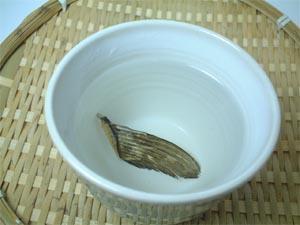
http://kitchen-h.fem.jp/cgi-bin/column/column/basic/009.html
The dried fins are either left as they are or chopped finely and are then immersed in ricewine. This brew has a special taste and is well loved by connoisseuers. The reaction of the alcohol in the body shows fast, therefore it is usually used as a last farwell drink.
Sometimes a piece of raw blowfish (sashimi) is immersed inthe ricewine, this is also a kigo called "Fish Meat Ricewine" mizake (身酒).
Read more about the Blowfish here
WKD : Blowfish (fugu)
xxxxxxxxxxxxxxxxxxxxxxxxxxxxx
Brewing ricewine in the cold, kanzukuri 寒造, 寒作り
Ricewine that is brewed with especially cold water in the middle of winter.
xxxxxxxxxxxxxxxxxxxxxxxxxxxxx
Ricewine whilst viewing the snow falling
yukimizake 雪見酒
WKD Snow (yuki)
xxxxxxxxxxxxxxxxxxxxxxxxxxxxx
Ricewine with an egg, tamagozake 玉子酒, 卵酒
Since the Edo period this was used as a medicine against cold, because of the nutrition of the egg.
Nowadays sugar is also added to the mixture. Sometimes the pot is set on fire with a match to get rid of the alcohol to give the drink to children.
xxxxxxxxxxxxxxxxxxxxxxxxxxxxx
Ricewine with ginger, shoogazake 生姜酒
Finely grated or ground ginger is put in a cup and hot sake added to it. This is also a traditional medicine against cold. The flavor of ricewine and ginger go well together and you could sip this brew for hours ...
xxxxxxxxxxxxxxxxxxxxxxxxxxxxx
Liquor made from pine needles, matsubazake, matsuba sake
松葉酒 まつばざけ, まつはさけ
Tonic liquor flavored with pine needle extracts
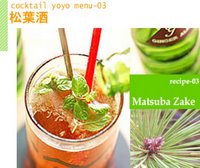
Made in May from fresh pine needles, choped finely, with sugar and water added. When left in the sunshine, it starts to ferment. Recently it is also prepared with rice schnaps, shoochuu 焼酎. After half a year the mixture is ready to drink. It is known as a medicine for various ailments in China, Korea and Japan.
Some Korean Recipies
There is also a schnaps made with Matsutake Mushrooms.
松茸酒
Fresh mushrooms are cut and immersed in shoochu for about 6 months before consumption.
http://www2.tokai.or.jp/fuji-ys/ninjinmatutake.htm
xxxxxxxxxxxxxxxxxxxxxxxxxxxxx
"Hail Wine", ararezake 霰酒 あられざけ
Also called "Snow Pellet Wine" mizorezake 霙酒 みぞれざけ
This brew has its origin in the year of Keichoo (from 1596) and the hint was taken from the famous pond Sarusawa 猿沢 in Nara.
Rice cakes (mochi) are cut and diluted with rice shnaps (shoochuu) many times until they finally resemble hail stones when chopped. They are put in sweet rice wine (mirin 味醂 ) to mature for a while.
Another way of preparation is using the molded sake (kooji, koji 糀) to imitate the snow pellets.
This sake is a speciality of Nara.

http://www.kitora.com/harusika-araresake.htm
.................................................................................
observance kigo for early winter
tooji kitaru 杜氏来る (とうじきたる)
the sake brewers are coming
..... kura iri 倉入り(くらいり)"entering the storehouse"
In the Edo period, it was customary for farmers to leave home in winter and work in the big sake breweries to make some extra money. Most of them were specialists in their trade. They worked from December for about 100 days, and were thus also called the "workers for 100 days" 百日男.
The most famous regions for these seasonal brewmasters were
Tanba (Tamba Toji) (丹波杜氏), Tajima (但馬杜氏), Noto (能登杜氏) and Nanbu (南部杜氏).
There is even a museum about the Tamba Toji 丹波杜氏酒造記念館.
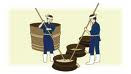
Tamba Toji
雪消をせむと杜氏の帰りたり
yuki-gie o semu to tooji no kaeritari
when the snow melts
the brewemasters
head home
Sonehara Ikuko 曽根原幾子
:::::::::::::::::::::::::::::::::::::::::::::::::::::::::::::::::::::::::::::::::::::::::::::::::::::
New Year
New Year's Ricewine
... nenshu 年酒
... toshizake としざけ
mulled with spices, toso, o-toso 屠蘇
WKD : Mulled wine (gloegg)
:::::::::::::::::::::::::::::::::::::::::::::::::::::::::::::::::::::::::::::::::::::::::::::::::::::
Kenpaishiki 献盃式 in memory of Saint Shinran
Drinking sake in a memorial service, at temple Honganji and others
January 1.
. Shinran Shonin 親鸞聖人 and Kigo
:::::::::::::::::::::::::::::::::::::::::::::::::::::::::::::::::::::::::::::::::::::::::::::::::::::
A sake barrel,
Born without hands, makes merry —
Cherry blossom time
Ihara Saikaku (1642-1693)
Sake Barrels exhibited at Shinto Shrines
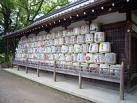
Sake Barrels, Decoration Barrels
Explanations are here !
sakagomo 酒薦(さかごも)straw mat to cover a barrel
waramushiro 藁蓆(わらむしろ)straw mat / komo 薦

source : library.metro.tokyo.jp/portals
sugoroku game with famous sake barrels
新撰銘酒寿語禄(しんせんめいしゅすごろく)
by 梅素亭玄魚(1817-1880)
:::::::::::::::::::::::::::::::::::::::::::::::::::::::::::::::::::::::::::::::::::::::::::::::::::::
The deity of the shrine in Kyoto is known as a
God of Japanese sake.
. Shrine Matsuo Taisha 松尾大社
*****************************
Worldwide use
Germany
Reiswein
Aus grünem Bambus
Reiswein genießen. Abschied
für die Studenten.
(Saskia Ishikawa Franke)
Ein elegisches Epigramm.
http://kulturserver-nds.de/home/haiku-dhg/Archiv/Fitterer_Epigramm.htm
..... ..... .....
Ein Greis sitzt am Fluss,
Schenkt sich `ne Schale Reiswein
Ein Volkslied summend.
Hungki Park
http://www.e-stories.de/gedichte-lesen.phtml?10965
*****************************
Things found on the way
Battledore Game
This game reached Japan from Japan during the Muromachi period, where it became a pastime for the court nobles and their children. When grown ups played it in teams, the loosing part had to drink a coup of rice wine.
Battledore game - Kigo in our Database
:::::::::::::::::::::::::::::::::::::::::::::::::::::::::::::::::::::::::::::::::::::::::::::::::::::
Read Gabi Greve about
Sake and Shochu - Ricewine, Schnaps and Daruma
酒、焼酎と達磨 — 晩酌散歩
.......................................................................
A Japanese link with haiku about rice shnaps, shoochuu
焼酎の俳句
http://plaza.rakuten.co.jp/hiromuworld/5000
*****************************
HAIKU
. Sake - Matsuo Basho 松尾芭蕉 - Archives of the WKD .
草の戸や日暮てくれし菊の酒
kusa no to ya higurete kureshi kiku no sake
this grass door -
dusk arrives with a present
of chrysanthemum ricewine
Tr. Gabi Greve
Written in 1691, on the ninth day of the ninth lunar month
元禄4年9月9日
His disciple Kawai Otokuni 河合乙州 brought a barrel of rice wine.
Basho stayed at temple Gichu-Ji at Mumyooan 義仲寺無名庵 Mumyo-An.
. Kawai Otokuni 川井乙州/ 河井乙州 / 河合乙州.
(1675 - 1720)
.............................................................................
花にうき世我が酒白く飯黒し
hana ni ukiyo waga sake shiroku meshi kuroshi
cherry blossoms
in this fleeting world - my rice wine is white
my rice is black
MORE - Discussion and ukiyo hokku by
. Matsuo Basho 松尾芭蕉 - Archives of the WKD .
Nigori or nigorizake (濁り酒) is a variety of sake, an alcoholic beverage produced from rice. Its name translates roughly to cloudy because of its appearance. It is about 14–17% alcohol by volume.
Normal sake is usually filtered to remove grain solids left behind after the fermentation process, however nigori sake remains unfiltered, resulting in a far cloudier drink.
© More in the WIKIPEDIA !
.............................................................................
蒼海の浪酒臭し今日の月
sookai no nami sake kusashi kyoo no tsuki
blue seas
breaking waves smell of rice wine
tonight's moon
Tr. Jane Reichhold
MORE translations and discussion :
. WKD : Moon Haiku .
.............................................................................
柴付けし馬のもどりや田植樽
shiba tsukeshi / uma no modori ya / taue daru (tauedaru, taue-daru)
A barrel of rice wine offered at the end of the rice planting season.
MORE - Ricewine sake haiku by
. Matsuo Basho 松尾芭蕉 - Archives of the WKD .
:::::::::::::::::::::::::::::::::::::::::::::::::::::::::::::::::::::::::::::::::::::::::::::::::::::
親鳥のぬくめ心地や玉子酒
shinchoo no nukume kokochi ya tamagozake
正岡子規 Masaoka Shiki
http://www.suien.net/shiki/kansyo.htm
... ...
their stems dipped
in refined sake,
these drooping wisteria flowers
have recovered,
have revived!
(tr S. Goldstein)
Masaoka Shiki (1867-1902)
xxxxxxxxxxxxxxxxxxxxxxxxxxxxx
鰭酒に酔ひける夜の星の下
hirezake ni yoikeru yo no hoshi no shita
getting drunk on
blowfish fin sake this night
unter the stars
遠藤和良 Endo Kazuyoshi
http://www.endo-kazuyoshi.com/haiku/04.htm
..........................................................................
爐びらきや 雪中庵のあられ酒
robiraki ya sekichuuan no ararezake
opening the hearth -
in my hut surrounded by snow
a sip of snow pellet wine
(Tr. Gabi Greve)
. Yosa Buson 与謝蕪村 in Edo .
robiraki is itself a kigo for early winter.
..........................................................................
旬のゑらぶみぞれふる夜のあられ酒
ku no erabu mizore furu yo no ararezake
selecting haiku
on an evening with pellet snow -
a sip of hail wine
(Tr. Gabi Greve)
Kikaku
http://www.kitora.com/harusika-araresake.htm
xxxxxxxxxxxxxxxxxxxxxxxxxxxxx
花びらを吹いて楽しむ花見酒
hanabira o fuite tanoshimu hanamizake
blowing flower petals
and enjoying
rice wine under cherry blossoms
Hajko
http://www2.saganet.ne.jp/vastalto/hajko/hajk2000.html
:::::::::::::::::::::::::::::::::::::::::::::::::::::::::::::::::::::::::::::::::::::::::::::::::::::

amazake 甘酒
amazake no nukumori daite haru o matsu
holding on to a cup
of sweet rice wine -
waiting for spring
(Tr. Gabi Greve)
Mayuzumi Madoka 黛まどか
This is a haiku on a bag of sweet sake preparation, winner of a haiku contest about sweet sake from Morinaga Company.
http://morinaga.co.jp/amazake/haiku/index.html
:::::::::::::::::::::::::::::::::::::::::::::::::::::::::::::::::::::::::::::::::::::::::::::::::::::
方言に耳慣れて来しぬくめ酒
hoogen ni mimi narete kishi nukumezake
finally I get used
to the local dialect -
warm sake
Inoue Fumiko 井上芙美子
nukui is an expression used in Western Japan for warm or hot.
:::::::::::::::::::::::::::::::::::::::::::::::::::::::::::::::::::::::::::::::::::::::::::::::::::::
Matsuo Basho in the year Genroku 6
寒菊や醴造る窓の前
kangiku ya amazake tsukuru mado no saki
winter chrysanthemums
it makes a sweet drink
in front of the window
Tr. Reichhold
winter chrysanthemum--
heating sweet wine
in front of the window
Tr. Barnhill
Reichhold says that the drink is a milky liquid, and she thinks Basho is comparing its color to white winter chrysanthemums, "which were probably covered with oiled white paper."
MORE food and drink hokku by
. Matsuo Basho 松尾芭蕉 .
:::::::::::::::::::::::::::::::::::::::::::::::::::::::::::::::::::::::::::::::::::::::::::::::::::::
!!! Special Feature of the World Kigo Database :
Santoka and Sake 。。山頭火と酒の俳句 Santooka
:::::::::::::::::::::::::::::::::::::::::::::::::::::::::::::::::::::::::::::::::::::::::::::::::::::
寒造透かせグラスの江戸切子
kanzukuri sukase-gurasu no Edo kiriko
rice wine brewed in the cold -
a transparent glass of
old Edo cut glass
吉岡ゆたか Yoshioka Yutaka
www5.ocn.ne.jp/~turu/kukai/g_200503.html
. Edo kiriko 江戸切子 and KIGO
:::::::::::::::::::::::::::::::::::::::::::::::::::::::::::::::::::::::::::::::::::::::::::::::::::::
kanzukuri 寒造, 寒作り brewing rice wine in the cold
柿渋を塗りし手桶や寒造
Abe Gassanko 阿部月山子
並蔵はひびきの灘や寒作り
Kikaku 其角
佇めばつぶやく醪寒造
Kishi Fuusanro 岸風三楼 Fusanro
白水の川の出来たと寒造り
Kobayashi Issa 一茶
蔵梯子たわむをのぼり寒造
Miyashita Suishuu 宮下翠舟 Suishu
門前に竜の玉あり寒造り
Mori Sumio 森澄雄)
蔵入りの杜氏は初心を失はず
Nakai Yokaroo 中井余花朗
その情けこそ 寒づくり
Nishiyama Sooin 奥深き 西山宗因 Soin
二階より桶つりおろす寒造
Nishiyama Shookoshi 西山小鼓子
寒造り渚の如く米沈む
. Yamaguchi Seishi 山口誓子.
MORE from Issa about Sake :
一茶ほろにが酒
- source : www.h6.dion.ne.jp/~jofuan
*****************************
Related words
. WASHOKU
futsukayoi, futsuka-yoi 【二日酔い 】hangover, Kater
and some natural remedies for it !
:::::::::::::::::::::::::::::::::::::::::::::::::::::::::::::::::::::::::::::::::::::::::::::::::::::::
sakaya 酒屋 sake shop, liquor shop
梅咲くや酒屋へ一里黄泉へ二里
ume saku ya sakaya e ichiri yomi e niri
plums are blossoming -
one ri distance to the liquor shop
two ri distance to the Yellow Springs
Anai Futoshi 穴井太 (1926 - 1997)
. yomi 黄泉 "the yellow springs" netherworld .
.......................................................................
とうふ屋と酒屋の間を冬篭
tôfu ya to sakaya no ai wo fuyugomori
between tofu shop
and the tavern...
my winter seclusion
Tr. Lanoue
. 小林一茶 Kobayashi Issa and Tofu .
- - - - - Senryu
Some coin-string vendors were quite vicious and hang around shops and stores to "force" their owners to buy the string. A lot of senryu have been written about them.
いらぬさし買って酒屋はしずかなり
iranu sashi katte sakaya wa shizuka nari
he bought money strings
that were not needed, now the sake shop
is all quiet
He had to keep them in the second floor of his shop and could not accomodate any customers there for a while.
. Doing Business in Edo - 江戸の商売 .
:::::::::::::::::::::::::::::::::::::::::::::::::::::::::::::::::::::::::::::::::::::::::::::::::::::::
***** Deafness-curing sake (jirooshu)
***** Mirin (sweet sake for cooking) Japan
***** SUMMER Drinks Japan
Including sweet rice wine (amazake), beer, ice shavings with flavor (kakigoori), barley tea (mugicha), strong liquor (shochu) and many more
***** World Kigo Database: Hot Drinks List
***** Egg Nog
***** Hot Whiskey (Toddy, Irish Coffee)
***** Mulled wine (gloegg, Gluehwein)
***** Iced Coffee, aisu-koohii (Japan) Hot Coffee
:::::::::::::::::::::::::::::::::::::::::::::::::::::::::::::::::::::::::::::::::::::::::::::::::::::
WASHOKU : Jizake, local rice wine brands
WASHOKU ... Japanese Food SAIJIKI
:::::::::::::::::::::::::::::::::::::::::::::::::::::::::::::::::::::::::::::::::::::::::::::::::::::
[ . BACK to WORLDKIGO . TOP . ]
[ . BACK to DARUMA MUSEUM TOP . ]
- #sake #ricewine #barrel #sakagomo #komo -
:::::::::::::::::::::::::::::::::::::::::::::::::::::::::::::::::::::::::::::::::::::::::::::::::::::



 Posts
Posts


15 comments:
もうたまりません。
私は今、禁酒中です。
良くこれだけ詳しく集めましたね。
感心します。
がびさんも、お酒は嫌いの方ではありませんね。
sakuo
sake moon -
conversation flows
from heated cups
shane gilreath
a New Year's toast
for his wrinkled face...
laughter
shiwa-zura ni toso nuritsukeru warai kana
皺面にとそぬり付るわらひ哉
by Issa, 1821
Tr. David Lanoue
http://cat.xula.edu/issa/
-Sake Regionality and Climate
(Warm it in the north, cool it in the south)
John Gauntner
Regionality in sake is a topic near and dear to my heart, perhaps because trying to understand it forces one to walk a fine line of frustration and delight. Never a dull moment involved.
I have written several times about regionality in the sake world, most significantly in issues 84 and 85 in late 2006, archived here and here. Rather than rehash those articles, let us look at how the sake of the various regions in Japan are affected by but one factor: climate. And, at the very real risk of being excessively general, let us look at Japan as if it were but two regions: north and south.
snip
Finally, let us note one more thing. Long ago, brewers were stuck with the ambient temperature of their breweries and their climates. Sure, the kura were built to stay consistent and cool even in the summer, but there are limits to this. These days, we have refrigerated rooms, entire cooled kura, cooling jackets on tanks, and even entire tanks enclosed in refrigeration units. Sure, the more advanced you get, the more expensive things are, and not every place can afford these things.
But the point is that brewers are no longer constrained to the ambient temperatures of the past, and this holds especially true for premium sake like ginjo. And, in fact, this is one reason why we see much less evident regionality in ginjo than we do in lower grades of sake: for ginjo, they will make efforts to use modern technology to control temperatures, whereas lower grades are more often left to fend for themselves in tanks et al that are less protected from the local whims of nature.
While there are many things that contribute to the vague concept of regionality in Japan, perhaps the ambient temperatures of the regions is one of the easiest to grasp and remember.
Read it all HERE
http://www.sake-world.com/html/sw-2008_3.html
this blessing
not allowed in Paradise...
new sake
gokuraku ni ikanu kahoo ya kotoshi sake
.極楽に行かぬ果報やことし酒
by Issa, 1822
Drinking alcoholic beverages is prohibited according to traditional Buddhist precepts. Issa doubts, therefore, that this "blessing" (kaho^) will be allowed in Amida Buddha's Western Paradise.
As the polka exclaims, "In heaven there is no beer; that's why we drink it here!"
Though Issa is a Buddhist, he partakes freely of the newly brewed sake, manifesting a healthy disdain for precept-following that is much in the tradition of the founder of the Joodoshinshuu sect to which he belonged: Shinran.
Shinji Ogawa paraphrases: "The blessing of not having been in Paradise...this year's sake." Issa's point:
"Because I haven't gone to Paradise, I am blessed with the new sake."
David Lanoue
http://cat.xula.edu/issa/
Gabi san, thank you for your touji haiku.
Sakuo
Kobayashi Issa
酒飯の掌にかかるみぞれ哉
sakameshi no tenohira ni kakaru mizore kana
sleet falls
on a palm holding
steamed rice for sake
Tr. Chris Drake
This hokku was written on 10/28 (Dec. 11) in 1803, when Issa was living in Edo. The hokku and the hokku following it in Issa's diary seem to be based on a visit to a sake brewery. Issa had just written a kasen renku sequence with the poet and rich merchant Seibi, so he could have gone with Seibi to visit a brewery. In any case, Issa is interested by the newly steamed rice that one of the brewers seems to be inspecting.
The rice used in making sake is first washed and steam-cooked (not boiled) and then cooled before it is mixed with the other ingredients. This specially steamed rice is still fairly hard on the outside and is not considered food or delicious. The brewer needs to test its feel, smell, color, body, and whether it's been cooked enough, but it's a dark winter day and there are only a few oil lamps inside for light, so he carries a handful of the rice outside the brewery door, where it's lighter and he can see better. The way the warm steam rises up from the rice through the cold sleet falling on it perhaps suggests the intensity of the brewer's stare and his obvious strong desire to steam the latest batch of rice inside just the right amount.
Chris Drake
.
toso, o-toso
mikusuri o kuuzu 御薬を供ず offering honorable medicine
..... toso 屠蘇(とそ)ritual ricewine
byakusan 白散(びゃくさん)
doshoosan, toshoosan 度嶂散(どしょうさん)
kusurigo 薬子(くすりご)"child drinking medicine"
The original name was toso enmei san 屠蘇延命散 medicine to prolong life.
It was introduced from China in the Heian period for the Emperor Saga Tenno 嵯峨天皇 and been offered at court on the third day of the New Year. Later during the Edo period it became a habit of the townspeople.
The tradition of drinking toso at the New Year began in the Tang Dynasty in China, and was adopted by Japanese aristocrats during the Heian period. The first cup drunk would be made with tososan, and the second and third cups with different varieties called byakusan and toshōsan.
.
Matsunoo Taisha 松尾大社 Matsunoo Grand Shrine - Matsuno'o Taisha
and sake brewing
.
http://japanshrinestemples.blogspot.jp/2015/04/matsunoo-taisha.html
.
Sake 酒 for rituals and festivals
.
http://japanshrinestemples.blogspot.jp/2015/04/sake-rituals-festivals.html
.
Kooji Koji
Japanese-Made Microorganism Key to Washoku Taste
The secret history of Koji fungus
The key to the distinctive flavors of washoku lies in the use of traditional Japanese seasonings such as sake, miso, soy sauce and mirin (cooking wine). They all owe their existence to the koji fungus, a microorganism known in scientific circles as called Aspergillus oryzae.
http://ignition.co/205?
Kobayashi Issa - nozake 野酒
蝶とぶや茶売さ湯うり野酒売
chô tobu ya cha uri sayu uri nozake uri
a butterfly flits --
hot tea, hot water
and sake for sale
Shinji Ogawa notes that nozake means "field-sake," similar to the English word, "beer garden." He believes that this is a scene of cherry blossom viewing.
David Lanoue Gerard
.
Kobayashi Issa
梅満り酒なき家はなき世也
ume miteri sake naki ie wa naki yo nari
plum in full bloom--
a house without sake
can't be found
(Tr. David Lanoue)
.
http://edoflourishing.blogspot.jp/2013/02/kobayashi-issa.html
.
Sugoroku board game for Newly Selected Famous Sake
(Shinsen Meishu Sugoroku)
.
https://heianperiodjapan.blogspot.com/2017/09/sugoroku-game-legends.html
.
toso mulled rice wine
During the reign of 嵯峨天皇 Saga Tenno there was the saying that
if only one member of the family drinks Toso the whole family would get ill.
But if all family members would drink Toso, they would stay healthy for the whole year.
The Toso was kept in a well and pulled out on the first of January.
.
https://gokurakuparadies.blogspot.com/2020/12/saga-tenno-legends.html
.
Post a Comment