:::::::::::::::::::::::::::::::::::::::::::::::::::::::::::::::::::::::::::::::::::::::::::::::::::::
Home village, home town, home land
(furusato ふるさと 故郷、古里)
Heimat
***** Location: Japan
***** Season: Non-seasonal Topic
***** Category: Humanity
*****************************
Explanation
The mention of the word FURUSATO in Japan will bring a lot of emotions to the heart, it is very very dear to the Japanese!
The German HEIMAT seems a bit similar in emotional potential.
Let us look at some expressions with this word, as they are are used in Japanese haiku.
There are many clichees with the Japanese "hometown" feeling, for example the red dragonfly, the graves of the ancestors, the Autumn festival at the local shrine and the food flavor of home (furusato no aji), expecially the miso soup made by mother (o-fukuro no aji).


:::::::::::::::::::::::::::::::::::::::::::::::::::::::::::::::::::::::::::::::::::::::::::::::::::::
Heimatland, homeland,
another possibility to translate FURUSATO, has various other nuances in other languages.
What Does "Homeland" Mean to You?
:::::::::::::::::::::::::::::::::::::::::::::::::::::::::::::::::::::::::::::::::::::::::::::::::::::
hometown, home village, my native place, furusato
..... ふるさと 故郷、古里 故里 郷土 郷里
"my old village", "my home village", "my native village"
place where I was born, umare kokyoo 生まれ故郷
home country, kyookoku 郷国、郷関
mura 村 village
The place where one was born is usually called "my home town", furusato. The place where one has lived a long time during his life is the "second home" (dai-ni no furusato). In my case, the mountains of Ohaga in Okayama are my second home.
Some people have to live away from their native place and can not return for various reasons, but they will always remember it.
Even if we travel back to the hometown, we might find our old parent's house gone.
The Japanese word KOKYOO sounds rather stiff, whereas FURUSATO is pleasing to the ear. Therefore FURUSATO is used mostly in haiku. Ever since Matsuo Basho used it in his famous haiku, it has been used again and again. Some haiku may sound sentimental just because the use of this word. Yet, since we all can resonate with the feeling of belonging there, most haiku are well liked.
xxxxxxxxxxxxxxxxxxxxxxxxxxxxx
home of my family, kakyoo 家郷
home of my mother, bokyoo 母郷
my homeland, the country where I come from, kunimoto 国許
The place where I was born and raised. My mother's house is most often used in haiku. But this word is not shown in many big dictionaries. It has been derived for poetry from Japanese words like "my motherland" bokoku, "my mothertongue" bokoku.
I remember, in German, we rather say "My father's house, Vaterhaus", "Father's country, Vaterland".
.......................................................................

.......................................................................
my home mountains, kozan 故山
............. yamazato 山里
Japan is a very mountainous country, so many villages are sourrounded by high and low mountains. It sounds a bit like a word of old Chinese poetry.
My home here in Okayama has a sort of kozan feeling to it. Most villagers are just like a large family, with all its twists of community life.
Whereas yamazato refers to the village itself, the reverse, satoyama 里山, refers to the mountains around a village, especially the part that is used by all for common purposes and in, or rather was, an important part of the rural ecology.
The Traditional Rural Landscape of Japan
. Satoyama 里山 さとやま
xxxxxxxxxxxxxxxxxxxxxxxxxxxxx
land where I was born, shoogoku shookoku 生国
place of birth, shusshin chi 出身地
the honorable land of your birth, o-kuni お国
One of these questinos you hear as a foreigner: o-kuni wa dochire desu ka? Where have you been born? Even amongst Japanese, it matters whether you are born in Hokkaido or Okinawa or on the Mainland.
The Japanese reading of SHOKOKU is rather oldfashioned and not mentioned in many dictionaries. SHOOGOKU sounds more pleasant in haiku.
xxxxxxxxxxxxxxxxxxxxxxxxxxxxx
longing for the homeland, bookyoo 望郷
。。。。。。。。。。。。。。。。 kaikyoo 懐郷
thinking of the homeland, shikyoo 思郷
These words have already been used in Chinese poetry of old, during the period of the six dynasties 220 AD - 589 AD.
Some of the Japanese Envoys to China (kentooshi) , especially Abe no Nakamaro, have used these expressions to make poems about their longing for Japan.
:::::::::::::::::::::::::::::::::::::::::::::::::::::::::::::::::::::::::::::::::::::::::::::::::::::

. furusato haiga ふるさと俳画
haiga from the homeland / heartland .
:::::::::::::::::::::::::::::::::::::::::::::::::::::::::::::::::::::::::::::::::::::::::::::::::::::
................................... kigo for summer:
to return home, kisei 帰省
..... ................... kikyoo 帰郷
person returning home, kiseishi 帰省子
to return to Kyoto, kikyoo 帰京
returning home, kichoo 帰朝
........................ sato-gaeri 里帰り
The season for returning to one's hometown and family is during the O-Bon Festival in August and the New Year . Students and workers return home to pray at the family graves.
But even this custom, which leads to a country-wide traffic congestion, the kisei rasshu 帰省ラッシュ, is getting less every year. People rather take a normal holiday during this time and visit leisure lands or go abroad. Since the rush is greatest during the summer holiday time, it is a kigo for summer.
Sato-gaeri, to return home to mother, was also a custom for pregnant women just before giving birth.
:::::::::::::::::::::::::::::::::::::::::::::::::::::::::::::::::::::::::::::::::::::::::::::::::::::
one's house of birth, home of birth
.................... seika 生家
..................... jikka 実家
Jikka is used more casually, but seika means business, family business and a lot of traditions related to one's position in the family and the local neighbourhood. It does not only mean the building of the home itself.
客として生家にありぬ菊枕
kyaku to shite seika ni arinu kiku-makura
only a guest
in the house I was born -
chrysanthemum pillow
Ichiba Motomi 市場基巳
xxxxxxxxxxxxxxxxxxxxxxxxxxxxx
home country, kyookoku 郷国
mother country, bokoku 母国
ancestor's country, sokoku 祖国
This is expecially important for Japanese, who have emigrated to a foreign country for some reason, to a place with strange food and a strange language. They feel very emotional using these words.
xxxxxxxxxxxxxxxxxxxxxxxxxxxxx
foreign land, takyoo 他郷
.....。。。。。 takoku 他国
strange land, ikoku 異国
................. ikyoo 異郷
..... ......... ikyoo 異境
takyoo, takoku or ikyoo can be used for an area or country in Japan or ourside of Japan. ikoku is always a land that is NOT one's motherland. This is also called "foreign land", gaikoku、外国. A person like myself, German living in Japan, is always a foreigner, gaikoku-jin 外国人、called gaijin 外人 for short.
xxxxxxxxxxxxxxxxxxxxxxxxxxxxx
place where I was born, ubusuna 産土
.......................... seichi 生地
......................... jimoto 地元
The place where a baby is born and gets its first clothes (ubugi). There the local gods live (ubusunagami 産土神), who protect the baby. In haiku, it can therefore carry a lot of meaning.
. ubugami 産神 "deity of birth" .
Visit to a temple of the God of one's birthplace (ubusunagami - 産土神)
. ubusuna mairi 産土神参 .
kigo for the New Year
Locally grown vegetables and other food are also jimoto vegetables.
xxxxxxxxxxxxxxxxxxxxxxxxxxxxx
dialect, local speach, namari なまり、訛
dialect of the country, kuninamari 国訛
language of the region, hoogen 方言
language of the land, okuni kotoba お国言葉
Although Japanese are proud of their unity, there are a lot of local differences. A person from the North will hardly understand someone from the southern island of Kyushu. You learn the local language from your parents, siblings and people around you. Just by the way people talk you can get a hint of where they were born.
During the Edo period, when travelling for leisure purposes was not very frequent, peopel from outside were soon recognized by the way they talked. One of the trainings for a good spy (ninja) was the ability to imitate many dialects from Japan, so they would not be found out when talking in the market place of a village.
:::::::::::::::::::::::::::::::::::::::::::::::::::::::::::::::::::::::::::::::::::::::::::::::::::::
................................... kigo for late autumn:
. mura kabuki 村歌舞伎(むらかぶき)village kabuki
... jikyooten, ji kyoogen 地狂言(じきょうげん) village kyogen
... ji shibai, jishibai 地芝居 (じしばい) local performance
... mura shibai 村芝居(むらしばい)performance in the village
:::::::::::::::::::::::::::::::::::::::::::::::::::::::::::::::::::::::::::::::::::::::::::::::::::::
This concludes the tour of words around the home towns and home villages in Japan.
The difference between the concept of Motherland and Fatherland is striking.
What is the usage in your country?
*****************************
Worldwide use
Germany
Heimat. Heimatland (home land), Vaterland (fatherland)
*****************************
Things found on the way
The famous Japanese song "My Homeland"
Orinally composed by Teiichi Okano (1878-1941)
Usagi oishi kano yama
Kobuna tsurishi ka no kawa
Yume wa ima mo megurite
Wasuregataki furusato
Ika ni imasu? chichi haha
tsutsuganashi ya? tomogaki
Ame ni kaze ni tsuketemo
Omoi izuru furusato
Kokorozashi wo hatashite
Itsu no hi ni ka kaeran
Yama wa aoki furusato
Mizu wa kiyoki furusato
:::::::::::::::::::::::::::::::::::::::::::::::::::::::::::::::::::::::::::::::::::::::::::::::::::::
山里は冬ぞさびしさまさりける
人めも草もかれぬと思へば
Yamazato wa. Fuyu zo sabishisa masarikeru.
Hitome mo kusa mo. Karenu to omoeba.
Winter loneliness
In a mountain village grows
Only deeper, when
Guests are gone, and leaves and grass
Are withered: troubling thoughts.
28 - Minamoto no Muneyuki 源宗于朝臣
. Ogura Hyakunin Isshu Poems 小倉百人一首 .
*****************************
HAIKU
Matsuo Basho
旧里や臍の緒に泣くとしの暮
ふるさとや ほぞのおになく としのくれ
furusato ya hozo no o ni naku toshi no kure
town where I was born -
as I weep over my umbilical cord
the year comes to a close
Tr. Ueda
Written in 1687 貞享4年, Oi no Kobumi
This hokku has the cut marker YA at the end of line 1.
Japanese mothers keep the umbilical cord as a memento of the birth of their babies.
heso no o, hozo no o 臍の緒 umbilical cord
When Basho has the chance to hold it in his hands again in Iga Ueno, he is overwhelmed with the memories of his late mother and father.
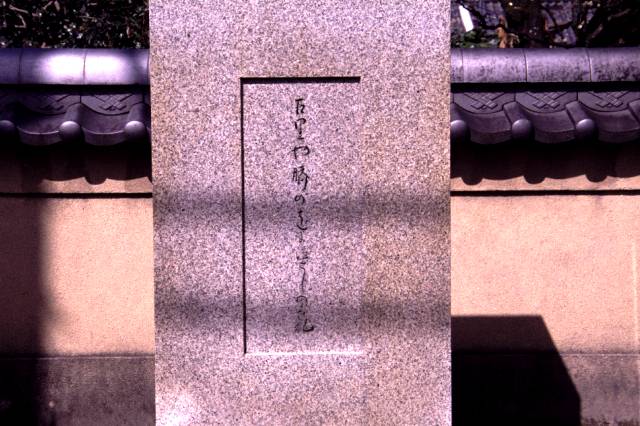
Photo: ©(牛久市森田武さん撮影)
Haiku Stone Monument in Iga Ueno
http://www.ese.yamanashi.ac.jp/~itoyo/basho/oinokobumi/oino13.htm#ku3
my home town -
I weep over my navel string
at the end of the year
Tr. Gabi Greve

umbilical cord box へその緒寿箱
The box is called Kotobuki-bako 寿箱 "Long Life Box", and sold at many shrines in Japan. There are many variations, with a small baby doll clad in kimono above the navel string.
. heso no o へその緒と伝説 the umbilical cord .
里古りて柿の木持たぬ家もなし
sato furite kaki no ki motanu ie mo nashi
- furusato ふるさと 故郷、古里 home village, home town, Heimat -
. Matsuo Basho 松尾芭蕉 - Archives of the WKD .
:::::::::::::::::::::::::::::::::::::::::::::::::::::::::::::::::::::::::::::::::::::::::::::::::::::
. WKD : Kobayashi Issa 小林一茶 .
里の火の古めかしたる月夜哉
sato no hi no furumekashitaru tsukiyo kana
moonlight
in a village
with old lamps
Tr. Chris Drake
This hokku is from the intercalary 8th month (Sept.) of 1805.
Issa was then living mostly in Edo, which had many forms of illumination at all hours of the night. A visit to a small village that uses mostly weak, old-style lamps and torches seems to have reacquainted Issa with the primordial power of autumn moonlight.
Chris Drake
小庇に薪並おく雪解哉
kobisashi ni maki narabe oku yukige kana
inside the house
on rows of firewood
melting snow
Tr. Chris Drake
This hokku is from the second month (March) of 1818, when Issa was visiting students in the area around his hometown. The cutting word is at the end, and the first two lines modify the third, so the snow melt is the main focus. The hokku seems to be both about the hard work that has to be done in early spring and about the disappearing border between inside and outside. Snow is rapidly turning into wet, glistening traces of snow on the bark of the logs of firewood that have been brought indoors and placed in the area just inside the walls of the house to dry. Spring and the environment have both been brought inside the house, but the wet snow is disappearing, and although the border between inside and outside remains, it is weaker than before, as if it, too, were melting.
Moreover, the reason the firewood was brought inside seems to be because the snow outside has also begun to melt and soak into the wood, so logs both outside and inside are glistening or at least wet with snowmelt, and the inside of the house becomes a kind of modified outside. Spring literally seems to permeate or soak into the inside of the house and the people living in it -- people who have until recently been cooped up inside during a long, snowy winter.
In modern Japanese hisashi means eaves or a canopy, but in Issa's time it meant the narrow space between the main pillars supporting the roof and the outer walls. On the sides of ordinary houses, the pillars were commonly flush with the outer walls, but the front and back of the house often extended outward beyond the pillars, creating a bit of extra space just inside the front and back doors and porches. Issa says it is a "small hisashi," so it's probably only a few feet wide.
In Buddhist temples, Shinto shrines, and large houses, this space was wider and usually ran around the inside of all four walls, but farmhouses were more cramped.
Chris Drake
- quote
hisashi 廂 - Also written 庇.
The area surrounding the moya 母屋 or core of a temple building.
A narrow aisle-like area, usually only one bay wide. It can extend entirely around the moya or on one, two or three sides. The floor of the moya and the hisashi is the same level throughout. Hisashi may also refer to an unenclosed veranda or corridor protected by either additional eaves underneath those of the main roof or by the extension of the eaves of the main roof over the open hisashi. Although the architecture of Shinto shrines was affected to some extent by the importation of Buddhism, the interior floor plan remained relatively simple, with the exception of that of Kibitsu Jinja Honden 吉備津神社本殿 and Haiden 拝殿, in Okayama prefecture (1390-1425).
Both the worship hall and the inner sanctuaries are surrounded by narrow corridors like enclosed hisashi. The rooms of palaces and mansions of the mid-Heian period were surrounded by corridors. Example: the residence of Fujiwara Teika 藤原定家 (13c) in Kyoto. The plans include core areas surrounded by corridors which resemble the moya and hisashi of temple buildings.
- source : JAANUS
.............................................................................
furusato ya yoru mo sawaru mo bara no hana
My native village
on approach and to the touch
a bramble rose.
Issa
http://www.ahapoetry.com/haiku.htm
xxxxxxxxxxx xxxxxxxxxxxxxxx
give me a homeland,
and a passionate woman,
and a winter alone
Issa
http://www.tapsns.com/haiku.php?mode=list&page=15
xxxxxxxxxxxxxxxxxxxxxxxxxx
国がらや田にも咲するそばの花
kunigara ya ta ni mo saki suru soba no hana
such is my homeland!
blooming in rice fields
buckwheat
Issa, tr. David Lanoue
http://haikuguy.com/issa/haiku.php?code=576.03a
xxxxxxxxxxxxxxxxxxxxxxxxxx
露の玉 ひとつひとつに 故郷あり
tsuyu no tama hitotsu hitotsu ni kokyoo ari
dewdrops ...
in this one, in this one too
my dear homeland
Tautropfen -
in diesem, in diesem auch
meine Heimat
Issa
Tr. Gabi Greve
in beads of dew
one by one my home
village
Tr. David Lanoue
More of Issa's FURUSATO haiku !
我村や春降雪も二三尺
waga mura ya haru furu yuki mo ni san shaku
my home village -
even the spring snow falls
two or three shaku
Tr. Gabi Greve
one shaku is about 30 cm or 1 foot.
hitotsu hitotsu ni
. Numbers used in Haiku .
夕時雨馬も古郷へ向てなく
yuu shigure uma mo furusato e muite naku
rainy winter night--
the horse neighs too
toward his home village
Issa
:::::::::::::::::::::::::::::::::::::::::::::::::::::::::::::::::::::::::::::::::::::::::::::::::::::
Masaoka Shiki and his hometown, Matsuyama
故郷やどちらを見ても山笑ふ
furusato ya dochira o mite mo yama warau
my hometown -
wherever I look
mountains are smiling
. mountains smiling, yama warau 山笑う .
故郷はいとこの多し桃の花
furusato wa itoko no ooshi momo no hana
in my hometown
there are so many cousins -
peach blossoms
ふるさとや親すこやかに鮓の味
furusato ya oya sukoyaka ni sushi no aji
my dear hometown -
my mother is well and
the taste of sushi
. Shiki and the sushi of his hometown .
故郷や祭りも過ぎて柿の味
furusato ya matsuri mo sugite kaki no aji
my hometown -
after the festival
the taste of persimmons
松山の城を見おろす寒さかな
Matsuyama no shiro o miorosu samusa kana
this coldness
looking down from the castle
of Matsuyama
. Matsuyama 松山 and Masaoka Shiki .
Reference : www.cc.matsuyama-u.ac.jp
:::::::::::::::::::::::::::::::::::::::::::::::::::::::::::::::::::::::::::::::::::::::::::::::::::::
kaisan no aida ni furusato ya yomogi-mochi
between sea and mountains
there is my homeland !
rural ricecakes
Matsumoto Yachiyo
yomogi-mochi are special rice cakes made from mugwort and provoke a feeling of homeland and mother's cooking.
xxxxxxxxxxxxxxxxxxxxxxxxxxxxx
aka tonbo kaeru furusato to ari ni keri
red dragonfly -
at least I have a home town
to come back to
Satoo Fumiko
xxxxxxxxxxxxxxxxxxxxxxxxxxxxx
kiriboshi ya kakyoo sutetaru ni wa arazu
dried long radish -
I just could not leave behind
my family home
Kojima Ken
xxxxxxxxxxxxxxxxxxxxxxxxxxxxx
daikon hosu tsuma koozen to kuni namari
drying large radishes -
my wife proudly talks
in local dialect
Furutachi Soojin
:::::::::::::::::::::::::::::::::::::::::::::::::::::::::::::::::::::::::::::::::::::::::::::::::::::::
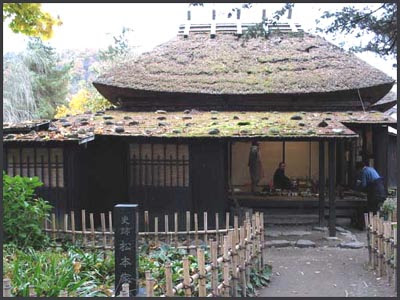
みじか夜や村雨わたる板庇
mijika yo ya murasame wataru itabisashi
this short night -
a shower passes over the planks
of the eaves
Yosa Buson 与謝蕪村
. murasame 村雨 (むらさめ) "rain on the village"
a passing shower, a kind of "evening shower" (yuudachi 夕立) after a hot summer day.
This is a welcome shower that brings a special sound to a village with thatched-roofed homes.
The eaves were covered with wooden planks, sometimes fortified with stones as in the photo above, to prevent them flying off in a typhoon. Below the eaves was the place to enjoy in summer, meet the neighbours, chat and have a drink.
. mura shigure, murashigure 村時雨 "village shower"
passing winter shower
kigo for early winter
:::::::::::::::::::::::::::::::::::::::::::::::::::::::::::::::::::::::::::::::::::::::::::::::::::::::
色深きふるさと人の日傘かな
iro fukaki furusatobito no higasa kana
the strong colors
of summer umbrellas from folks
in my hometown
Nakamura Teijo 中村汀女 (1900 - 1988)
:::::::::::::::::::::::::::::::::::::::::::::::::::::::::::::::::::::::::::::::::::::::::::::::::::::

yamazato ni kodomo no egao aki matsuri
.. .. .. in the mountain village
.. .. .. all children laughing -
.. .. .. autumn festival
Photo and Haiku by Gabi Greve, Autumn Festival
:::::::::::::::::::::::::::::::::::::::::::::::::::::::::::::::::::::::::::::::::::::::::::::::::::::
home at last
our valley yet more lovely
through tears
ancient forest
every green leaf
born this year
the stream
of my childhood
new water
old farmer's
hard hands are gentle
planting seedlings
© Sequence by Denis Garrison, USA, July 2006
:::::::::::::::::::::::::::::::::::::::::::::::::::::::::::::::::::::::::::::::::::::::::::::::::::::
Immigrants
oak trees
my twenty-two years
as an immigrant
Ella Wagemakers, Philippines - Holland
o o o o o
snow deepening...
I've forgotten my Chinese
name
Chen-ou Liu, Taiwan - Canada
o o o o o
Christmas eve -
I dream about Germany
in Japanese
Gabi Greve, Germany - Japan
o o o o o
"Are there oaks in Yemen?"...
roots fed by tears
in Germany
Heike Gewi, Germany - Yemen
Kigo Hotline, December 2010
*****************************
Related words
***** My country, my province (waga kuni)
:::::::::::::::::::::::::::::::::::::::::::::::::::::::::::::::::::::::::::::::::::::::::::::::::::::::::::::::::::::::::::
[ . BACK to DARUMA MUSEUM TOP . ]
[ . BACK to WORLDKIGO . TOP . ]
:::::::::::::::::::::::::::::::::::::::::::::::::::::::::::::::::::::::::::::::::::::::::::::::::::::::::::::::::::::::::::



 Posts
Posts


19 comments:
red dragonfly --
two homelands double the appreciation
chibi
http://groups.yahoo.com/group/happyhaiku/message/2700
Thanks, Chibi, indeed two homelands!
Gabi
::::::::::::::::::::::::::::::::::::::::::::::::::::::::::::::::::::::
::::::::::::::::::::::::::::::::::::::::::::::::::::::::::::::::::::::
my home village--
four or five years of soot
needs sweeping
furusato ya shi go nenburi no susu harai
古郷や四五年ぶりの煤払
by Issa, 1824
Tr. David Lanoue
http://cat.xula.edu/issa/
::::::::::::::::::::::::::::::::::::::::::::::::::::::::::::::::::::::
old neighbourhood:
welcomed back by
my graffiti
—Ross Clark
Brisbane, Australia
http://tinywords.com/haiku/2006/08/18
.
in the remote village
snow melting also
is not easy
yabu mura ya yuki no tokeru mo muzukashiki
.薮村や雪の解るもむづかしき
by Issa, 1814
Literally, the village is in a "thicket" (yabu).
Tr. David Lanoue / http://cat.xula.edu/issa/
tonight's moon--
how many mountains resemble
the ones back home?
tsuki koyoi kokyoo ni nitaru yama wa ikutsu
.月今よひ古郷に似たる山はいくつ
by Issa
This is an early haiku written in the 1790s. It is a revision of the following, changing statement to question:
tsuki koyoi kokyoo ni nizaru yama mo nashi
tonight's moon-- mountains just like the ones back home
Tr. David Lanoue
http://cat.xula.edu/issa/
kane tsukanu sato wa nani o ka haru no kure
(in another version, 'sato' is replaced by 'mura'.)
a village where no
bells ring: what, then,
of spring evenings?
Basho, trans. Barnhill
mountain village--
soot-covered plum blossoms
and camellias
yama-zato ya susu o kabutte ume tsubaki
.山里や煤をかぶって梅椿
by Issa, 1813
Tr. David Lanoue
Thank you for your endeavor of expanding Japanese culture to all over the world..
I wish to present my personal 文化勲章 culture medal to your couple.
Sakuo
Happy Haiku Forum
一里はみな花守の子孫かや
hito sato wa / mina hanamori no / shison ka ya
Matsuo Basho
山里は万歳遅し梅の花
yamazato wa manzai ososhi ume no hana
Matsuo Basho
(1691 - mid-First Month, February)
mountain village
and the New Year's dancers are late:
plum blossoms
Tr. Barnhill
MORE translations and
about Manzai
刈りかけし田面の鶴や里の秋
kari kakeshi / tazura no tsuru ya / sato no aki
Matsuo Basho
Matsuo Basho
里古りて柿の木持たぬ家もなし
sato furite / kaki no ki motanu / ie mo nashi
- - - - -
里の子よ梅折り残せ牛の鞭
sato no ko yo / ume orinokose / ushi no muchi
- - - - -
里人は稻に歌詠む都かな
sato-bito wa / ine ni uta yomu / miyako kana
.
chinjugami 鎮守神 tutelary deities
regional, local Kami
http://japanshrinestemples.blogspot.jp/2013/04/chinjugami-tutelary-deity.html
Kobayashi Issa
returning to my hometown after being away for forty years --
ふしぎ也生れた家でけさの春
fushigi nari umareta ie de kesa no haru
how mysterious --
New Year's morning in
the house where I was born
read the comment by Chris Drake
.
http://groups.yahoo.com/group/translatinghaiku/message/4278
Yosa Buson
故郷や酒はあしくと蕎麦の花
furusato ya sake wa ashiku to soba no hana
My hometown --
Though the sake is not good
Buckwheat flowers
Tr. Nelson/Saito
山里は梢さびしく散果てゝ嵐の音も庭の枯葉に
yamazato wa kozue sabishiku chirihatete
arashi no oto mo niwa no kareba ni
In a mountain home
The treetops, desolately,
Are completely bare;
The storm-wind’s sound
Is in my garden’s withered leaves . . .
Lord Ari’ie.
Winter poems from the Poetry Contest in Six Hundred Rounds:
Round Two Hundred and Forty-Four: Winter – Falling Leaves.
Thomas McAuley
山里は朝川渡る駒の音に瀬々の氷の程を知るかな
yamazato wa
asakawa wataru
koma no oto ni
seze no kōri no
hodo o shiru kana
Dwelling in the mountains,
Crossing the river in the morning,
The horses’ footfalls
Upon the ice within the shallows
Tells to me its depth…
Kenshō.
Winter poems from the Poetry Contest in Six Hundred Rounds:
Round Two Hundred and Forty-Four: Winter – Falling Leaves.
Thomas McAuley
.
へその緒は母の箪笥に桐の花
heso no o wa haha no tansu ni kiri no hana
my umbilical cord
in the chest of my mother -
paulownia blossoms
Sakamoto Kyoko 坂本杏子
.
kiridansu, kiri tansu 桐箪笥 chest from paulownia wood
.
http://omamorifromjapan.blogspot.jp/2015/10/tansu-chest-of-drawers.html
.
Larry Bole wrote:
hana ibara kokyoo no michi ni nitaru kana
thorn flowers in bloom---
so like a path near the village
where I was born
--Buson, trans. Makoto Ueda,
from "The Path of Flowering Thorn: The Life and Poetry of Yosa Buson" (Stanford U. Press, 1998)
Ueda writes:
"The flower's fragrance evokes memories of a childhood that is long gone. But the poet cannot go back to the childhood, for there is no way to reverse the flow of time. He cannot even visit his birthplace, though it still exists. He craves to return there, yet a thorn bush or wbatever is symbolized by the thorny plant is blocking his homeward path.
"The poet, Yosa Buson, wrote a number of other poems that similarly suggest a longing for his old home; they are so poignant that he has come to be known as 'the poet of nostalgia' in recent decades."
Ueda's footnote:
"Hagiwara Sakutaroo was the first to call Buson 'a poet of nostalgia.' His 'Yosa Buson, a Poet of Nostalgia' (Kyooshuu no shiiin Yosa Buson) published in 1936, eloquently expounds Buson's poetry from this viewpoint."
.
Post a Comment