:::::::::::::::::::::::::::::::::::::::::::::::::::::::::::::::::::::::::::::::::::::::::::::::::::::
Goldenrod (awadachisoo)
***** Location: Japan, worldwide
***** Season: Early Autumn
***** Category: Plant
*****************************
Explanation
This is a very common plant, rather one of these weeds you would not like in your garden.
I remember in Germany we called it the "French Weed" and my neighbours here in Japan call it "Korean Weed" - always blaming the country next to yours ...
goldenrod, awadachisoo 泡立草
aki no kirinsoo 秋の麒麟草(あきのきりんそう)kirin giraffe grass of autumn
seitaka awadachisoo 背高泡立草(せいたかあわだちそう) high goldenrod
It was introduced to Japan late and during the Showa period it could be found all over the islands. It grows along rivers and fields and here in my area it is slowly taking over the fallow rice fields.

It is also used as a herbal drug in folk medicine, see below.
Gabi Greve
:::::::::::::::::::::::::::::::::::::::::::::::::::::::::::::::::::::::::::::::::::::::::::::::::::::
Goldenrods (Solidago)
Habitat:
Goldenrod is a very common wildflower. It occurs in many habitats, including waste areas, meadows, and on the margins of forests. There are about 125 varieties of Goldenrod native to North America. There are 30 species of goldenrods in Ontario! Their identification may be difficult!
All these goldenrods are native to North America.
Goldenrod occurs in most areas where there is full to part sun.
Folklore:
There is an old legend that relates goldenrods to asters. Two young girls talks about what they would like to do when they grew up. One, who had golden hair, said she wanted to do something that would make people happy. The other, with blue eyes, said that she wanted to be with her golden-haired friend. The two girls met and told a wise old lady of their dreams. The old lady gave the girls some magic corn cake. After eating the cake, the girls disappeared. The next day, two new kinds of flowers appeared where the girls had walked: Asters and Goldenrods.
Read a lot more about these flowers here:
http://www.ontariowildflower.com/goldenrods.htm
*****************************
Worldwide use
Germany
Goldrute, in some areas Franzosenkraut.
... ... ...
Echtes Goldrutenkraut - Solidaginis virgaureae herba
Goldrautenkraut, Goldwundkraut, Edelwundkraut;
Englisch: Golden rod, golden rod wort, goldenrod.
Anwendungsgebiete:
Zur Durchspülung bei entzündlichen Erkrankungen der ableitenden Harnwege, Harnsteinen und Nierengrieß; zur vorbeugenden Behandlung bei Harnsteinen und Nierengrieß.
Read more about this drug use in Germany
http://www.pharmakobotanik.de/systematik/6droge-f/solida-v.htm
xxxxxxxxxxxxxxxxxxxxxxxxxxxxx
Historically, goldenrod (Solidago virgaurea), also called European goldenrod, has been used topically for wound healing. In fact, the name Solidago means "to make whole."
In traditional medical practices, goldenrod has been used to treat tuberculosis, diabetes, enlargement of the liver, gout, hemorrhoids, internal bleeding, asthma, and rheumatic illnesses (disorders of the muscles and joints). Topical preparations of goldenrod are used in folk medicine to treat inflammation of the mouth and throat as well as slow-healing wounds.
Today, goldenrod is primarily used as an aquaretic agent, meaning that it promotes the loss of water from the body (as compared to a diuretic, which promotes the loss of both water and electrolytes such as salt). It is used frequently in Europe to treat urinary tract inflammation and to prevent or treat kidney stones. In fact, goldenrod is commonly found in teas (typically with other herbs including uva ursi) to help "flush out" kidney stones and alleviate inflammatory diseases of the urinary tract.
Contrary to popular belief, goldenrod does not cause hay fever. Its pollen grains, which are meant to be carried by insects, are much heavier than those of ragweed and other plants with airborne pollens that may be associated with allergies or hay fever.
Read more about it here:
http://www.umm.edu/altmed/ConsHerbs/Goldenrodch.html
*****************************
Things found on the way
*****************************
HAIKU
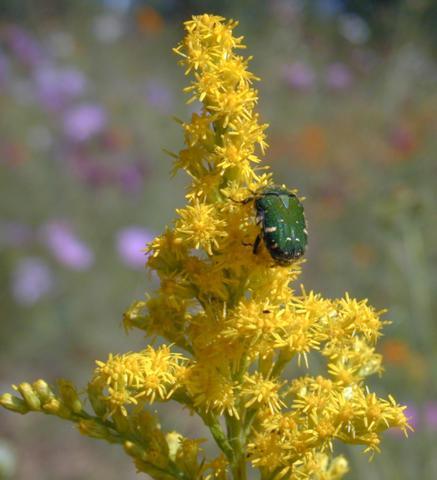 picnic by the lake - the green beetle feeds on gold Picknick am See - der kleine Käfer futtert Gold ... ... ... 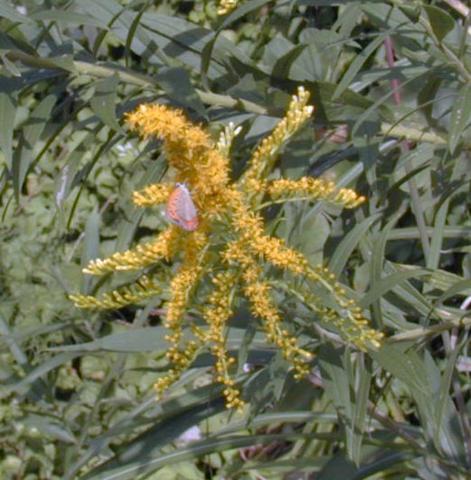 goldenrod - a butterfly balances in the wind |
© Photos and Haiku by Gabi Greve
:::::::::::::::::::::::::::::::::::::::::::::::::::::::::::::::::::::::::::::::::::::::::::::::::::::
こんなにも捨て身背高泡立草
konna ni mo sutemi seitaka awadachisoo
神野紗希 Koono Saki
http://www.nhk.or.jp/haiku/html/haiku16-11-20.htm
:::::::::::::::::::::::::::::::::::::::::::::::::::::::::::::::::::::::::::::::::::::::::::::::::::::
goldenrod ~
nothing to sneeze at
or is there
- Shared by Elaine Andre
Joys of Japan, March 2012
:::::::::::::::::::::::::::::::::::::::::::::::::::::::::::::::::::::::::::::::::::::::::::::::::::::

- Shared by Pat Geyer Andre
Joys of Japan, March 2012
*****************************
Related words
kigo for mid-summer
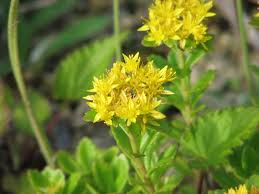
***** kirinsoo 麒麟草 (きりんそう) "giraffe plant" Sedum
..... hosoba kirinsoo 細葉麒麟草(ほそばきりんそう)
Sedum aizoon. Fetthenne
Grows wild in the mountains with good sunshine, even among rocks.
:::::::::::::::::::::::::::::::::::::::::::::::::::::::::::::::::::::::::::::::::::::::::::::::::::::
***** AUTUMN . . . PLANTS -
SAIJIKI
[ . BACK to WORLDKIGO . TOP . ]
:::::::::::::::::::::::::::::::::::::::::::::::::::::::::::::::::::::::::::::::::::::::::::::::::::::



 Posts
Posts


1 comment:
late summer
sunlight through a jar of
goldenrod honey
Linda Papanicolaou
::::::::::::::::::::::::::::::::::::::::::::::::::::::::::::::::::::::
Post a Comment