10/30/2005

Jelly strip (tokoroten)

[ . BACK to Worldkigo TOP . ]
:::::::::::::::::::::::::::::::::::::::::::::::::::::::::::::::::::::::::::::::::::::::::::::::::::::

Jelly Strips, gelidium jelly (tokoroten)

***** Location: Japan
***** Season: All Summer
***** Category: Humanity


*****************************
Explanation

Cold Jelly Stripes, gelidium jelly, tokoroten,
心太, 心天 (ところてん)
..... tokoroten 石花菜(ところてん)

"big heart" kokorobuto こころぶと
"heart and heaven", kokoroten こころてん


pushing out the jelly, kokoroten tsuki 心太突き(ところてんつき)

extruding tokoroten jelly


This low-calorie food made of the red seaweed called "tengusa 天草" (Gelidium) is a godsent for dieting people! It is high in vegetable proteins but low in calories. Tengusa is harvested by the womenfolk from rocks along the shorelines of Japan.
After boiling, it gets its jelly-like quality.

Maybe the old Chinese food called "tama abura" was another form of a "seaweed that makes gel". In the Heian period, this was a delicacy for the aristocracy.

Gabi Greve
jello
:::::::::::::::::::::::::::::::::::::::::::::::::::::::::::::::::::::::::::::::::::::::::::::::::::::


'Tokoroten'
is a dish of thin translucent jelly strips. It is served cold and eaten with vinegar-based dressing. It is a snack rather than a meal.

Agar agar, aka Kanten
Tokoroten is made from agar, also known as kanten. Agar contains a substantial amount of dietary fiber and no calories. Unlike gelatin, agar does not contain animal protein.

Tengusa
Agar is made from some species of marine plant. They are called tengusa in Japanese.

'Mitsumame'
is a kind of dessert made of agar cubes instead of strips and eaten with sweet syrup instead of sour vinegar.
© kimoto.cc


CLICK for more photos


*****************************
Worldwide use


*****************************
Things found on the way


tokoroten uri ところてん売り vendors of Tokoroten


source : www.web-nihongo.com
The hiragana for tokoroten is written on the figure of the vendor.
They carried a shoulder pole with two boxes 荷台, one for the plates and a bottle of soy sauce. Sometimes white sugar (an expensive rarity in Edo) or soy flour was sprinkled on the treat.

They called out their merchandise :
tokoroten ya - tenya ところてんや、てんや

心天売は一本半に呼び
tokoroten uri wa ippon han ni yobi

tokoroten -
the vendor calls one
and a half


ところてんきなこ砂糖は嫁のぷん
tokoroten kinako satoo wa yome no bun

Tokoroten
sprinkled with soy flour and sugar
only for the wife


source :shop.gnavi.co.jp/i-kappa
selling tokoroten by the roadside


tororoten uri ところてん売り vendors had a wooden box with lattice, to provoke a cool feeling.


. Food vendors in Edo .

. senryuu, senryū 川柳 Senryu in Edo .


*****************************
HAIKU


清滝の水汲ませてやところてん
Kiyotaki no mizu kumasete ya tokoroten

water drawn up
from Kiyotaki stream -
this Tokoroten jelly

Tr. Gabi Greve

Written in 1694 元禄7年, Basho age 51
This hokku has the cut marker YA at the end of line 2.

This is a greeting hokku for his host Yamei to thank him for the refreshment.

Written at the home of Sakai Yamei 坂井野明 in Sagano, Kyoto.
Nearby was the river Kiyotakigawa 清滝川. The Kiyotaki waterfall brings the water from Mount Atagoyama to the gorge in Sagano.

Yamei was a masterless Samurai from Hakata, Kuroda.
His haiku name YAMEI was given to him by Matsuo Basho himself.
He is also called Hoojin 鳳仭.


. Matsuo Basho 松尾芭蕉 - Archives of the WKD .

:::::::::::::::::::::::::::::::::::::::::::::::::::::::::::::::::::::::::::::::::::::::::::::::::::::


Kobayashi Issa liked it quite a lot !


小盥や不二の上なる心太
ko-darai ya fuji no ue naru tokoroten

little tub--
on top of Mount Fuji
cold jelly


Tr. David Lanoue


CLICK for more photos
Tokoroten from Izu, with Mt. Fuji


旅人や山に腰かけて心太
tabibito ya yama ni koshi kakete tokoroten

a traveller -
he sits on the mountain
with gelidium jelly

Tr. Gabi Greve


:::::::::::::::::::::::::::::::::::::::::::::::::::::::::::::::::::::::::::::::::::::::::::::::::::::


. Yosa Buson 与謝蕪村 .

ところてん逆しまに銀河三千尺
tokoroten sakashima ni ginga sanzenjaku

Jelly noodles
in a black bowl -- an upside-down
Milky Way


Tr. Allan Persinger

:::::::::::::::::::::::::::::::::::::::::::::::::::::::::::::::::::::::::::::::::::::::::::::::::::::


ところてん煙の如く沈み居り
tokoroten kemuri no gotoku shizumiori

tokoroten -
like smoke
it sinks down


Hino Sojo (Soojoo) 日野草城 (1901-1956)


:::::::::::::::::::::::::::::::::::::::::::::::::::::::::::::::::::::::::::::::::::::::::::::::::::::


tokoroten susutte jimon jitoo kana

Rogetsu
(Tr. Blyth)

Sucking up the gelidium jelly,
I ask myself questions,
And answer them.


Blyth reports that Rogetsu was "greatly respected in the haiku world after the death of Shiki."(Note: p. 150, A History of HAIKU, Volume Two) In the same small section he introduces this tokoroten haiku but does not offer any comments. One can speculate almost anything as to what Rogetsu wished to say in this poem. What is certain is that he would not have used such a phrase as jimon jito without meaning some kind of a metaphor, or hidden meaning. Jimon jito is rather a peculiar phrase to use in haiku, especially in Rogetsu's time. He therefore must have used it deliberately. It can mean several things.

Firstly, Rogetsu may be depicting a kind of his loneliness whereby he had to deal with certain difficult (philosophical) questions all alone as he is not in the company of those with whom he could discuss them. It can mean that he was casting a doubt on the way he was living. The comical juxtaposition of tokoroten and jimon jito indicates a degree of self-mockery and a faint self-pity about it.

The reason why Blyth chose this haiku seems almost self-evident. It is the Zen-like atmosphere and scene which permeate this haiku. It is also the kind of un-expected moment (the act of eating tokoroten) when Rogetsu seemed to tackle some question, when satori may or may not happen. I am always cautious whenever critics, including Blyth, start talking about Zen in relation to haiku.
Comment by Susumu Takiguchi, WHR 2002


*****************************
Related words

***** Jelly Bean Cake (mizu-yookan)

***** Seaweed (kaisoo)

***** Food from Japan (washoku)

:::::::::::::::::::::::::::::::::::::::::::::::::::::::::::::::::::::::::::::::::::::::::::::::::::::


. ONI 鬼 the demons of Japan .


Oni making Tokoroten
Nichosai 耳鳥斎


:::::::::::::::::::::::::::::::::::::::::::::::::::::::::::::::::::::::::::::::::::::::::::::::::::::

WASHOKU ... Japanese Food SAIJIKI


[ . BACK to DARUMA MUSEUM TOP . ]
[ . BACK to WORLDKIGO . TOP . ]
#tokoroten #jellystrip
::::::::::::::::::::::::::::::::::::::::::::::::::::::::::::::::::::::::::::::::::::::::::::::::::::: 

10/22/2005

June (rokugatsu)

[ . BACK to Worldkigo TOP . ]
:::::::::::::::::::::::::::::::::::::::::::::::::::::::::::::::::::::::::::::::::::::::::::::::::::::

June (rokugatsu 六月)

***** Location: Japan, worldwide
***** Season: Mid-Summer
***** Category:Season


*****************************
Explanation


Haiku rokugatsu in the Edo period relates to the climate of present-day July,
but some festivals are dated in our present-day June.

. . Names of Japanese months and their meanings . .

:::::::::::::::::::::::::::::::::::::::::::::::::::::::::::::::::::::::::::::::::::::::::::::::::::::


rokugatsu 六月 (ろくがつ) sixth month, june
rokugatsu kuru 六月来る(ろくがつくる)june is coming
rokugatsu kaze 六月風(ろくがつかぜ) wind in the sixth month


:::::::::::::::::::::::::::::::::::::::::::::::::::::::::::::::::::::::::::::::::::::::::::::::::::::

June――Blessings of Water
By Inahata Teiko

Rice sprouts begin to be planted in the field, and then the rainy season has come. So June makes a strong impression of water, don't you think so? Thanks to a blessing of water, fields and mountains are covered in fresh greenery, and surrounding scenery gives us a sign of summer. In the seasonal words we can find many seasonal flowers at the water's edge and so do the animals in the water.

Not only we adapt our life to high temperature and high humidity of this season and cope with such a season but also we take a step forward and find out joy under this circumstance, and furthermore enhance our life to enjoy refined tastes. So we feel refined daily life through such seasonal words as sanaeburi (feast after rice-planting), kawagari (fishing with rounding up in the river), yoburi (fishing at night with light), aosudare (a green reed screen), touisu (a ratten chair), fusuma-hazusu (taking off a fusuma, sliding door), misogi (purification ceremony).

I think that our mentality, as well as daily life and events, has a connection with such high temperature and high humidity. For example, we can never talk about the fundamental idea of Buddhism, reincarnation, without knowing the circumstances of high temperature and high humidity of India, where the dead body returns to the earth, in which plants grow thick and under which the animals live. This idea is utterly different from that of Judaism and Christianity, which originate in such a dry land where the dead body is easy to mummify and the dead are promised to ascend to heaven by God through the Last Judgment.

It may be due to blessings of abundant water that we Japanese soon forget everything, saying, "Let's let bygones be bygones", or have an inclination not to pursue the responsibility thoroughly, and that those who should be blamed are purified and forgiven by misogi 御祓(禊) .

© Inahata Teiko
http://www.kyoshi.or.jp/12month/12month-6.htm

xxxxxxxxxxxxxxxxxxxxxxxxxxxxx

Japan in June

June 1: First day of Ayu (trout) season
Ayu are sweetfish and this is a major day for catching them. Fishing for the ayu is strictly controlled to preserve their numbers so the opportunities for catching them are quite limited. The exact starting date for fishing can vary and the length of the season for catching them can also vary depending on the area of Japan one is in.
The oldest poetry written in Japan- the Manyoshu- from the 8th century has some poems about fishing for ayu.

Catching them is an unusual task. In the U.S. we bait our hooks with worms and related critters or put fish flies on them; in Japan in order to catch an ayu you use an ayu. A live ayu has a ring attached to its nose and a hook to its belly. The ring is attached to the fishing line and the fish is cast into the water. Since the fish has a strong territorial instinct another other ayu will attack the first fish, thinking it is invading its territory. The attacker gets caught on the hook and reeled in.

June 4: Cavity Prevention Day
Various activities are held by the Health and Welfare Ministry to get people, especially young children, to take better care of their teeth. This can even include department stores having dentists come in to give free checkups and consultations.

Mid-June: Peiron-Dragon Boat Race
This is a Chinese custom that was adopted by the city of Nagasaki which housed the Chinese trading missions during the Edo Period (1603-1868). The race is similar to those held in Hong Kong, Thailand and Okinawa.
The boats themselves are long, requiring both skill and strength, and there is a strong sense of competition among the participants.

First Sunday of June
Chiyodacho, Hiroshima. The Mibu-no Hana Taue ceremony with special rice-planting songs.

Mid-June: Sanno Festival
This particular shrine goes back to 1478 (consider; this is some 14 years before North American was "discovered" by Columbus!) when it was built to ensure good fortune during the construction of the Edo castle.
This is another time when portable shrines are used. Originally the shrines were moved through the Edo Castle itself and viewed by the shogun. Today it has become a regular parade through Tokyo with hundreds of people taking place.

June 24: Izawanomiya Otaue Matsuri
Izawanomiya Shrine, Isobecho, Mie rice festival with boys 5 to 6 years of age dressing as women and playing a loud drum.

Third Sunday: Father's Day
This is another holiday imported from the United States. It is not as widely adhered to as Mother's Day, though. Gifts are given to fathers and can include such things as belts, wallets and neckties or things the child or children make themselves.

Misc. items
This general period of time is also noted for other activities, although these do not necessarily occur on any specific date.

1. It is the opening of the pool season. Swimming is an important part of the physical education program of schools and 75% of Japanese middle schools have their own pool. (How many schools of any kind in the U.S. do you know with their own swimming pool?).

2. Rice planting: This is roughly the time that rice is being planted with various rituals and celebrations throughout Japan.

3. This is also roughly the start of Japan's rainy season called tsuyu. It is a time of considerable discomfort as temperatures are rising and the humidity is high. There is little sunshine and children get bored being indoors.

Japanese Festivals of all months
January .. .. February .. .. March .. .. April .. .. May .. .. June .. .. July .. .. August .. .. September .. .. October .. .. November .. .. December
http://www.bookmice.net/darkchilde/japan/jfestival.html

xxxxxxxxxxxxxxxxxxxxxxxxxxxxx


*****************************
Worldwide use


Southern Hemisphere, Tropics ...
Adjustments for each region must be made.

Calendar reference kigo

*****************************
Things found on the way


*****************************
HAIKU


六月や峯に雲置あらし山
rokugatsu ya mine ni kumo oku Arashiyama

the six month -
clouds are laying on the summit
of Mount Arashiyama


Matsuo Basho 松尾芭蕉


. Arashiyama 嵐山 "Storm Mountain" .


:::::::::::::::::::::::::::::::::::::::::::::::::::::::::::::::::::::::::::::::::::::::::::::::::::::


rokugatsu ya
kigo shuushuu mo
ame no naka

t'is June !
collecting kigo
all in the rain


Gabi Greve, June 2006


:::::::::::::::::::::::::::::::::::::::::::::::::::::::::::::::::::::::::::::::::::::::::::::::::::::


chilly June night ...
the moon disappears
under thick clouds


Catherine Njeri, Kenya
June 2009


:::::::::::::::::::::::::::::::::::::::::::::::::::::::::::::::::::::::::::::::::::::::::::::::::::::


june showers -
keading to pothols on
tarmac, terrific


june drizzle -
woman under leaking roof
with soaked clothes

june showers
green pasteurs blossom
goats satisfied


Gideon Gichamba, Kenya
June 2009


*****************************
Related words

***** Calendar reference kigo


:::::::::::::::::::::::::::::::::::::::::::::::::::::::::::::::::::::::::::::::::::::::::::::::::::::


. . . . SUMMER
the complete SAIJIKI


. WKD : June - KIGO CALENDAR .


::::::::::::::::::::::::::::::::::::::::::::::::::::::::::::::::::::::::::::::::::::::::::::::::::::: 

[ . BACK to DARUMA MUSEUM TOP . ]
[ . BACK to WORLDKIGO . TOP . ]

:::::::::::::::::::::::::::::::::::::::::::::::::::::::::::::::::::::::::::::::::::::::::::::::::::::

10/05/2005

Jelly Bean Cake (mizu yookan)

[ . BACK to WORLDKIGO . TOP . ]
::::::::::::::::::::::::::::::::::::::::::::::::::::::::::::::::::::::::::::::::::::::::::::::::::::: 

Jelly Bean Cake (mizu-yookan 水羊羹)

***** Location: Japan
***** Season: All Summer
***** Category: Humanity


*****************************
Explanation


http://www.office-takumi.com/shikisaika/07/free.htm

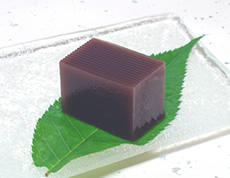
This is a delicacy eaten in the hot summer. Just looking at is supposed to make you feel fresh.
Mizu Yookan (mizuyokan 水羊羹) is made from red bean paste, but there are other types now made with sweet potatoes or other ingredients.
It is served on the green leave of a cherry tree.

It is a traditional sweet, easily made at home too, and just the mention of the name makes you feel fresh again on a hot summer day. Farmers use freshly cut bamboo and stuff it in the tubes, then hang it in the local river for cooling (in times you had no refrigerator...).

Gabi Greve

:::::::::::::::::::::::::::::::::::::::::::::::::::::::::::::::::::::::::::::::::::::::::::::::::::::


History of Mizuyokan
by A. Tara

As the summer gets hotter and hotter, people like to eat chilled and light-tasting sweets such as Mizuyokan (水羊羹). Mizuyokan is a watery version of Yokan, a rectangular bar of sweetened jellied bean paste available in different flavors, and served with tea.

Yokan has a history going back hundreds of years. It was originally brought from China by Zen monks between the years 1192~1573. At that time Yokan was eaten as a vegetarian substitute for the thick mutton soup traditionally served between meals (known as tenshin). Zen monks were forbidden to eat meat, so they made meat substitutes using mashed beans and powdered kuzu root (kuzuko: Japanese arrowroot). With time, the popularity of Yokan gradually spread to the military (samurai) world as well, and it was often served during religious ceremonies and memorial services for the dead.

At that time sugar was a precious ingredient, so Yokan did not have the sweet taste it has now. At ceremonial meals people ate Yokan served with with slices of pear or sashimi (raw fish) which seems unthinkable now.

During the 16th century, Yokan began being used for tea ceremonies. As sugar supplies increased during the Edo period, Yokan started being produced as a dessert rather than food eaten between meals.

In the 18th century Yokan began being produced as merchandise, wrapped in bamboo leaves. The process of Yokan production during that time period is similar to the way that steamed Yokan (Mushiyokan) is made now. Mizuyokan was created by making steamed Yokan using Kuzuko in place of wheat powder and a larger quantity of water, creating a jelly-like texture. It took a while for the recipe to be perfected, so it was not until the 18th century that it caught on in popularity.

In 1789-1801, Neriyokan (Yokan paste), began being made in the Edo region (Tokyo), using kanten (agar- a jelly made from seaweed) to make it firm. This became popular, and spread all over Japan. Neriyokan was more popular than steamed Yokan because it kept well and was better tasting. It thus became the main Yokan product on the market.


Mizuyokan made with kuzuko tastes smoother than the kind made with kanten, but is more difficult for mass production and does not keep as well as the kanten variety, so the latter tended to dominate the market. In modern times, packed and canned Mizuyokan can be easily preserved, but are not as aesthetically pleasing as fresh sliced Mizuyokan placed on real cherry leaves or packed in a real bamboo container complete with bamboo leaves on the top.
Many sweet shops sell original Mizuyokan in a variety of tastes, shapes and colors. So why not give Mizuyokan a try this summer?

http://www.kcif.or.jp/en/newsletter/lik/archives/0308/08_2003.htm

:::::::::::::::::::::::::::::::::::::::::::::::::::::::::::::::::::::::::::::::::::::::::::::::::::::


Mizuyokan (red bean cake) Recipe

Yield: 10 Servings

12 oz Azuki beans - cooked
2 pk Gelatin, unflavored
1 ¼ c Sugar, granulated
pn Salt


1. PREPARE AHEAD: Place the drained, cooked beans in a 4 quart pot. Add 2 quarts of cold water and, over high heat, bring to a boil. Reduce the heat to its lowest point and cook uncovered for about 3 hours, or until the beans are very soft.

2. Pour the beans into a coarse sieve set over a large bowl and puree them by rubbing them through with the back of a large spoon. Transfer the puree to a very fine sieve set over another bowl, and rub them through again.

3. Wrap the pureed beans in a kitchen towel and twist to squeeze them dry. The beans may be refrigerated, tightly wrapped in the towel, for as long as 4.

TO COOK: In a 1-1/2 to 2 quart saucepan, stir together the gelatin, sugar and salt. Pour in 2 cups of cold water and bring to a boil over moderate heat, stirring constantly. Add the pureed beans and return to a boil, still stirring. Then pour the beans into an 8" cake pan, cool and refrigerate overnight or until firm. Slice into 2" wedges and serve as dessert or a swee course.

Original recipe from "Recipes - The Cooking of Japan"
by Time-Life Books. Meal-Master conversion by Rick Weissgerber
http://www.astray.com/recipes/?show=Mizuyokan%20(red%20bean%20cake


*****************************
Worldwide use


*****************************
Things found on the way


. Donryuu Yookan 呑龍羊羹 Donryu Yokan sweets .
In Memory of Saint Donryu 呑龍上人
September at temple Horyu-Ji 宝龍寺


:::::::::::::::::::::::::::::::::::::::::::::::::::::::::::::::::::::::::::::::::::::::::::::::::::::


My essay about some Japanese sweets, with Daruma as the main ingredient!


AME, DAGASHI Sweets

*****************************
HAIKU


蕉庵へ 途中なれども 水ようかん
shoo-an e tochuu naredomo mizuyookan

even on the way to
Basho’s hut

jelly bean cake

Nakamura Sakuo


:::::::::::::::::::::::::::::::::::::::::::::::::::::::::::::::::::::::::::::::::::::::::::::::::::::


水羊羹喜劇も淡き筋ぞよき
mizu yookan kigeki mo awaki-suji zo yoki

jelly bean cake -
better see a comic play
with a soft plot


Mizuhara Shuoshi 水原秋桜子


:::::::::::::::::::::::::::::::::::::::::::::::::::::::::::::::::::::::::::::::::::::::::::::::::::::


From the NHK Programm 俳句王国
平成14年6月1日


水羊羹旅の車中でゆれゆれと
mizuyookan tabi no shachuu de yureyure to

jelly bean cake
on a trip in the train
wobbeling here and there
(Tr. Gabi Greve)


立ち残る湯気ごと冷す水羊羹

寺普請釘打ち終えて水羊羹

水羊羹今切られしが凛と立つ

切り分けて雫こぼすや水羊羹


http://www.nhk.or.jp/haiku/html/haiku14-6-1.htm


*****************************
Related words

***** . WAGASHI - - - Sweets for Summer   


. 鍾馗羊羹 Yokan with Shoki, the Demon Queller .


:::::::::::::::::::::::::::::::::::::::::::::::::::::::::::::::::::::::::::::::::::::::::::::::::::::::::::::::::::::::::::
[ . BACK to DARUMA MUSEUM TOP . ]
[ . BACK to WORLDKIGO . TOP . ]

:::::::::::::::::::::::::::::::::::::::::::::::::::::::::::::::::::::::::::::::::::::::::::::::::::::::::::::::::::::::::::

10/02/2005

January 2006

nnnnnnnnnnnn TOP nnnnnnnnnnnnn

January (ichigatsu, Japan)

***** Location: Japan
***** Season: New Year / Late Winter
***** Category: Season


*****************************
Explanation

The following is a list of every day in January 2006 with its kigo.
Quoted from Haiku Alpha (Mainichi Shinbun)
「俳句アルファ」(毎日新聞刊)
Translations: Gabi Greve

Only haiku with food have been selected.

First Buddhist Ceremonies of the year

.................................. Kigo for New Year

January 1

first day of the year, gantan,
first shrine or temple visit, hatsumoode,
First Sun, First Sunrise (hatsuhi, hatsuhi no de, Japan)
mochi mo suki sake mo suke nari kesa no haru

I like mochi
I also like ricewine -
this New Year morning

Takahama Kyoshi

:::::::::::::::::::::::::::::::::::::::::::::::::::::::::::::::::::::::::::::::::::::::::::::::::::::

January 2

first dream, hatsu yume
first luggage, hatsu ni
first calligraphy, kakizome

naganaga to kuchi e nobitaru zooni mochi

longer and longer
they hang out of the mouth -
gooey rice cakes in soup

Takizawa Iyoji

zooni is a special soup for the New Year and the mochi, rice cakes, are like rubber ...

:::::::::::::::::::::::::::::::::::::::::::::::::::::::::::::::::::::::::::::::::::::::::::::::::::::

January 3


:::::::::::::::::::::::::::::::::::::::::::::::::::::::::::::::::::::::::::::::::::::::::::::::::::::

January 4

:::::::::::::::::::::::::::::::::::::::::::::::::::::::::::::::::::::::::::::::::::::::::::::::::::::

January 5


:::::::::::::::::::::::::::::::::::::::::::::::::::::::::::::::::::::::::::::::::::::::::::::::::::::

January 6


:::::::::::::::::::::::::::::::::::::::::::::::::::::::::::::::::::::::::::::::::::::::::::::::::::::

January 7


:::::::::::::::::::::::::::::::::::::::::::::::::::::::::::::::::::::::::::::::::::::::::::::::::::::

January 8


:::::::::::::::::::::::::::::::::::::::::::::::::::::::::::::::::::::::::::::::::::::::::::::::::::::

January 9


:::::::::::::::::::::::::::::::::::::::::::::::::::::::::::::::::::::::::::::::::::::::::::::::::::::

January 10


:::::::::::::::::::::::::::::::::::::::::::::::::::::::::::::::::::::::::::::::::::::::::::::::::::::

January 11


:::::::::::::::::::::::::::::::::::::::::::::::::::::::::::::::::::::::::::::::::::::::::::::::::::::

January 12


:::::::::::::::::::::::::::::::::::::::::::::::::::::::::::::::::::::::::::::::::::::::::::::::::::::

January 13

:::::::::::::::::::::::::::::::::::::::::::::::::::::::::::::::::::::::::::::::::::::::::::::::::::::

January 14


:::::::::::::::::::::::::::::::::::::::::::::::::::::::::::::::::::::::::::::::::::::::::::::::::::::

January 15

:::::::::::::::::::::::::::::::::::::::::::::::::::::::::::::::::::::::::::::::::::::::::::::::::::::

January 16


:::::::::::::::::::::::::::::::::::::::::::::::::::::::::::::::::::::::::::::::::::::::::::::::::::::

January 17

:::::::::::::::::::::::::::::::::::::::::::::::::::::::::::::::::::::::::::::::::::::::::::::::::::::

January 18


:::::::::::::::::::::::::::::::::::::::::::::::::::::::::::::::::::::::::::::::::::::::::::::::::::::

January 19


:::::::::::::::::::::::::::::::::::::::::::::::::::::::::::::::::::::::::::::::::::::::::::::::::::::

January 20


:::::::::::::::::::::::::::::::::::::::::::::::::::::::::::::::::::::::::::::::::::::::::::::::::::::

January 21


:::::::::::::::::::::::::::::::::::::::::::::::::::::::::::::::::::::::::::::::::::::::::::::::::::::

January 22


:::::::::::::::::::::::::::::::::::::::::::::::::::::::::::::::::::::::::::::::::::::::::::::::::::::

January 23


:::::::::::::::::::::::::::::::::::::::::::::::::::::::::::::::::::::::::::::::::::::::::::::::::::::

January 24


:::::::::::::::::::::::::::::::::::::::::::::::::::::::::::::::::::::::::::::::::::::::::::::::::::::

January 25

First Tenjin Ceremony of the year, hatsu Tenjin and other FIRST ceremonies

tara nabe no
fuda odorasete
daikazoku

hodgepot with cod
makes the lid dance -
a big family


Katoo Kenkoo 加藤 憲曠

a large ceramic pot filled with fish (cod), vegetables, tofu and other ingredients, boiled at the table, where all sit and wait to help themselves from the steaming broth.

taranabe, kigo for winter

:::::::::::::::::::::::::::::::::::::::::::::::::::::::::::::::::::::::::::::::::::::::::::::::::::::

January 26

yuzu sutte kureshi
kama-age udon kana

grating citron peel
for the big pot of
hot noodle soup

Ooishi Etsuko 大石悦子

udon noodles eaten from a large pot filled with hot water. You take out each mouthfull, dip the noodles in flavored broth and eat it with pieces of tempura, vegetables or pure noodles. This is a speciality of some areas of Shikoku island.

kama-age udon 釜揚饂飩, kigo for winter

Yuzu (Japan) a ctiron fruit

:::::::::::::::::::::::::::::::::::::::::::::::::::::::::::::::::::::::::::::::::::::::::::::::::::::

January 27


:::::::::::::::::::::::::::::::::::::::::::::::::::::::::::::::::::::::::::::::::::::::::::::::::::::

January 28

First Purification Ceremony and Festival at Koojin Temple, Osaka
Hatsu Harai Koojin Daisai 初はらい荒神大祭

First Fudo Ceremony of the year, hatsu Fudo and other FIRST ceremonies 初不動

koi wa bi no
okoze wa oni no
samusa kana

beautiful like a carp
develish ugly like the devil stinger
--- this cold


Suzuki Masajo

cold, samusa 寒さ, kigo for winter

:::::::::::::::::::::::::::::::::::::::::::::::::::::::::::::::::::::::::::::::::::::::::::::::::::::

January 29

:::::::::::::::::::::::::::::::::::::::::::::::::::::::::::::::::::::::::::::::::::::::::::::::::::::

January 30

sokobie no
yado no kinpira
goboo kana

foot-cold -
the little inn serves
local roots


Tsuda Teiko 津田汀ヶ子

foot-cold, sokobie, imagine a cold little hotel in Hokkaido, where the ground is frozen and the cold seeps through the thin tatami mats to your feet and bottom.

sokobie 底冷え, kigo for winter

comfrey, goboo 牛蒡  is a vegetable good for your health because of its many fibers. Kinpira goboo is a side dish on every table, sort of the taste of mother and home.

:::::::::::::::::::::::::::::::::::::::::::::::::::::::::::::::::::::::::::::::::::::::::::::::::::::

January 31

sanjuunichi shoogatsu、三十日正月

The first "last day of the year with the number 31", misoka. People celebrate it eating buckwheat noodles (soba).
December 31 is the "Great last day", Last Day of the Year (oomisoka, Japan)

yudoofu ya inochi no hate no usuakari

hot tofu -
at the end of my days,
a faint light

Kubota Mantaroo 久保田万太郎

tofu in hot water, yudoofu 湯豆腐, is a kigo for winter.

Kubota lost his first wife and his son commited suicide. He married again but that did not last. His third wife also died and he spend his old age quite alone. The faint light is shining from the Paradise of the West, where the souls reside after death.
Haiku about Amida Buddha in the Paradise of the West
by Gabi Greve


:::::::::::::::::::::::::::::::::::::::::::::::::::::::::::::::::::::::::::::::::::::::::::::::::::::

Japanese LINK about January day kigo
http://plaza.rakuten.co.jp/princesshiromi/5002

*****************************
Related words

***** January Worldwide

*****************************
Please send your contributions to Gabi Greve
worldkigo .....

Back to the WHC Worldkigo Index
http://worldkigodatabase.blogspot.com/