1/24/2005

Awaodori Dance

[ . BACK to WORLDKIGO  TOP . ]
::::::::::::::::::::::::::::::::::::::::::::::::::::::::::::::::::::::::::::::::::::::::::::::::::::: 

Awaodori Dance 阿波踊り

***** Location: Japan
***** Season: Early August
***** Category: Observance


*****************************
Explanation

This is a special dance that originated in Tokushima (Shikoku) more than 400 years ago.
It is performed during the days of the Bon Festival (o-bon) in many parts of Japan nowadays.


There are three different theories about the origins of the Awa Dance.
One is that it is a version of the Bon Odori, a dance performed in summer throughout Japan.

Another is that it began from a celebration of the completion of Tokushima Castle when Hachisuka Iemasa provided sake for the townspeople who got drunk and began to dance with abandon. The Awa Dance features organized teams of dancers, which is suggested to have been influenced by "Furyu"-a performing art from the Heian period that later became Noh.

The third theory relies on Miyoshi district records from the year 1663 of a Furyu dance at the Shozui Castle, considering this performance to be the origin of the Awa Dance. In the 1920s the dance festival became organized to attract tourism and was named "Awa Odori." Every August 12th to 15th the streets of Tokushima teem with high-spirited folks enjoying a festival atmosphere.


The Awa Dance is held in the city of Tokushima using the main downtown streets as a stage. It starts in the evening (6:00 p.m.) and the dancing lasts until 10:30 p.m. The main performances are held on outdoor dance stages or strips built in the downtown parks and streets. Eight are on stages, four in plazas, two along roads, and six at streetcorner spaces.

The Awa Dance is held not only in the city of Tokushima but also in Naruto, Ikeda, Kamojima, Sadamitsu, and other locales in the prefecture. All of Tokushima prefecture catches the summer fever when it comes to Awa Odori.
http://www.tokushima-kankou.or.jp/foreign/english/awaodori/

xxxxxxxxxxxxxxxxxxxxxxxxxxxxx

Other kigo with respect to the Bon dancing:

Bon dancing, bon odori 盆踊
dancing , odori 踊
..... nagashi ながし..... zomekiぞめき
..... Bon yatsushi 盆やつし

Dance for the souls, shooryoo odori 精霊踊
Memorial Dance, kuyoo odori 供養踊
Lantern Dance, tooroo odori 燈篭踊
Dance for a good year, hoonen odori 豊年踊


hat for dancing, odori-gasa 踊笠
There are regional differences in this hat.

light kimono for dancing, odori-yukata 踊浴衣
drum for the dance, odori daiko 踊大鼓
song for the dance, odori-uta 踊唄
..... ondotori 音頭取(おんどとり)

dancer, odoriko 踊子(おどりこ)
place for the dance, odoriba 踊場
dancing in a circle, odori no wa 踊の輪


kokiriko odori 小切子踊(こきりこおどり)Kokiriko dance
In Gokayama, Fukuyama prefekture and a few parts of Niigata in Kashiwazaki.
富山県五箇山


kokiriko is a special instrument made from bamboo, it is about 20 to 30 cm long. One stick is held in each hand and hit to produce a suond.

. . . CLICK here for Dance Photos !

Other souces say the kokiriko is a kind of
. sasara clapper ささら .


okesa odori おけさ踊(おけさおどり)Bon dance in Echigo
Also in Sado Island.
. . . CLICK here for Photos !

Sado Okesa 佐渡おけさ - LOOK and LISTEN:
source : www.youtube.com


Kiso odori 木曾踊(きそおどり)Bon dance in the Kiso region
長野県木曽福島
Kisa Odori - LOOK and LISTEN:
source : www.youtube.com


. sansa odori さんさ踊(さんさおどり)Bon dance in Morioka .  
August 1 - 4 
Sansa Odori - LOOK and LISTEN:
source : www.youtube.com


:::::::::::::::::::::::::::::::::::::::::::::::::::::::::::::::::::::::::::::::::::::::::::::::::::::

Song of the Dancers in Awa

odoru ahoo ni miru ahoo onaji ahoo nara odoranya son son
odoru aho ni miru aho onaji aho nara odoranya son son
tanzende Narren ........... dancing fools
zuschauende Narren .... watching fools
wenn schon ein Narr .... if I have to be a fool
dann lieber tanzen . ....... I'd rather dance


:::::::::::::::::::::::::::::::::::::::::::::::::::::::::::::::::::::::::::::::::::::::::::::::::::::


Read a charming article about the Shiraishi Odori, a Bon dance held in the memory of Shiraishi island ancestors.

By Amy Chavez, August 2005
http://blog.livedoor.jp/worldkigo/archives/30497631.html

xxxxxxxxxxxxxxxxxxxxxxxxxxxxx

Koenji Awa-Odori Dance Festival
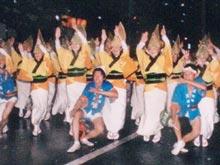


The Dancers forming dance units called "Ren", dance around the street or trough the spectators' seats. Ren, a dance unit, usually consists of a carrier of lanterns with the group's name on at the head of line, then female dances (kid dancers), male dancers and at the back a musical accompaniment called "Narimono" who play traditional instruments including shamisens, flutes, bells and drums.

The female dance features dancing on tiptoe with a wattle hat low over their eyes, waving the lithe hands above the head, and the male dance, its dynamic movements will catch your eyes. The lilt dance and music is very exhilarating to experience!
http://events.paperlantern.net/view_entry.php?id=329&date=20050826

. Kooenji 高円寺 Koen-Ji Awaodori Tokyo .


*****************************
Worldwide use


*****************************
Things found on the way


Awaodori Chicken 阿波尾鶏 from Tokushima
A special breed from 1989, with respect to the Awa Odori 阿波踊り dance of Tokushima and is known for its beautiful tail. Breeding time is only 80 days, so it is rather cheap.
ODORI here does not mean dance, but LONG TAIL !

***** WASHOKU : Awaodori 阿波尾鶏 from Tokushima

:::::::::::::::::::::::::::::::::::::::::::::::::::::::::::::::::::::::::::::::::::::::::::::::::::::


Sunday, January 22, 2012

Awa dance performed in cold river

Tens of people performed the traditional Awa dance in a cold river in Tokushima City, western Japan, on Sunday.

The summer dance was performed in the Shinmachi River running through the central part of the city.
About 30 people wearing traditional yukata and happi entered the water all at once, and moved their hands in a unique Awa dance style, while calling out "Yattosa".
An 86-year-old man received a round of applause as he wrote the character for dragon, which is this year's sign, while treading water.
The water temperature was 11 degrees Celsius as of 9 AM, and the dancers were shivering as they came out of the river. They said the cold water straightened them out and made them feel refreshed.
source : www3.nhk.or.jp

水中阿波踊り


*****************************
HAIKU


. WKD : Kobayashi Issa 小林一茶 in Edo .

踊から直に草刈さはぎ哉
odori kara sugu ni kusa karu sawagi kana

still in dancing duds
people make quite a racket
cutting wild grass

Tr. Chris Drake


This early autumn hokku was written in the 7th month (August) in 1822. It is the time when people are preparing for the big Bon (or, more honorifically, O-Bon) Festival of Returning Souls, a festival that mixes popular Buddhism with shamanic ancestor worship. The main part of the Bon Festival, one of the biggest festivals of the year, lasts for three days (7/14-16) at the time of the full moon and climaxes with a great ring dance, often with several rings of dancers, only half of whom are visible, since half of the dancers are the invisible souls of ancestors. The week before this great dance with invisible souls -- a kind of group possession -- is one of hectic preparation: houses and home altars to ancestors are thoroughly cleaned and prepared for the return of the souls of recent ancestors, while outside much high, vigorously growing wild grass has to be cut to clear the paths to graveyards and the graveyards themselves, many of which are located on hills or on the slopes of mountains, places which souls are believed to use as doors between the other world and the visible world.

Since the souls of the dead are also believed to be gods and/or Buddhas, cleaning and clearing wild grass from grave sites and the paths to them had to be done very carefully, and the souls were greeted and later sent off by living escorts holding lanterns. In addition, since almost everyone would be resting from their normal activities and participating in a three-night dance, grass for animal feed and other daily needs had to be cut early and stored for use during the three days of the festival. Grass-cutting was hard work, but it was most demanding and exhausting during high summer and just before Bon, and it was a big job involving many villagers.

In Issa's hokku, two readings seem possible. One is that the preparations for the big dance haven't been finished, so many of the dancers have to go directly from the dance as it ends near dawn on the first night and finish cutting the wild grass that remains dressed as they are. Issa's diary shows there was a lot of rain around the time of the Bon Festival in 1822, so it may have been difficult to cut all the grass that needed to be cut in time for the festival, so perhaps it had to be cut during the festival. On the other hand, this hokku could be about dancers on the last night of the dance leaving at dawn to cut wild grass needed for their farm animals after three days of rest. Either way, dancers in colorful light cotton robes with wide sashes, many in costumes (dressed as samurai and other roles) or wearing masks or cross-dressing (as was common at Bon dances in Issa's time), leave the dance grounds and go directly to the fields and paths nearby that need to be cut.

Issa says they're making quite a "racket, uproar," an expression that can also mean revelry or merrymaking, so probably the grass-cutters continue to sing some of the lyrics of the songs that go with the Bon dances, and some probably make dance steps and arm movements as they swing their sickles in the dawn light. Perhaps they feel they are cutting the grass together with their invisible ancestors, and their continued songs and rhythmic movements may be partly intended to soothe and humor their ancestors' souls as they see them off. In one sense, group work such communal grass-cutting establishes the base rhythm and the emotional sense of solidarity and communion with the dead that provides the spiritual and physical energy for the big Bon dance, so it's appropriate that the grass-cutters are still dressed for the dance. If one wanted to approach this hokku via film, it would take a director like Fellini to do justice to it.

Chris Drake

:::::::::::::::::::::::::::::::::::::::::::::::::::::::::::::::::::::::::::::::::::::::::::::::::::::::


路地裏に始まってゐる阿波踊り
roji-ura ni hajimatte iru awa odori

in the back streets
it has already started -
Awaodori Dancing

.....

手も足もいつの間にやら阿波踊り
te mo ashi mo itso no ma ni yara awa odori

my hands, my feet
moving all by themselves -
the Awa Dance

.....

阿波踊り人それぞれでありにけり
awa odori hito sorezore da ari ni keri

Awaodori dance -
people are indivituals
each and every one

.....

三味と笛鉦と太鼓も阿波踊り
shamisen to kane to daikoo mo awa odori

shamisen, flutes,
gongs and the big drum -
Awaodori dance

(Tr. Gabi Greve)

遠藤和良 Endo Kazuyoshi
http://www.endo-kazuyoshi.com/haiku/
http://www.endo-kazuyoshi.com/haiku/04.htm

xxxxxxxxxxxxxxxxxxxxxxxxxxxxxxxxxxxxxxxxxxxxxxx


Bon Odori
yukata-clad folks dance 'round
to taiko drums sound


© Tokyo on July 23, during a vist by ito (Juanito Escareal)

Read more about this trip here:
Bon Odori, by Juanito Escareal

This photo shows the typical bon yagura 盆櫓, the tower in the middle with the music where people dance around it.

*****************************
Related words

***** Bon Festival (o-bon) (05)


::::::::::::::::::::::::::::::::::::::::::::::::::::::::::::::::::::::::::::::::::::::::::::::::::::: 


source : sunnysmile2005
kokeshi こけし wooden dolls


Awaodori Dance Dolls
. Folk Toys from Tokushima .


Yosakoi Dance and Dolls よさこい人形
Kochi, Shikoku

. Folk Toys from Kochi and Tosa .

::::::::::::::::::::::::::::::::::::::::::::::::::::::::::::::::::::::::::::::::::::::::::::::::::::: 

[ . BACK to WORLDKIGO . TOP . ]
[ . BACK to DARUMA MUSEUM TOP . ]
- #awaodori -
:::::::::::::::::::::::::::::::::::::::::::::::::::::::::::::::::::::::::::::::::::::::::::::::::::::

1/22/2005

Autumn Equinox (aki higan)

[ . BACK to WORLDKIGO  TOP . ]
::::::::::::::::::::::::::::::::::::::::::::::::::::::::::::::::::::::::::::::::::::::::::::::::::::: 


Autumn equinox (aki higan)

***** Location: Japan, worldwide
***** Season: Mid-Autumn
***** Category: Seasons


*****************************
Explanation

aki higan 秋彼岸 (あきひがん) autumm exuinox
fall equinox
nochi no higan 後の彼岸(のちのひがん)the "later" equinox
second equinox of the year, as opposed to the SPRING equinox

akihigan-e 秋彼岸会(あきひがんえ) ceremony for the autumn equinox


:::::::::::::::::::::::::::::::::::::::::::::::::::::::::::::::::::::::::::::::::::::::::::::::::::::

O-higan お彼岸
is a special time, rooted in Buddhist tradition, when families remember and tend to their loved ones who have passed away. It is said that when a person dies, they cross the river of the netherworld, “Sanzu no kawa” from “Shigan 此岸” (this world) to “Higan 彼岸” (the other side of the river or the other world); families hold memorial services for their relatives living across the river. During this week, families visit cemetaries to clean and maintain graves. They also pray for their loved ones, burn incense and offer them flowers and food. The spirits are known to prefer round food, so botamochi (round glutinous rice balls covered in bean paste) are eaten on this day in spring. The treat gets its name from botan, Chinese peonies which bloom in the spring time.

As spring and fall approach, people often say “Atsusa samusa mo o-higan made,” This expression refers to the favorable seasonal changes that occur at the time of the biannual equinoxes. “Heat and cold last until Higan.” So, we can all look forward to this time of change, and soon welcome spring and its bounty.

The Buddhist rituals may have their predecessors in nature cults and sun cult rituals for the sun. In some areas in Tajima, Tango area, on the day of the equinox the farmers visit three different small shrines in the morning, midday and evening to make offerings to the sun the whole day.

Food offerings for the ancestors are often eaten by the wild animals and birds after the celebrations are over.
The crows and rave are especially keen in our area in Okayama.

. WASHOKU
ohagi おはぎ wrapped rice cakes
 
offerings for ohigan in autumn.

:::::::::::::::::::::::::::::::::::::::::::::::::::::::::::::::::::::::::::::::::::::::::::::::::::::


Shuubun no hi 秋分の日 Day of the Autumn Equinox
September 23

Observance kigo for mid-autumn


This is an official holiday in Japan since 1948, when the constitution defined it as a day “to honor the ancestors and remember the dead . Before 1948, this day was called “Shuuki koorei-sai 秋季皇霊祭, Autumn Celebration of the Ancestors Souls”

In Buddhist communities it is celebrated as “Autumn Equinox Celebration“ shuki higan-e 秋季彼岸会, when it is customary to visit the family graves. This custom started already during the Heian period.

The seven days with this day in the center are called “autumn equinox” aki higan 秋彼岸, the equinoctial week.
Another word is “the other, later equinox, nochi no higan 後の彼岸“, with respect to the spring higan.

The vernal equinox in Spring is simply called “higan” 彼岸” in haiku manuals.


The proper visit of a family grave

1 First clean the stone.
2 Next remove the old incense sticks.
3 Offer some flowers.
4 Burn some fresh incense sticks.
5 Say your prayers with folded hands.
. . . CLICK here for Photos !


:::::::::::::::::::::::::::::::::::::::::::::::::::::::::::::::::::::::::::::::::::::::::::::::::::::


The Night Sky changing within the seasons.

Most star patterns in the night sky are associated with specific seasons of the year. Evening skywatchers in the Northern Hemisphere enjoy Orion the Hunter only during the cold wintry months, for example. Spring evenings provide a view of the Sickle of Leo, the Lion. In summer, the stars of Scorpius, the Scorpion dominate the southern sky. And the Great Square of Pegasus vies for the stargazer's attention on fall evenings.
Read the details HERE
http://www.space.com/spacewatch/seasonal_stars_030207.html


WKD
science behind the season


*****************************
Worldwide use


*****************************
Things found on the way


Autumnal Equinox Day
This national holiday was established in 1948 as a day on which to honor one's ancestors and remember the dead.
Due to the necessity of recent astronomical measurements, the date of the holiday is not declared official until February of the previous year.
Prior to 1948, the autumnal equinox was an imperial ancestor worship festival called Shuki korei sai (秋季皇霊祭 shuuki koorei sai).

. September 23, 2011 .


*****************************
HAIKU


In rural Japan, most of the farmhouses have their own small private graveyard with stone monuments for the ancestors. It is still quite common to visit these graves and make offerings four times a year, spring and autumn equinox, o-Bon in mid-august and during the New Year Holidays.

But this year in our area

autumn equinox -
so many gravestones
without flowers


autumn equinox -
one last flower
on her grave


Gabi Greve, September 2004


autumn equinox -
the dead old relatives
visit my dream

Read about the visit ...
Gabi Greve, September 2006


:::::::::::::::::::::::::::::::::::::::::::::::::::::::::::::::::::::::::::::::::::::::::::::::::::::


秋彼岸 香の漂う 墓となり
aki higan koo no tadayou haka to nari


higan walk -
the smell of incense
from many graves


join my walk on autumn equinox 2006
Gabi Greve


:::::::::::::::::::::::::::::::::::::::::::::::::::::::::::::::::::::::::::::::::::::::::::::::::::::


烏鳴く 彼岸の朝の 烏鳴く
karasu naku higan no asa no karasu naku


crows crowing
on the morning of higan
crows crowing


Gabi Greve, September 23, 2008


:::::::::::::::::::::::::::::::::::::::::::::::::::::::::::::::::::::::::::::::::::::::::::::::::::::


Click for more information !


autumn equinox -
all the crows celebrating
with grave offerings


Gabi Greve, September 23, 2009


:::::::::::::::::::::::::::::::::::::::::::::::::::::::::::::::::::::::::::::::::::::::::::::::::::::


きらきらと秋の彼岸の椿かな 
kirakira to aki no higan no tsubaki kana

shining bright
the camellias
at the autumn equinox


Kidoo 木導


:::::::::::::::::::::::::::::::::::::::::::::::::::::::::::::::::::::::::::::::::::::::::::::::::::::


- Shared by Christine L. Villa, USA -
Joys of Japan, 2012


*****************************
Related words

***** Spring equinox (haru higan) vernal equinox


***** Spider Lilies (higanbana)


:::::::::::::::::::::::::::::::::::::::::::::::::::::::::::::::::::::::::::::::::::::::::::::::::::::

. . . . AUTUMN
the complete SAIJIKI


[ . BACK to WORLDKIGO . TOP . ]
::::::::::::::::::::::::::::::::::::::::::::::::::::::::::::::::::::::::::::::::::::::::::::::::::::: 

1/19/2005

April (shigatsu)

[ . BACK to Worldkigo TOP . ]
:::::::::::::::::::::::::::::::::::::::::::::::::::::::::::::::::::::::::::::::::::::::::::::::::::::

April (shigatsu 四月)

***** Location: Japan, worldwide
***** Season: Late Spring
***** Category:


*****************************
Explanation


Haiku shigatsu in the Edo period relates to the climate of present-day May,
but some festivals are dated in our present-day April.

. . Names of Japanese months and their meanings . .

:::::::::::::::::::::::::::::::::::::::::::::::::::::::::::::::::::::::::::::::::::::::::::::::::::::

April―The Relation with Composing a Haiku on Nature
by Inahata Teiko

April is the most glorious month in spring. Cherry blossoms and many kinds of flowers are at their best, and also we feel joy of life at this time. Therefore it is good for us to make a haiku on nature or our feelings and deep emotion through the seasonal words. Let's go outside and make haiku freely, you will find much pleasure of composing haiku on nature.

 I always suggest that a haiku is ruled by a seasonal word and the fixed form (5・7・5). What is more, haiku is Kacho Fuei Shi, a poem composing on the subject of Kacho. Kacho means not only the birds or flowers but also the phenomena of natural world and human affairs caused by the change of seasons. I believe that behind this idea there is an Oriental world view, "Human beings are a part of nature".

 As I have already mentioned, a haiku can be composed with any subject; society or the self which is the important theme of modern literature. But when a haiku is composed on the above subject, it should be equipped with a specific character of Kacho Fuei Shi. The senses of season should be expressed in it and in particular the haiku should be composed in a poetic style. One's ideology or thought should not be directly composed in a haiku, but it must be metaphorically described in the form of the object in front of the individual or through seasonal words. As a result, if the haiku is successful in describing the society or human beings, it attains good achievement.
That is characteristic of the composition of haiku.

© Inahata Teiko
http://www.kyoshi.or.jp/12month/12month-4.htm

xxxxxxxxxxxxxxxxxxxxxxxxxxxxx

Quote: Japan in April

April 5-7: Hikawa-jinja Hanashizume-no-Mai
At the Hikawa-jinja Shrine, Omiya-shi, Saitama. A cherry-blossom dance in which children wear cherry blossoms in their hair and hold branches of blossoms.

April 7,8: The Saturday and Sunday closest; Inuyama Matsuri
Harizuna-jinja Shrine, Inuyama-shi, Aichi. Thirteen parade floats are used in the festival. At night they are decorated with paper lanterns.

April 8: Kombutsu-e: Buddha's Birthday
This is also called the Hana Matsuri or Flower Festival. A small hall called the hanamido is set up at the Buddhist temples and decorated with colorful flowers. Small statues of the child Buddha are decorated with flowers and hydrangea tea is poured over the statue by worshippers.
The tea is prepared in considerable quantity and distributed to festival visitors.

April 7-14: Tsurugaoka Hachiman Shrine Spring Festival Kamakura
The ancient shrine has an 800-year-old Ginkgo tree by its steps. There are various processions in the costume of the Kamakura Period.

April 12, nearest Sunday to: Shingenko Matsuri
Kofu-shi, Yamanshi. Takeda Shingen was a famous warrior and is honored by this festival. In one highlight of the festival more than 1000 men dressed as warriors stage a mock battle in the city.

April 13: Otaue Shinji
Kumata-jinja Shrine, Osake-shi, Osaka's rice planting festival known for its dance, a puppet play and noh.

April 14,15: Sanno Festival in Takayama
This festival is based on the Gion Festival of Kyoto. It features large floats decorated with rugs and tapestries and featuring various mechanical figures.

April 14-16: Hikiyama Matsuri
Nagahama-hachimangu Shrine, Nagahama-shi, Shiga. Floats are used in this festival and local children aged 5 to 12 will be on them performing kabuki and kyogen.

April 15, 16: Tama-no-Kagura
Chigata-jinja Shrine, Oyama-shi, Tochigi. Children's festival ceremony performed by a group of ten young girls.

April 18: Akadomari Matsuri
Wakamiya Hachiiman-jinja Shrine, Adadomari-mura, Nigata. Children's festival with dances.

April 22: Hidaka Hibuse Matsuri
Hidaka-jinja Shrine, Mizusawa-shi, Iwate
This festival's purpose is to ward off outbreaks of fire. Before WWII almost all Japanese homes were built of paper and wood. Whenever a fire would break out it could spread quickly, a fact demonstrated by the American fire-bombing of Japanese cities which actually did more damage than the atomic bombs.
In this festival musical floats are paraded around the town, some of the floats carrying young girls sitting and playing small drums.

April 25: Magomi Matsuri
Children's festival, Kawaguchi Sengen-jinja Shrine, Kawaguchiko-machi, Yamanashi. This particular ceremony is held in order to keep Mt. Fuji from erupting.

April 29: Greenery Day Midori no Hi
This was originally a national holiday that celebrated the birth of the Emperor Showa but now is a day for nature appreciation. Commemorative planting of trees is done across Japan. It was named Greenery Day because the late Emperor Showa had a great love of nature.

April 29: Kyokusui-no-En
This is held at Jonangu Shrine, Kyoto-shi, Kyoto. Kyokusi was a pastime followed by the nobility in ancient times. A lacquer sake cup was set adrift in a stream and the participants, watching on a downstream bank, had to compose a short poem and then drink the sake in the cup when it reached them.

April 29-May3: Uesugi Matsuri
Useugi-jinja Shrine, Yonezawa-shi, Yamagata. Useugi Kenshin was a warrior lord in feudal Japan and this particular festival comemorates him and his followers. This is a parade of people dressed as warriors in costumes of the time along with mock battles being taken place.

First Saturday and Sunday of the month
Tori-jingu Otauesai festival, Katori-jingu Shrine, Sawara-shi, Chiba. Women perform the rice-planting ceremony to music.

Japanese school year starts
The Japanese school year is divided into three terms. The first runs under about July 20 when summer vacation starts. Students come back to school in early September and the second term runs untill about December 25. The final term starts in early January and lasts until late March.
There are various school entrance ceremonies held at this time, again having the principal make opening remarks to be followed by an introduction of the homeroom teachers who then take the students to their room. Unlike American schools, where students change room from one bell to another Japanese students usually stay in the same room all day.

Hanami (Cherry Blossom Viewing)
This is a rather variable dated activity since the Japanese islands are so long going North to South that the exact time of blossoming of the cherry trees depends on just how far north one lives. They start appearing in Kyushu around the end of March, get to Tokyo in early April and reach Hokkaido in mid-May.

People go outdoors and hold picnics under the trees to admire the beauty of the blossoms. This is yet another Japanese activity that has ancient roots. Various literary works, dances and paintings have all been inspired by cherry blossoms.

Golden Week
This starts on April 29 and runs about a week, ending during the first week in May. Many workers get a short vacation during this time due to the number of festivals held during that week.

Ombashira Matsuri
Suwa-taisha Shrine, Suwa-shi, Nagano. Large fir trees are cut down and erected on the grounds of the shrine. The ceremony apparently is to represent the rebuilding of the shrine.
Participants include people who help to cut down the tree, people carrying a box containing their "lords" clothes and other possessions, people dressed up as feudal lords and a group of people who sit on the log while another group uses ropes to raise the log to a vertical position.
http://www.bookmice.net/darkchilde/japan/japr.html

Japanese Festivals of all months
January .. .. February .. .. March .. .. April .. .. May .. .. June .. .. July .. .. August .. .. September .. .. October .. .. November .. .. December
http://www.bookmice.net/darkchilde/japan/jfestival.html

*****************************
Worldwide use


Southern Hemisphere, Tropics ...
Adjustments for each region must be made.

Calendar reference kigo


*****************************
Things found on the way


*****************************
HAIKU


*****************************
Related words

***** April Fool .. (shigatsu baka, Japan) Worldwide


***** Calendar reference kigo


. WKD : April - KIGO CALENDAR .


::::::::::::::::::::::::::::::::::::::::::::::::::::::::::::::::::::::::::::::::::::::::::::::::::::: 

[ . BACK to DARUMA MUSEUM TOP . ]
[ . BACK to WORLDKIGO . TOP . ]

:::::::::::::::::::::::::::::::::::::::::::::::::::::::::::::::::::::::::::::::::::::::::::::::::::::
1/16/2005

Apple (ringo)

[ . BACK to WORLDKIGO  TOP . ]
::::::::::::::::::::::::::::::::::::::::::::::::::::::::::::::::::::::::::::::::::::::::::::::::::::: 
Apple (ringo)

***** Location: Japan, other areas
***** Season: Late Autumn, others see below
***** Category: Plant


*****************************
Explanation

Delicious apples, who would not have fond memories of mother's apple pie or apple jam or apple jelly.

The largest apple-growing regions in Japan are in Tsugaru and Aomori in Northern Japan. The orchards are often visited by a typhoon just before the harvest and many fruit fall on the ground.

fallen leaves
fallen fruit and
fallen hopes


Gabi Greve, September 2005

aoringo, ao-ringo, ao ringo 青林檎 green apple
(ao can mean green or blue or all shades inbetween in Japanese)
(sometimes placed in late summer as kigo)

. green apple, blue apple - ao-ringo .
discussion in my garden


blue apple
haiku by Scott Metz
discussion
source : www.thehaikufoundation.or

:::::::::::::::::::::::::::::::::::::::::::::::::::::::::::::::::::::::::::::::::::::::::::::::::::::

Apple trees grow in most parts of the world. " Malus domestica" is his latin name.


http://www.botanical-online.com/flormalusdomesticaangles.htm
xxxxxxxxxxxxxxxxxxxxxxxxxxxxx

Other Japanese kigo for the apple

Red Treasure, koogyoku 紅玉
Sparkling Land, kookoo 国光
Indian apple, indo ringo インド林檎
Delicious, dirishasu ヂリシャス
Star King, sutaakingu スターキング

xxxxxxxxxxxxxxxxxxxxxxxxxxxxx


green apples --
delicious on photos
but unripe

© Isabelle Prondzynski


:::::::::::::::::::::::::::::::::::::::::::::::::::::::::::::::::::::::::::::::::::::::::::::::::::::


kigo for all winter

fuyu ringo 冬林檎 (ふゆりんご) winter apples
.... kan ringo 寒林檎(かんりんご)apples in the cold


*****************************
Worldwide use

Germany

Den letzten Apfel...
Haiku und Kohlezeichnungen
Hermann J. Mürmann

In den Haiku leuchtet uns das wahre Wesen der Natur entgegen.Es offenbart sich als Einswerden im gegenwärtigen Augenblick mit der begegnenden Naturerscheinung.
Im Loslassen aller Sorgen und Gedanken ereignet sich das Freiwerden für die tiefe Begegnung mit der Natur.

Umhüllt steht der Mensch
von der ihn liebenden Welt
Kann er es fühlen?

Die Kohlezeichnungen sind reduziert auf das Wesentliche und führen uns auf ihre Weise in die Wirklichkeit des Seins ohne etwas hinzuzufügen.
Das Schwarz der Kohle enthält alle Farben ist zugleich die höchste Stufe der Farbvereinfachung und erzeugt im Kontrast mit den weißen Flächen eine ihm eigene Lebendigkeit und Tiefe.


... Den letzten Apfel ....

:::::::::::::::::::::::::::::::::::::::::::::::::::::::::::::::::::::::::::::::::::::::::::::::::::::
North America

Crabapples, Pyrus sp.

A member of the Rose family these occur in both wild and cultivated forms. This is a cultivar which is fairly true to the wild species, Pyrus coronaria. Frequently used in landscapes these trees provide a beautiful color, and aroma to spring. The bitter fruit of the wild species can be made into a wonderfully tart jelly.


http://www.wncnaturally.com/PhotosCrabapple.html

:::::::::::::::::::::::::::::::::::::::::::::::::::::::::::::::::::::::::::::::::::::::::::::::::::::

Malus domestica (Domestic Apple)

The Domestic Apple is a hybrid mixture of at least four different wild species including Malus sylvestris, M. pumila, M. dasyphylla and M. sieversii. These species occur in the cool temperate regions of Europe, the Near East and central Asia. It is difficult to ascertain when domestication of apples began but apple remains in archaeological sites dating back to the Neolithic suggest that from the earliest times, apples were being harvested from the wild and eaten.

Presumably apple trees started growing round habitations from discarded apple pips. However, the earliest evidence of apple domestication dates back to only the 10th Century BC from a site in Israel between Sinai and the Negev. This site is well outside the range of the wild apple species yet apple cores occur in large numbers suggesting apple trees were cultivated and probably irrigated as this region is so dry.

The first record of grafting of apple cultivars is from Greece in about 300 BC. The development of grafting techniques was important as apple plants do not root readily from cuttings. Grafting permitted favourable varieties to be propagated clonally which was important because the favourable characters would have been diluted by outcrossing if seeds were used. The rootstocks for grafts were usually seedlings of wild species.

During the Middle Ages, peasants and monasteries produced many apple varieties and in the 1500's and 1600's rich people with large gardens cultivated numerous varieties. Many apple cultivars were developed in eastern North America, arising from different varieties of seed brought over by immigrants from various parts of Europe.

For instance, the Golden Delicious arose from a chance seedling in 1900 in West Virginia. Apples are grown in temperate regions all over the World and some of the varieties were developed in Australia and New Zealand, the most conspicuous example being the Granny Smith apple that originated from a seedling in New South Wales (Australia) in 1868.

Copyright 2004, Iziko Museums of Cape Town
http://www.museums.org.za/bio/plants/rosaceae/malus_domestica.htm


:::::::::::::::::::::::::::::::::::::::::::::::::::::::::::::::::::::::::::::::::::::::::::::::::::::::

. Johnny Appleseed .

John Chapman (September 26, 1774 – March 18, 1845),
often called Johnny Appleseed,
was an American pioneer nurseryman who introduced apple trees to large parts of Pennsylvania, Ohio, Indiana, and Illinois, including the northern counties of present day West Virginia . . .


*****************************
Things found on the way


. Daruma as an apple 林檎達磨  
Ringo Daruma


just one apple
eaten in paradise -
and all these consequences


. Hatoyama Apples 鳩山リンゴ  .


. WASHOKU - Apples from Aomori .


*****************************
HAIKU


赤き林檎青き林檎や卓の上
akaki ringo aoki ringo ya taku no ue

a red apple
a green apple !
on the table


or

red apples
green apples !
on the table


. - Masaoka Shiki 正岡子規 - .

(Maybe he got them as a present, while he was laying on his sickbed.)


:::::::::::::::::::::::::::::::::::::::::::::::::::::::::::::::::::::::::::::::::::::::::::::::::::::


green apples -
a man finds back
to his childhood

Read more about my
Green Apples fallen by the typhoon 青林檎

Gabi Greve, September 2005

xxxxxxxxxxxxxxxxxxxxxxxxxxxxx


From a link with many haiku about trees
http://www.wood.co.jp/haiku/aki-ringo.htm

濃き紅は 林檎の肩を あふれ越ゆ

山口青邨

... ... ...

空は太初の 青さ妻より 林檎受く


中村草田男

xxxxxxxxxxxxxxxxxxxxxxxxxxxxx

she walked on
the woman with the apple,
but her smile...
(Tr. Gabi Greve)

Weitergegangen
die Frau mit dem Apfel,
aber ihr Lächeln...

© Alle Rechte bei Udo Wenzel
http://kulturserver-nds.de/home/haiku-dhg/Autorentreffen/gastseite_von_Udo%20Wenzel.htm

xxxxxxxxxxxxxxxxxxxxxxxxxxxxx

morning light
more apples than leaves
hang from the tree

john crook

Read more haiku and poems about the apple tree !
Ray Rasmussen and his haiku friends
http://raysweb.net/appletree/


:::::::::::::::::::::::::::::::::::::::::::::::::::::::::::::::::::::::::::::::::::::::::::::::::::::


last apples
deep red hanging from
bare branches


Bob
Happy Haiku Forum, November 2011


*****************************
Related words

***** Apple blossoms
ringo no hana, hana-ringo 林檎の花

kigo for late spring

Seen f rom far, the fowers seem all white, but at a closer look they are slightly pink and make a fine contrast with the shiny green leaves.

Hana Ringo  花林檎  is also the name of a Haiku Magazine in Japan.


coolness …
apple tree blooms more
after the "saw ceremony"


Saw ceremony :
when a tree is lazy to bloom and results in small fruits, farmers invited by its owner gather to drink a cup of tea and local cake under its shadow; then the owner pretends he/she is very angry and wanna cut this tree, and the other farmers pretend to stop him/her. Then the other farmers promise the owner this spring this tree will bloom more and more and -- as i see this will work !

- Shared by Reza Aarabi
Joys of Japan, March 2012


:::::::::::::::::::::::::::::::::::::::::::::::::::::::::::::::::::::::::::::::::::::::::::::::::::::


Haiga about a Princess Apple, Malus pumila,
Hime Ringo 姫林檎 from Aomori
Ise Atsuji
http://www1.quolia.com/iseatuji/aki/ringo.htm

... ...

From a link with many haiku about trees
http://www.wood.co.jp/haiku/haru-ringo.htm

林檎散る 昼かみなりの 鳴るなべに
ringo chiru hiru kaminari no naru nabe ni

高浜虚子 Takahama Kyoshi

... ... ...

みちのくの 山たゝなはる 花林檎
michinoku no yama tatanaharu hana ringo

山口青邨

xxxxxxxxxxxxxxxxxxxxxxxxxxxxx

「林檎をつまみ云ひ尽くしてもくりかへさねばならぬ」
ringo o tsumami ii-tsukushite mo kurikaesaneba naranu

munching apples ....
even after all is said,
it needs to be repeated

(Tr. Gabi Greve)

Read a discussion about this haiku by
Hugh Bygott, Translating Haiku Forum


xxxxxxxxxxxxxxxxxxxxxxxxxxxxx

apple blossoms
crowding the river---
a pinwheel comes to life


Andrew Riutta (USA)
http://canadianzenhaikuhome.homestead.com/czhdigest2005spring.html

:::::::::::::::::::::::::::::::::::::::::::::::::::::::::::::::::::::::::::::::::::::::::::::::::::::


***** Candy Apple
kigo for autumn in North America

A candy apple is an apple covered with candy. Sometimes, caramel or some other candy substance. Sometimes they're chocolate.
Even though candy apples are available year round, when I think of a candy apple I think of Autumn. I think of Halloween, fall festivals, and the candy apple displays in my grocery store. I think of candy apple kits at apple stands and farmer's markets.
Deborah P Kolodji

A basic recipe:
http://www.cooks.com/rec/view/0,187,157184-226192,00.html

A wikipedia article:
http://en.wikipedia.org/wiki/Candy_apple

Here's another link which really shows what they look like:
http://www.ljcfyi.com/ljcsProjects/cooking/candyApple.html


candy apples
at the county fair,
lipstick

candy apples
lined up on a tray --
the doorbell

candy apple --
she saves the tooth
for her pillow


- Deborah P Kolodji

xxxxxxxxxxxxxxxxxxxxxxxxxxxxx

candy apple --
he tells me "hands off
the Mustang"


where, of course, a Mustang is an automobile.

Rich Magahiz

:::::::::::::::::::::::::::::::::::::::::::::::::::::::::::::::::::::::::::::::::::::::::::::::::::::


***** Apple Jam, Apple pie, Apfelstrudel
***** Fresh Apple Cider, frischer Apfelmost
kigo for autumn


Cider, apple cider (saidaa) in various seasons
Japan, Europe, Australia


::::::::::::::::::::::::::::::::::::::::::::::::::::::::::::::::::::::::::::::::::::::::::::::::::::: 
[ . BACK to WORLDKIGO . TOP . ]
[ . BACK to DARUMA MUSEUM TOP . ]

:::::::::::::::::::::::::::::::::::::::::::::::::::::::::::::::::::::::::::::::::::::::::::::::::::::

1/15/2005

Ant, ants (ari)

[ . BACK to Worldkigo TOP . ]
. ari 蟻と伝説 Legends about ants .
:::::::::::::::::::::::::::::::::::::::::::::::::::::::::::::::::::::::::::::::::::::::::::::::::::::
Ant (ari)

***** Location: Japan, worldwide
***** Season: Various, see below
***** Category: Animal


*****************************
Explanation

Although ants are with us most of the year, in summer they are at their best and therefore mostly a kigo for all summer.

CLICK for more photos

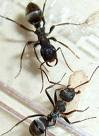
Let us look at some ant-related
ALL SUMMER kigo:


ari 蟻 (あり) ant, Ameise
big ant, oo-ari 大蟻
small ant, ko-ari 小蟻


mountain ants, yama-ari 山蟻
large black ant, dai kuro-ari 大黒蟻
red ant, aka-ari 赤蟻
yellow ant, ki-ari 黄蟻


anthill, arizuka, 蟻塚
ant tower, ari no too 蟻の塔

ant queen, joo-oo ari 女王蟻
male ant, osu ari 雄蟻
worker ant, 働蟻

ant trail, ant procession, ant column、line of ants
.. .. ari no michi  蟻の道
.. .. ari no retsu  蟻の列

flying ants, ants with wings, ha-ari, haari, 羽蟻、higi 飛蟻
.. .. hari はり


arimaki 蟻巻 (ありまき) aphid, plant louse
. . . arimaki 蚜虫(ありまき)、aburamushi あぶらむし
Blattlaus


white ants, shiro-ari シロアリ白蟻
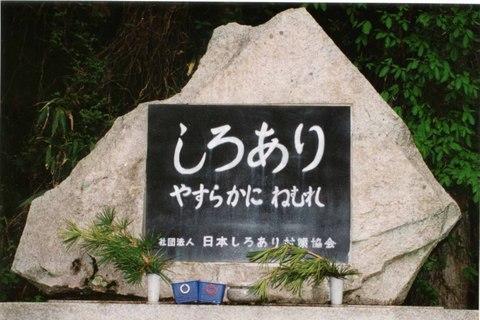
..... They are quite a pest and can destroy the wood of a house. So they are destroyed by the pest control squads regularly. One of these companies has erected a "grave for the white ants", in order to pray for the souls of the dead animals. The inscription reads:
"White ants, rest in peace" shiro-ari, yasuraka ni nemure.


http://darumapilgrim.blogspot.com/2004/02/koya-san-in-wakayama.html

Gabi Greve

:::::::::::::::::::::::::::::::::::::::::::::::::::::::::::::::::::::::::::::::::::::::::::::::::::::

kigo for mid-spring

ari ana o izu 蟻穴を出づ (ありあなをいづ)
ants coming out of their hole

.... ari ana o deru 蟻穴を出る(ありあなをでる)
ari izu 蟻出づ(ありいづ) ants coming out (again), ants emerge

Finally it gets warmer and the ants come out looking for food. This kigo shows the joy of springtime.


ants out of a hole —
when did I stop playing
the red toy piano?


Fay Aoyagi, 2006
http://www.modernhaiku.org/essays/Lanoue-FayAoyagiHaiku.html


. Discussion at THF, January 2011


.................................................................................

kigo for mid-autumn

ari ana ni iru 蟻穴に入る(ありあなにいる)
ants going into their holes


:::::::::::::::::::::::::::::::::::::::::::::::::::::::::::::::::::::::::::::::::::::::::::::::::::::


Ant Nests: Ants Love City Living
Ant Nests Read about ants and how they build their nests.

More links about the Ants:
http://www.emints.org/ethemes/resources/S00000793.shtml


*****************************
Worldwide use

Germany

Ameisen, Ameisenhaufen, Ameisenhuegel, Ameisenstrasse. Waldameisen.

:::::::::::::::::::::::::::::::::::::::::::::::::::::::::::::::::::::::::::::::::::::::::::::::::::::

North America

There is a well-known professor named Deborah Gordon whose a specialist in ants. Here are
urls for her book, 'Ants at Work', and a page about her research on harvester ants in Arizona.

http://www.amazon.com/exec/obidos/tg/detail/-/0684857332/102-7098940-4089726?v=g\lance
http://www.aliciapatterson.org/APF1904/Foster/Foster.html

What we have here in my are of California are Argentinian sugar ants, a highly successful invasive specis that has liminated the native species.

http://www.lalc.k12.ca.us/uclasp/urban_science/urban_bestiary/ant.htm
http://www.insecta-inspecta.com/ants/argentine/


Their hills have multiple queens, and are all apparently genetically identical so they behave as one colony, from one end of California to the other. They are therefore very, very difficult to control and impossible to eradicate. I used to think ants were cute. Not anymore.


Linda Papanicolaou

.. .. ..

CAUTION: CLOSEUP IMAGES OF ANTS--CLICK LINKS AT YOUR OWN RISK!

http://www.uq.edu.au/nanoworld/printfriendly.pl_files/Fire_ant_u_m634285.jpg

http://upload.wikimedia.org/wikipedia/en/c/ca/Ant_SEM.jpg


Here is the full url for the second image:
http://july.fixedreference.org/en/20040724/wikipedia/Ant

Linda Papanicolaou


:::::::::::::::::::::::::::::::::::::::::::::::::::::::::::::::::::::::::::::::::::::::::::::::::::::


doodle bug, also known as an ant lion

doodle bug!
the end of the grass stem
drips with spit


(a trick to capturing a doodle bug was to pluck a slim grass stem and wet the pale end with spit and poke it in the center of the doodle bugs funnel shaped nest to trick the hidden bug out of its home... I guess this equivalent in entertainment value back then as the Nintendo"wii" is now?)

Chibi


*****************************
Things found on the way


An ant on the move does more than a dozing ox.
Lao Tzu


*****************************
HAIKU


Sitting outside the first night after a long winter.
All is so quiet.. the stars amazingly near...

quietude -
an ant is sneezing
in a far galaxy

Gabi Greve, 2005
http://happyhaiku.blogspot.com/2005/04/quietude-and-ant.html

.. .. ..

unknown voices
whispering in the valley -
an ants procession
.

unbekannte Stimmen
fluestern im Tal -
Ameisenstrasse

.

shiranu koe
tani ni sasayaku
ari no michi

(Japanese by Nakamura Sakuo)

© Haiku by Gabi Greve, 2005

.. .. ..

news alive -
the ants took over
the mail box


lebende Nachrichten -
Ameisen uebernehmen
den Briefkasten

Sticking my hand in the box to get the newspaper as usual, yelling with surprise!

These are the tinywiny ants who make up for their body size in sheer numbers.

With so much rain around, I guess they deserve some shelter.

So, see you tomorrow morning, my million little friends.

Gabi Greve, June 10, 2004
http://groups.yahoo.com/group/happyhaiku/message/34

:::::::::::::::::::::::::::::::::::::::::::::::::::::::::::::::::::::::::::::::::::::::::::::::::::


.. .. .. Some Ant-Haiku by Issa

夕桜蟻も寝所は持にけり
yûzakura ari mo nedoko wa mochi ni keri

evening cherry blossoms--
the ants also
have a place to sleep


http://cat.xula.edu/issa/searchissa.php?haiku_id=228.03a

.. .. ..


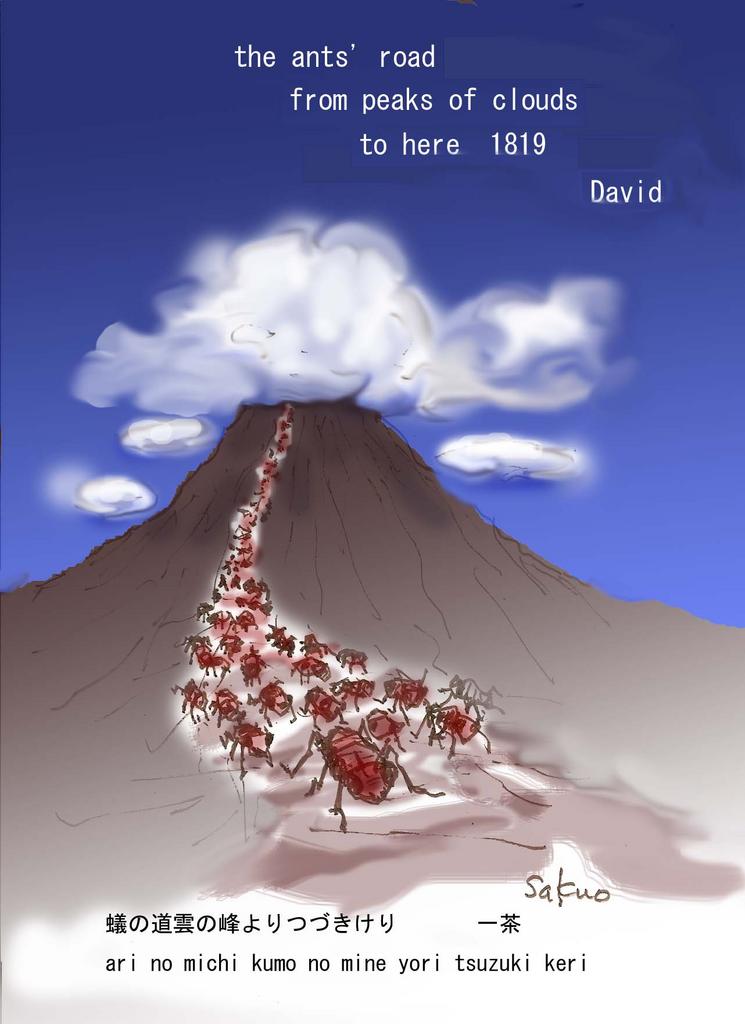
蟻の道雲の峰よりつづきけり
ari no michi kumo no mine yori tsuzuki keri

the ants' road
from peaks of clouds
to here

http://cat.xula.edu/issa/searchissa.php?haiku_id=270.18a

.. .. ..


出るやいな蚯蚓は蟻に引れけり
deru ya ina mimizu wa ari ni hikarekeri

just coming out
the earthworm dragged off
by ants


http://cat.xula.edu/issa/searchissa.php?colors=T&show_c=T&haiku_id=388.03a
Issa
Tr. David Lanoue
Haiga by Nakamura Sakuo

:::::::::::::::::::::::::::::::::::::::::::::::::::::::::::::::::::::::::::::::::::::::::::::::::::


蟻を殺す殺すつぎから出てくる
ari o korosu korosu tsugi kara dete kuru

I kill an ant
kill the next and the next
as they come out


. Ozaki Hoosai, Ozaki Hosai 尾崎 放哉   


:::::::::::::::::::::::::::::::::::::::::::::::::::::::::::::::::::::::::::::::::::::::::::::::::::


Dort die Frau am Fluss,
die wackelt mit dem Hintern.
Ameisenhügel


the woman at the river there
waggles her behind -
anthill
(Tr. Gabi Greve)

Jens O. Hoffmann
http://www-public.rz.uni-duesseldorf.de/~zinner/pr1/ameisen.html


*****************************
Related words

***** Termites

Wood inhabiting termites
Soil tunnelling termites


The wood-inhabiting termites are the more primitive type. Their colonies consist of excavated galleries inside dead branches or logs. Once the dead wood is consumed the colony dies. Since single pieces of dead wood can not sustain a very large family, their colonies rarely ever number more than a few thousand termites.

These wood inhabiting termites have a primitive type of caste system. Instead of having true workers they have false workers which are older nymphs who have undergone a regressive molt and that temporarily stay in the nest galleries and help their parents to raise more brothers and sisters. The soldiers have enlarged orange heads and long toothed jaws.

The soldier's main purpose is to defend the colony from termite's mortal enemies, the ants. Most nymphs gradually grow wing pads and then transform into winged termites called alates. The alates fly from the colony at a certain time of the year to start new colonies.


Read a lot more about the termites here:
http://www.utoronto.ca/forest/termite/trmts101.htm

.. .. .. .. ..

cowless barn
termites, new tenants
......milkweed is dying


peigi

Look at a photo of the old barn here:
http://www.haikupoetshut.com/vishaiku18a.html

.. .. ..

housing termites
the dying tree stands
~rooted


peigi

Look at a photo of the old tree here:
http://www.haikupoetshut.com/vishaiku8a.html

................................................................................


. flying termites (kumbi kumbi)  Kenya


:::::::::::::::::::::::::::::::::::::::::::::::::::::::::::::::::::::::::::::::::::::::::::::::::::::


***** Fire Ants
Solenopsis invicta

CLICK for more information !

アカカミアリ .. akakami ari
火の蟻 .. hi no ari (a more poetic version)
火蟻 .. hi ari
針蟻 .. hari ari (needle ants)
red fire ants, 紅火蟻
A variety of ants living in the tropics.

The follwing link has a rather graphic picture of a fire ant attack, so be warned!
http://www.desertmuseum.org/invaders/invaders_fireant.htm

xxxxxxxxxxxxxxxxxxxxxxxxxxxxx

Hawaiian fire ants
hot sting
born of Pele

M. Shanna Moore, Hawaii

xxxxxxxxxxxxxxxxxxxxxxxxxxxxx

fire ant mounds -
cattle grazing
on crooked paths


- Paul (MacNeil)
http://haiku.cc.ehime-u.ac.jp/shiki.archive/9802/0437.html

xxxxxxxxxxxxxxxxxxxxxxxxxxxxx

walk in park
... fire ant hills
....... sidestepping

peigi. Florida, US
http://www.worldhaikureview.org/2-2/haikunews_edginko.shtml


xxxxxxxxxxxxxxxxxxxxxxxxxxxxx


my bathroom blind
red hot ants crawling
all over


kenneth daniels (GY)
Kigo Hotline, June 2009

Guyana
kigo for the wet season


:::::::::::::::::::::::::::::::::::::::::::::::::::::::::::::::::::::::::::::::::::::::::::::::::::::


ANT haiku from Ireland


climbing a rocky ridge
in the sun,
two winged ants

by Anatoly Kudryavitsky
(from 'Morning at Mount Ring', DOGHOUSE Books, 2007)


June afternoon
ants searching for food
on the tiled bathroom wall


by Tasha Smith


:::::::::::::::::::::::::::::::::::::::::::::::::::::::::::::::::::::::::::::::::::::::::::::::::::::


***** arijigoku, ari jigoku 蟻地獄 (ありじごく)
doodlebug, ant lion, antlion

lit. "hell for the ants"
kigo for all summer
suribachi mushi 擂鉢虫(すりばちむし)"mortar insect"
arozusari あとずさり、atosari mushi あとさり虫(あとさりむし)
. . . CLICK here for Photos !
Ameisenlöwe

This is the larvae of the
usuba kageroo 薄翅蜉蝣(うすばかげろう), the weak-winged ephemera
Hagenomyia micans
kigo for late summer


:::::::::::::::::::::::::::::::::::::::::::::::::::::::::::::::::::::::::::::::::::::::::::::::::::::

. ari 蟻と伝説 Legends about ants .

[ . BACK to DARUMA MUSEUM TOP . ]
[ . BACK to WORLDKIGO . TOP . ]
- #ari #ant #ameise
:::::::::::::::::::::::::::::::::::::::::::::::::::::::::::::::::::::::::::::::::::::::::::::::::::::::::::::::::::::::::::

Anemone

[ . BACK to WORLDKIGO  TOP . ]
::::::::::::::::::::::::::::::::::::::::::::::::::::::::::::::::::::::::::::::::::::::::::::::::::::: 

Anemone

***** Location: Japan, Germany
***** Season: Late spring
***** Category: Plant


*****************************
Explanation

Anemone アネモネ .
Other names in Japanese
Benibana Okinagusa 紅花翁草
Hana-ichige, botan-ichige 花一華、牡丹一華


Ichirinsoo 一輪草 (いちりんそう) "one flower plant"
ichigesoo 一花草(いちげそう)
urabni ichige 裏紅いちげ(うらべにいちげ)
Anemone nikoensis


oginagusa 翁草 (おきなぐさ) "old man plant"
hakutoo-oo 白頭翁(はくとうおう)
ubagashira うばがしら shagumasaiko しゃぐまさいこ
zeigaisoo ぜがいそう, nekogusa ねこぐさ


In English they are also called "Windflowers".

They are supposed to have morphed from the tears of the Greek godess Aphrodite and were loved by the Roman god of the winds, Jupiter.
Their land of origin is the area of the Mediterranean and they were introduced to Japan during the Meiji period.
They come in many colors and varieties.
Poppy anemone, A. coronaria.


In Haiku, they also express some kind of softness and gentleness.

Gabi Greve


CLICK for more photos


.................................................................................


nirinsoo 二輪草 (にりんそう) soft windflower
gashoosoo 鵝掌草(がしょうそう)
Anemone flaccida


:::::::::::::::::::::::::::::::::::::::::::::::::::::::::::::::::::::::::::::::::::::::::::::::::::::


Anemone (from Greek Άνεμος 'wind'),
is a genus of about 120 species of flowering plants in the buttercup family Ranunculaceae in the north and south temperate zones. They are closely related to Pasque flowers (Pulsatilla) and Hepaticas (Hepatica); some botanists include both of these genera within Anemone.
© More in the WIKIPEDIA !


INFORMATION ABOUT ANEMONE FLOWERS...

The story behind the anemone flower's name is a sad one. The name comes from Greek and roughly translates into “windflower”. It is said in Greek Mythology that the anemone flower sprang up from the blood of Aphrodite's slain lover, Adonis. The name “windflower” signifies that the wind that blows the petal open will also, eventually, blow the dead petals away.

Despite the anemone flower's depressing background, it can be a wonderful addition to your garden and can add a cheery bit of color to low areas of your garden. The anemone's flowers come in almost all colors, so you can find any color you would like for your garden.

There are three types of anemone flowers. There is a Spring flowering type, which has either rhizomes or tubers. There is tuberous Mediterranean which flowers in spring and summer. And there is a larger Fall flowering type, which blooms in late summer to fall and tends to have fibrous roots.
http://www.plantingflowerbulbs.com/anemone-flowers.htm

:::::::::::::::::::::::::::::::::::::::::::::::::::::::::::::::::::::::::::::::::::::::::::::::::::::


Look at more Anemone pictures here
http://www.hana300.com/anemon1.html


*****************************
Worldwide use

Germany

Zu Thiems Todestag
offen die Anemonen.
Welch ehrliches Weiß!


Rudolf Thiem, ein wichtiger Mann in der Entwicklung der deutschen Haikukritik, verstarb am 20. April vorigen Jahres.

Horst Ludwig
MN, USA, August 2009

Reference : Rudolf Thiem


*****************************
Things found on the way


*****************************
HAIKU


side by side -
awaiting the treasures
of TODAY

二人して
今日の恵みを
待つばかり

Look at more Anemone haiku by Gabi Greve
http://happyhaiku.blogspot.com/2005/04/anemones.html

:::::::::::::::::::::::::::::::::::::::::::::::::::::::::::::::::::::::::::::::::::::::::::::::::::::


アネモネや里の暮らしも馴れし日々
 本田 日出登

Aaa, Anemones!
Getting used to daily life
in a small village

Honda Hideto
After living in Tokyo for more than 15 years,
he finally moved to the countryside.


*****************************
Related words

***** Autumn Anemone, A. hupehensis (kibunegiku 貴船菊 )
kigo for autumn


Also called "Shuumeigiku" 秋明菊.
Land of origin is China, but the flower has been introduced to Japan long ago. Also called the "Peony of Autumn" (aki botan 秋牡丹).


http://www.hana300.com/syumei.html
http://www.hana300.com/syumei1.html

:::::::::::::::::::::::::::::::::::::::::::::::::::::::::::::::::::::::::::::::::::::::::::::::::::::

kigo for late summer

hakusan ichige 白山一花草 (はくさんいちげ)
"narcissus-flowered anemone"
Anemone narcissiflora. 白山一華


:::::::::::::::::::::::::::::::::::::::::::::::::::::::::::::::::::::::::::::::::::::::::::::::::::::

[ . BACK to WORLDKIGO  TOP . ]
annemone
:::::::::::::::::::::::::::::::::::::::::::::::::::::::::::::::::::::::::::::::::::::::::::::::::::::

1/14/2005

Angelus prayer

[ . BACK to WORLDKIGO . TOP . ]
::::::::::::::::::::::::::::::::::::::::::::::::::::::::::::::::::::::::::::::::::::::::::::::::::::: 

Angelus

***** Location: Catholic Communities
***** Season: Mid-spring
***** Category: Humanity


*****************************
Explanation

o-tsugesai 御告祭 (おつげさい) Annunciation
kami no o-tsuge 神のお告げ(かみのおつげ), gokuchisai 告知祭(こくちさい)、o-tsuge no shukujitsu お告げの祝日(おつげのしゅくじつ), jutai kokuchibi 受胎告知日(じゅたいこくちび)、seitai gokuchibi 聖胎告知日(せいたいこくちび)
Maria Verkündigung


:::::::::::::::::::::::::::::::::::::::::::::::::::::::::::::::::::::::::::::::::::::::::::::::::::::


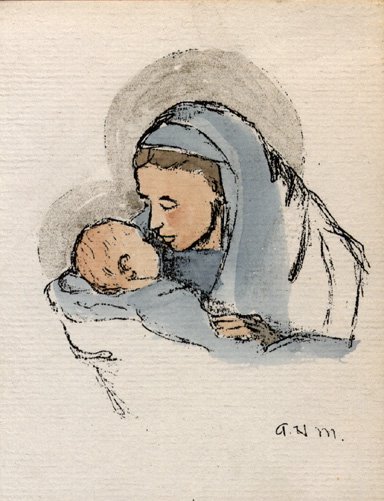
Madonna and Child - Watercolor by Alice Mankowski
http://www.wf-f.org/Angelus.html#anchor689231

The Angelus Domini is the traditional form used by the faithful to commemorate the holy annunciation of the angel Gabriel to Mary. It is used three times daily: at dawn, mid-day and at dusk. It is a recollection of the salvific event in which the Word became flesh in the womb of the Virgin Mary, through the power of the Holy Spirit in accordance with the salvific plan of the Father.

The recitation of the Angelus is deeply rooted in the piety of the Christian faithful, and strengthened by the example of the Roman Pontiffs. In some places changed social conditions hinder its recitation, but in many other parts every effort should be made to maintain and promote this pious custom and at least the recitation of three Aves.

It is therefore "desirable that on some occasions, especially in religious communities, in shrines dedicated to the Blessed Virgin, and at meetings or conventions, the Angelus be solemnly recited by singing the Ave Maria, proclaiming the Gospel of the Annunciation" and by the ringing of bells.

Read more about it here:
Angelus

*****************************
Worldwide use


BLAGOVESHTENIE (ANNUNCIATION DAY) - March 25
Name day of everyone named Blagovest, Blagoy, Blaga, Vangel, Evangelina, Bonka.
Ritual table: fish (baked or boiled), flat cake, onion pastry.

The feast is also known under the name of Blagovshtene, Blagovets, Blagoets - in English: ANNUNCIATION, or LADY DAY.

In the traditional conceptions this day is associated with the arrival of the migratory birds and with the final springtime awakening of Nature. After Blagoveshtenie, everyone takes care to come out of one's house well-fed and with some money in his/her pocket, so that should a cuckoo sing a song to him, he will be well-fed and have money throughout the year.
It is believed that if someone should first see a stork that is not flying but is lying or walking, some ill will befall him. When a maiden or an unmarried young man first sees a cuckoo, she/he ties three times an empty cloth, places it on the roof and three days later makes prophesies about the spouse she or he is to get.
source : www.plovdivguide.com


helping my daughter
to choose her first earrings-
Blagoveshtenie


- Shared by Tzetzka Ilieva -
Haiku Culture Magazine, 2013


*****************************
Things found on the way


*****************************
HAIKU


Angelus--
the silence of
cash registers

Most Filipinos are Catholics. Especially in the rural areas, the recitation of the Angelus is seriously being observed not only at homes but also in public places. In one supermarket I visited, everyone -- including, of course, the cashiers -- had to stop at the start of the Angelus. You don't hear any sound, especially the sound of cash registers. The Angelus moment therefore serves as a break from our daily struggle in the material world, and a reminder of the spirituality of our existence.

roh mih, Philippines

xxxxxxxxxxxxxxxxxxxxxxxxxxxxx

This haiku would read as follows in Ireland :

Angelus--
the silence of the
radio presenters

The Angelus bells are broadcast on the main radio station in Ireland (RTE 1) at noon every day, and many of those listening (even if not Roman Catholics) stop for a moment of prayer.

In Kenya :

muezzin chant --
deepening the silence
of the wee hours

The nearest mosque is many kilometres away from my house. Yet, between 5 and 6 in the morning, when Nairobi is still still, the singer can be heard here. If ever I am half-awake at that time, the chant is reassuring and peaceful.

Isabelle Prondzynski

xxxxxxxxxxxxxxxxxxxxxxxxxxxxx

Romania

I am a Catholic, living in a predominantly Orthodox, but a very multi-denominational environment.

Here are 2 haiku and their background stories.

First about the Angelus. One of the Catholic churches in my town is just a couple of metres away from my house, across the railway. Bells used to toll for Angelus 3 times a day:at 8 AM, 12.00 noon and 6 PM. In addition they made themselves heard for Masses or when somebody important died, as well as to dispell hail (it works!). This until the '80-s when the Communists decided they were disturbed by that and forbade the use of churchbells. Later the bells were also removed altogether. They were re-installed in 1993 (the parrish had no money before that). It was for the Noon Angelus on a July day that we heard them again for the 1-st time:

in the scorching heat
bodies doze off, but my heart
beats with the church bells

Incidentally, Isabelle, did you know that there is a direct link between the Angelus and the Ezzan (muezzin's call)? When St. Francis of Assisi came back from the Middle East, he wrote a "Letter to all the faithful" in which he suggested that Christians say a prayer in memory of the Incarnation, 5 times a day, just like Islamic prayer times, and that bells or horns be used to call people to such prayers. However, the practice was not institutionalised (with just 3 times a day) until later, when a Pope made vows to that effect if the Christians were able to thwart an attempt by the Turks to penetrate the Italian peninsula, which actually happened at the battle of Otranto.

About silence and radio stations:
Also in the Communist times, we were not allowed to say some words in public:"Christmas", "Easter", "Good Friday" and almost any words having to do with religion could mean one's suspension from school-with the impossibility to go to University afterwards, one's being sacked from any position one held etc. Needless to say, these were not public holidays, either. Not all Communist states were that harsh. Some-including our neighbouring Hungary- held them as public holidays and Radio Budapest -which broadcast the Angelus bells each day-on Good Friday when, throughout the Catholic world, NO bells are supposed to toll, actually explained that on the air.

Hungarian or not, Catholic or not, elderly people in our town all understood some Hungarian and tuned in to Radio Budapest to hear the magic words:"Today being Good Friday, we shall have no bells". Just to hear that it was possible to say "Good Friday" on the air, in a Communist country.

In 1987 or 1988 I wrote a haiku in English, hoping that if "they" find it, "they" will have trouble understanding it.I have lost it since, but I think it went something like this:

"Twelve noon, Good Friday:
airwaves keep the souls alive
with the bells'silence".


Cristian Mocanu

xxxxxxxxxxxxxxxxxxxxxxxxxxxxx

Actually the Angelus bells are broadcast on RTE1 twice a day, at noon and 6 pm.
I have to say I never saw anyone (except a few old ladies) stop for a moment of prayer when they are broadcast.

amid the news
on clerical abuse a pause
Angelus bells

Sexual abuse of children by Catholic priests is seldom out of the news these days in Ireland. A poignant juxtaposition is caught in the verse.

Norman Darlington

xxxxxxxxxxxxxxxxxxxxxxxxxxxxx

Tractors tearing
rows into the fat earth.
Evening Angelus.


Times are changing. The bells still ring, but the machines keep running. In the near future actually, tractors might be running computer-directed, without even a person directing them.

Horst Ludwig, USA


*****************************
Related words

***** Silence (maun) in India


. Christian Celebrations in Japanese Kigo  

[ . BACK to WORLDKIGO . TOP . ]
:::::::::::::::::::::::::::::::::::::::::::::::::::::::::::::::::::::::::::::::::::::::::::::::::::::