:::::::::::::::::::::::::::::::::::::::::::::::::::::::::::::::::::::::::::::::::::::::::::::::::::::
Fields, rice fields, rice paddies (ta)
***** Location: Japan, other areas
***** Season: Various, see below
***** Category: Earth
*****************************
Explanation
Fields, especially the rice fields are very important for the farming communities of Japan. We have a lot of kigo during all seasons, concerned with the work on the fields.
field, rice paddy, ta 田
terraced rice fields, tanada 棚田

© Gabi Greve, Terraced rice fields of Ohaga-Nishi, Okayama Prefecutre, Japan
small path between the fields, azemichi 畦道
..... あぜ 畦
hatake, fields (for other crops) 畑
fields and rice paddies, tahata, tabata 田畑
**********************************
Kigo for Spring
fields in spring, spring paddies, haruta 春田
..... haru no ta 春の田
..... haru tauchi 春田打(はるたうち)
preparing the fields, "hitting the fields" tauchi 田打ち
... ta o utsu 田を打つ(たをうつ)
.... ta-okoshi 田起こし "waking the fields up"
Mishima otauchi matsuri 三島御田打祭
festival of "hitting the fields at Mishima
O-tauchi 御田打(おたうち)"honorable hitting the fields"
Onta matsuri 御田祭(おんたまつり)festival of the fields
hata uchi 畑打 (はたうち) preparing the fields / the soil by ploughing
..... hatake utsu 畑打つ(はたけうつ)
..... hatake kaesu 畑返す(はたけかえす)
..... hatake suku 畑鋤く(はたけすく)ploughing the fields
spring plowing, tagayashi 耕(たがやし)
..... shunkoo 春耕(しゅんこう)
. Seeds in Spring Kigo
:::::::::::::::::::::::::::::::::::::::::::::::::::::::::::::::::::::::::::::::::::::::::::::::::::::
mid-spring
noogu ichi 農具市 (のうぐいち) market for farm tools
.................................................................................
late spring
aze nuri 畦塗 (あぜぬり) repairing the path between the rice fields
..... nuri aze 塗畦(ぬりあぜ)
kuru nuri 畔塗り(くろぬり)
. . . CLICK here for Photos !
nawashiro 苗代 ( なわしろ) bed for rice plants
rice nursery
. . . CLICK here for Photos !
nawashiroda 苗代田(なわしろだ)
naeda 苗田(なえだ), shirota 代田(しろた)
oyada 親田(おやだ)"parent field"
naema 苗間(なえま)space between seedlings
noshiro のしろ
nawashi tojime 苗代じめ(なわしとじめ)
nawashirogayu 苗代粥(なわしろがゆ) rice gruel for the nursery
(A bowl of rice gruel is placed at the entry for the water, as an offering to the field deities.)
nawashiro mizu 、苗代水(なわしろみず)water poured into a rice nursery
nawashiro michi 苗代道(なわしろみち)path between rice nurseries
nawashirodoki 苗代時(なわしろどき)time for the beds for rice plants
tanzaku nawashiro 短冊苗代(たんざくなわしろ)

tansaku nawashiro
in the form of a tanzaku long paper slip
:::::::::::::::::::::::::::::::::::::::::::::::::::::::::::::::::::::::::::::::::::::::::::::::::::::
paddie snails, mud snails, tanishi 田螺 たにし
collecting mud snails, tanishi tori 田螺取
"mud snails crying", tanishi naku 田螺鳴く
Cipango paludina. Teichschnecke
. . . CLICK here for Photos !
They are small conches of about 4 - 7 cm length, which live in the wet rice paddies and are part of the ecosystem, providing food for many birds ... and the humans.
They are a delicacy in this season, being boiled in soy sauce or fried and grilled and added with different flavors. They where a source of protein for the poor farmers of the Edo period. Children could collect them in the fields and have a cheap snack.
They do not make a sound or cry, but there is also the theory that their voice was heared by the farmers of old.
Tanishi ae 田螺和 (たにしあえ) mud snail in dressing
WASHOKU
nishizakana 螺肴 (にしざかな) tanishi conch snacks for the New Year
The Chinese character NISHI 螺 means a sprial shellfish or snail that lives in water (Wasserschnecke).
静けさに堪えて水澄たにしかな
shizukesa ni taete mizusumashi tanishi kana
(? shizukesa ni taete mizu sumu tanishi kana)
in the clear water
a mudsnail enduring
the stillness
(Tr. Makoto Ueda)
(水澄 mizusumashi, whirligig beetle, Taumelkäfer. Gyrinus japonicus )
a mud-snail
and a whirligig beetle
enduring the stillness
(Tr. Gabi Greve)
. Yosa Buson 与謝蕪村 in Edo .
- - - - - - - - - -
袖よごすらん田螺の海士の隙を無み
. sode yogosuran tanishi no ama no hima o nami .
田螺取義仲寺遠く暮れにけり
tanishi tori Gichuuji tooku kure ni keri
義仲寺 Temple Gichu-Ji and Matsuo Basho at Lake Biwa
. Matsuo Basho 松尾芭蕉 - Archives of the WKD .
- - - - - - - - - -
静さに堪へて田螺の移りけり
shizukesa ni taete tanishi no utsurikeri
(? shizukasa ni taede tanishi no utsuri-keri)
Murakami Kijo 村上鬼城
More Haiku with tanishi
http://cgi.geocities.jp/saijiki_09/kigo500g/030.html

. tanishi ningyoo たにし人形 from Nogata 直方張子
dolls made from mud snails
. tanishi ningyoo たにし人形 from Tsuchiura, Ibaraki
dolls made from mud snails
- quote -
Tanishi Chooja タニシ長者 / たにし長者 Tanishi Choja
The Mud Snail Millionair
Long,long ago there were a farmer and his wife living in a village,who had no child. They were not so young but they prayed every day to God for their baby.
One day she suddenly started labor and gave birth to a baby. To their surprise, the baby who was born was a mud-snail. Even if it was a snail, they loved and took great care of him as he was their beloved son.

Twenty years had passed.
The farmer and his wife became old, but their child was still a snail. On the day when they carried NENGU (an annual tribute) on horseback, the snail spoke to them for the first time;
"I'll make you happy from today." The snail took the horse with NENGU by himself to a CHOJA's (a millionaire) house.
As the snail was now very famous in the village and had much knowledge, he was treated by the millionaire kindly.
The Choja liked him very much and decided to make him a son-in-law.
The millionaire had two daughters.
An elder sister rejected to marry him firmly, while a gentle-minded and hardworking younger sister accepted to marry him as it was his father's decision.
Anyway they got married and were having happy lives.
One day they went to see a Festival of the village fair. On their way back to the house, she put him on the edge of a rice field and went to a KANNON (Goddess of Mercy) statue to pray for their happiness.
Then the envious elder sister asked a crow to attack the snail.
He ran away from the crow as fast as possible to the house. She noticed it and helped him by covering him with her body,when the snail grew and grew big until it was a handsome young man. Her love for her husband caused a miracle.
He succeeded to his father-in-law's wealth and he was called 'TANISHI (mud-snail) CHOJA.'
- source : HeartLand-Gaien
In a version told in Okayama:
She went to a temple festival of Yakushi Nyorai, while the mud snail (a messenger of the Suijin, Deity of water) prayed there in the field. When the girl came back from her prayers, she could not find the mud snail and calling for him, he would not answer.
So she decided to throw herself into the water and search for him, when suddenly someone from behind grabbed her to hold her back. It was a young handsome man!
Who was this? You guess right, it was the mud snail turned human after all their prayers.
medetashi medetashi
たにしと嫁は薬師さまのお祭りを見物しに出かけた。嫁は願掛けをしたいからと言って、たにしを田んぼのふちに置いて姿を消した。
- source : manga nihon mukashibanashi
. Kamakura Gongorō Kagemasa 鎌倉権五郎景政 Legends .
景政の目玉田螺も力餅
Kagemasa no medama tanishi mo chikaramochi
景政が片目をひろふ田螺かな
Kagemasa ga katame o hirou tanishi kana
:::::::::::::::::::::::::::::::::::::::::::::::::::::::::::::::::::::::::::::::::::::::::::::::::::::
paddy parsley, taseri 田芹 たぜり
Oenanthe javanica.
Quite a delicasy in spring dishes.
tea plantations, tea fields, chabatake 茶畑 ちゃばたけ
:::::::::::::::::::::::::::::::::::::::::::::::::::::::::::::::::::::::::::::::::::::::::::::::::::::
Kigo for Summer
humanity kigo for early summer
. shirokaki 代掻 (しろかき) light ploughing the fields
and more activities
humanity kigo for mid-summer
planting rice in the paddies, taue 田植
..... ta o uu 田を植う
plowing the fields, ta kaku 田掻く
horse for plowing, takaku uma 田掻馬
ootaue, oo-taue 大田植(おおたうえ)"big rice planting"
when the whole family or neighbourhood helped planting
tauegumi 田植組(たうえぐみ)group planting rice together
..... yoriai taue 寄合田植(よりあいたうえ)
. song for rice planting, taue uta, taue-uta 田植歌 .
..... tauebushi 皐月節(さつきぶし)
..... saotome uta 早乙女唄(さおとめうた)
. rice-planting woman, saotome 早乙女 さおとめ with MORE kigo
taue joogi 田植定規(たうえじょうぎ)ruler for rice planting
made from bamboo, to measure the distance between the plants and rows
. . . CLICK here for Photos !
taue meshi 田植飯(たうえめし)rice eaten during rice planting
usually some nigiri for all the participants, eaten in a hurry to finish the work needed for the day.
tauezakana 田植肴(たうえざかな)side dishes for rice planting
usually a few slices of pickled radish takuan and plums (umeboshi).
tachiudo, tachi udo 立人(たちうど) "standing person"also spelled 立歌人, standing and singing to get the rhythm for the planters
This was done by the young men of the village.
tauegasa 田植笠 hat for rice planting
usually a wide straw hat
田植え笠
ta aruji 田主(たあるじ)owner of the paddy
supervisor of the planting group
tarooji 太郎次(たろうじ)supervisor of the singing group
taudo, ta-udo 田人(たうど)
satsuki さつき dialect of northern Japan for rice planting.
setsuda 節田(せつだ)is another dialect word.
yoi satsuki 宵皐月(よいさつき) "night planting"It was customary to have as many people as it took to finish the planting of paddies of one family in one day. If the estate was too big, a part would be done before that day.
hana taue 花田植(はなたうえ)
taue nunoko 田植布子(たうえぬのこ)simple robe for rice planting
It was usually raining during the planting season and simple cotton robes could get wet and dry easily. On hot days people would also work almost naked.
. geta sandals for rice planting, tageta 田下駄 たげた
.SAIJIKI ... HUMANITY
Kigo for Summer
.................................................................................
field for seedlings, shirota 代田 しろた
planted fields, ueta 植田 うえた
fields with rice seedlings, sanaeda 早苗田(さなえだ)
fields in the fifth lunar month, satsukida 五月田(さつきだ)
green rice paddies, green fields, aota, aoda 青田
aotamono 青田面(あおたのも)
wind on the green fields, aotakaze 青田風(あおたかぜ)
green fields like waves, aota nami 青田波(あおたなみ)
path between the green fields, aotamizhi青田道(あおたみち)
time of the green fields, aotadoki 青田時(あおたどき)
"seller of green fields", aota uri 青田売(あおたうり)
paddies in a drought, drought-stricken paddy
hiderida 旱田, ひでりだ, ひでりた, hiyakeda 日焼田 ひやけだ
withered field, kareta 涸田(かれた)
burned by the sun, yakeda 焼け田(やけだ)
split by the dryness, hibiwareda 乾割れ田(ひわれだ)
field in a drought, kanbatsuda 旱魃田(かんばつだ)
alpine flower-meadows, o-hanabatake お花畑
butterbur field, fukibatake 蕗畑 ふきばたけ
. SAIJIKI ... category EARTH
Kigo for Summer
:::::::::::::::::::::::::::::::::::::::::::::::::::::::::::::::::::::::::::::::::::::::::::::::::::::
Kigo for Autumn
autumn rice paddies, aki no ta 秋の田
..... akita 秋田(あきた)paddies in autumn
ta no iro 田の色(たのいろ)"colors of the fields"
irozukuta, irozuku ta 色づく田(いろづくた) fields getting colorful
paddy with rice plants (before harvesting)
inada 稲田 いなだ
ploughing in autumn, shuukoo 秋耕 (しゅうこう )
tilling the fields after the harvest, plowing in autumn
taro field, imobatake 芋畑 いもばたけ
.................................................................................
humanity kigo for mid-autumn
. otoshimizu, otoshi mizu 落し水 draining water .
mizu otosu 水落す(みずおとす)"water falls" (is drained)
tamizu otosu 田水落す(たみずおとす)
seki hazusu 堰外す( せきはずす)take the barrier off
and
doyoo-boshi 土用干し draining the riece paddies during the "dog days"
.................................................................................
earth kigo for late autumn
karita 刈田 (かりた) stubble-paddy, harvested paddy
kari oda 刈小田(かりおだ)small harvested paddy
karita michi 刈田道(かりたみち)path between harvested paddies
karitazura 刈田面(かりたづら)"face of the harvested fields"
karitahara 、苅田原(かりたはら) plain with harvested fields
hitsujida 穭田 (ひつじだ) field with wild grain growing
:::::::::::::::::::::::::::::::::::::::::::::::::::::::::::::::::::::::::::::::::::::::::::::::::::::
Kigo for Winter
paddy fields in winter, fuyuta 冬田 (ふゆた)
fuyu no ta 冬の田(ふゆのた)
yasumeta 休め田(やすめた)"paddy taking a rest"
fuyu tamichi 冬田道(ふゆたみち)path between winter paddies
furutamono 冬田面(ふゆたのも)
yuki no ta 雪の田(ゆきのた)paddies in snow
withered fields, kareno 枯野 かれの
..... kudara no 朽野 (くだらの, 百済野、くだら野)
fields in winter, fuyuno 冬野 (ふゆの)
:::::::::::::::::::::::::::::::::::::::::::::::::::::::::::::::::::::::::::::::::::::::::::::::::::::
Kigo for New Year
Some saijiki list them in the SPRING section.
"March Festival", satsuki iwai 皐月祝
garden field planting, niwa taue 庭田植(にわたうえ)
"March Night", yoi satsuki宵皐月(よいさつき)
Dancing and planting rice, taue odori 田植踊
..... Jajuuroo 弥十郎(やじゅうろう)
Enburi Dance えぶり 柄振り
Held on January 15 (now February 17) in Hachi no He Town in Aomori prefecture 青森県八戸. A group of men from schoolchild to grandfather (enburi gumi えんぶり組), dressed in special coats with large hats, with field tools dance around the streets and in front of farm houses, wishing for a bountiful harvest.
..................... Other kigo in connection with this dance:
eburi, えぶり
enburi, gozen enburi 御前えんぶり(ごぜんえんびり)
naga enburi ながえんぶり、doosai enburi どうさいえんぶり
home where the Enburi Dance is performed
..... enburi yado えんぶり宿(えんぶりやど)
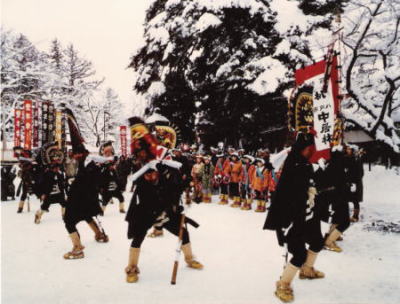
© Photos by Nakaibayashi
Backup
... ... ...
"playing in the fields" ta asobi 田遊 たあそび
"honorable field" onda 御田(おんだ)
spring field tools、haru kuwa 春鍬(はるくわ)
..... yasume 安女(やすめ, tarooji 太郎次(たろうじ)、yoneba よねぼ、shakutaroo 尺太郎(しゃくたろう)、shakujiroo 尺次郎(しゃくじろう)、yoneboo よねほう、yonanzoo よなんそう、inanzoo いなんそう
*****************************
Worldwide use
Bhutan
. . . CLICK here for Photos !
rice terraces
the cries of ploughmen
all day
Sonam Chhoki
. BHUTAN SAIJIKI .
*****************************
Things found on the way
The song for rice planting (taue uta) was necessary to keep the rythm for all planters, when it was still done by hand by the farmer's womenfolk. It was also an offering for the god of the fields (ta no kami) and the god of the earth (tsuchi no kami).
With the advent of planting maschinery, these local songs are fast becoming extinct. When some anthropologists went to the local communities to record these songs in autumn, the farmers refused strictly on the ground, that this would be a strong insult for the god of the fields and bring them bad fortune !
Read my article about
Ta no Kami, God of the Rice Fields 田の神さま
sanbai 三拝is another name for the "god of the fields", mostly used in Western Japan.
Read more of his kigo in this article.
The god of the fields and the earth had a special festival twice a year around the spring and autumn equinox to welcome him and send him off. The day was defined to be the "light or elder day of the earth" tsuchi no e 戊, according to the Asian lunar calendar and the knowledge of the five elements.
This day is also called "Shrine Day" shanichi, shajitsu 社日. On this shrine day, farmers would assemble at the local shrine and dance for the gods, praying for a good harvest in spring (shunsha 春社) and thanking for one in autumn (shuusha 秋社). In autumn, the god of the earth was then sent off to the mountain, to live there until next spring as the "god of the mountain, yama no kami 山の神.
Used in haiku, "Shrine day" shanichi is a kigo for spring.
. 社日様 Shajitsu Sama,田の神様 Tanokami Sama - Legends .
Deafness-curing sake (jirooshu) 治聾酒
Drunk on this Shrine Day in spring.
*****************************
HAIKU
Hokku about planting rice
. Matsuo Basho 松尾芭蕉 - Archives of the WKD .
:::::::::::::::::::::::::::::::::::::::::::::::::::::::::::::::::::::::::::::::::::::::::::::::::::::::::::::::::
. Kobayashi Issa 小林一茶 .

田の水やさらばさらばと井にもどる
ta no mizu ya saraba saraba to i ni modoru
rice field water --
saying many goodbyes
it returns to the spring
This hokku is from the beginning of the seventh lunar month (August) in 1821, when Issa was living in his hometown. In the hokku farmers are draining a wet rice field or paddy for the last time during the rice-growing season. Autumn is just beginning, and it is time to let the rice dry out before it is harvested in September. The farmers break the small dikes at the entrance and exit of one field and watch and listen to the water as it flows out of the field and back toward a nearby spring or stream. The word i in the third line means mainly 'well' in contemporary Japanese, but in Issa's time the first meaning was a spring or any other water source. Since rice fields were usually irrigated by digging a channel from the nearest stream or spring to the rice fields, while the fields themselves were themselves were linked by small temporary dikes or short channels, the source Issa is talking about is likely water from a spring not far from the fields. The water from the fields will now return back to its "home" or source.
Issa, as is rather common in much haikai and pre-Meiji literature, imagines the water's feelings. The water, like a thankful traveler, now shows its gratitude to the farmers for taking care of it and letting it stay in their field for several weeks, and it says goodbye over and over as it runs smoothly and freely out of the field and back toward the spring nearby. Issa seems to be suggesting two meanings with saraba-saraba in the second line: the first meaning is farewell or goodbye (saraba, literally "if such must be; so be it"), while the repetition implies 'repeatedly,' and the second meaning is sara-sara, an onomatopoeic expression for gurgling, murmuring water as it flows quickly, lightly, and freely. The sounds of the water flowing from the field thus become its voice saying goodbye again and again to the kind farmers.
Tr. and comment : Chris Drake
.......................................................................
田の水をかすりに行も日傘哉
ta no mizu o kasuri ni yuku mo higasa kana
a scattered pattern
on rice paddy water...
parasols
- - - Issa about paddies
(tr. David Lanoue)
遠かたや青田のうへの三の山
ochikata ya aoda no ue no mitsu no yama
far distance--
above green rice fields
three mountains
畠打や祭々も往く所
hata uchi ya matsuri-matsuri mo iku tokoro
plowing fields--
festivals, festivals
all over!
田が青む田が青むとやけいこ笛
ta ga aomu ta ga aomu to ya keiko fue
the rice fields
greener and greener!
flute practice
田のくろや馬除柳馬がくふ
ta no kuro ya uma yoke yanagi uma ga kuu
ridge between rice fields--
the horse eats
the sheltering willow
鳴田にし鍋の中ともしらざるや
naku tanishi nabe no naka tomo shirazaru ya
pond snails sing
they're in the kettle
but don't know it
Issa about fields
( tr. David Lanoue)
畠打や足にてなぶる梅の花
hata uchi ya ashi nite naburu ume no hana
plowing the fields -
plum blossoms get crushed
under the feet
Tr. Gabi Greve
- the cut maker YA is at the end of line 1 -
:::::::::::::::::::::::::::::::::::::::::::::::::::::::::::::::::::::::::::::::::::::::::::::::::::::
shirunabe ni kasa no shizuku ya sanae tori
picking up rice seedlings -
raindrops from their sedge hats
fall in the soup pot
Kikaku 基角
(Tr. Gabi Greve)
Women transplanting rice-seedlings;
Rain-drops from their kasa
Fall into the soup of the saucepan.
(Tr. Blyth)
sanaetori .. This process is taken at the first stage of rice planting.
It is supposed that this first work is done by young woman. That is because it needs delicate hands for working.
Look at some illustrations by
Sakuo Nakamura
:::::::::::::::::::::::::::::::::::::::::::::::::::::::::::::::::::::::::::::::::::::::::::::::::::::
夜水とる里人の声や夏の月
yomizu toru satobito no koe ya natsu no tsuki
As they let in water at night,
voices of the paddy farmers --
a summer moon.
Tr. Sawa and Shiffert
離別
さられたる 身を踏込で 田植哉
sararetaru mi o fumikonde taue kana
(1784)
divorced
she is but goes into his field
for rice planting
水古き深田に苗のみどりかな - mizu furuki
(1784)
つばくらや水田の風に吹れ貌 - tsubakuro ya
(1784)
獺
かわうその住む水も田に引く早苗哉 - kawauso no
(1784)
山颪早苗を撫でて行方かな - yama oroshi
鯰得てもどる田植の男かな - namazu ete
(1784)
. Yosa Buson 与謝蕪村 in Edo .
:::::::::::::::::::::::::::::::::::::::::::::::::::::::::::::::::::::::::::::::::::::::::::::::::::::
ひつじ田 や痩(や)せて慈姑(くわゐ)の花一つ
hitsujita ya yasete kuwai no hana hitotsu
Takahama Kyoshi 子規
:::::::::::::::::::::::::::::::::::::::::::::::::::::::::::::::::::::::::::::::::::::::::::::::::::::
paddy fields
we drive past
fleeting milestones
Kala Ramesh, India
:::::::::::::::::::::::::::::::::::::::::::::::::::::::::::::::::::::::::::::::::::::::::::::::::::::
in the midst
of the flooded paddies --
a little graveyard
Isabelle Prondzynski, May 2011
:::::::::::::::::::::::::::::::::::::::::::::::::::::::::::::::::::::::::::::::::::::::::::::::::::::

Early summer...
the sound of falling water
in the terraced rice fields
修学院離宮の棚田
terraced rice fields at Shugakuin Rikyu in Kyoto.
- Shared by Taro Aizu -
Joys of Japan, 2012
*****************************
Related words
***** Rice plants (ine) and various kigo
***** tanaike, tana-ike 種池(たないけ)pond to immerse the rice seeds
and related kigo for late spring
Farmers Work
***** Farmers work in Spring
***** Farmers work in Summer
***** Farmers work in Autumn
***** Farmers work in Winter
***** . Seeds and planting in spring
Tanbo Art
. Rice Field Art 田んぼアート tanbo aato .
. SAIJIKI ... category EARTH
. HUMANITY KIGO - for all seasons
[ . BACK to WORLDKIGO . TOP . ]
:::::::::::::::::::::::::::::::::::::::::::::::::::::::::::::::::::::::::::::::::::::::::::::::::::::




 Posts
Posts


28 comments:
This is an old one --
rice terraces ...
my laughter, too,
is layered
.
secluded house--
trusting in the Buddha
rice plants bloom
kakurega ya anata makase no ine no hana
かくれ家やあなた任せの稲の花
by Issa, 1813
Translation: David Lanoue
http://cat.xula.edu/issa/
.
kareno wa mo/en no shita made/tsuzuki ori
withered field...
ah, it continues to below
my balcony
Kubota Mantaroo
Kubota Mantaroo
Tr. Susumu Takiguchi
一斉にそよぐ畠の稲穂哉
issei ni soyogu hatake no inaho kana
all at once
the field is rustling...
heads of rice
Issa (Tr. David Lanoue) / http://cat.xula.edu/issa/
my hands for a pillow
imagining the green rice field
is mine
temakura ni ono ga aoda to omou kana
手枕におのが青田と思ふ哉
by Issa, 1806
Shinji Ogawa explains that the particle to in this context means "as if."
Tr. David Lanoue
http://cat.xula.edu/issa/
your rice field
my rice field
the same green
kimi ga ta mo waga ta mo onaji aomi kana
君が田も我田も同じ青み哉
by Issa, 1815
Shinji Ogawa notes that this haiku can be appreciated better if we remember one written eight years earlier: minaoseba minaoseba hito no aoda kana looking again looking again... someone else's green field Shinji comments,
"In 1807 Issa could see only other guys' fields, and now at age fifty three he finally owns [his own] green rice fields."
The biographical dimension is revealing, but the haiku resonates with significance that goes beyond the details of Issa's life. Rice fields show the same green color, despite human concepts of "mine" and "thine." Nature blesses all equally.
Tr. David Lanoue
http://cat.xula.edu/issa/
青芝ぞここ迄ござれ田にし殿
ao shiba zo koko made gozare tanishi dono
a green lawn--
come have a seat
Sir Pond Snail!
Kobayashi Issa
(Tr. David Lanoue)
rice harvesting season
the birds too excited
with songs...
John Tiong Chunghoo, facebook
"We have a saying in The Philippines when we talk about very young people ...
'He still needs to eat a lot of rice.'
meaning
'He still has a lot of growing to do.'"
Ella Wagemakers
facebook
Alee Imperial Albano wrote:
naema
between reflected skies
our eyes meet
寝たり寝たり天下太平の田にし哉
netari netari tenka taihei no tanishi kana
sound asleep
there is peace on earth...
pond snail
Kobayashi Issa
(tr. David Lanoue)
.
畑打つ音やあらしの桜麻
hatake utsu oto ya arashi no sakura asa
the sound of
ploughing the fields - (like a) storm
among the cherry-blossom hemp
Matsuo Basho
Tr. Gabi Greve
.
http://worldkigodatabase.blogspot.jp/2010/06/hemp-asa.html
.
風流の初めや奥の田植えうた
fuuryuu no hajime ya Oku no taue uta
jetzt wirds langsam poetisch ...
das Lied der Reispflanzer
von den Nordprovinzen
Matsuo Basho
Matsuo Basho about rice planting -
風流の初めや奥の田植えうた
fuuryuu no hajime ya Oku no taue uta
柴付けし馬のもどりや田植樽
shiba tsukeshi uma no modori ya tauedaru (taue-daru)
MORE
AOTA
Matsuo Basho at Narumi, Aichi
初秋や海も青田も一みどり
hatsu aki ya umi mo aota mo hito midori
The beginning of autumn;
The sea and fields,
All one same green.
Tr. Eri Takase
MORE about Basho at Narumi
.
Matsuo Basho
難波津や田螺の蓋も冬ごもり
Naniwa zu ya / tanishi no futa mo / fuyu-gomori
tauchi 田打ち preparing the fields
冬田打つ産土神に見守られ
fuyuta utsu ubusunagami ni mimorarete
preparing the winter fields
we are protected
by the birthplace gods . . .
Tanaka Masako 田中政子
.
MORE about the ubusunagami
Isasumi Jinja 伊佐須美神社
Aizu, Fukushima
Rice-planting Shinto ritual of Isasumi Shrine in Aizutakada
The festival is held on July 11-12 annually and is revered as Hirutaue (day planting) of Takada, and considered on a par with Asataue (morning planting) of Ise Shrine and Yutaue (evening planting) of Atsuta Shrine.
.
Kobayashi Issa
田の水をかすりに行も日傘哉
ta no mizu o kasuri ni yuku mo higasa kana
he uses a parasol
even when he steals
rice field water
This summer hokku is from the fourth month (May) of 1820, when Issa was living in his hometown. Issa was not actively involved in growing rice in the rice fields he inherited from his father but instead rented most of them to local farmers, so the hokku seems to be in the third person, as are most of the other hokku in this part of Issa's diary. At this time of year farmers are flooding their rice fields in preparation for planting rice shoots in early June. Rice fields were flooded to various depths, depending on the stage of rice plant growth, and twice -- in midsummer and before harvest -- they were drained and dried, so lots of water was used, and irrigation water shortages were common, especially in years with little rain. Disputes over water rights between villages were also common, and within a single village, fields closer to the source of irrigation water had an advantage, since they could subtly siphon off more water than was their share, leaving the fields downstream with less water than they needed, and disputes and water theft were constant problems. Growing rice was a matter of life and death for most farmers, and taxes were also paid in rice, so competition for water was often intense. A common traditional Japanese expression for engaging in special pleading or unfairly asking for special consideration literally means 'causing water to flow into your own rice paddy' (gaden-insui).
In this hokku Issa satirically evokes a farmer who likes to walk around holding a parasol, something done mainly by wealthy or powerful men, though parasols were commonly used by women. Most farmers wore wide straw or rush hats, and in several of Issa's hokku the image of males with parasols connotes social inequality. Since the farmer in the hokku seems to use his parasol often, he may be a rich farmer who walks around and watches hired workers grow his rice. He is dissatisfied with the amount of water in his rice fields, and his sense of entitlement is so strong that in broad daylight he goes to the fields and changes one or more of the low mud dikes in a neighboring field or perhaps in his own field or fields. He may open a section of a dike separating one of his fields from a neighboring field, causing the other field's water to flow into his field, or he may be changing one of the dikes in his own field so that more water will collect in this field and less will flow down to other fields. Usually water theft was a nighttime activity, but this man steals in the daytime and evidently feels no guilt or shame. Perhaps he will claim that he himself is being robbed of his water by farmers upstream or that he deserves more water because of his social status. Issa doesn't seem to be sympathetic.
Chris Drake
.
Kobayashi Issa
畠打がうてば唸る霰かな
hata uchi ga uteba unaru arare kana
the tilling farmer
groans -- hit
by hailstones
This hokku is from 1794, when Issa, thirty-two, was wandering around in Kyushu and Shikoku in western Japan, where it is comparatively warm. Farmers there begin to till their dry, nonirrigated vegetable fields (hata) in winter, and sometimes the work can be not only exhausting but painful. In the hokku no horse is mentioned, so I take the farmer to be tilling the field with a hoe. As he works it begins to hail, and the hailstones are large enough to cause him considerable suffering. Will he give up for the time being, or is he so impoverished he must continue to till in spite of the pain? Issa is no doubt very aware of the difficult life most farmers have to lead, since he could see and to some extent experience it when he was a child in his own hometown.
As in waka and sometimes in haikai, in this hokku the verb in the second line ('when [they/he] strike(s)') seems to have two subjects -- the tiller in the first line and the hail in the third line. Japanese verbs, especially in poetry, often do not occur with explicit or contiguous subjects, and this loose connection between subject and verb allows Issa to invoke both the tiller and the hail as simultaneous subjects and to make a parallel between them. In Japanese, tilling and plowing are literally 'hitting/striking a field,' while hail is said to 'hit' the ground, so the tiller is 'hitting' or tilling the field while the hail is hitting him and making him groan. Perhaps Issa's point is that we know the farmer is hurt and sympathize with him because of the groaning sounds he makes, but how must the field feel when it is tilled and cut open? The earth has no direct way to express itself to human ears, so analogies, as in hokku, may aid our understanding and increase communication with the far from mute earth. At least within the space of Issa's hokku, the uncanny sound of the farmer's hoe on hail-covered soil may also be a form of audible groaning.
Chris Drake
.
Tanishi Fudo タニシ 不動 ・たにし不動 Mud-Snail Fudo
"Wasserschnecken-Fudo"
with various legends
.
http://fudosama.blogspot.jp/2015/03/fudo-legends-miyagi.html
.
Tanishi Fudo タニシ 不動 ・たにし不動 Mud-Snail Fudo
"Wasserschnecken-Fudo"
.
http://fudosama.blogspot.jp/2015/03/fudo-legends-miyagi.html
.
Taue Jizoo, Ta-ue Jizoo 田植え地蔵 Jizo planting rice
With a legend from Tottori (Izumo no Kuni)
.
http://gokurakuparadies.blogspot.jp/2015/04/taue-jizo.html
.
Tanishi Fudo タニシ 不動 ・たにし不動 Mud-Snail Fudo
Fukushima
https://fudosama.blogspot.jp/2017/09/fudo-legends-03-fukushima.html
.
Chiba 成田市 Narita 遠山村 Toyama
tanishi タニシ mud snails
Once there was a great fire at the temple of Yakushi, but all the mud snails from the fields around came shielding the statue of Yakushi from being burned.
Since then the villagers of Toyama village do not harvest and eat these mud snails any more.
In effect, Yakushi had helped the mud snails !
.
https://gokurakuparadies.blogspot.jp/2018/01/yakushi-legends-03-chiba-ehime.html
.
Tanishi legends
田螺
40 to collect
.
Tanishi and Mizunokami
https://japanshrinestemples.blogspot.com/2019/06/mizu-no-kami-water-legends.html
.
Akita 秋田県 仙北郡 Senboku district
Mud snails are seen as messengers of Mizunokami. They protect from fire.
水の神 Deity of Water legends
.
https://japanshrinestemples.blogspot.com/2019/06/mizu-no-kami-water-legends.html
.
Legend from Nagano 北佐久郡 Kita-Saku district 三井村 Mitsui village
.
At 安養寺 the temple Anyo-Ji there was a wooden statue of the founder.
Once there was a fire, but the wooden statue jumped out of the building and into the pond and prevented wounds from the flames.
Since then the tanishi mud snails in this pond to not have a butt.
.
https://gokurakuparadies.blogspot.com/2020/09/anyoji-kannon-kagurazaka.html
.
Post a Comment